1970s Semi Truck Cabs: CB Radios, Twin Sticks and Tuck-and-Roll
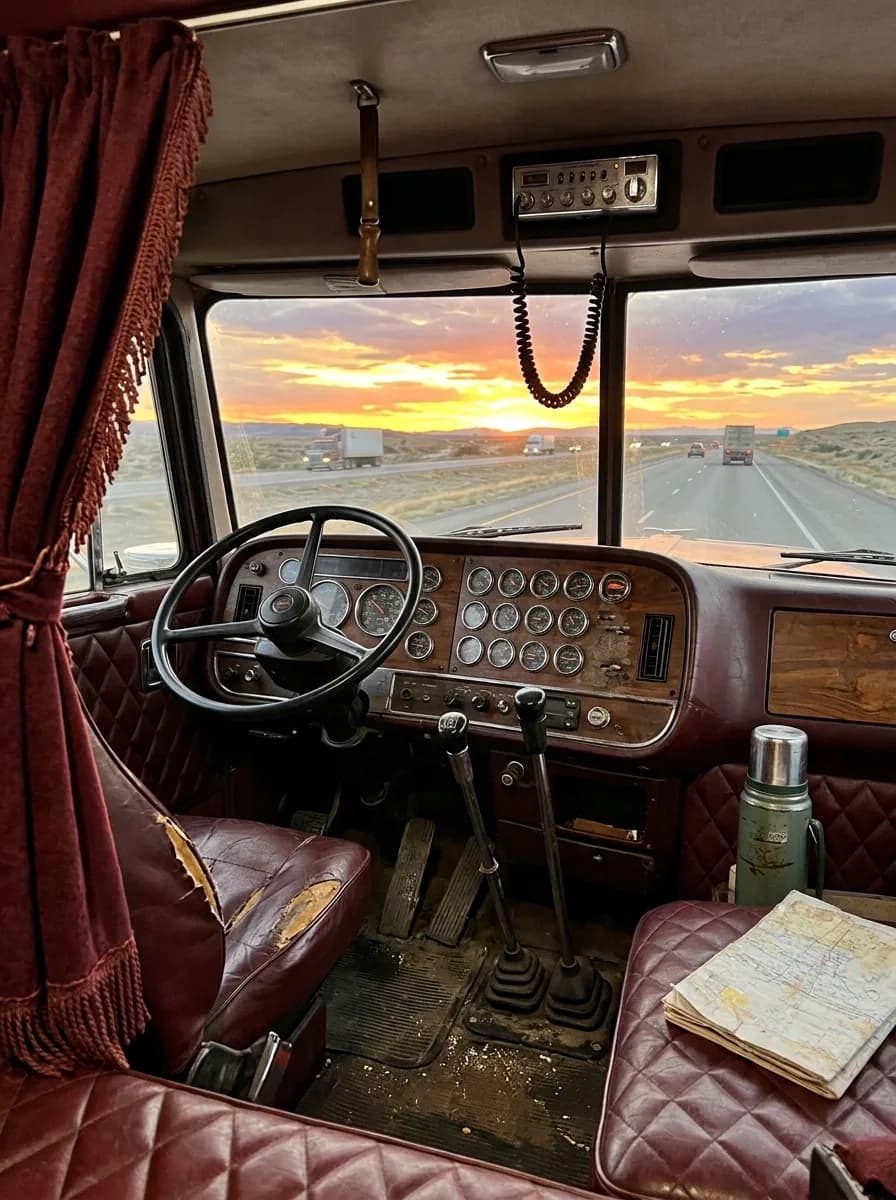
Picture two gear levers rising out of the floor, a CB mic swinging on its coiled cord, and a driver who lives in that cab for days at a time. The AI-generated scene above is a sunset-highway moment every long-haul driver of the CB era would recognize, and a good snapshot of what made a 1970s sleeper cab feel like its own world.
Sleeper Cabs Come Of Age
Long-haul trucks had sleeper compartments long before the 1970s, but they started out as little more than a padded box behind the seat — enough room to lie down, nothing more. Through the 1950s and 60s, cabs slowly picked up curtains, storage cubbies and real cushioning as manufacturers realized comfort kept drivers alert and rigs on schedule. By the 1970s and into the 80s, manufacturers began stretching the cab itself, raising rooflines and giving drivers a proper walk-in sleeper instead of a crawl-through bunk. One builder pushed the idea further than anyone expected: a Florida outfit called LivLab bolted on a module with a kitchenette, a bathroom and a generator, turning a truck cab into something closer to a studio apartment on wheels. Most drivers never had anything that elaborate, but the direction was clear: the sleeper was becoming a second home, and the 1970s-80s cab set the template that later grew into the tall, insulated "condo" sleepers of the 1990s, complete with cabinetry and climate control.
Breaker, Breaker: The CB Radio Boom
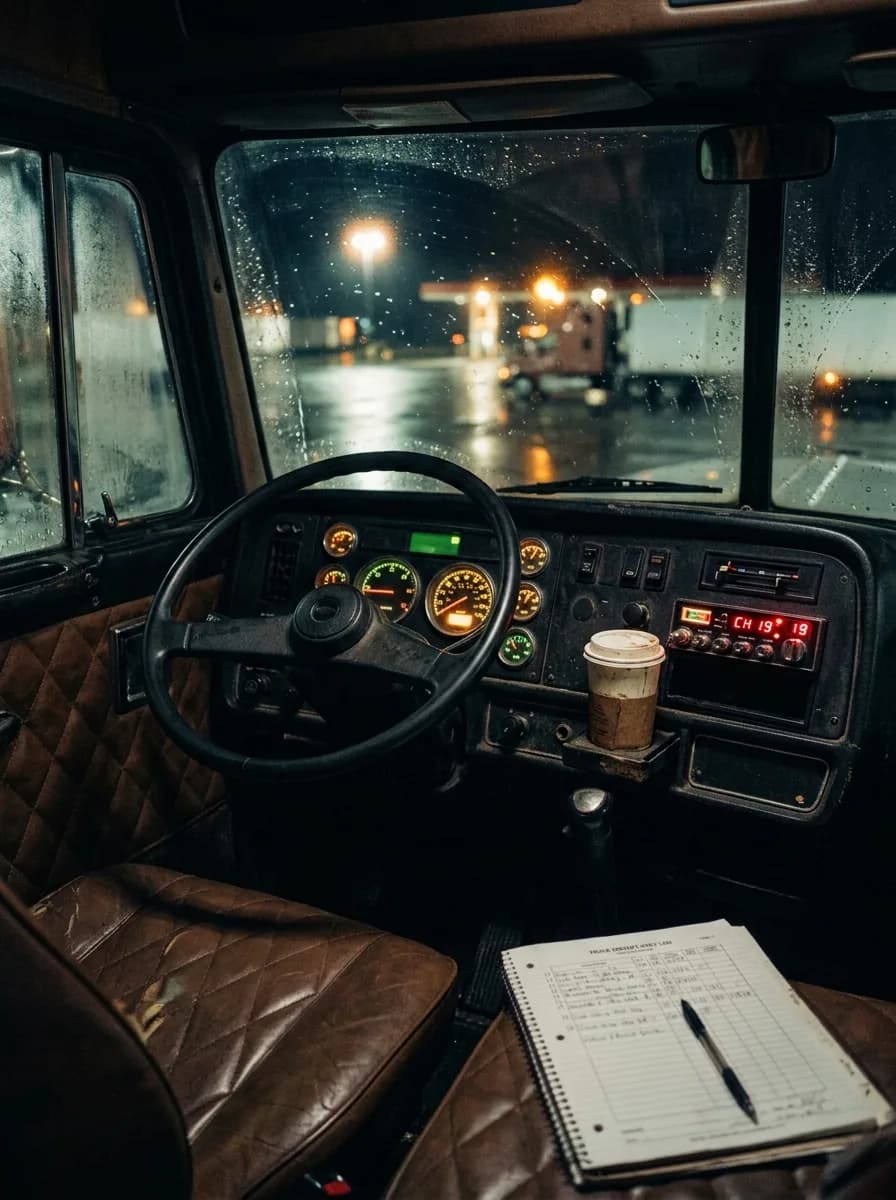
Nothing defines the look of a period-correct dash more than a CB radio bolted under it. Truckers had used citizens band radio since the 1950s, but it stayed a novelty until 1973, when the oil embargo hit. Fuel got scarce, prices spiked, and the government followed with a nationwide 55 mph speed limit. For drivers paid by the mile, a CB became essential — a way to find a station that still had diesel, warn each other about speed traps, and organize convoys in protest of the price hikes. Channel 19 emerged as the shared highway frequency and stuck as "the trucker's channel," a title it still holds for real-time traffic, weather and "bear" reports today. The trend broke into mainstream culture when C.W. McCall's "Convoy" topped both the country and pop charts in January 1976, and by the late 1970s an estimated 14 million Americans held CB licenses, with tens of millions more radios in use unlicensed. Every driver picked a handle, and for a few years a coiled mic hanging from the headliner was as common as a rearview mirror.
Two Sticks, Twice the Gears
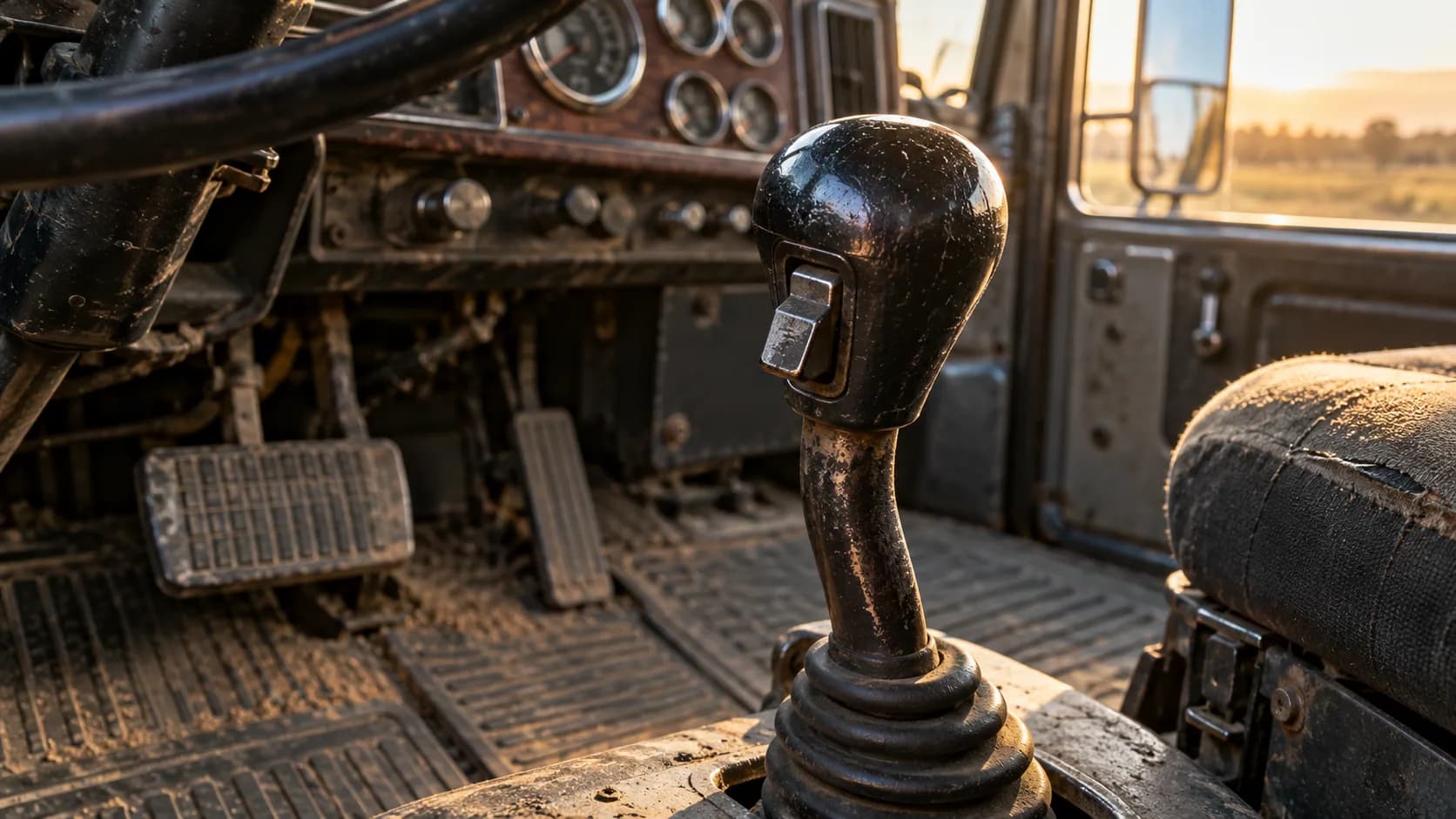
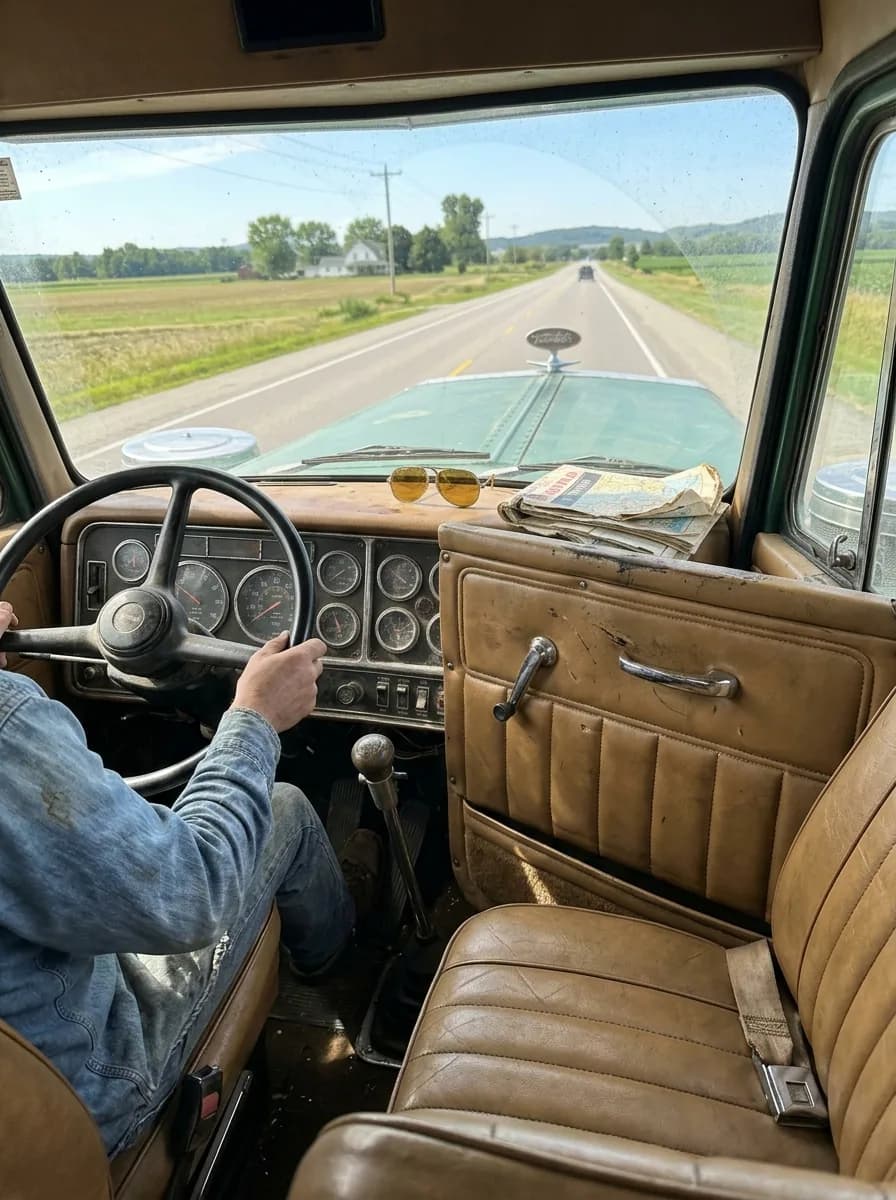
The second shifter in a cab like this isn't a spare — it's a separate transmission. A twin-stick setup pairs a main gearbox with an auxiliary box bolted behind it, each with its own lever. The main stick selects the base gear; the auxiliary stick splits or multiplies it, so a five-speed main paired with a two-speed auxiliary — a "duplex" — yields ten usable ratios, and the same main paired with a three-speed auxiliary — a "triplex" — could stretch to fifteen. It took practice: timing the auxiliary shift against engine revs while the main gear was already engaged, working the two levers almost like a drummer's hands. Done right, it let a loaded rig find exactly the right gear for a grade instead of lugging or overrevving. The two-stick approach eventually gave way to single-lever range-and-splitter transmissions that bundled both gearboxes into one shift pattern, but during the 1970s and 80s twin sticks were standard equipment on trucks from Peterbilt, Kenworth and other builders.
Reading the Dash, Feeling the Seat
Open the door on a well-kept cab from this era and two things stand out: the wall of round gauges facing the driver, and the seats. Tuck-and-roll upholstery — pleated vinyl, usually Naugahyde, stitched into narrow channels — had already been a hot-rod staple since the 1950s and carried straight into custom truck cabs, paired with wood-grain trim and chrome-ringed gauges. It wasn't just about looking good on a long haul; the padded channels held up to years of sitting better than flat bench cushions did, and a driver could tell a well-built cab from a stripped-down one just by running a hand across the seat.
Built to Outlast the Highway
That combination of character and durability is exactly why cabs from this period are still being restored today. Peterbilt 359s and Kenworth W900As from the 70s and 80s are regulars at truck shows, often rebuilt down to period-correct twin sticks, tuck-and-roll seats and a working CB tuned to channel 19. Swap meets and specialty upholstery shops keep the parts supply alive, from reproduction gauge faces to vintage-style radios that still key up on the trucker's channel. The technology has moved on, but the appeal of that cab — mechanical, tactile, unmistakably its own — hasn't.
Specs
- CB Boom Era
- c. 1973 - early 1980s
- Catalyst
- 1973 oil embargo + 55 mph national speed limit
- Trucker's Channel
- CB Channel 19
- Peak Licensed CB Users (est.)
- ~14 million by the late 1970s
- Transmission Style
- Twin-stick: separate main + auxiliary gearbox
- Upholstery Style
- Tuck-and-roll pleated vinyl (Naugahyde)
FAQ
- Why do old semi trucks have two gear shifters?
- Older trucks used a separate main and auxiliary transmission, each with its own lever. The main stick selected the base gear and the auxiliary stick split or multiplied it, giving the driver far more usable ratios than a single gearbox could.
- Why is channel 19 the trucker channel on CB radio?
- Channel 19 became the informal highway standard during the 1970s CB boom, when drivers needed one shared frequency for traffic, speed-trap and fuel-stop chatter. It stuck, and it's still where truckers gather on CB today.
- What started the CB radio craze of the 1970s?
- The 1973 oil embargo and the 55 mph national speed limit that followed pushed truckers to lean on CB radios to find open gas stations and dodge speed traps. Pop culture, including the 1976 hit song 'Convoy,' carried the trend to the general public.
- Can you still get a truck with a sleeper cab like this?
- Not from a factory line today - modern sleepers are taller, insulated 'condo' units with electronics built in. But restored Peterbilt 359s and Kenworth W900As with period-correct interiors are actively bought, sold and shown.
Know someone who drove one? Share this guide
Get the Look
As an Amazon Associate we earn from qualifying purchases.
- 1:25 scale classic Peterbilt semi truck model kit — Build the twin-stick era on a shelf.
- CB radio for trucks — Modern units still tune to channel 19.
- American trucking history book — A deeper read on the CB and sleeper-cab era.
Sources
- history.com — oil-crisis-1973-truck-strike
- en.wikipedia.org — National_Maximum_Speed_Law
- natcommag.substack.com — cb-radio-when-channel-19-became-the-highway-channel
- en.wikipedia.org — Convoy_(song)
- billboard.com — cw-mccall-convoy-forever-number-one-1235054868
- museum.tv — citizens-band-radio
- autos.yahoo.com — why-older-semi-trucks-two-024500019
- bigmacktrucks.com — 49809-the-three-stick-mack
- 4btswaps.com — mack-duplex-triplex-quadraplex.66449
- truckinginfo.com — twin-sticks-to-no-sticks-trucks-have-sure-come-a-long-way-baby.aspx
- curbsideclassic.com — vintage-ad-1979-livlab-more-than-sleeper-semi-truck-cab
- theautopian.com — how-a-mysterious-company-turned-semi-trucks-into-campers-in-the-1980s
- allamericansleeper.com — sleeper-cabs
- thehogring.com — meet-scott-beard-of-tuck-n-roll-upholstery