Cummins ISX15/X15 vs Detroit DD15: Specs, Problems, Trucks
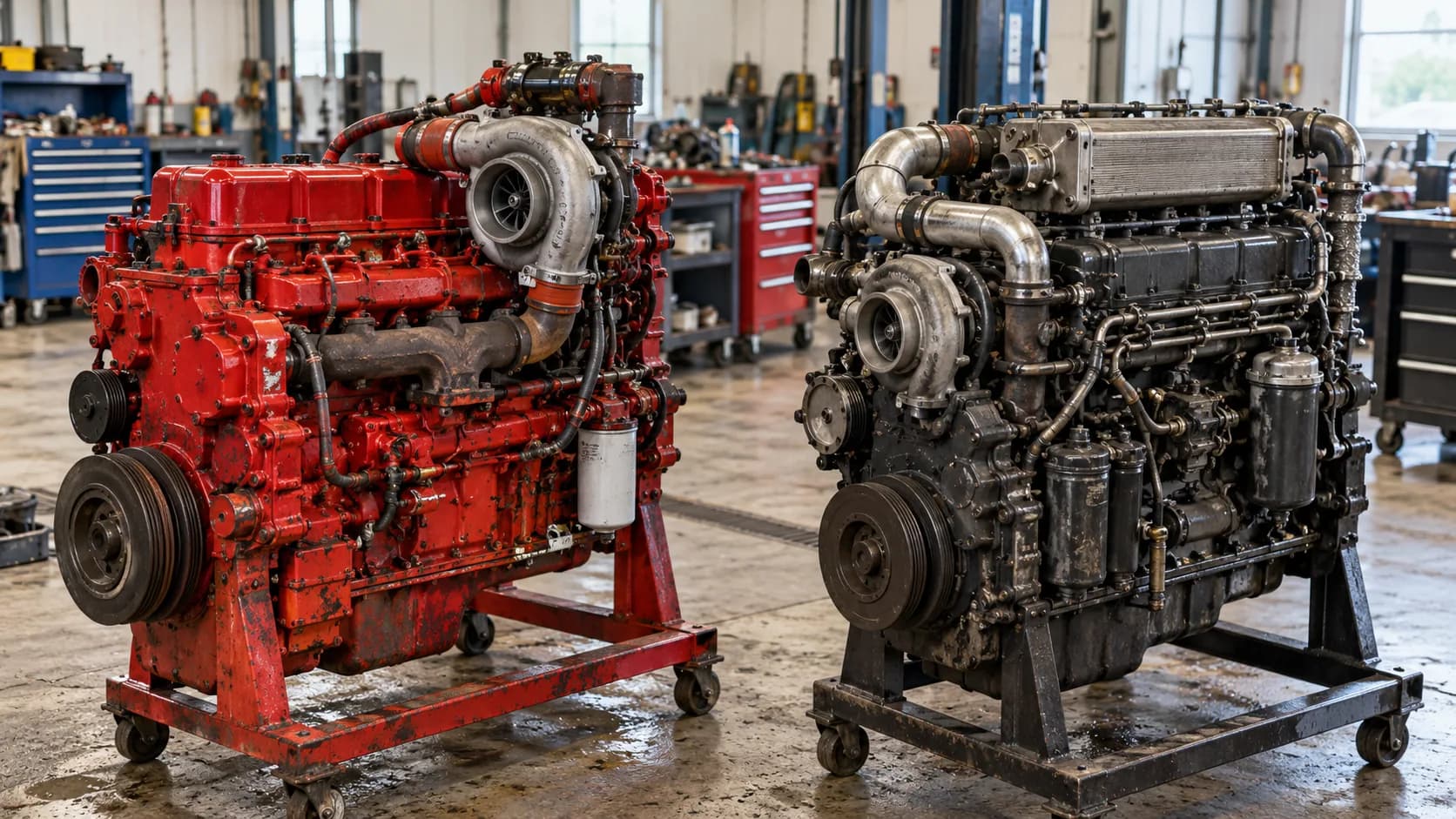
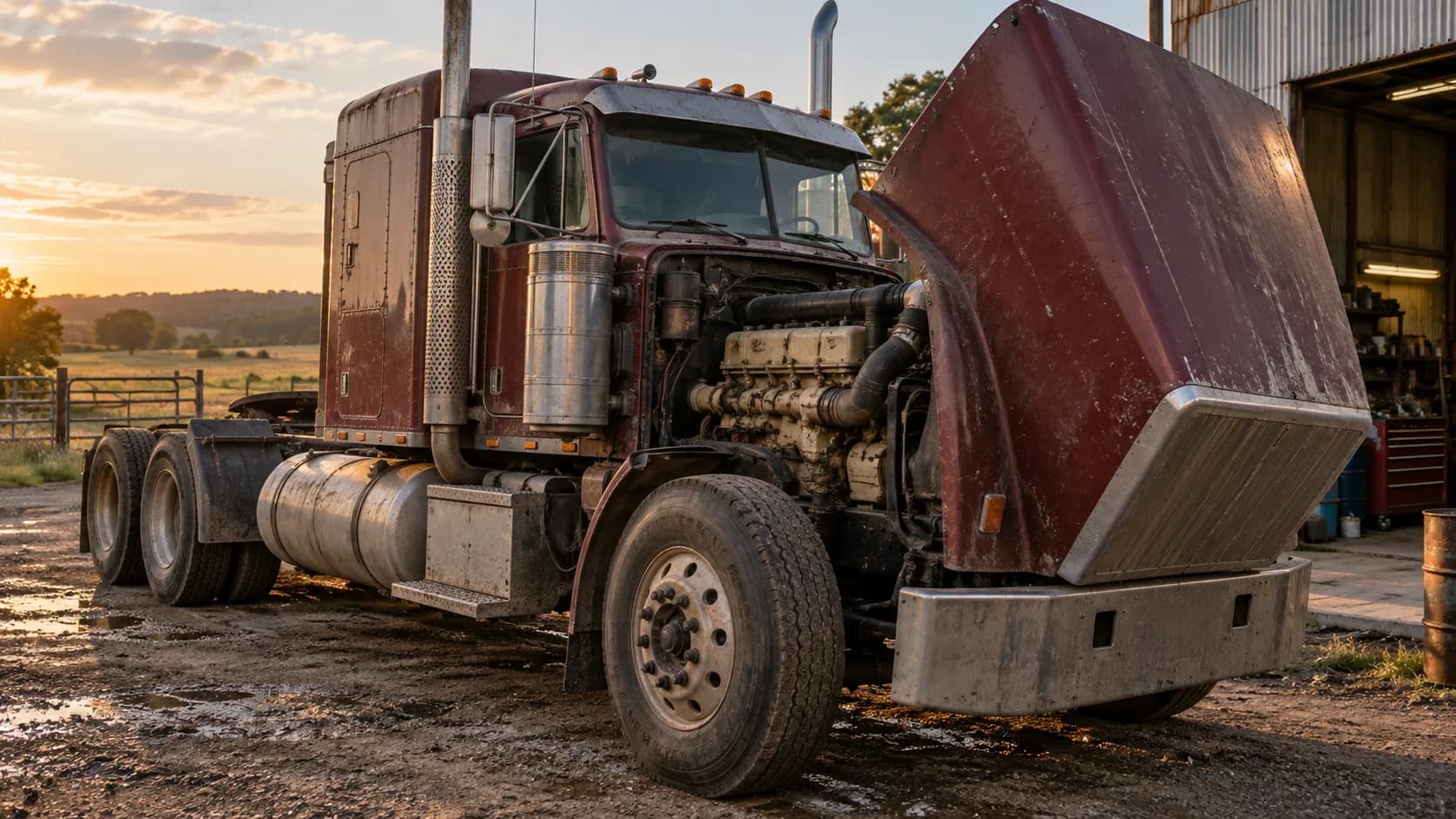
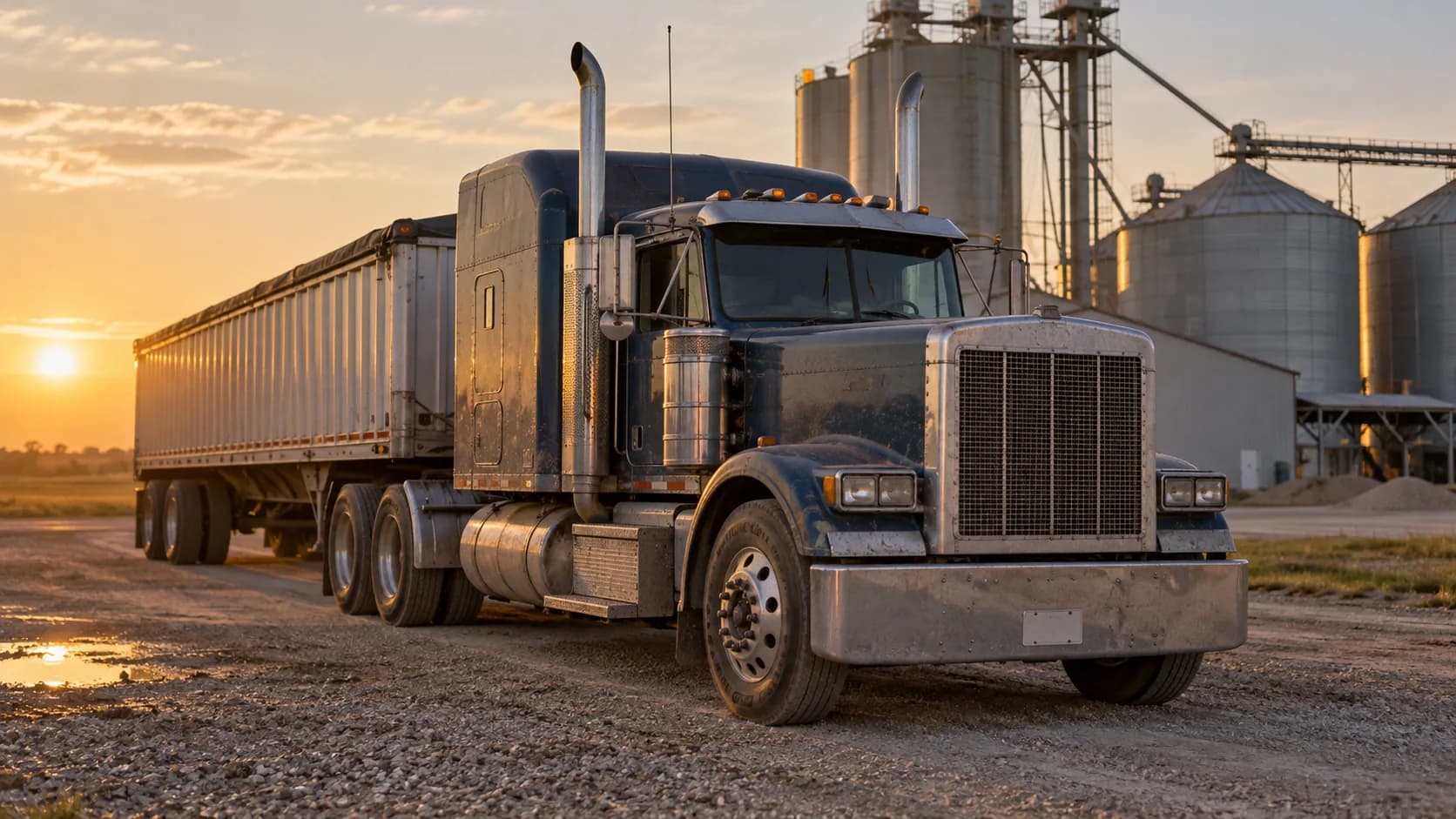
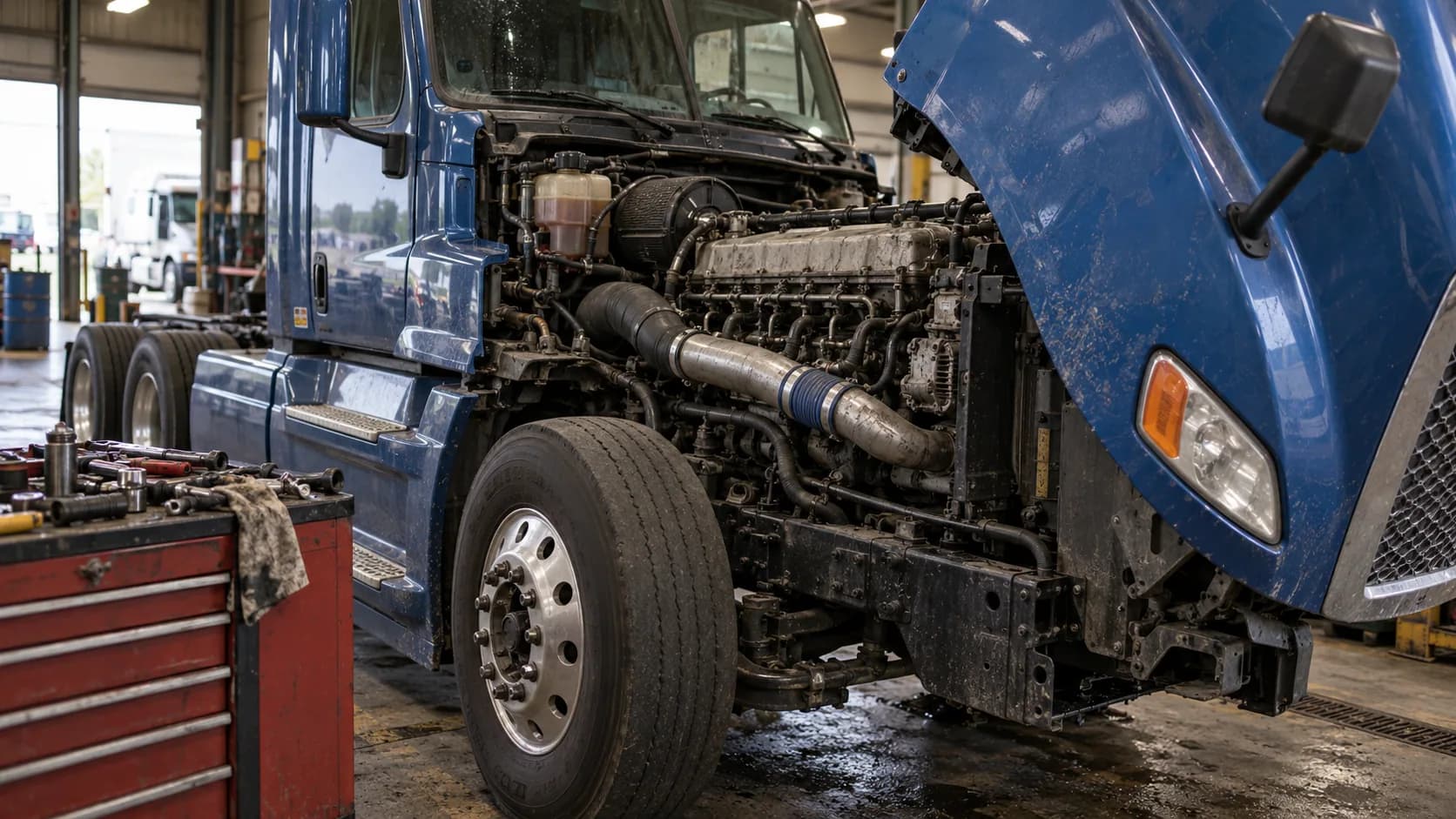
Ask ten drivers at a truck stop which 15-liter belongs under the hood and you will get ten opinions, most of them loud. The renders above imagine the argument in a shop, two big inline sixes on engine stands and a tractor with its hood tilted open, and they are AI-generated images, not photos of real engines or trucks. The question behind them is real: the Cummins ISX15 (sold as the X15 since the 2016 to 2017 changeover) and the Detroit DD15 are the two names that come up most in that argument, and they make their power in different ways.
Two Engines, Two Histories
The ISX came first. Cummins built it to replace the N14, and it was originally called the Signature series. Until 2010 it used two overhead camshafts, one for the valve train and one to drive the injectors. For EPA 2010, the ISX15 moved to a common-rail fuel system, Cummins' XPI, and dropped the injector cam, leaving a single overhead camshaft. The X15 name took over from the ISX15 in the 2016 to 2017 period, and the engine split into Efficiency and Performance series.
The DD15 is the younger engine. Detroit Diesel unveiled it on October 19, 2007, at its Redford, Michigan plant as the successor to the Series 60, with its market launch planned for the second quarter of 2008, first in the Freightliner Cascadia. It became the first member of a family that also includes the smaller DD13 and the larger DD16.
Displacement, Power and Torque
On paper they are close. The X15 displaces 14.9 liters; the DD15 displaces 14.8 liters, with a 139 mm bore and 163 mm stroke. The gap shows up at the top of the range.
At launch, the DD15 was rated from 455 to 560 hp and 1,550 to 1,850 lb-ft. Freightliner's current Cascadia spec page lists the Gen 5 DD15 at 425 to 505 hp and 1,550 to 1,850 lb-ft. Buyers who want 600 hp from Detroit step up to the DD16, which Detroit rated from 505 to 600 hp in 2012.
The ISX family has spanned roughly 430 to 620 hp with up to 2,050 lb-ft. International's current X15 page lists the Efficiency Series at 1,450 to 1,850 lb-ft and the Performance Series at 525 to 565 hp with 1,850 to 2,050 lb-ft. That extra torque at the top is why the X15 keeps a following in heavy haul and mountain work.
How They Are Built Differently
The fuel systems are the headline difference. The DD15 uses Detroit's Amplified Common Rail System. The rail runs at relatively low pressure, and the injector itself boosts fuel to as much as about 32,000 psi. The X15 relies on XPI, a common-rail system that let Cummins drop the cam that used to drive its injectors.
The valve gear differs too. The DD15 launched with two overhead camshafts and four valves per cylinder, while the X15 has run on a single overhead cam since 2010.
Turbocharging is where the DD15's history gets interesting. The original engine used turbo compounding: a second turbine recovered exhaust energy and fed it back to the crankshaft through a gear drive and hydrodynamic coupling. Detroit claimed up to 5 percent lower fuel use than a similar Series 60. For the GHG14 rules, Detroit introduced a new DD15 with an asymmetric turbocharger and next-generation ACRS, and renamed the older engine the DD15 TC, kept in production for fleets that wanted it. The X15, by contrast, uses a variable geometry turbocharger (VGT).
Known Problems and Recalls
Both engines carry the full emissions stack: cooled EGR, a diesel particulate filter, and SCR with diesel exhaust fluid. That hardware, not the bottom end, is where most complaints live.
On the ISX side, a 2010 trade report said Cummins had trouble with EGR valves across generations. Moving the valve away from the hot side for 2007 did not cure every problem, and Cummins redesigned how the valve worked for 2010. The same report quoted a dealer mechanic describing turbos whose sliding member could stick, possibly from coked oil getting past the seal. In 2024, Cummins recalled 9,274 X15 engines and service parts because fuel pump barrels could fracture, leak fuel and stall the engine.
On the Detroit side, a 2012 recall campaign called for inspecting, and if needed replacing, the high-pressure fuel feed lines between pump and rail on EPA07 and EPA10 DD-platform engines built before about February 1, 2012, to prevent fuel leaks. It covered Freightliner, Sterling and Western Star trucks.
A recall is not a reliability score, and no public data ranks the two engines head to head. Before buying a used truck, run its VIN through NHTSA's recall search and ask for the engine's service history.
Maintenance and Which Trucks Get Which
Service intervals are similar. Cummins' 2021 X15 guide lists oil drains from 25,000 miles in severe duty to 75,000 miles at 7 mpg or better, overhead adjustment every 500,000 miles, and DPF cleaning between 250,000 and 800,000 miles depending on duty cycle. Detroit publishes its own DD15 schedule by duty cycle, so compare the two sheets for the way a truck will actually run.
Truck brand often makes the choice. The DD15 is a Daimler engine, so it lives in Freightliner and Western Star tractors; Freightliner's Cascadia lineup is built around Detroit DD13 and DD15 engines, with the Cummins X15N natural gas engine listed as an option and the diesel X15 listed as coming in January 2027. On the PACCAR side, Kenworth and Peterbilt build around the MX-13, and Kenworth's T680 is also offered with the Cummins X15.
No survey settles which engine owner-operators prefer, so the honest answer is a checklist. The X15 offers higher ratings and fits more brands. The DD15 comes as part of a Daimler-built powertrain in Freightliner and Western Star trucks. Pick the truck first, then the engine.
The Bottom Line
The X15 and DD15 arrive at roughly the same displacement and torque by different paths: single cam, XPI and VGT on one side, twin cams, amplified common rail and a turbo-compound past on the other. Either can run a long life with clean fuel, clean DEF and on-time aftertreatment care.
Specs
- Displacement
- X15/ISX15: 14.9 L; DD15: 14.8 L
- Introduced
- ISX: N14 successor, first called Signature; DD15: unveiled Oct. 19, 2007
- Current hp range
- X15: Performance Series 525-565 hp; DD15 Gen 5: 425-505 hp
- Torque
- X15: 1,450-2,050 lb-ft; DD15 Gen 5: 1,550-1,850 lb-ft
- Fuel system
- X15: XPI common rail; DD15: Amplified Common Rail System
- Camshafts
- ISX15/X15: single overhead cam since 2010; DD15: twin overhead cams
- Turbo
- X15: VGT; DD15: turbo compound at launch, asymmetric turbo from GHG14
- Typical trucks
- DD15: Freightliner, Western Star; X15: Kenworth T680, International and others
FAQ
- Which is better, the Cummins X15 or the Detroit DD15?
- No public data ranks them head to head. The X15 offers higher ratings, up to 565 hp and 2,050 lb-ft in the Performance Series, and is sold in more truck brands, while the current DD15 tops out at 505 hp and is matched to Detroit's own powertrain in Freightliner and Western Star trucks.
- What is the displacement of the Detroit DD15?
- The DD15 displaces 14.8 liters, with a 139 mm bore and 163 mm stroke. The Cummins X15 displaces 14.9 liters.
- Does the DD15 have turbo compounding?
- The original DD15 did. For GHG14, Detroit introduced a new DD15 with an asymmetric turbocharger and renamed the turbo-compound engine the DD15 TC.
- When did the Cummins ISX15 become the X15?
- The X15 name replaced the ISX15 in the 2016 to 2017 period, when Cummins split the engine into Efficiency and Performance series.
Know someone who drove one? Share this guide
Get the Look
As an Amazon Associate we earn from qualifying purchases.
- Diesel engine 1:24 scale model kit — A small-scale inline six for the shelf.
- Heavy duty diesel engine repair manual — Background on how modern truck diesels and aftertreatment work.
- API certified diesel exhaust fluid — Both engines need clean, in-spec DEF to stay out of derate.
Sources
- en.wikipedia.org — Cummins_X-series_engine
- truckinginfo.com — detroit-diesel-dd15-debuts-better-fuel-economy-performance-
- fleetowner.com — detroit-details-new-dd15-other-ghg14-engines
- freightliner.com — specifications
- international.com — cummins-x15
- truckinginfo.com — engine-of-opportunity
- mart.cummins.com — 0076480.pdf
- static.nhtsa.gov — RCAK-24E078-7247.pdf
- static.nhtsa.gov — RCRIT-12V074-4244.pdf
- ttnews.com — kenworth-expands-powertrains
- trucknews.com — detroit-diesel-expands-engine-family-with-launch-of-dd13
- trucknews.com — new-detroit-diesel-engine-boasts-improved-fuel-mileage-torque-and-performance-br-i-dd15-will-replace