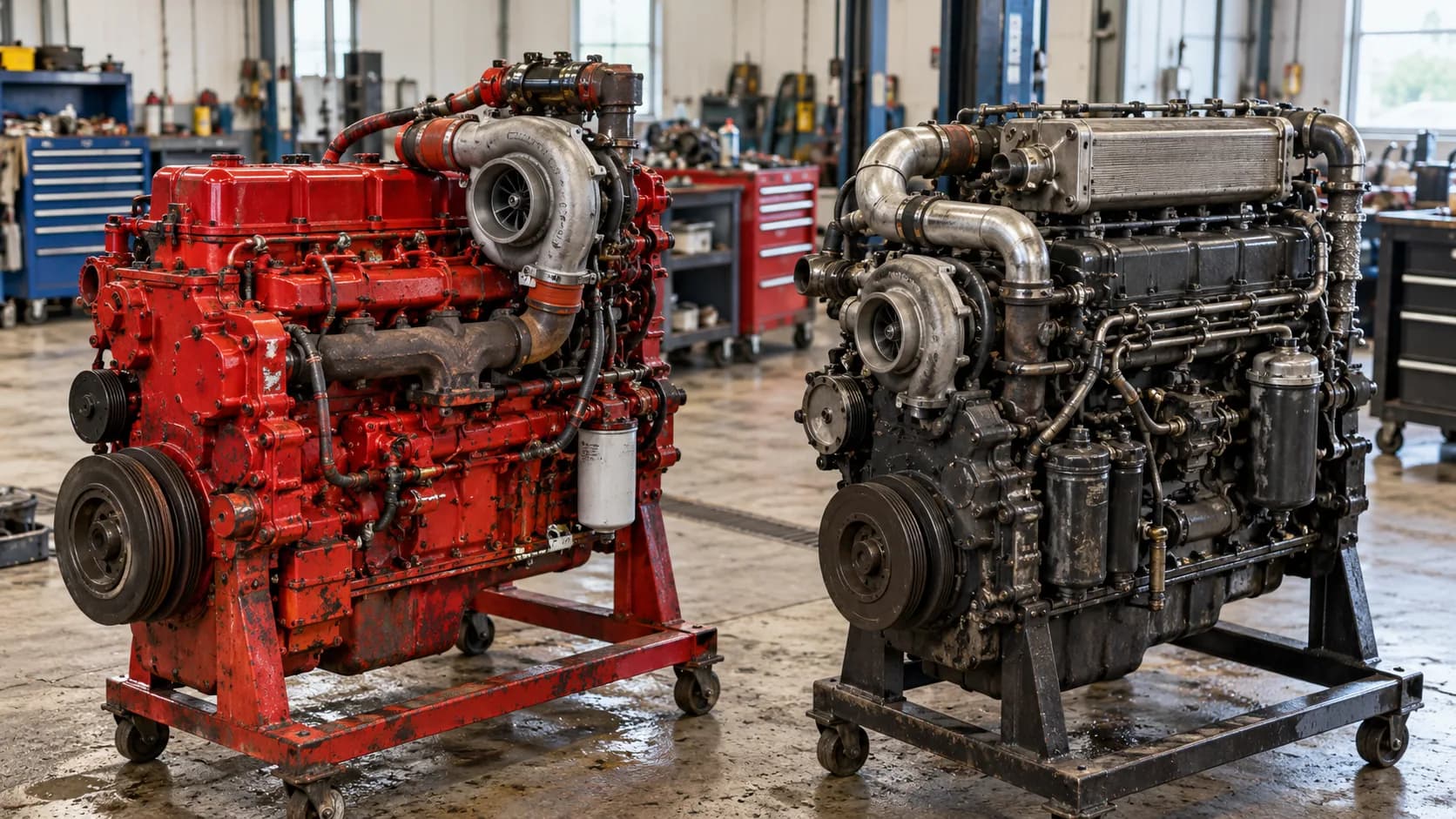
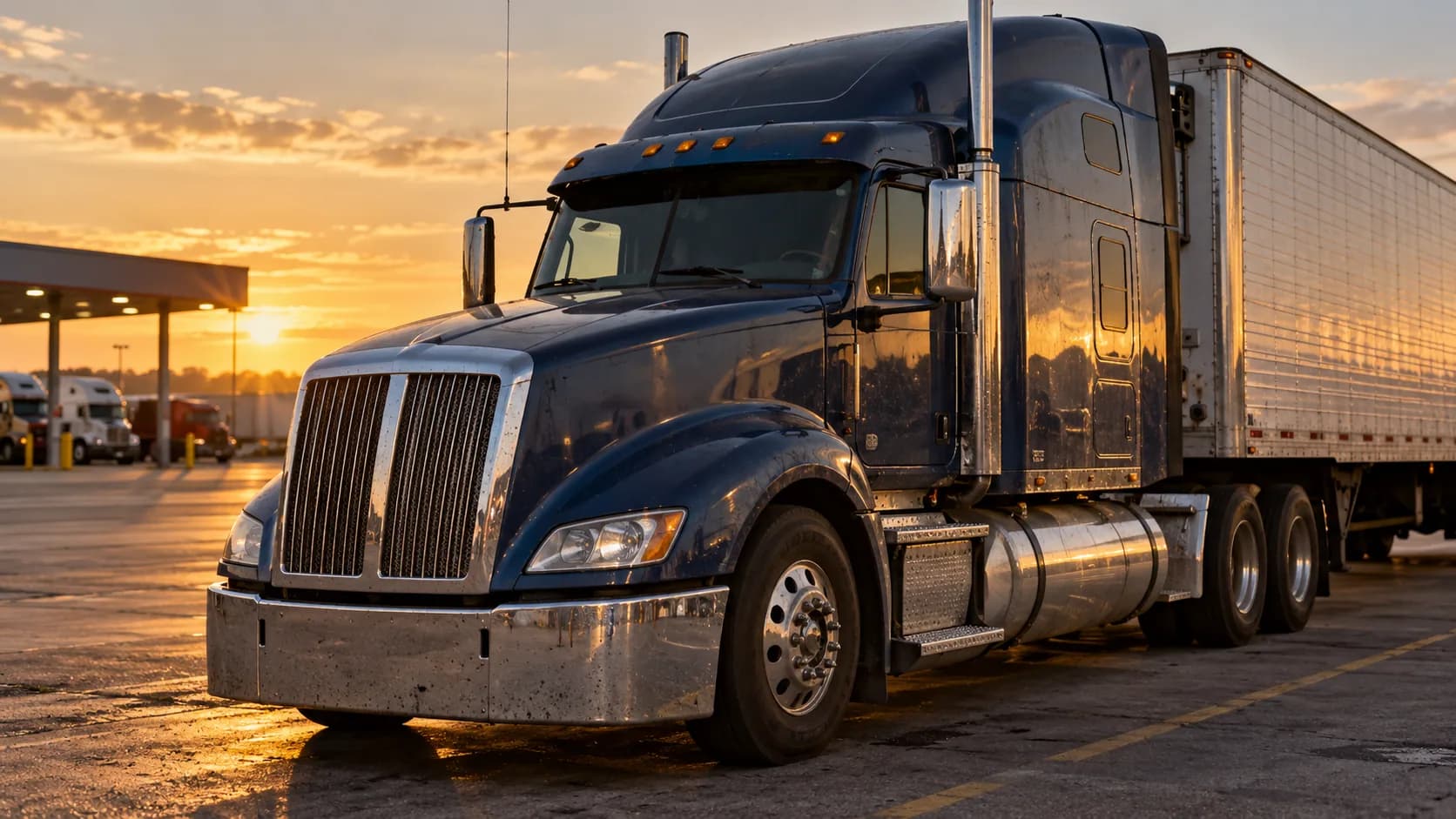
Cummins N14 Engine (1987-2001): Celect, HP and Specs
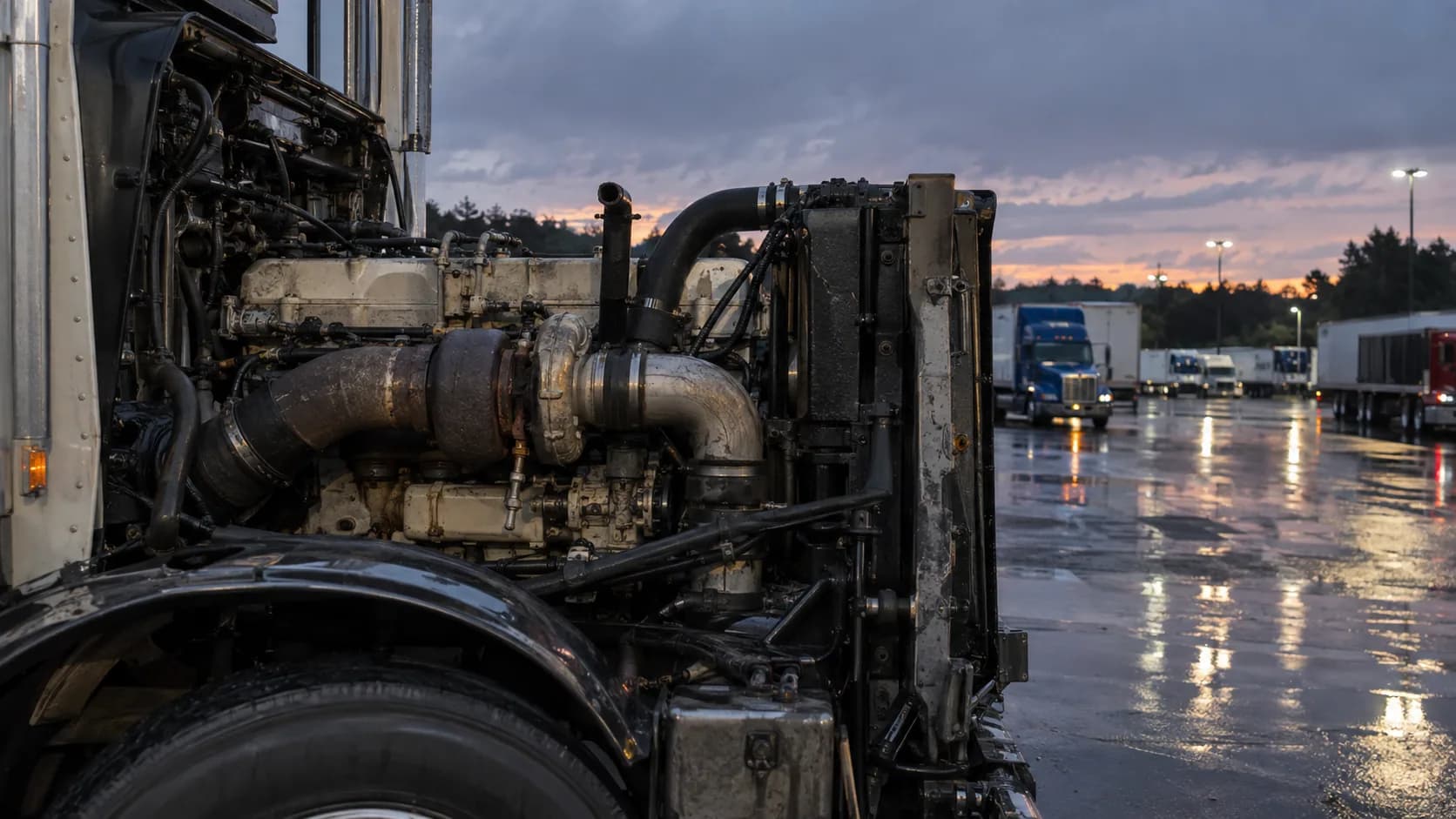
Some engines get remembered for horsepower. The Cummins N14 gets remembered for mileage. The render above imagines a black long-hood at dusk with its hood tipped open, a big inline six with a turbo and fat intake plumbing on display, and a wet truck-stop lot full of trailers behind it, the kind of place where an N14 owner swaps stories about how many times it has rolled past a million. It's an AI-generated image, not a real truck, but the engine it stands for is one of the best-known diesels of the 1990s.
From the Big Cam to the N14
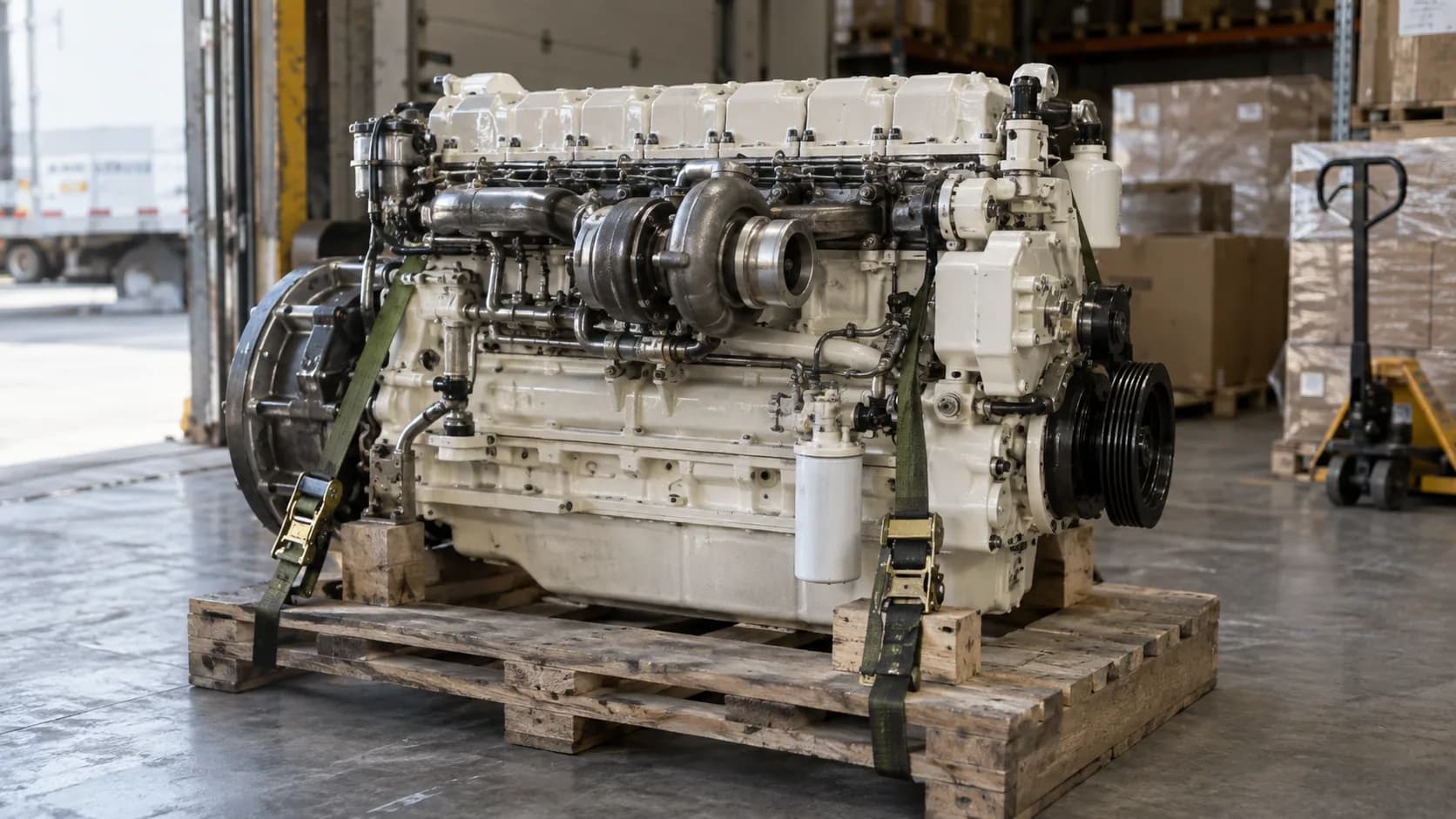
Capital Reman Exchange describes the N14 as the successor to the hugely popular 855 Big Cam, built from 1976 to 1985, and a more powerful engine with a similar structural profile. The N14 is a 14.0-liter (855 cubic inch) inline six with a 5.5-inch bore and 6.0-inch stroke. Sources date it from 1987 to either 2001 (DieselHub, Capital Reman Exchange) or 2002 (4BT Engines), so the end year is soft; the first versions arrived in 1987.
Three Versions: Mechanical, Celect and Celect Plus
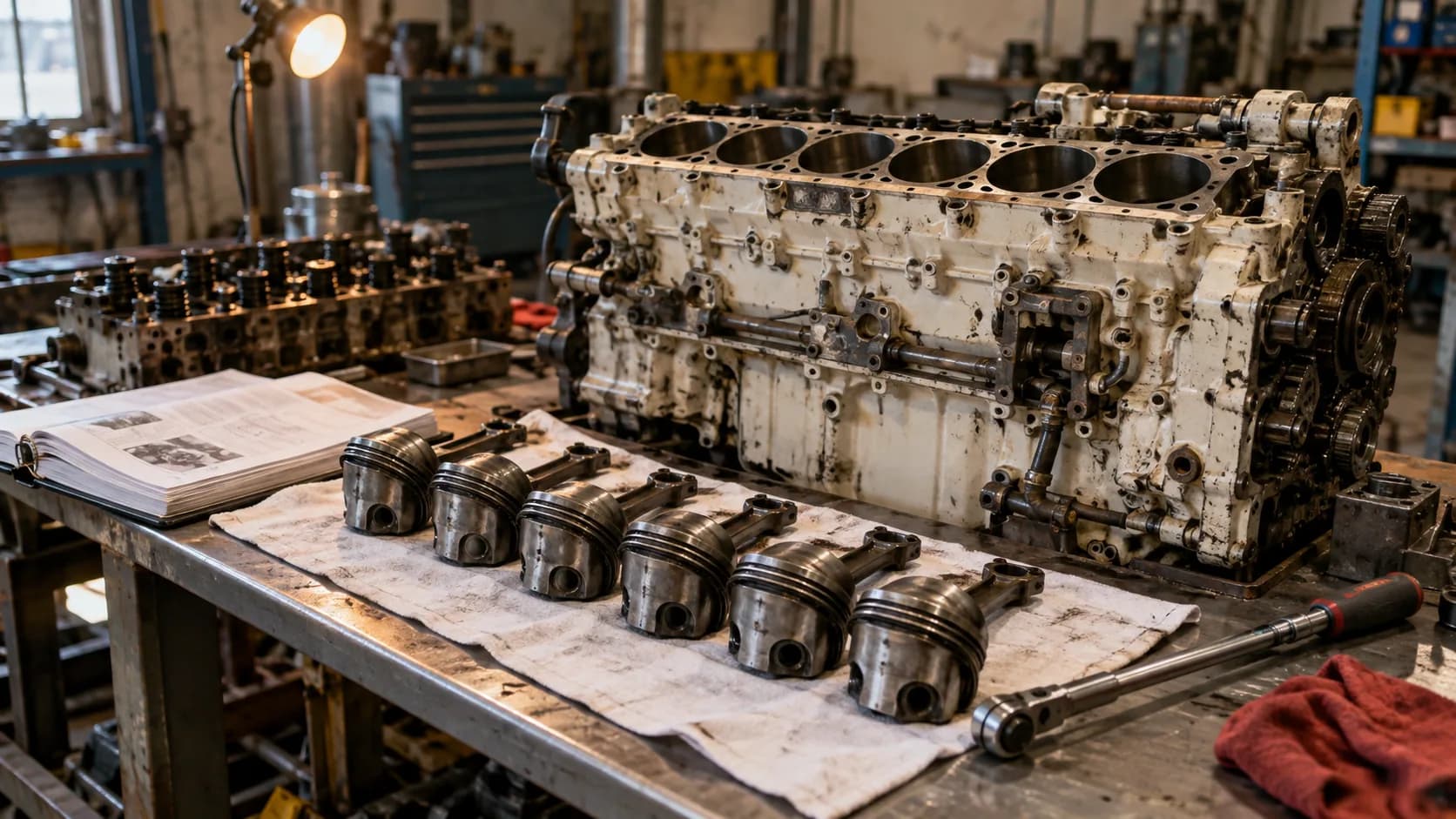
The first N14s, about 1987 to 1989, were mechanical. They used Cummins' pressure-time fuel system, with a gear-driven pump and a camshaft that fired the unit injectors, and no engine computer.
Around 1990, Cummins introduced the Celect, short for Cummins Electronic Engine Control. It brought electronically controlled unit injection, with solenoid-actuated injectors driven off the camshaft. According to DieselHub, the Celect was developed to compete with Detroit's Series 60 and its electronic control system. In 1997 came the Celect Plus, which, as DieselHub puts it, added a more sophisticated ECM and injection management system.
Horsepower, Torque and Trucks
Across all versions, the N14 was rated from about 310 to 525 horsepower at 1,800 to 2,100 rpm, with torque from about 1,250 to 1,850 lb-ft at 1,200 rpm. That is a wide spread, so the rating on the plate matters more than the engine name. The N14 was a cross-brand engine. Cummins' N14 showed up in the Peterbilt 379 lineup and across the Kenworth W900 family, and it was an option in the Freightliner Century Class alongside the Cat 3406E and Detroit Series 60. If you're hunting a classic long-hood from the 1990s, an N14 under the hood is a very common find.
Strengths and Known Problems
The reputation is longevity. Capital Reman Exchange's history calls the N14 part of the "1,000,000 mile club" and says a major overhaul should not be necessary for 500,000 to 1,000,000 miles. That is a supplier's claim, not a guarantee, and it assumes good maintenance. The mechanical engines carry no engine computer.
The weak spot on the Celect and Celect Plus is the electronic fuel system. Capital Reman Exchange names injector failures and related electronics as the engine's primary weakness, including ECM grounding faults, wiring harness shorts that can damage the ECM, and faulty fuel solenoids. It suggests carrying a spare injector or two. That's the single most important thing to check on an electronic N14.
Buying a Truck With an N14
First decide whether you want the simpler mechanical engine or the more powerful and smoother electronic one, then ask for proof. For a Celect or Celect Plus truck, ask whether the injector harness has been replaced or inspected, and whether the ECM shows any injector or grounding fault codes. Look for misfires, gray smoke and rough running when warm. Check that the engine hasn't been neglected on oil changes, because an N14 that has lived on a good schedule is a very different purchase from one that hasn't.
Confirm the actual power rating from the engine plate and the ECM rather than from the seller's description, since the N14 was sold across such a wide range of ratings.
The Move to the ISX
Wikipedia's article on the X-series says the ISX was designed to replace the N14 in 2001, when U.S. emissions rules made the N14 obsolete. The ISX started out under the Signature name and uses Cummins' Interactive System for fuel control; it is a 15-liter-class engine, with a displacement of 14.9 liters. The N14 is the last of the line that started with the Big Cam.
Specs
- Production
- 1987 to 2001 or 2002 (sources vary)
- Layout
- Inline six-cylinder turbo diesel
- Displacement
- 14.0 L (855 cu in)
- Bore x stroke
- 5.5 in x 6.0 in
- Power
- About 310-525 hp at 1,800-2,100 rpm
- Torque
- About 1,250-1,850 lb-ft at 1,200 rpm
- Versions
- Mechanical (c. 1987), Celect (c. 1990), Celect Plus (1997)
- Predecessor / successor
- 855 Big Cam (1976-1985) / ISX (2001, per Wikipedia)
FAQ
- How much horsepower does an N14 have?
- The N14 was rated from about 310 to 525 hp at 1,800 to 2,100 rpm, with torque of about 1,250 to 1,850 lb-ft at 1,200 rpm.
- What is the difference between an N14 Celect and a Celect Plus?
- Both use electronically controlled unit injection. The Celect Plus, introduced in 1997, added a more sophisticated ECM and injection management system compared with the original Celect.
- What years was the Cummins N14 made?
- Sources put it from 1987 to 2001 or 2002. Mechanical versions came first, Celect electronics arrived around 1990, and the Celect Plus followed in 1997.
- What replaced the Cummins N14?
- According to Wikipedia, the ISX, originally called the Signature series, was designed to replace the N14 in 2001 when U.S. emissions regulations made the N14 obsolete.
Know someone who drove one? Share this guide
Get the Look
As an Amazon Associate we earn from qualifying purchases.
- Cummins N14 engine scale model — A shelf-size stand-in for one of the most common engines in the long-hood era.
- Cummins N14 service manual — Torque specs and procedures for the shop-manual crowd.
- Diesel engine troubleshooting book — Useful background before chasing a fuel-system fault code.