Cat 3406 Engine (1973-1999): Versions, Horsepower, Specs
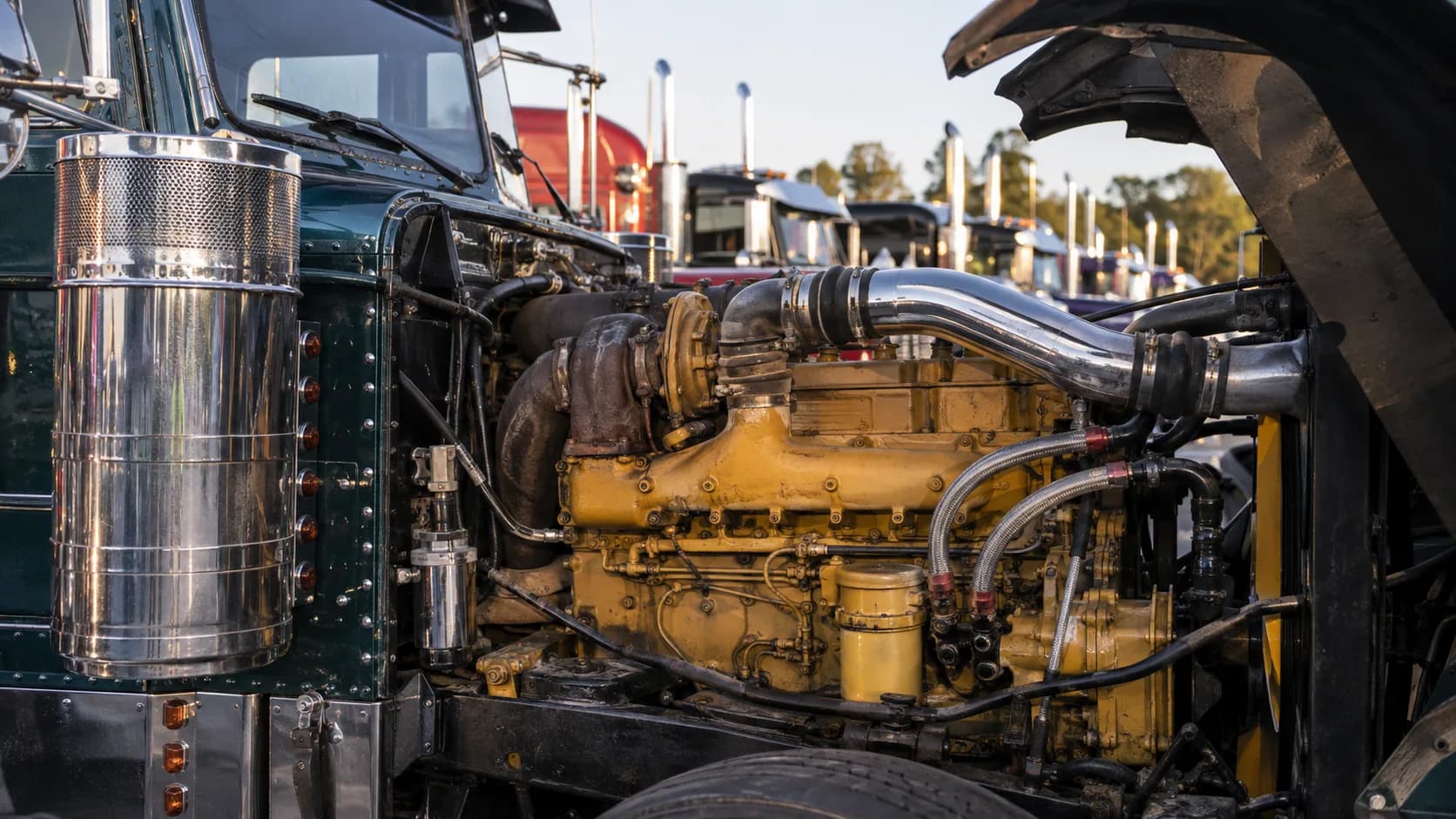
Pop the hood on enough classic Class 8 trucks and you keep finding the same thing underneath: a big inline six, 14.6 liters of it, with Caterpillar cast into the side. The render above imagines that moment, a hood swung open on a dark green long-hood, a yellow-painted engine with a chrome air cleaner and a polished charge-air pipe, and a row of show trucks fading into late light behind it. It's an AI-generated image, not a real truck, but the engine it points at is the one people search for by name: the Caterpillar 3406.
Where the 3406 Came From
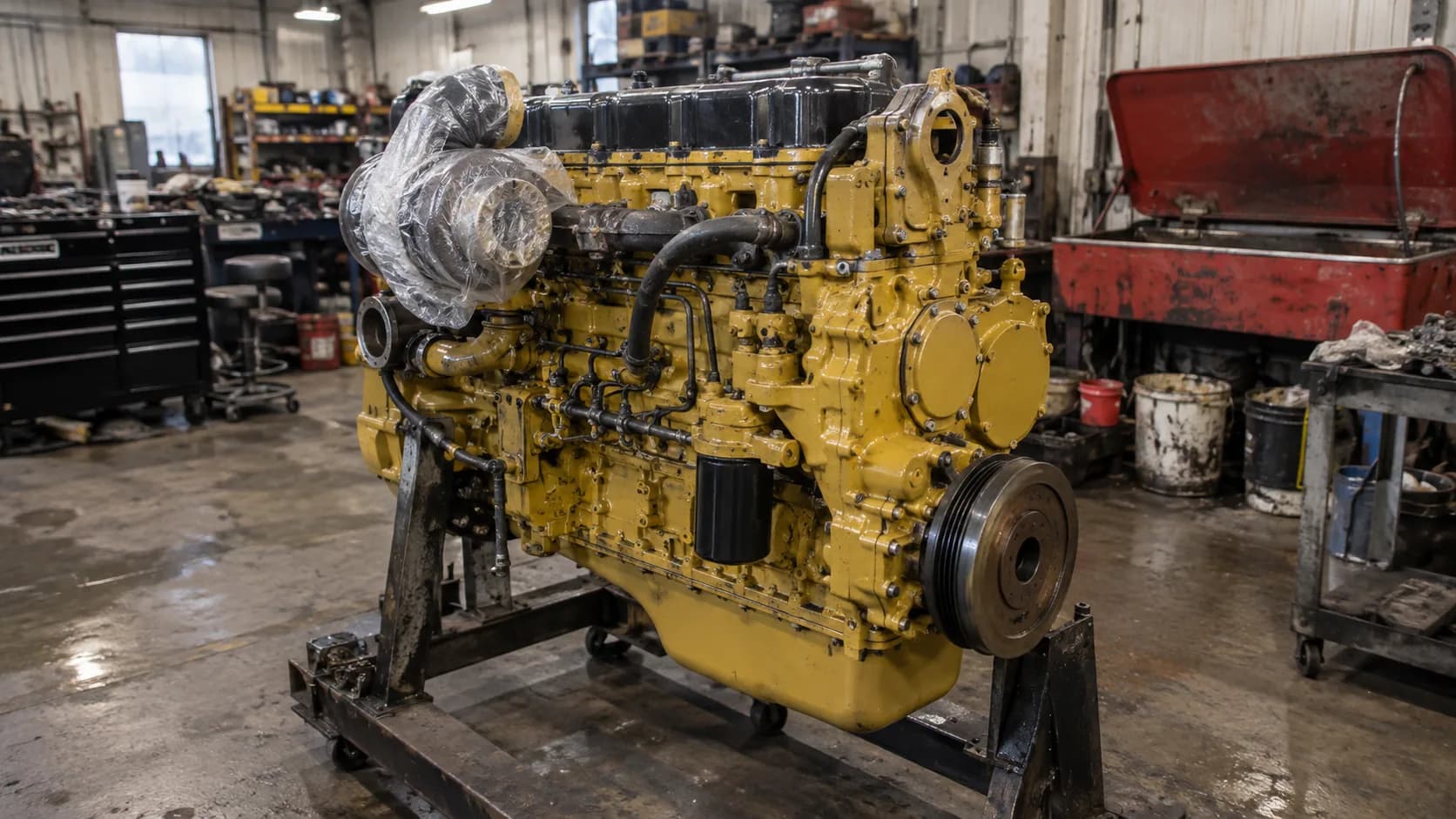
The 3406 was introduced in 1973 as a mechanically injected, 14.6-liter inline six. Parts-supplier histories such as IPD's split the family into four generations: the 3406A (1973-1987, about 310 to 425 horsepower), the 3406B (1987-1993, about 350 to 525), the 3406C (1993-1998) and the 3406E (from 1993). Suppliers disagree on the dates, and on when the 3406E ended: Highway and Heavy Parts says it lasted until 1999, when the C15 replaced it. Treat any single year as approximate. What stays constant is the basic engine: 14.6 liters, a 5.4-inch bore and a 6.5-inch stroke on the 3406E, and a reputation for being rebuilt rather than replaced.
Mechanical vs. Electronic: A, B, C and E
This is the question behind most searches, usually phrased as the difference between a 3406B and a 3406E. The short version is that the early engines are mechanically injected, the C is a bridge, and the E is fully electronic.
The 3406A and 3406B are described as mechanically injected. The 3406C, according to IPD's history, added Caterpillar's Programmable Electronic Engine Control, known as PEEC, on top of mechanical injection, though a 1987 SAE paper shows Caterpillar was already developing PEEC for 3406B truck engines, so the exact year it reached production is murky. The 3406E went fully electronic with electronic unit injectors, and Highway and Heavy Parts calls it the first successful fully electronic motor in the series. IPD lists the 3406E at about 435 to 800 horsepower across its applications. Each step up brought more power and better diagnostics, but it also swapped simple hardware for wiring, sensors and a computer that now have to be healthy.
Trucks That Carried It
The 3406 is tied to nearly every heavy conventional of its era. Period listings show the 3406B in the Peterbilt 359, and Wikipedia lists the 3406A, B, C and E among the engines for the Kenworth W900L. Wikipedia's Peterbilt 379 article lists the 3406 alongside Cat's later C-series engines, and its Freightliner Century Class article lists the 3406E among the options. For many owner-operators of the 1980s and 1990s, "Cat power" in a long-hood simply meant a 3406.
Strengths and Common Problems
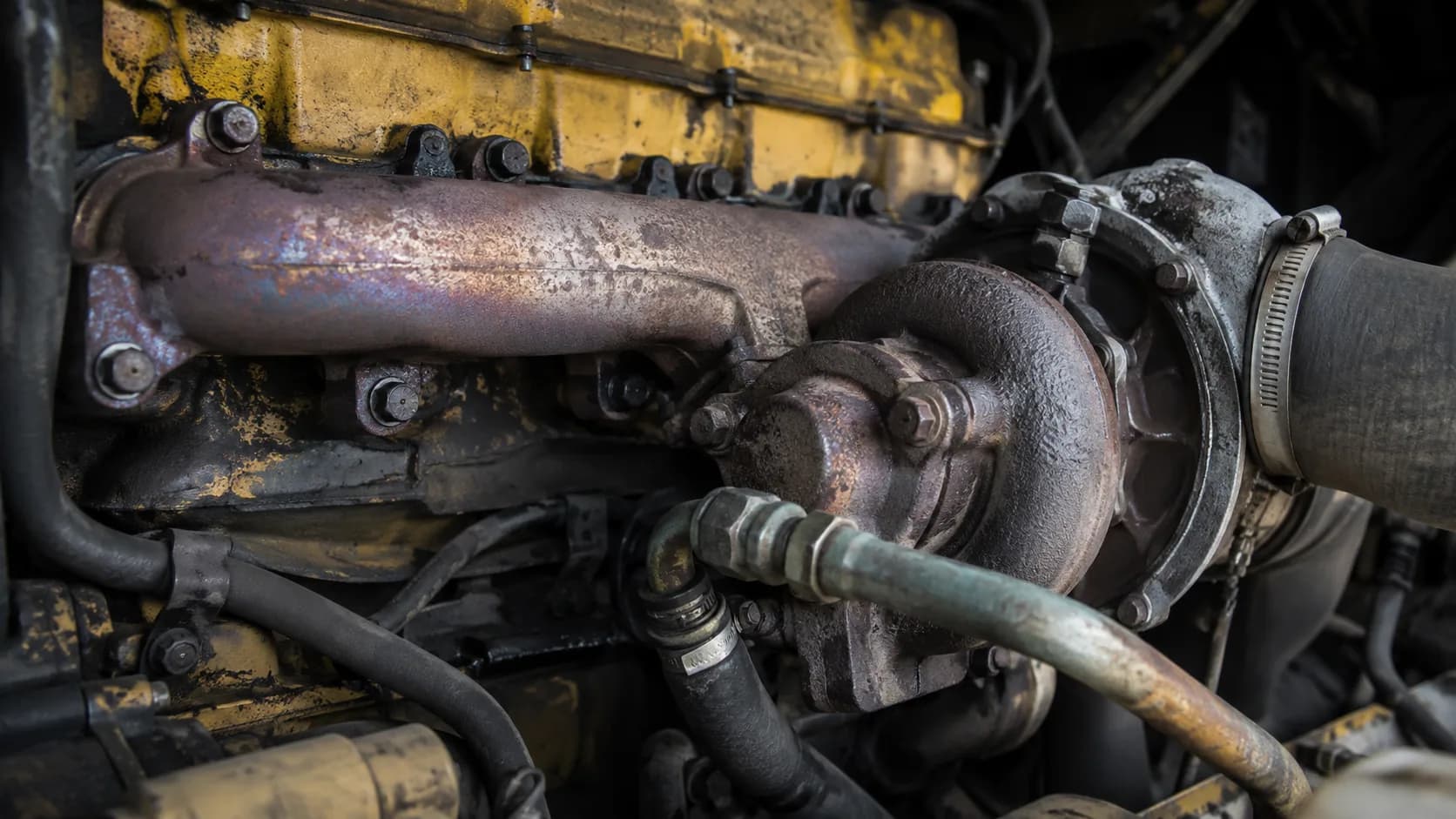
The reputation is durability and rebuildability. Parts-supplier write-ups credit the engine family with long service life and with being straightforward to overhaul, and the mechanical versions in particular are easy for a general diesel shop to understand.
Highway and Heavy Parts calls the 3406E notorious for oil leaks, typically from the rear engine structures and flywheel housing, and says some early 3406Es with the 5EK serial prefix had crankshafts that broke because of bad casting. Electronic versions also depend on a sound wiring harness and ECM. None of this makes the 3406 fragile, but it is a reminder to check the seals, the serial number and the electronics.
Buying a Truck With a 3406
Start by finding out which version you're looking at, since a 3406B and a 3406E want very different things from an owner. A mechanical engine is easier to troubleshoot in a driveway. An electronic engine can be the better daily worker, with more power and smoother manners, but it needs a working computer and harness, so ask for diagnostic results rather than taking a clean engine bay at face value.
Look for fresh oil around the flywheel housing, evidence of coolant loss, smoke on a cold start, and a service history that shows rebuilds, not just oil changes. Ask whether the engine has been rebuilt and by whom. Highway and Heavy Parts says many parts are shared between the 3406E and the later C15, which helps with availability.
The C15 and the Exit
In 1999 Caterpillar replaced the 3406E with the C15, which parts suppliers describe as similar in parts and power. The C15 later got Caterpillar's ACERT technology. A September 2003 trade report says Peterbilt's 379 could be ordered with the ACERT C15, rated from 435 to 550 horsepower. Then the road ended. In 2008 Caterpillar announced it would stop supplying engines to North American on-highway truck makers when the 2010 emissions rules took effect, saying independent engine suppliers faced an increasingly difficult market. Cat kept supplying through 2009 and supporting existing engines afterward. That makes the 3406 and its C15 successors the last chapter of Caterpillar's highway story.
Specs
- Introduced
- 1973 (original 3406)
- Versions
- 3406A, 3406B, 3406C, 3406E (dates overlap; sources vary by about a year)
- Layout
- Inline six-cylinder turbo diesel
- Displacement
- 14.6 L (893 cu in)
- Bore x stroke (3406E)
- 5.4 in x 6.5 in
- 3406A / 3406B output
- About 310-425 hp / about 350-525 hp (IPD)
- Fuel system
- Mechanical (A, B), PEEC-assisted (C), electronic unit injection (E)
- Successor
- Caterpillar C15 (from 1999)
FAQ
- What is the difference between a 3406B and a 3406E?
- The 3406B is a mechanically injected engine, while the 3406E is fully electronic with electronic unit injectors and an engine computer. The E generally makes more power and offers better diagnostics, but it depends on a healthy ECM and wiring.
- What years was the Caterpillar 3406 made?
- The 3406 was introduced in 1973. Parts-supplier histories put the 3406E at about 1993 to 1999, when the C15 replaced it, though sources disagree on the exact dates.
- How much horsepower does a Cat 3406 have?
- It depends on the version. IPD's history lists about 310 to 425 hp for the 3406A and about 350 to 525 hp for the 3406B, and about 435 to 800 hp for the 3406E across its applications.
- What replaced the Caterpillar 3406?
- The Cat C15 replaced the 3406E in 1999. Caterpillar later introduced ACERT technology on the C15 and left the North American on-highway engine market with the 2010 emissions rules.
Know someone who drove one? Share this guide
Get the Look
As an Amazon Associate we earn from qualifying purchases.
- Caterpillar 3406 engine scale model — A desk-size version of the engine this whole guide is about.
- Caterpillar 3406 service manual — Specs and torque figures straight from the shop-manual side.
- Diesel engine rebuild book — Handy background reading before pulling a head off a big six.
Sources
- ipdparts.com — history-of-the-caterpillar-3406-engine
- highwayandheavyparts.com — about-the-caterpillar-3406e
- highwayandheavyparts.com — caterpillar-stopped-making-diesel-truck-engines
- trucknews.com — cat-to-withdraw-from-na-on-highway-engine-market
- truckinginfo.com — cat-c15-engine-available-on-peterbilt-379-379x
- en.wikipedia.org — Freightliner_Century_Class
- en.wikipedia.org — Peterbilt_379
- bulktransporter.com — peterbilt-vehicles-offered-with-cat-acert-engines
- saemobilus.sae.org — caterpillars-3406b-peec-programmable-electronic-engine-control-870058
- en.wikipedia.org — Kenworth_W900