Peterbilt 359: History, Engines, and How to Spot One
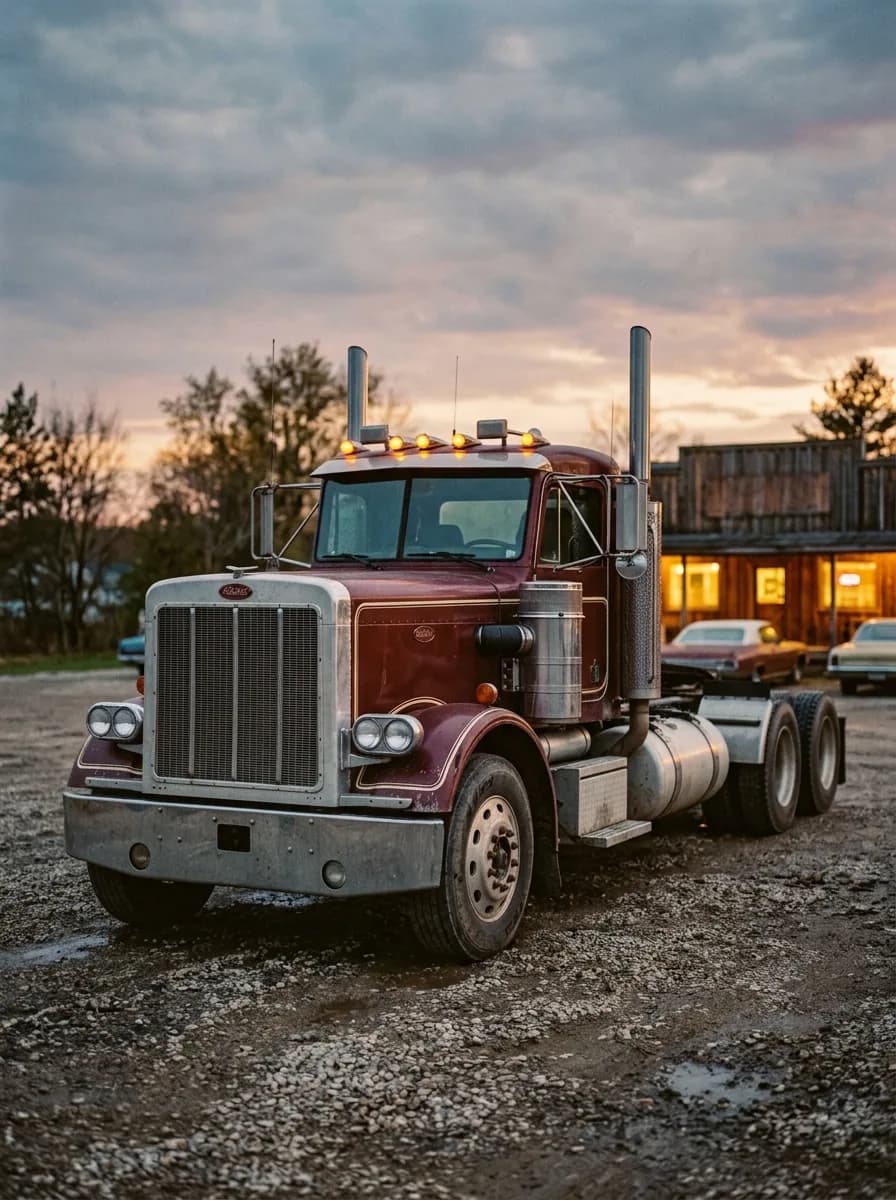
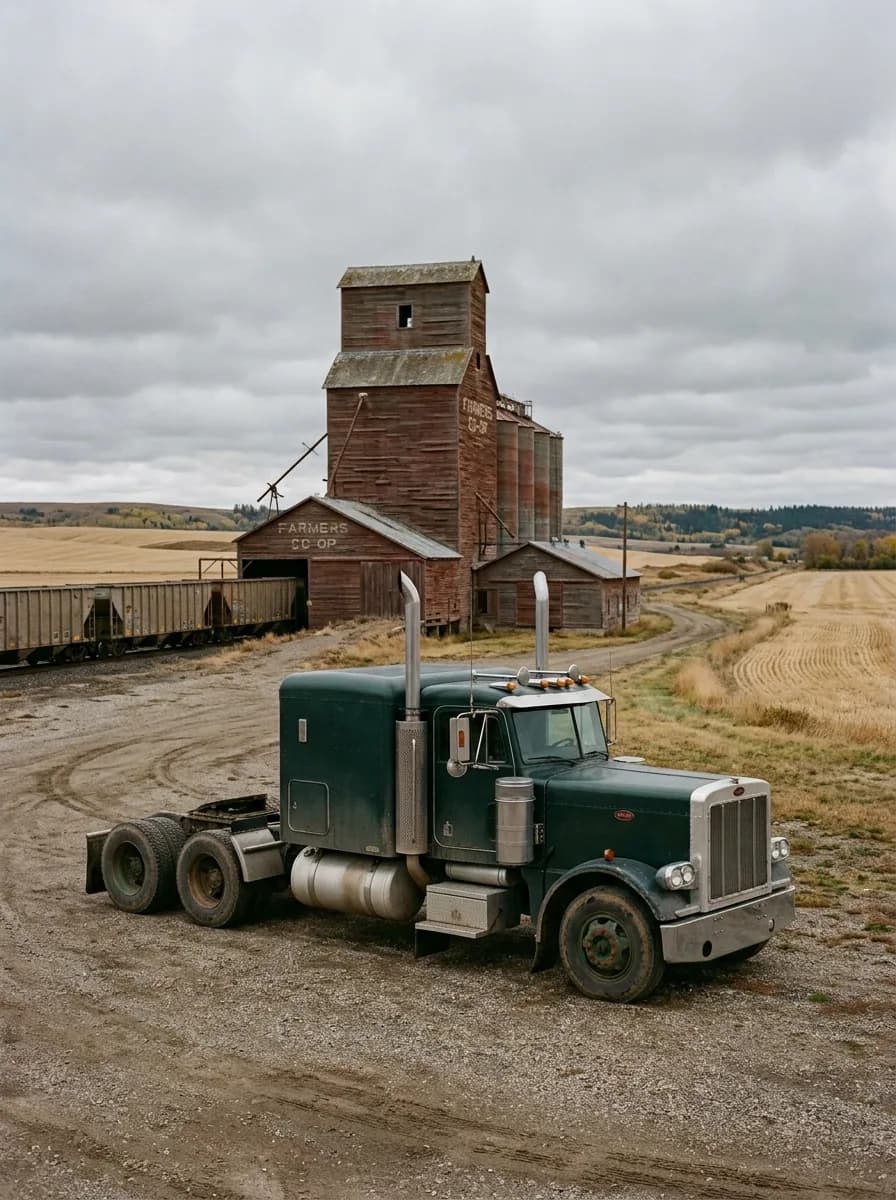
Every trucking town has a spot like the one above: a gravel lot, a lit-up doorway, and a long-hood Peterbilt parked crossways like it owns the place. The render imagines a well-kept 359 catching the last of the evening light, and it's a fair likeness of what the model still looks like at truck stops and swap meets decades after the last one rolled off the line.
A Wider Grille for a Bigger Motor
Peterbilt introduced the 359 in 1967 alongside the tilt-hood Model 358, which Wikipedia lists in production from 1965 to 1976, and the 359 gradually took over from the smaller 351 and 281 models through the first half of the 1970s. West Coast fleets and owner-operators wanted bigger engines and more cooling capacity than the older trucks could handle, so Peterbilt widened the front end and the grille to make room for them. That single change, a nose built around the engine instead of the other way around, is what gave the 359 its stance, and it's a big part of why the model became the shape every "classic big rig" silhouette since has borrowed from.
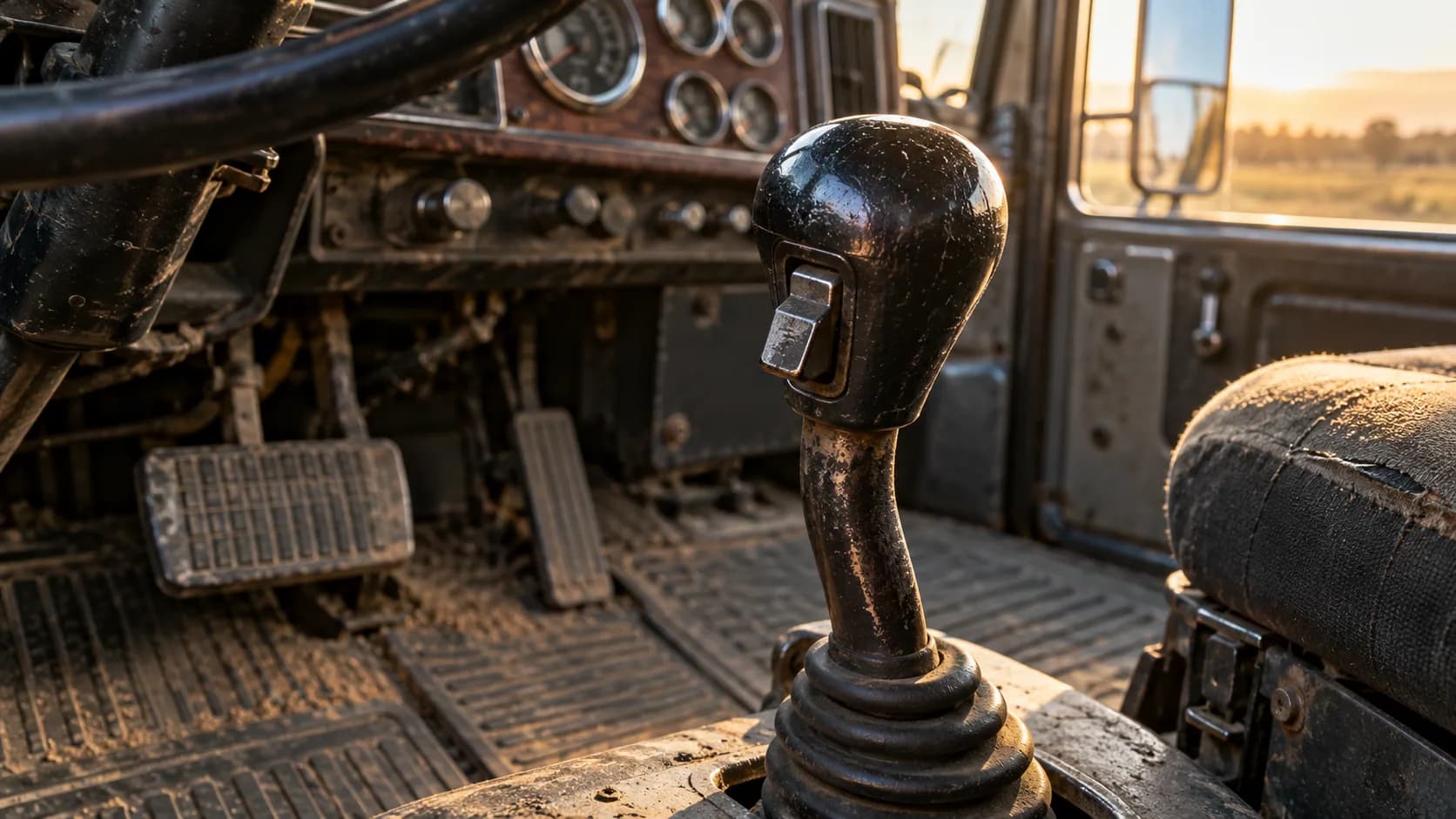
The 359 stayed in production for two decades, through 1987, picking up steady updates along the way. Bulkhead-style doors arrived in 1972, and a redesigned "Corvette dash" landed in the cab in 1977, part of a slow march of creature comforts the earliest trucks didn't have. When Peterbilt finally retired the model in favor of the 379, it sent the last trucks off the line as a numbered "Classic" series. Accounts of exactly how many were built don't agree, but every one of them left the factory as a send-off rather than just another 359.
Engines, Transmissions, and What Made It Run
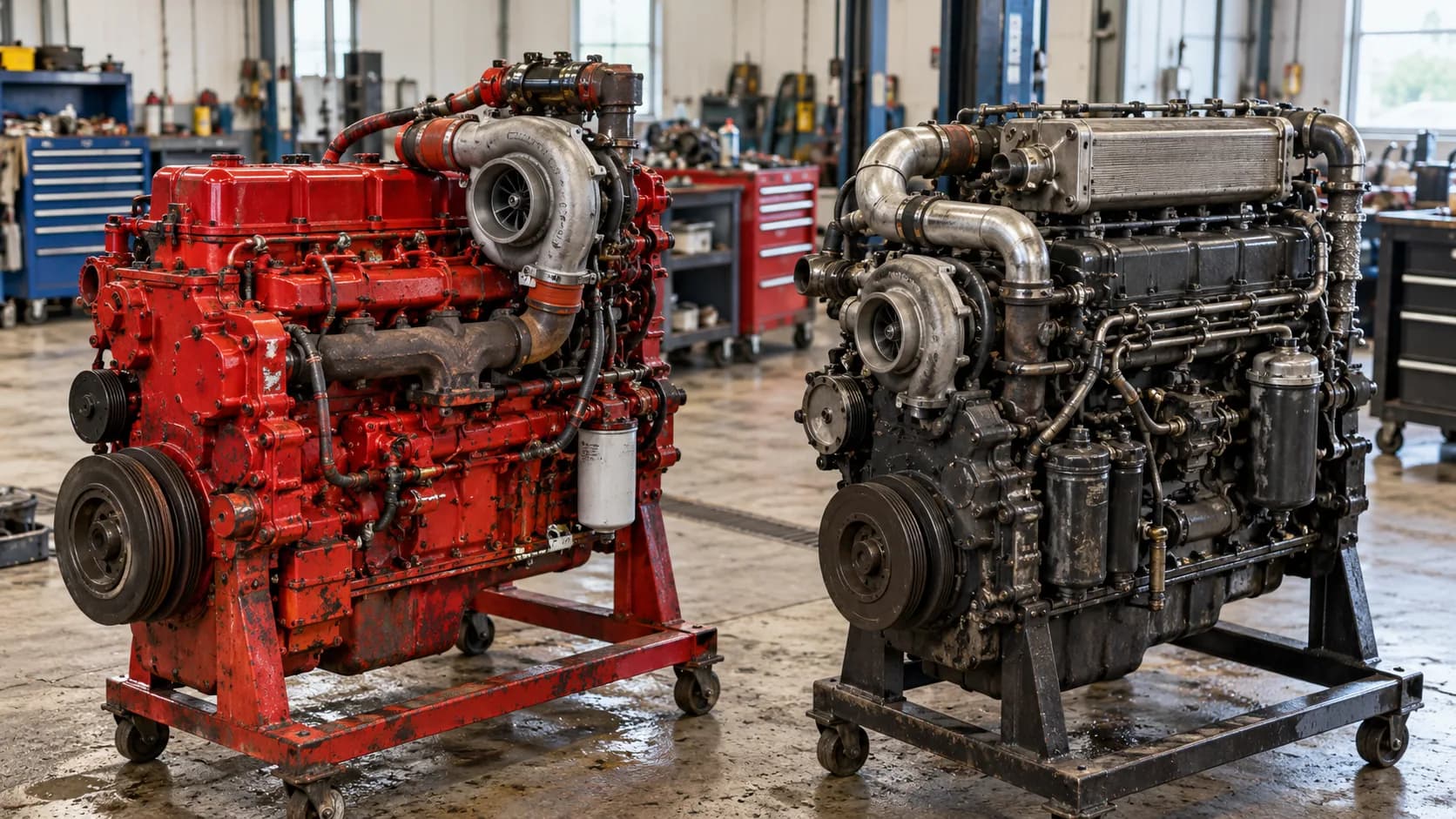
Caterpillar's 3406 was the engine most associated with the 359, with factory output that climbed over the model's run, from around 300 horsepower on the earliest ratings past 400 on later B-series tunes, and the larger 3408 also showing up under the hood on higher-output trucks. A handful of owner-operators went a different direction entirely and dropped in a Detroit Diesel 12V-71, one of the biggest V-12 engines built for highway trucks at the time, for a very different sound and torque curve than the Cat-powered trucks most people picture. Transmissions leaned on Spicer's SST-series and Eaton-Fuller's Roadranger multi-speed manuals, both built to be rebuilt in a truck stop parking lot if it came to that, which for a lot of owner-operators it eventually did.
The chassis underneath was just as simple by design: tandem rear axles, an air-leaf suspension setup, and a wheelbase commonly built around 250 inches on highway tractors, all sized to carry a gross vehicle weight around 50,000 pounds without complaint. None of it was flashy. It was built to be fixed on the side of the road, which is exactly why so many 359s are still running.
How to Spot a Real 359
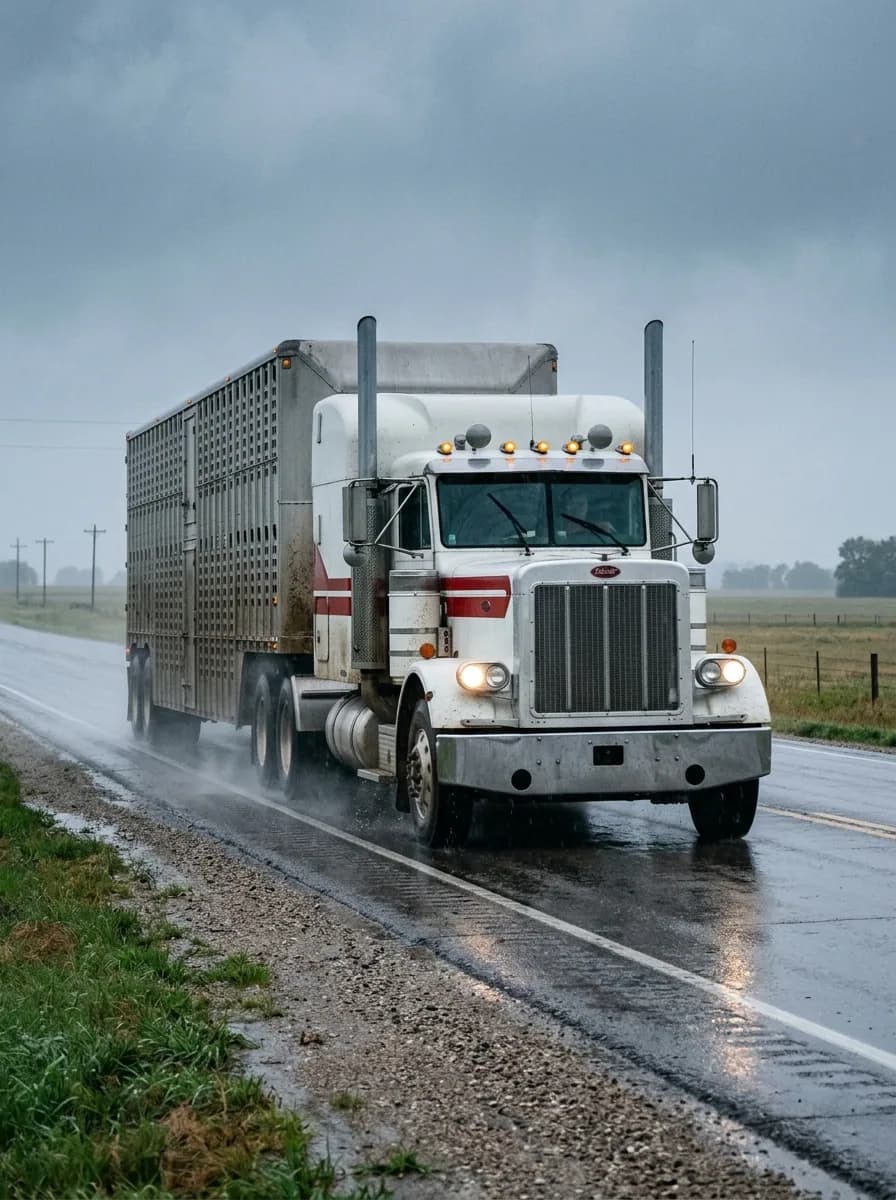
Fender-mounted turn signals are the fastest tell, and lamp shape is the less reliable one. Early 359s wore round headlights, but rectangular quad headlamps were available by about 1980, so a rectangular lamp alone doesn't rule a 359 out. Peterbilt didn't move the signals up into the headlamp housing until the 379 replaced it, so any Peterbilt long-hood with the blinker still sitting on the fender below the light is a 359 or older. The windshield wipers are the other giveaway: the 379 got a wider windshield with wipers mounted horizontally to match it, a layout the narrower 359 windshield never had. Add a hood that's narrower than the 379's, a tilt front end for engine access, and the tall chrome stacks most owners ran, and the silhouette is hard to mistake for anything else once you know what you're looking at.
Finding and Owning One Today
Clean 359s still turn up at truck shows, farm auctions, and classic-rig dealers, usually with a Cat 3406 or 3408 under the hood and a logbook of owners who kept them running well past their factory life. Parts support is better than you'd expect for a design this old, mostly because the drivetrain components were shared with other Peterbilt and Kenworth trucks of the same era, and because the aftermarket for classic big-rig restoration has grown right alongside the truck-show circuit that keeps these trucks in the public eye. Buyers looking for one tend to start at swap meets and dedicated vintage-truck classifieds rather than general equipment listings, since the good ones rarely sit on a lot for long.
The Legacy
The 359 is the truck most people picture when they hear "classic Peterbilt": long hood, wide grille, chrome stacks, and a cab shape that hasn't really gone out of style. It bridges the boxier conventional trucks of the 1960s and the more comfort-focused rigs that came after it, and it's still the truck plenty of custom builders reach for when they want a big rig that looks like it means business.
Specs
- Production
- 1967-1987
- Replaced
- Peterbilt 351 and 281 (gradually, through the mid-1970s); built alongside the tilt-hood 358
- Successor
- Peterbilt 379
- Common engines
- Caterpillar 3406, 3408; some owner-operator Detroit Diesel 12V-71 swaps
- Common transmissions
- Spicer SST-series; Eaton-Fuller Roadranger multi-speed manuals
- Headlights
- Round on early trucks, rectangular quad lamps available by about 1980; fender-mounted turn signals
- Typical wheelbase
- About 250 in. on highway tractors
- Final run
- Numbered "359 Classic" send-off series (exact unit count disputed across sources)
FAQ
- What years was the Peterbilt 359 made?
- The 359 was built from 1967 to 1987, when it was replaced by the Peterbilt 379.
- What engines came in a Peterbilt 359?
- Caterpillar's 3406 and 3408 were the most common factory engine options, with some owner-operators swapping in a Detroit Diesel 12V-71.
- How can you tell a Peterbilt 359 from a 379?
- The 359 has fender-mounted turn signals and a narrower windshield, while the 379 has rectangular headlights with the signals built into the housing and a wider windshield with matched, horizontally mounted wipers. Early 359s had round headlights, but rectangular ones were available by about 1980.
- Is the Peterbilt 359 still popular with collectors?
- Yes. It's widely considered the definitive classic Peterbilt and remains a fixture at truck shows and in custom-build circles.
Know someone who drove one? Share this guide
Get the Look
As an Amazon Associate we earn from qualifying purchases.
- Peterbilt 359 1:25 scale die-cast/model truck — The classic long-hood shape for a shelf, built or pre-assembled.
- Classic American big rig history book — Background reading on the era that produced trucks like the 359.
- CB radio for trucks — The classic cab accessory no big rig look is complete without.
Sources
- en.wikipedia.org — Peterbilt_359
- en.wikipedia.org — Peterbilt_379
- 4statetrucks.com — history-of-peterbilt-trucks
- heavytruckdata.com — peterbilt-359
- curbsideclassic.com — the-legendary-detroit-diesel-v12-12v-71-the-most-powerful-engine-built-for-highway-trucks
- daytonparts.com — air-leafr-single-tandem-axle-rear-air-suspension