Chevrolet 3100 (1947-1955): History, Engines and Specs
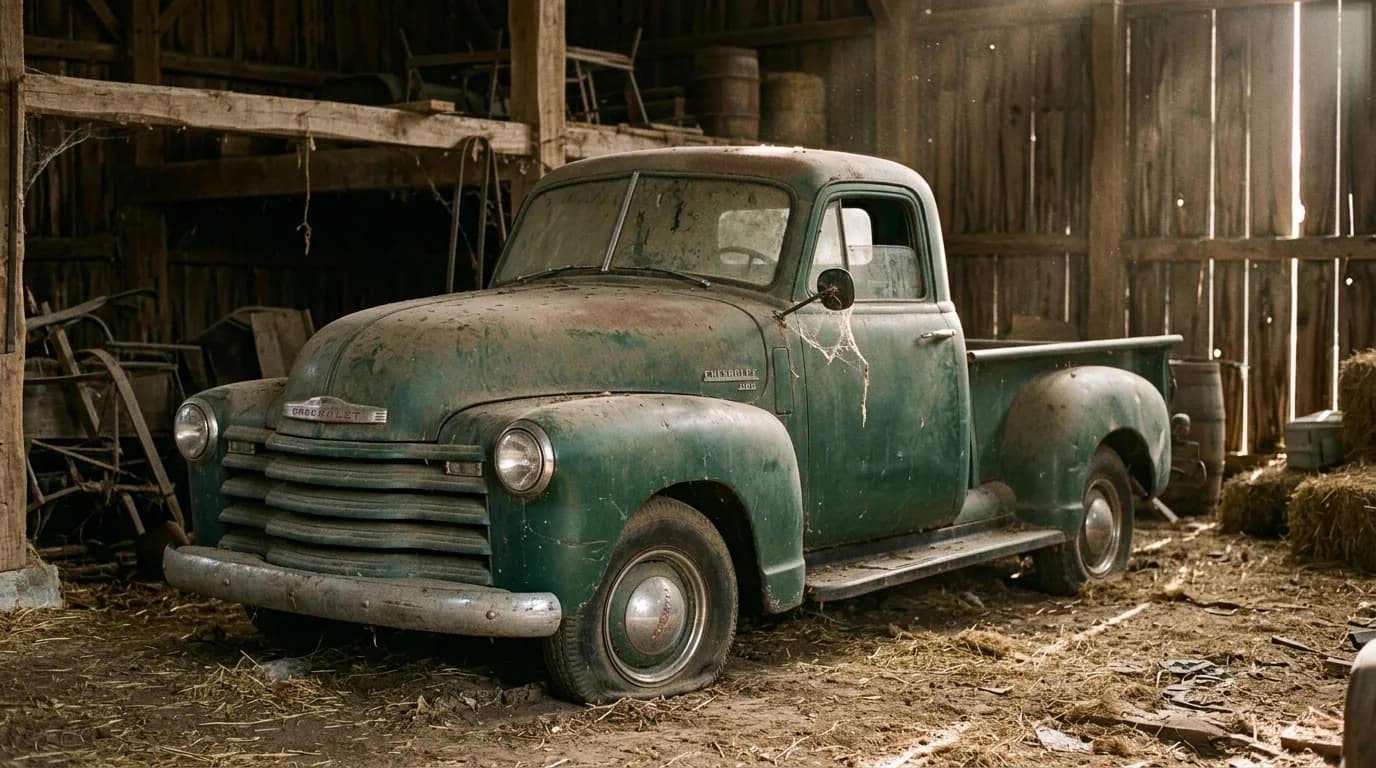
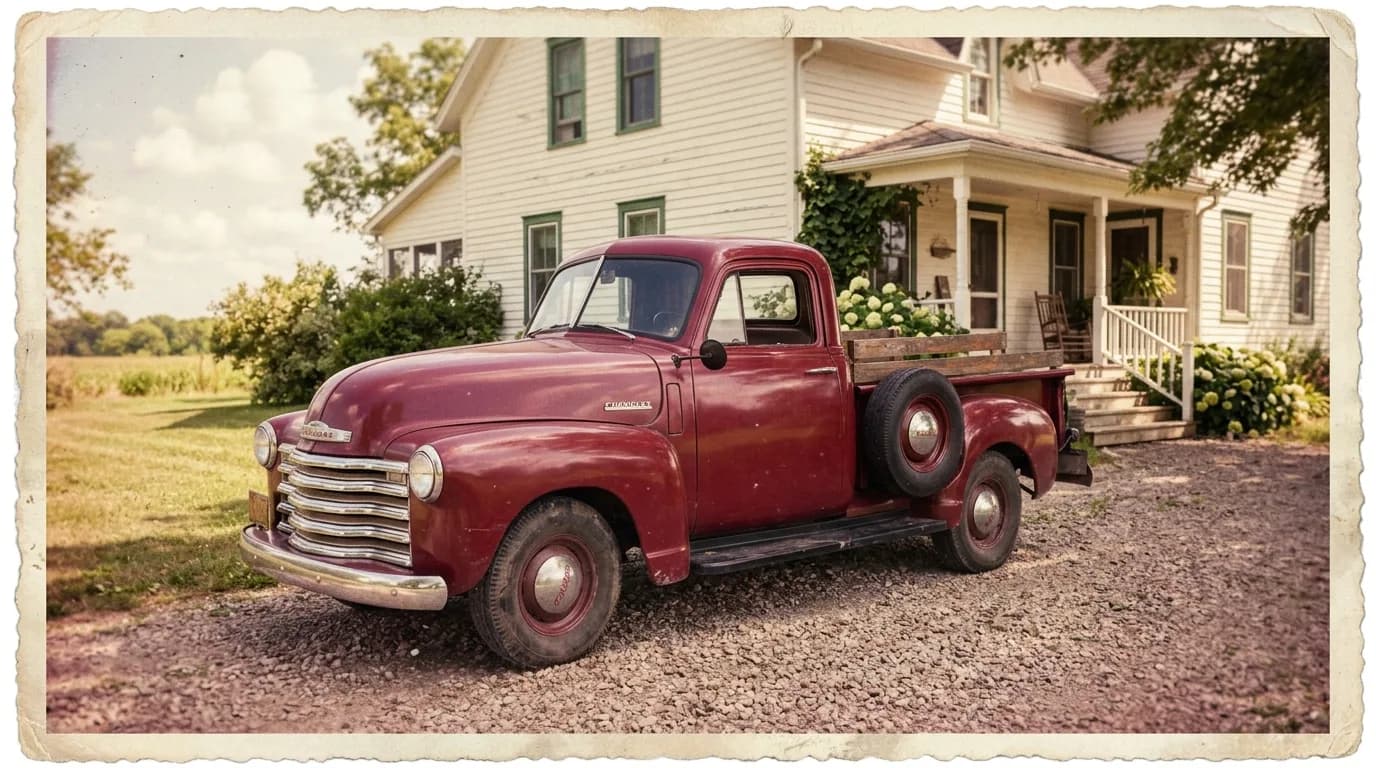
Every so often, a Chevrolet 3100 half-ton still turns up in an old outbuilding somewhere in the Midwest, sitting a lot longer than anyone planned. The AI render above has one of those finds in mind, and it's a fair likeness of the truck General Motors leaned on to rebuild its civilian lineup after World War II: a rounded, single-piece front fender line, a low horizontal grille, and a cab shape that looks friendly parked next to a modern truck but was considered tough and modern in its own time.
A Post-War Redesign Called Advance Design
Chevrolet introduced the Advance Design trucks on June 28, 1947, the company's first full truck redesign after the war and a clean break from the carryover pre-war bodies most manufacturers were still building. The line covered everything from the half-ton 3100 up through heavier one-ton and cab-over models, and it sold well enough that Chevrolet trucks led the U.S. sales charts for most of the run. Advance Design production continued for nearly eight years, finally giving way to the redesigned Task Force series on March 25, 1955. Because the changeover happened mid-model-year, Chevrolet folks refer to the last few months of Advance Design trucks as the 1955 "First Series," distinct from the all-new 1955 Second Series that introduced the Task Force's wraparound windshield and egg-crate grille.
Five Bars, Then a Bull Nose
For most of its run, from 1947 through 1953, the 3100 wore a grille built from five horizontal chrome bars set into a rounded opening, paired with a windshield split down the middle by a narrow vertical bar. Chevrolet revised both for the 1954 model year: the grille switched to a heavier crossbar arrangement enthusiasts nicknamed the "bull nose," and the split windshield gave way to a curved one-piece pane with no center divider. The dashboard and steering wheel were redesigned at the same time. So a truck with the five-bar grille and split glass, like the ones pictured here, dates to the 1947-1953 window, while a bull-nose grille with a single curved windshield marks a 1954 or early-1955 First Series truck.
Stovebolt Sixes Under the Hood
Every Advance Design 3100 left the factory with one of Chevrolet's overhead-valve inline sixes, nicknamed "Stovebolt" for the slotted fasteners on the valve cover. From 1947 through 1953, that meant the 216-cubic-inch six, rated at roughly 90 horsepower for most of the run before a small bump to about 92 horsepower in the early 1950s. For 1954, Chevrolet swapped in the larger 235-cubic-inch six as the truck engine, a jump that brought meaningfully more torque for hauling and towing. A three-speed manual was standard across the run, with a four-speed available, and Chevrolet even offered four-speed Hydra-Matic automatic on late Advance Design trucks for 1954 and 1955, an unusual option for a work truck of that era.
Small Cab Changes Worth Knowing
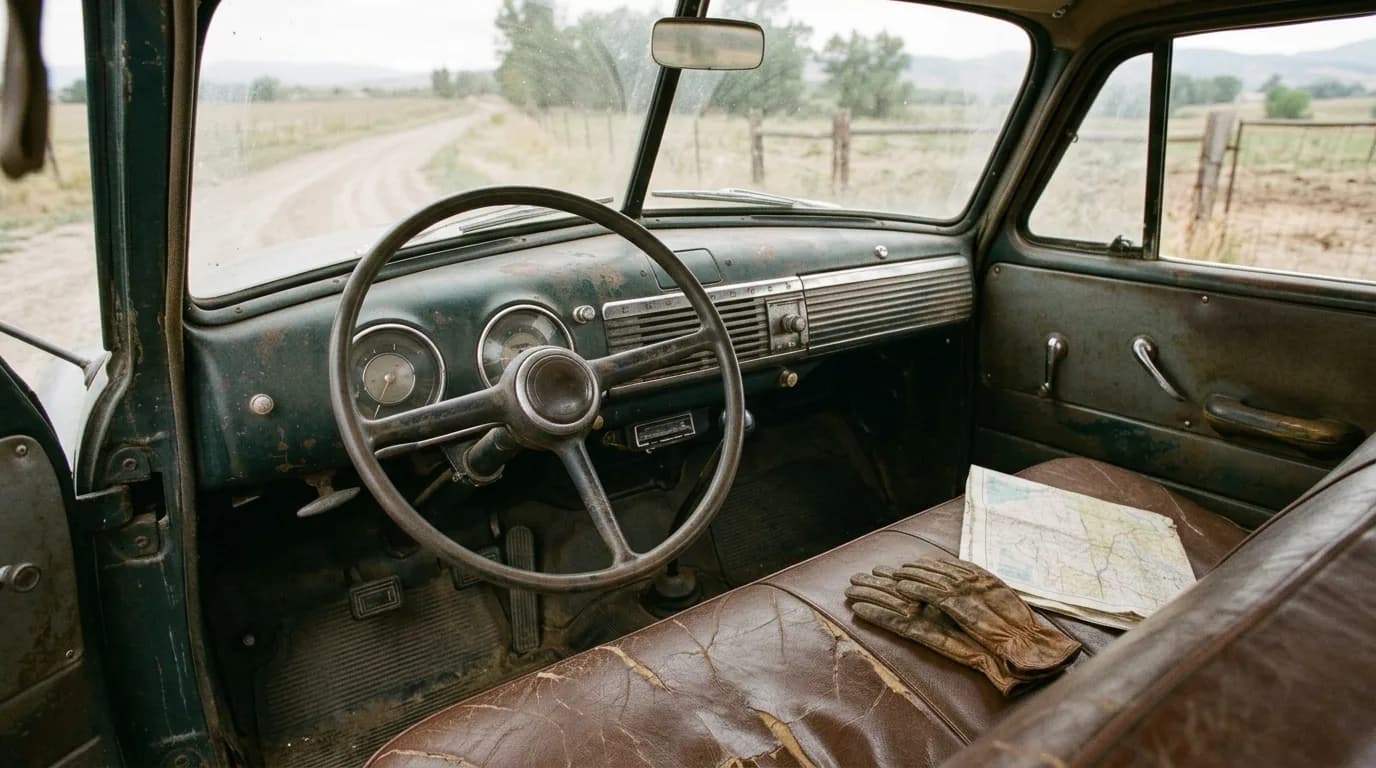
The 3100's cab evolved in smaller steps between the big 1954 redesign. In 1948, the manual shifter moved from the floor to the steering column. Door vent windows arrived in 1951 for better airflow, and in 1952 the door handles switched to push-button units and the dashboard picked up a body-color finish instead of chrome trim. None of these changes are as visible from across a parking lot as the grille or windshield, but they're useful details for anyone trying to date a truck more precisely once they're standing next to it.
Why the 3100 Still Turns Heads
Part of the Advance Design's staying power comes from how differently it read compared to the boxy pre-war trucks it replaced: rounded fenders, a wider cab, and a hood line low enough that drivers could actually see the road ahead of the bumper. It also arrived at the right moment, selling into a country full of farms and small businesses that needed a simple, rugged half-ton hauler, and Chevrolet built enough of them that survivors are still common at truck shows and swap meets today. That combination of good looks and mechanical simplicity, a Stovebolt six and a manual gearbox that any home mechanic of the era could work on, is why the 3100 remains one of the most recognizable classic pickups on the road, whether it's a restored driver or, like the one imagined above, still waiting to be pulled out of a barn.
Specs
- Production
- June 28, 1947 - March 25, 1955 (Advance Design, including the 1955 "First Series")
- Model designation
- 3100 (half-ton); 3600 (three-quarter-ton) and 3800 (one-ton) also offered
- Grille, 1947-1953
- Five horizontal chrome bars, paired with a split two-piece windshield
- Grille, 1954 onward
- Heavier crossbar "bull nose" grille with a curved one-piece windshield
- Engine, 1947-1953
- 216 cu in "Stovebolt" inline six, about 90-92 hp
- Engine, 1954-1955
- 235 cu in inline six
- Transmission
- 3-speed manual standard; 4-speed manual or 4-speed Hydra-Matic automatic (1954-1955) optional
- Successor
- Task Force series, introduced March 1955 with an all-new wraparound-windshield cab
Get the Look
As an Amazon Associate we earn from qualifying purchases.
A shelf-size version of the rounded post-war shape.
Check price at AmazonBackground reading on the Advance Design era and what followed it.
Check price at AmazonFor anyone keeping a 216 or 235 running the old-fashioned way.
Check price at AmazonFor keeping a five-bar or bull-nose grille show-lot bright.
Check price at AmazonFAQ
- What years was the Chevrolet 3100 Advance Design made?
- From June 28, 1947, through March 25, 1955, when the redesigned Task Force series took over. The final months of Advance Design production, into 1955, are known as the 1955 "First Series."
- How can you tell an early Chevrolet 3100 from a later one?
- The grille and windshield are the fastest markers. 1947-1953 trucks have a five-bar horizontal grille and a split, two-piece windshield. 1954 and early-1955 First Series trucks switched to a heavier "bull nose" crossbar grille and a curved one-piece windshield.
- What engine did the Chevrolet 3100 come with?
- A 216-cubic-inch Stovebolt inline six from 1947 through 1953, producing roughly 90 to 92 horsepower. Chevrolet switched to the larger 235-cubic-inch six for the 1954 and 1955 model years.
- What replaced the Advance Design truck?
- The Chevrolet Task Force series, introduced in March 1955 with an all-new cab featuring a wraparound windshield and an egg-crate grille.