Ford F-100 vs Chevy C10: Which Classic Half-Ton to Buy
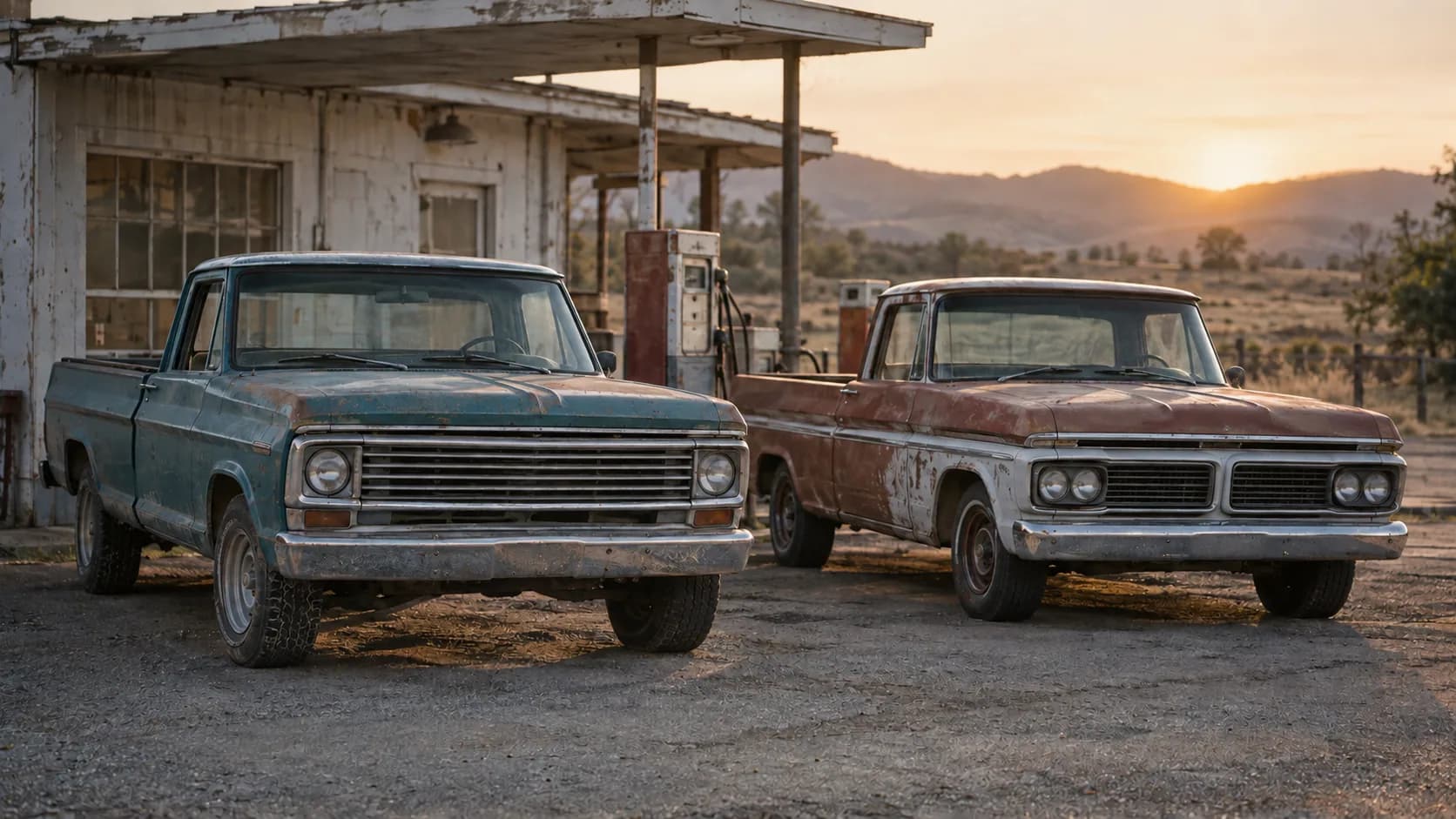
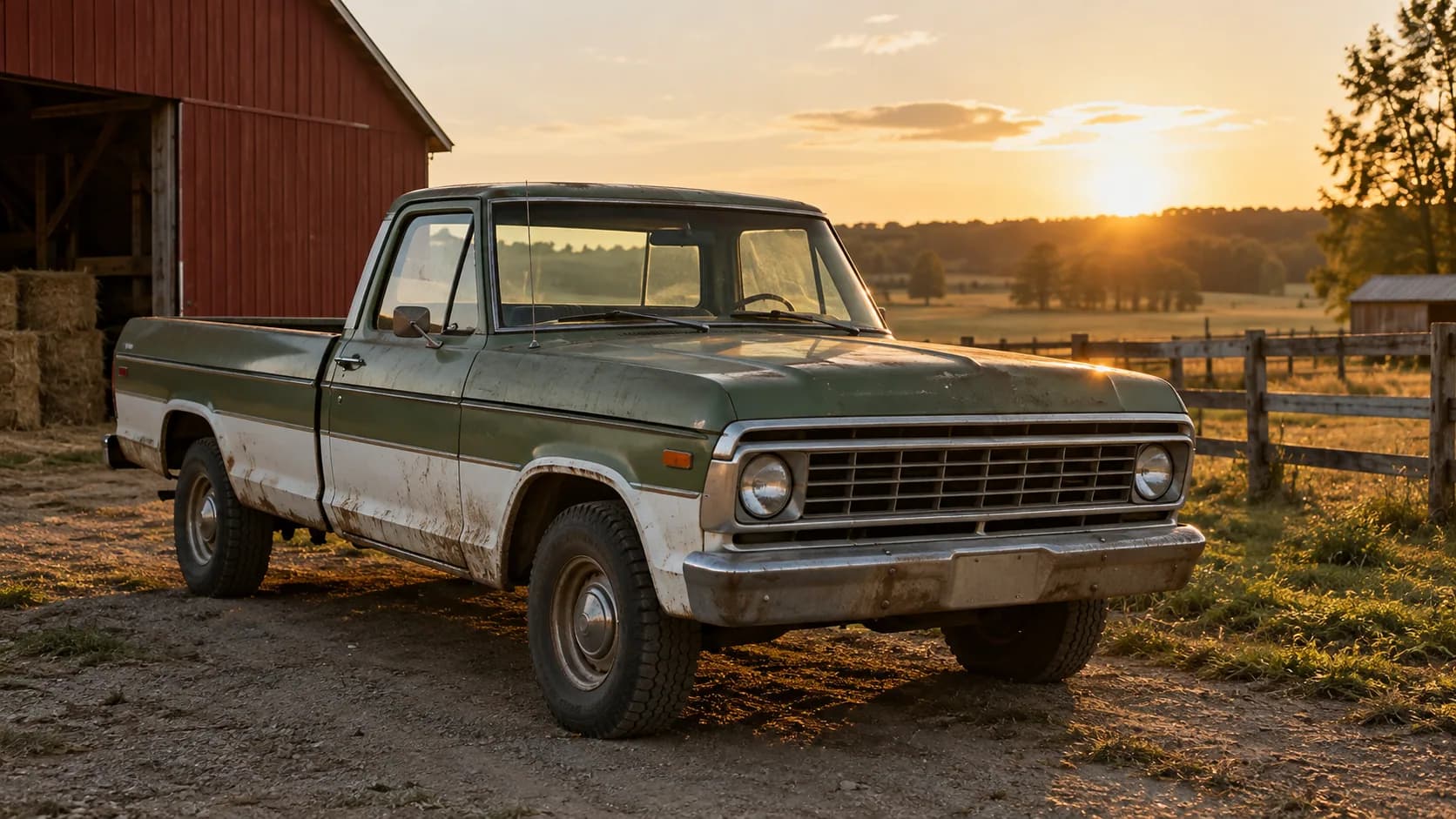
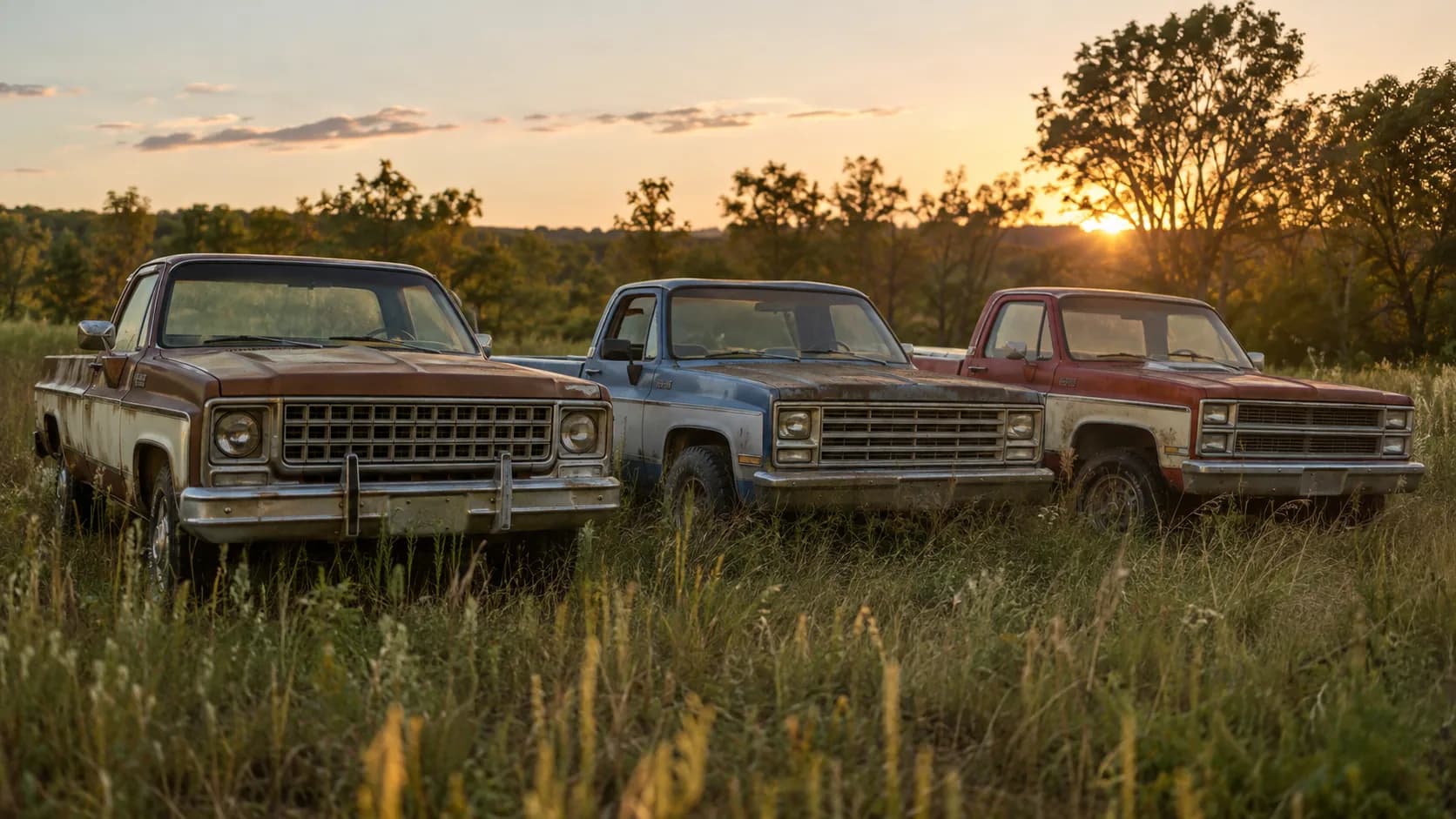
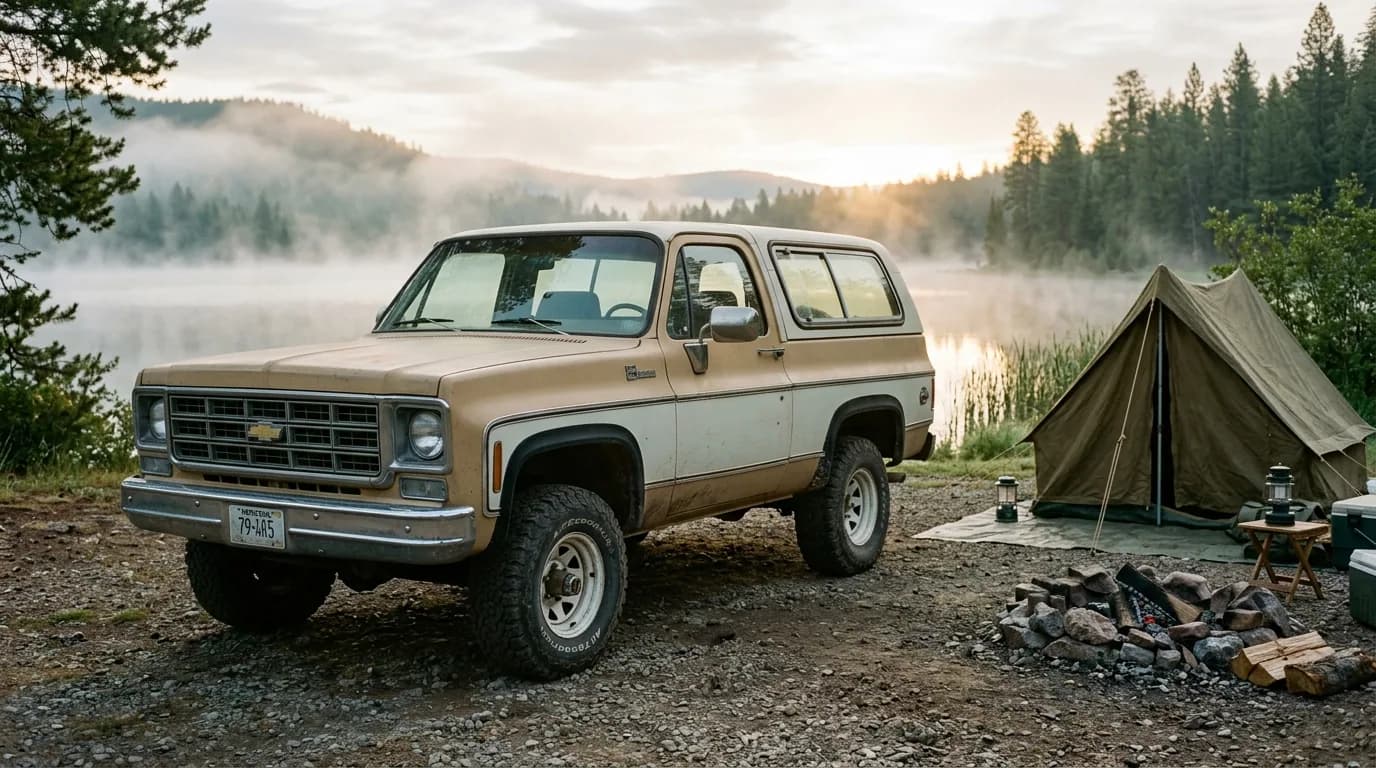
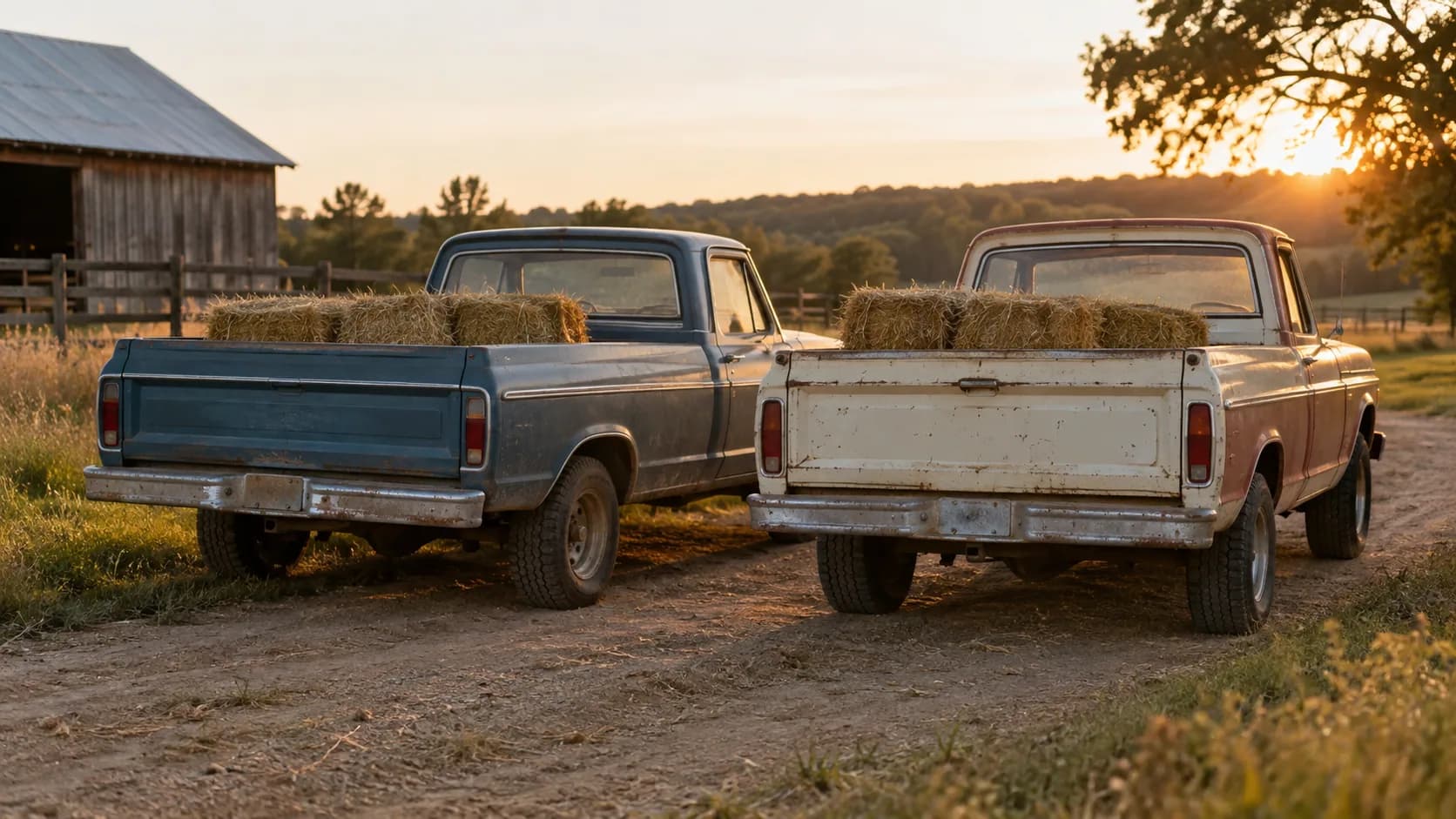
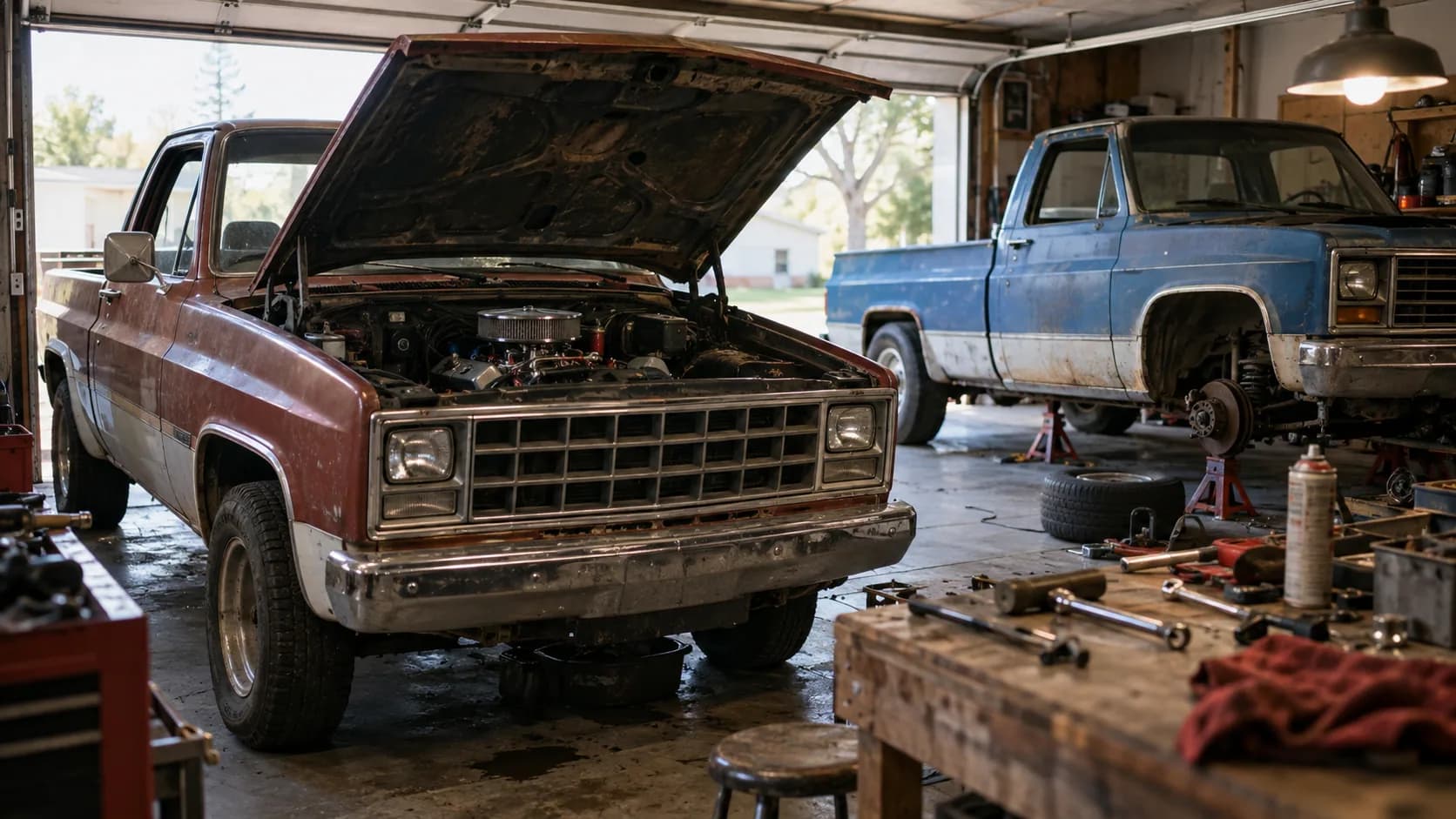
Walk into any classic truck show in America and the argument starts within minutes: Ford or Chevy, F-100 or C10. The renders above imagine that old rivalry at a weathered gas station, a garage bay and a farm lane, and they are AI images, not photos of real trucks. The trucks behind them are real, and so is the choice a buyer faces today. This guide compares the 1967 to 1972 Chevrolet C10 with the two Ford F-100 generations that ran from 1967 to 1979. For the Chevy alone, see our 1967-1972 C10 guide.
The Generations in Short
Chevrolet built its second-generation C/K trucks for the 1967 through 1972 model years and marketed them as the "Action Line." Ford's fifth-generation F-Series covered the same 1967 to 1972 model years, and enthusiasts call it the "Bumpside" for the ridge along its flanks. The sixth generation, often called the "Dentside," arrived for the 1973 model year and ran through 1979.
That means the fair fight is a C10 against a 1967-72 F-100, while the 1973-79 Ford is the truck a C10 buyer often ends up cross-shopping on price. Sixth-generation Fords also brought changes the C10 never saw: the SuperCab arrived for 1974, the F-150 was introduced for 1975, and Wikipedia notes that in 1977 the F-Series passed the Chevrolet C/K as the best-selling truck in the U.S.
Engines: Small-Blocks vs FE Power
Chevy's 1967 lineup included the 250 and 292 inline sixes and the 283 and 327 V8s. For 1968 the 283 grew into the 307, and a 396 V8 became an option, the first large-block V8 in a light-duty GM truck. The 327 grew to 350 cubic inches for 1969, and for 1971 the 396 was enlarged to 402 cubic inches and marketed as a 400. The small-block Chevy is the reason so many C10s get swapped and hot-rodded: parts for it are everywhere.
Ford's 1967 F-Series offered 170, 240 and 300 cubic-inch sixes and a 352 FE V8. For 1968 the 352 gave way to the 360 and 390 FE V8s, and the 302 Windsor joined the list for 1969. The 1973-79 trucks kept the 300 six, the 302, 360 and 390, and added the 460 on two-wheel-drive pickups, with the 351M and 400 arriving for 1977. Ford's 300 six has a loyal following of its own as a durable work engine.
Suspension: Twin I-Beam vs Coil Springs
This is the biggest mechanical difference. Ford introduced Twin I-Beam front suspension on its light trucks in 1965. Two offset, overlapping beam axles each carry a coil spring, with radius arms locating them. Ford sold it as a smoother ride with big-truck toughness. The trade-off is that camber changes as the wheels move, so worn bushings or a changed ride height can mean uneven tire wear and a tricky alignment. In the rear, the F-100 used leaf springs.
Chevrolet went another way. Its half-ton trucks used independent coil-spring front suspension, and the 1967-72 Chevy half- and three-quarter-ton trucks had a live rear axle on two coil-sprung trailing arms as standard, with leaf springs optional. GMC did the opposite and made leaf springs standard. The coil-spring rear is a big part of why the C10 rides like a car and why it became the favorite platform for lowered street trucks. Front disc brakes became standard on GM light-duty trucks for 1971.
Beds, Cabs and How to Tell Them Apart
Both brands offered a smooth-sided bed and a fendered step bed. Chevy called them Fleetside and Stepside, while GMC used Wideside and Fenderside. Ford's versions were the Styleside and Flareside, offered in 6.5- and 8-foot lengths on the F-100. Chevy also built the Longhorn, an 8.5-foot Fleetside bed on a 133-inch wheelbase.
From the front, the C10's low, wide grille changed often, and 1971-72 trucks got an eggcrate grille with the bowtie emblem back in it. Ford's Bumpside grilles were revised for 1969 and again for 1970 with wraparound turn signals. On a 1973-79 Ford, look for the 1978 single-piece grille and the rectangular headlamps that every 1979 model adopted.
Values and Parts Availability
The 1967-72 C10 is the more expensive truck to buy. A 2016 article in The Drive called it the most coveted of the C10 generations, listing top Barrett-Jackson sales of roughly $50,000 to $55,000 (charity sales went higher) and noting that many more trucks sold for around $30,000. The Ford is catching up. Ford Authority, reporting on Hagerty's Q1 2023 price guide, said 1967-72 F-Series values gained 37 percent in that quarter and that the trucks were gaining ground on the Chevy C/K, which has historically pulled bigger numbers. Treat all of these as snapshots and check current results before you make an offer.
Parts are not a problem for either brand. Restoration suppliers sell reproduction sheet metal, bumpers and fuel tank kits for the C10, and door skins and leaf springs for the 1973-79 F-100. The C10 has the deeper aftermarket for lowering kits and bolt-on suspension, and its small-block makes engine work cheap. The Ford asks a bit more patience, but owners on Ford truck forums report getting body mounts, cab mounts and brake parts without trouble.
Which One Should You Buy?
Buy the C10 if you want a street truck. The coil-spring rear, small-block V8 and huge aftermarket make it the easiest classic pickup to lower, swap and drive every day, and resale is strong. Expect to pay for it.
Buy the F-100 if you want more truck for the money, or if you plan to work it. The Twin I-Beam front end and leaf-spring rear handle a load, the 300 six and FE V8s are durable, and the 1973-79 trucks add the SuperCab extended cab, something Chevy's half-tons of that era never offered. Whichever badge you choose, buy the most solid, rust-free body you can afford, because rust repair costs more than any engine swap.
Specs
- Chevy C10 (2nd gen) years
- 1967-1972 ("Action Line")
- Ford F-100 years
- 1967-1972 (5th gen) and 1973-1979 (6th gen)
- C10 front / rear suspension
- Independent coil front; coil-sprung trailing arms rear (leaf optional)
- F-100 front / rear suspension
- Twin I-Beam with coil springs (from 1965); leaf springs rear
- C10 V8s
- 283, 307, 327, 350, 396, 402 ("400") depending on year
- F-100 V8s
- 352, 360, 390, 302; plus 460, 351M and 400 in 1973-79
- Bed styles
- Chevy Fleetside/Stepside; Ford Styleside/Flareside
FAQ
- What is the difference between a Chevy C10 and a Ford F-100?
- The biggest mechanical difference is suspension: 1967-72 C10s used coil springs front and, in standard form, at the rear, while F-100s used Ford's Twin I-Beam front end with leaf springs in the rear. Engines differ too, with Chevy small-blocks and the 396 against Ford's sixes, FE V8s and the 302.
- What years is the most popular Chevy C10?
- The second-generation 1967-1972 C10 is widely considered the most sought-after C10 generation.
- Is a Ford F-100 cheaper than a Chevy C10?
- Historically, yes. Ford Authority, citing Hagerty's 2023 data, said 1967-72 F-Series values were rising fast and gaining on the Chevy C/K, which has traditionally sold for more.
- What years did Ford use Twin I-Beam suspension?
- Ford introduced Twin I-Beam on its two-wheel-drive light trucks in 1965, so every 2WD F-100 from 1967 to 1979 has it.
Know someone who drove one? Share this guide
Get the Look
As an Amazon Associate we earn from qualifying purchases.
- 1972 Chevy C10 diecast model truck — The Action Line Chevy in 1:24 scale.
- Ford F-100 diecast model truck — Park it next to the C10 on the shelf.
- Classic pickup truck history book — Background on both brands' half-tons.
Sources
- en.wikipedia.org — K_(second_generation)
- en.wikipedia.org — Ford_F-Series_(fifth_generation)
- en.wikipedia.org — Ford_F-Series_(sixth_generation)
- macsmotorcitygarage.com — how-it-works-ford-twin-i-beam-suspension
- streettrucksmag.com — history-of-the-bumpside
- thedrive.com — second-generation-c-10-truck-values-are-on-the-rise
- fordauthority.com — 1967-1972-ford-f-series-values-have-skyrocketed
- generalspringkc.com — 1973-1979-ford-f100-f150-leaf-springs
- cjponyparts.com — 8_1001_4976
- ford-trucks.com — 1644074-lmc