Ford Dentside 1973-1979: F-100, F-150 and F-250 History
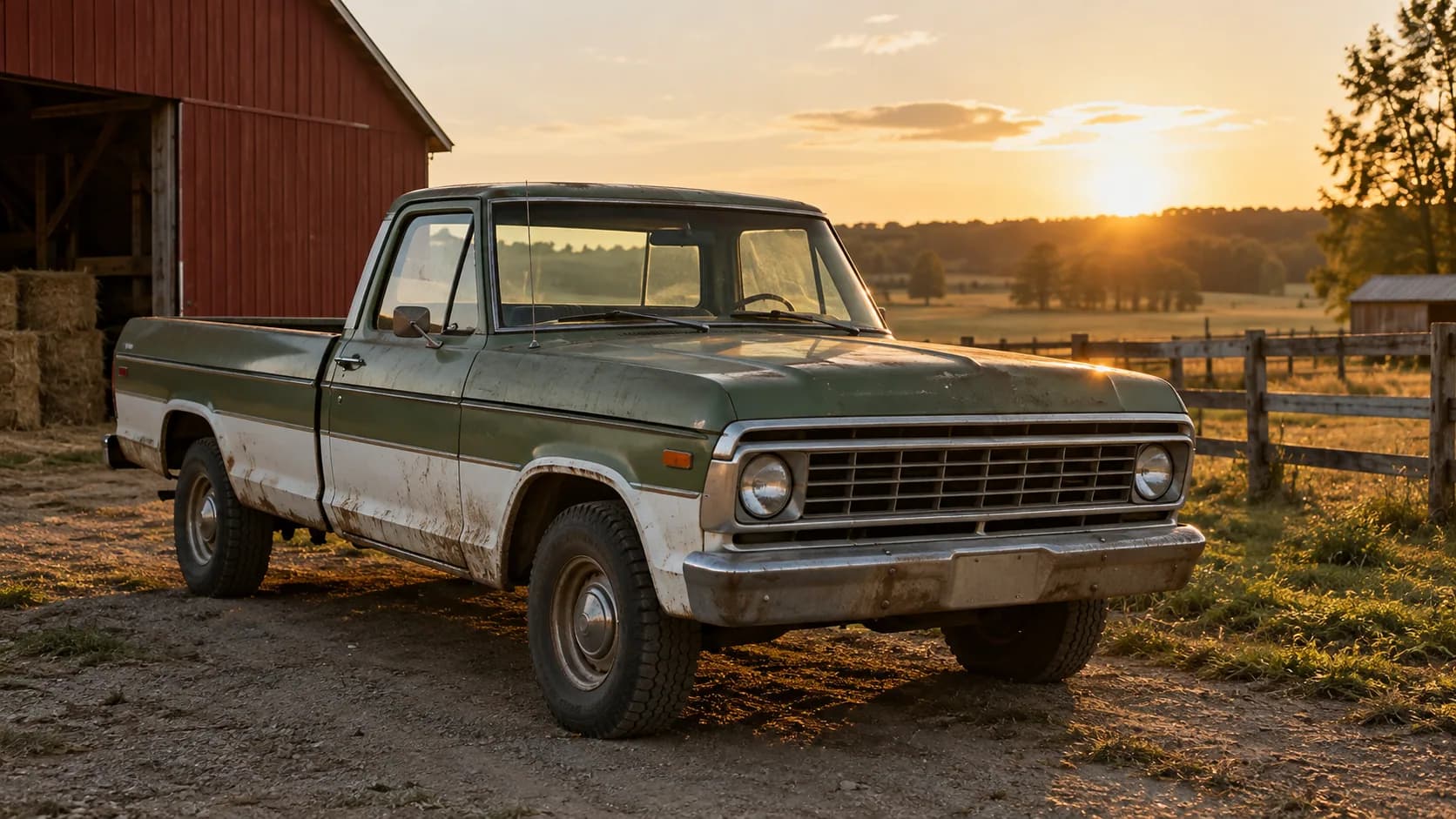
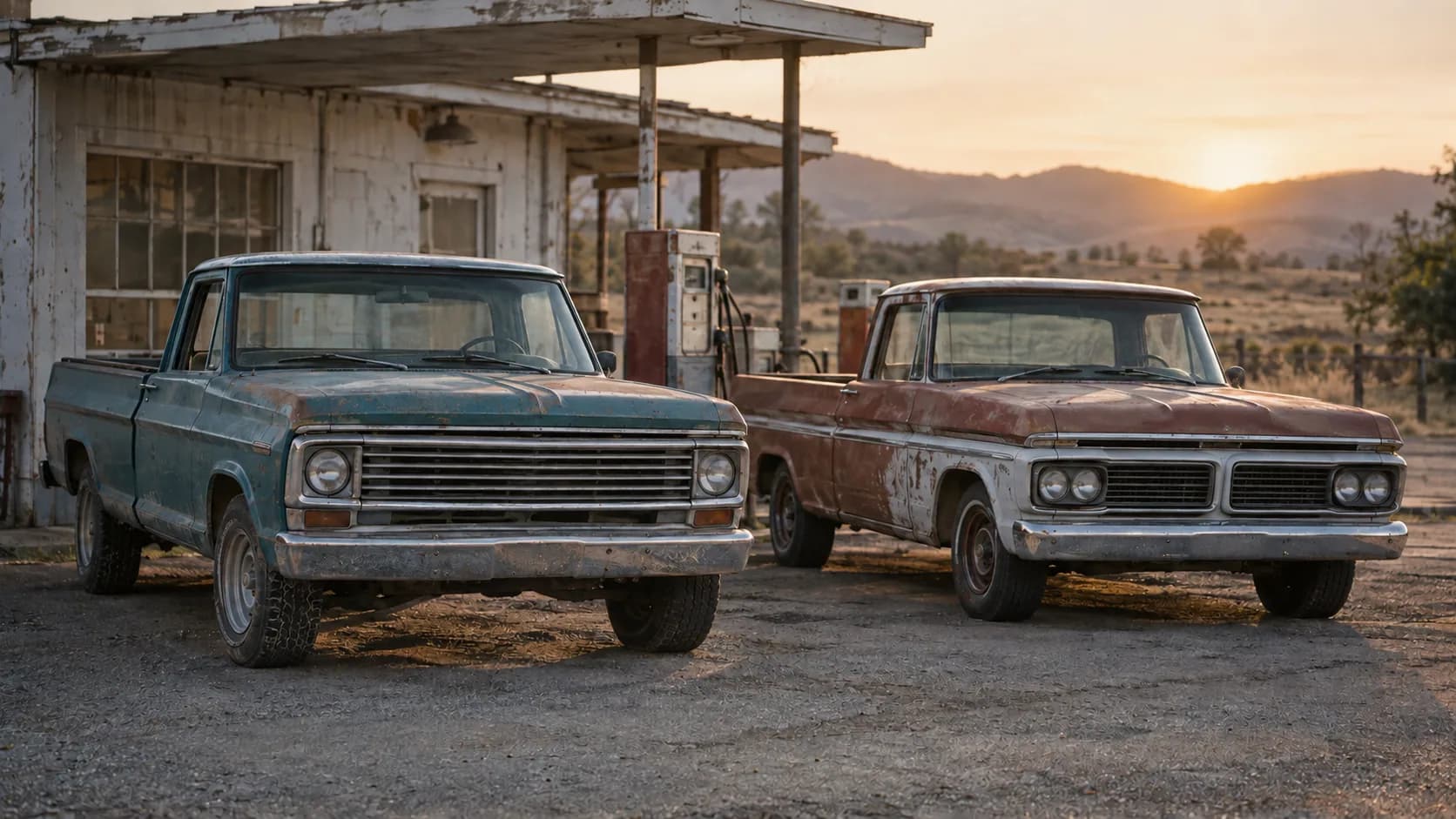
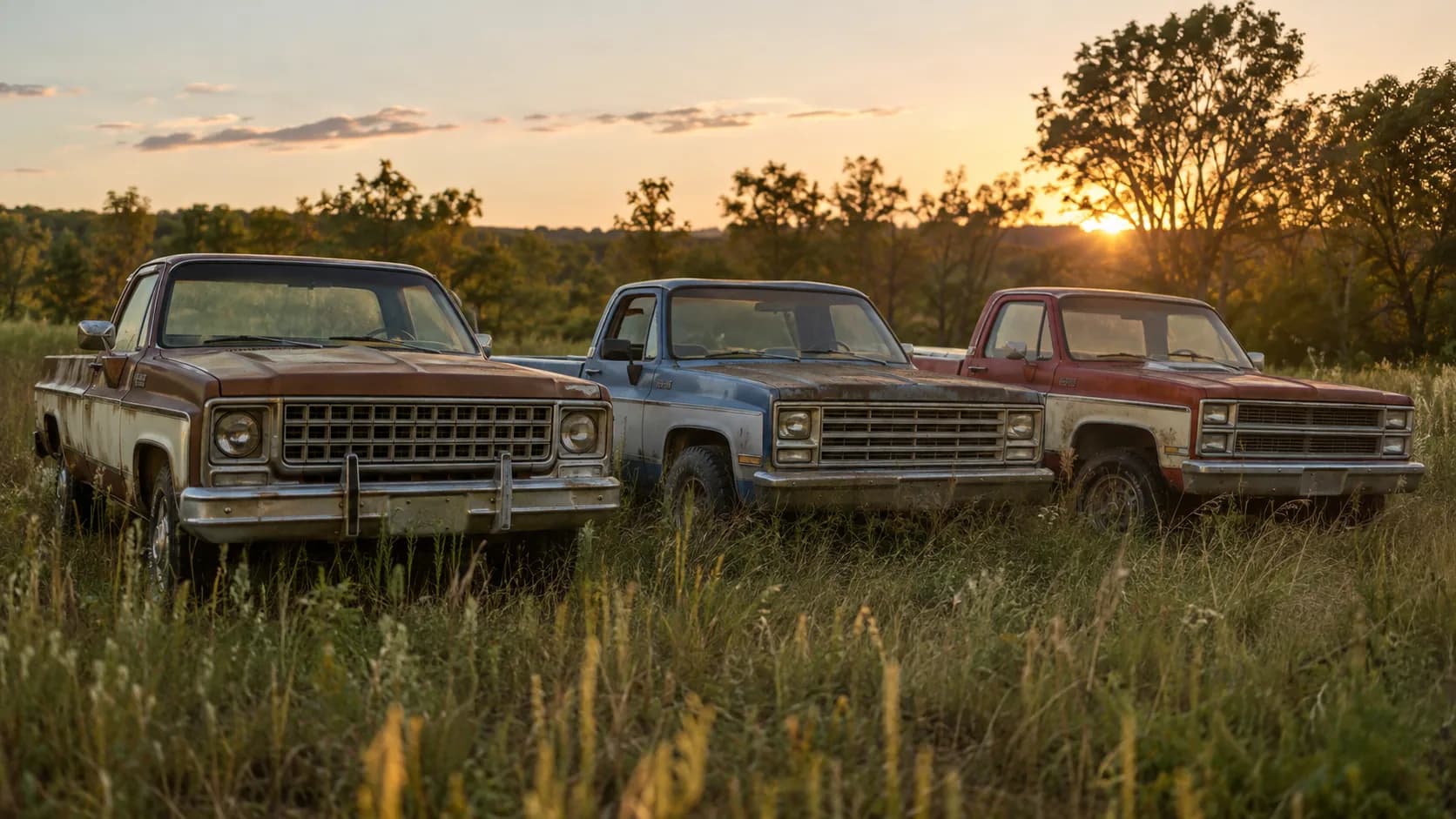
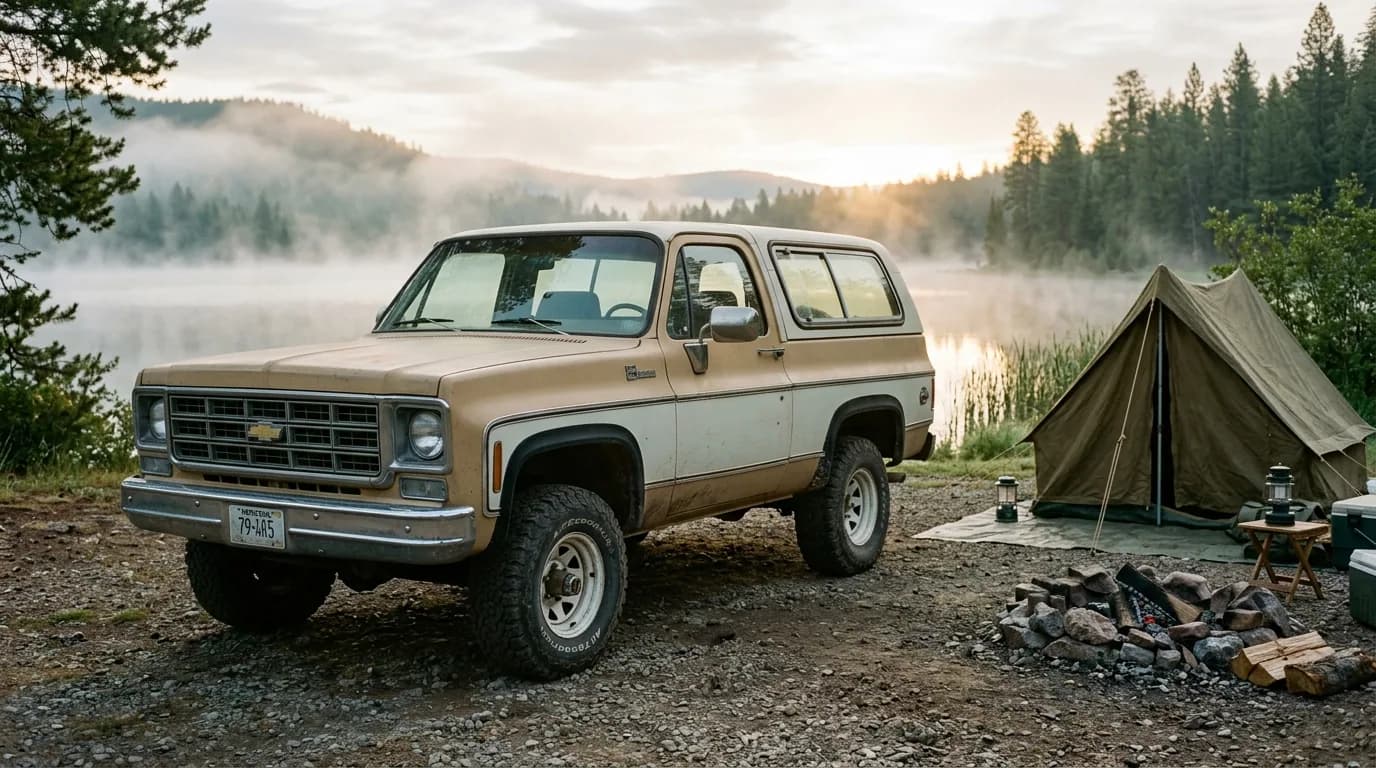
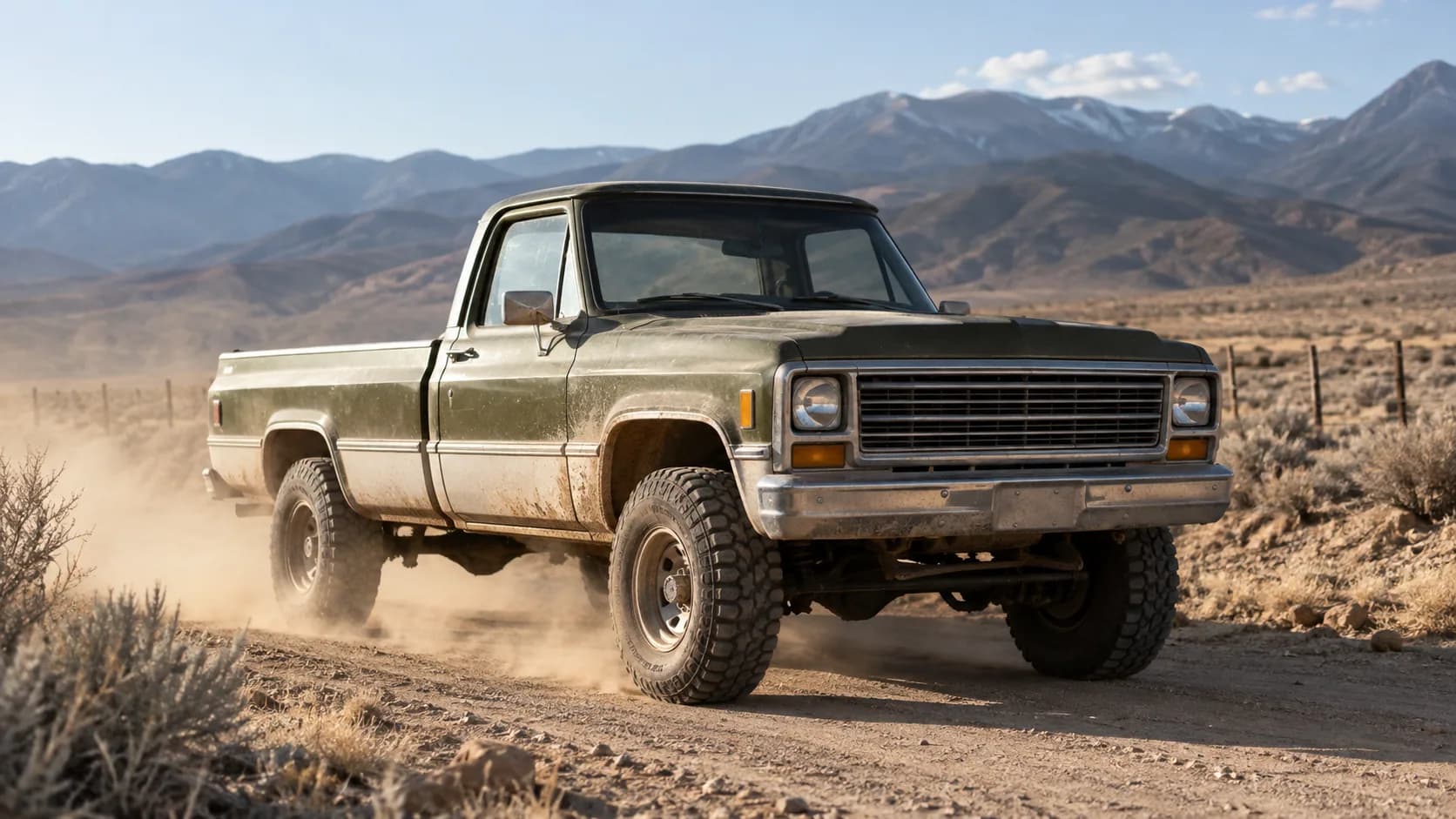
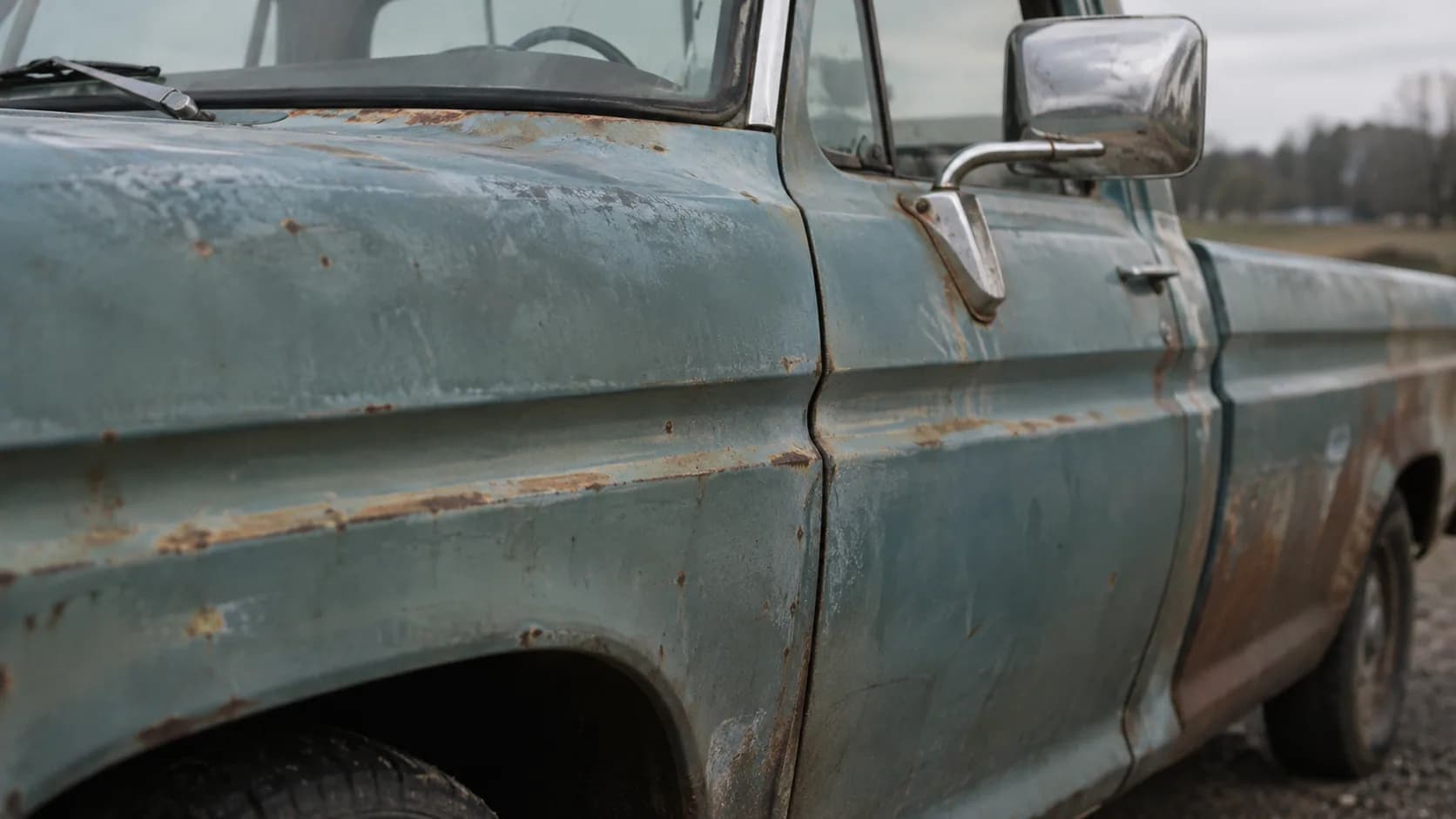
A two-tone Ford half-ton parked by a barn at sundown is about as American as a pickup scene gets, and the 1973 to 1979 trucks are the ones many people picture first. The renders on this page imagine that kind of truck, along with a lifted one kicking up desert dust and a close look at a weathered fender, and they are AI images, not photos of real trucks. The history behind them is real: this is the generation that gave us the F-150, the SuperCab and the last of the Highboys, and it is the truck that made the F-Series America's best-selling pickup line.
Why They Call It the Dentside
Ford never sold a truck called the Dentside. The name is an enthusiast term, and it comes from the side sheet metal. The 1967 to 1972 trucks have a body line that sticks out along the side, which is why fans call them Bumpsides. For the sixth generation, Ford turned that line inward. A Motortopia history describes the beltline as inverted, or "dented," to contrast with the earlier bump. Run your eye along the side of one and you will see the long recessed channel that runs from the front fender back through the door and bed. The close-up render on this page shows a long body line on a rusty blue fender and door.
Wikipedia dates the generation to the 1973 through 1979 model years, with the launch in December 1972. Under the new skin it was the third and final generation built on the basic structure Ford introduced for 1965.
The Years, Year by Year
The first year brought practical changes. Ford used more galvanized and zinc-coated steel to fight rust, and it began moving the fuel tank out of the cab to a frame-mounted spot under the bed, though a behind-the-seat tank still appears on many trucks through 1977. The SuperCab arrived for 1974, an extended cab that sat six in a shorter length than a crew cab.
The big news came for 1975. Ford's own 50th-anniversary history says the company added a truck to fit between the F-100 and the F-250. The F-100's gross vehicle weight stood at 5,500 pounds, while the new F-150 was rated at 6,050 pounds. Ford's 1975 Detroit Auto Show release said it could "team the ride comfort of an F-100 with the load rating of an F-250." Wikipedia and many enthusiasts say the higher rating also helped the truck sidestep the emissions rules that applied to lighter trucks. Ford's account says only that it had the right payload and fueling options for the new emission standards, so treat the exemption story as popular lore rather than settled fact. Either way, the F-150 became the most popular version and later replaced the F-100.
Ford says that starting in 1977, the F-Series became the best-selling truck line in the country.
Engines: From the 300 Six to the 460
The engine list was long. Wikipedia lists these for US trucks:
- 240 cubic-inch inline six, 1973 to 1976, F-100 only
- 300 inline six, all years
- 302 small-block V8, all years, two-wheel-drive pickups only
- 360 FE V8, 1973 to 1976
- 390 FE V8, 1973 to 1976, two-wheel drive only
- 460 V8, all years, two-wheel drive only
- 351M and 400 V8s, 1977 to 1979
The 300 six earned a reputation as a work engine, while the 460 was the big-block choice for towing. When the FE-family 360 and 390 left after 1976, the 351M and 400 took their place. Transmissions included a three-speed column manual, a four-speed floor manual, and the C4 or C6 three-speed automatics. Horsepower ratings changed by year, engine and truck class, so check the original paperwork for a specific truck rather than trusting a single number.
The Highboy 4x4
If you see a 4x4 F-250 from these years that seems to sit too tall, it may be a Highboy. That is another fan name, used for F-250 4x4s built from 1967 into 1977. Those trucks used a divorced transfer case, mounted apart from the transmission and connected by a short driveshaft. That layout raised the truck, and Wikipedia says it sat nearly 3 inches higher than an F-100 or F-150 4x4.
Ford switched to a transfer case bolted to the transmission as a running change during the 1977 model year, so trucks built after the change are sometimes called Lowboys. Off Road Xtreme dates the Highboy run to 1977.5. Wikipedia adds that the original Bigfoot monster truck was a 1974 F-250 of this design. Because 1977 trucks can go either way, check the transfer case itself, not just the title. The dusty 4x4 render on this page shows the tall stance people look for, but a real truck should be verified underneath.
Trims and How to Tell the Years Apart
The base trim was the Custom. Above it sat the Ranger and Ranger XLT, and the Ranger Lariat joined for 1978. Wikipedia also lists the Explorer appearance package for 1974 and the Free Wheeling package for 1977 to 1979.
The front end tells you the most:
- 1973 to 1977: a split grille with the headlamps set into it. For the 1976 model year, Wikipedia says the grille got a mild update with black accents around the headlights.
- 1977: smaller cowl badges, the in-cab tank dropped, and a body-color fuel filler door on the bed side.
- 1978: a new one-piece grille, with the Ford name moved to the hood. Custom trucks kept round headlamps, while the higher trims got rectangular ones.
- 1979: rectangular headlamps on every model.
A truck with round lamps and a big one-piece grille is likely a 1978 Custom. Rectangular lamps alone could mean a 1978 upper trim or any 1979. Wikipedia flags some of its 1978 and 1979 details as needing citations, so confirm against the truck's VIN and data plate.
Owning One Today
Dentsides were built in large numbers and used hard, so plenty survive as farm trucks and project trucks. Rust is the usual enemy, especially around the fenders and bed, and many trucks have had engines or transfer cases swapped over the years. A clean Highboy, a Ranger XLT with matching trim, or a well-kept 300-six work truck each has a following. Before buying, decode the VIN and data plate so you know the original engine, axle and trim, and check whether the truck has been mixed with parts from other years. We did not find a reliable price guide figure we could cite for this generation, so treat any asking price as a starting point.
Specs
- Model years
- 1973-1979 (launched December 1972)
- Models
- F-100, F-150 (from 1975), F-250, F-350
- F-150 GVW (1975)
- 6,050 lb, vs 5,500 lb for the F-100
- Six-cylinder engines
- 240 I6 (1973-1976, F-100), 300 I6 (all years)
- V8 engines
- 302, 360, 390, 460; 351M and 400 from 1977
- Transmissions
- 3-speed manual, 4-speed manual, C4 or C6 automatic
- Cabs
- Regular, crew cab, SuperCab (from 1974)
- Trims
- Custom, Ranger, Ranger XLT, Ranger Lariat (1978-1979)
FAQ
- Why is the 1973-1979 Ford truck called a Dentside?
- Its side sheet metal has a long recessed body line, the reverse of the protruding line on the 1967-1972 Bumpside trucks. Dentside is an enthusiast nickname, not a Ford model name.
- What year did the Ford F-150 come out?
- The F-150 debuted for the 1975 model year. Ford rated it at 6,050 pounds GVW, between the F-100 and F-250.
- What engines came in the 1973-1979 Ford F-100?
- Engines across the line included the 240 and 300 inline sixes and the 302, 360, 390 and 460 V8s, with the 351M and 400 replacing the 360 and 390 from 1977. Not every engine was offered in every model or drivetrain.
- What is a Ford Highboy?
- It is a fan name for F-250 4x4s built from 1967 into 1977 with a divorced transfer case, which made them sit taller. Ford switched to a transmission-mounted transfer case during the 1977 model year.
Know someone who drove one? Share this guide
Get the Look
As an Amazon Associate we earn from qualifying purchases.
- Ford F-100 dentside diecast model — A 1970s Ford half-ton for the shelf.
- Ford F-Series pickup history book — Background on every generation from the F-1 on.
- Rust converter and primer — For the fender and bed rust these trucks are known for.
Sources
- en.wikipedia.org — Ford_F-Series_(sixth_generation)
- fromtheroad.ford.com — f-150-50th-anniversary
- dev.motortopia.com — the-f-series-dentside
- offroadxtreme.com
- cjponyparts.com — f-100-dentside-vs-bumpside
- cjponyparts.com — what-is-a-ford-highboy
- torqueking.com — 1973-1977-5-ford-np205-transfer-case-id
- cjponyparts.com — ICFT1
- ford-trucks.com — 923753-grace554