Chevrolet K5 Blazer (1973-1991): Years, Engines, Specs
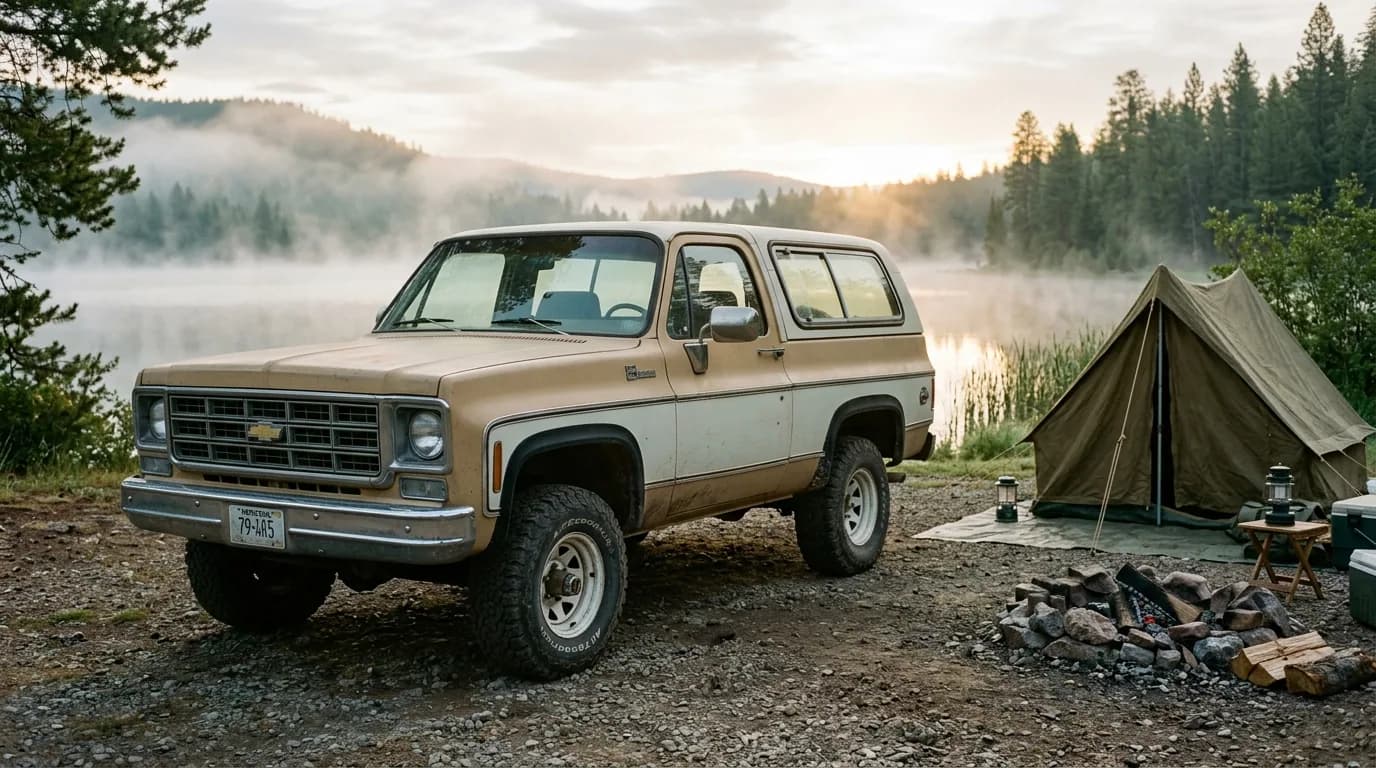
Why stop at the trailhead when a short four-wheel-drive wagon can drive right up to the campsite? That was the job the Blazer was made for, and the AI-generated scene above shows it: a tan-and-white Blazer on the gravel at a misty lakeshore camp, a canvas tent pitched beside a stone fire ring. The truck most people mean by "K5 Blazer" is the full-size, square-body generation that ran from 1973 to 1991.
1969: A Shortened K10 With a Top That Comes Off
Chevrolet launched the K5 Blazer for 1969 to take on the International Scout and the Ford Bronco. Designers started with the existing half-ton K10 pickup and shortened its wheelbase from 115 inches to 104. The original Blazer was four-wheel drive only. A two-wheel-drive version followed in 1970, and Tread Magazine says that by 1970 the Blazer was outselling International and Ford two to one. GMC's version, the Jimmy, arrived in 1970 too.
The names trip people up. K10 is the pickup (our Chevrolet K10 Square Body guide covers it), Blazer is the shortened wagon, and Jimmy is GMC's twin. "K5" was a badge Chevrolet used on the Blazer until 1988, though Wikipedia notes that GM never used the name internally.
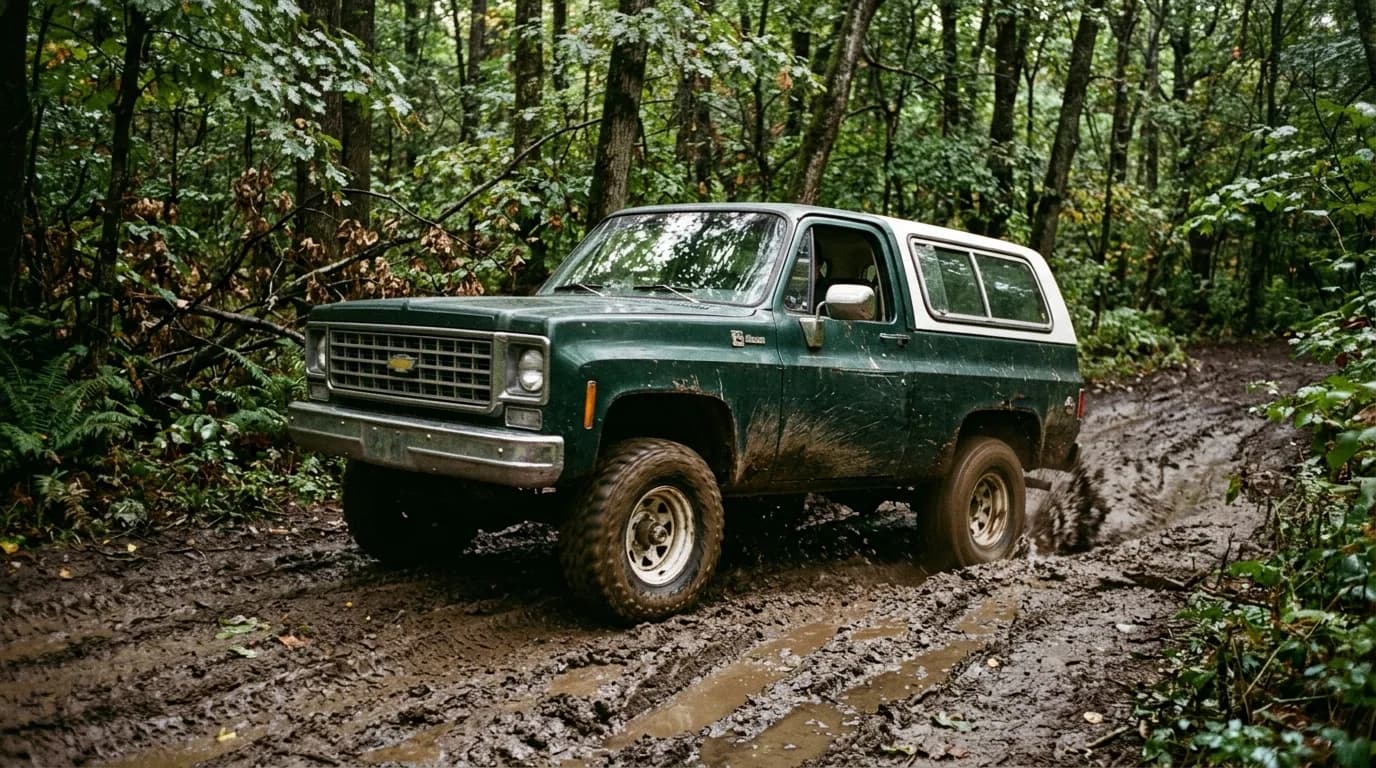
1973: The Square-Body Blazer
The second generation arrived for 1973 with the Rounded Line styling that fans later nicknamed square body. It grew 7 inches overall on a wheelbase 2.5 inches longer than the first-generation truck, which works out to 106.5 inches. For 1973 through 1975 the Blazer wore a removable convertible top. In 1976 GM replaced that fully open arrangement with a half-cab: full doors and a fixed roof, with a removable section that starts just behind the doors and runs to the rear. Old Cars Weekly describes the change as both safer and better in bad weather, and the half-cab stayed in production through 1991.
The truck sold well in this form. Old Cars Weekly says more than 90,000 were built for 1979, the most popular year yet, and Wikipedia's production table, which does not cite its source, shows output falling to roughly 32,000 in 1980. In 1976 GM also teamed with Chinook Mobilodge on a camper version, the Blazer Chalet (the GMC twin was the Jimmy Casa Grande), and about 1,800 were built over its two years. Chevrolet then refreshed the front end for 1981, offering stacked dual square headlamps.
Engines and Four-Wheel Drive
The 250 cubic-inch inline-six was the base engine into the early 1980s, rated about 105 hp early on and 130 hp from 1979, but sources differ on when it ended: Wikipedia says 1982, Old Cars Weekly 1984. Small-block V8s of 305, 307, 350 and 400 cubic inches rounded out the options list. Old Cars Weekly and Tread also list a 292 six, which Wikipedia shows only on first-generation trucks. The 400, rated 185 hp in Wikipedia's engine table, came only with four-wheel drive, and the 350 V8 was available across the whole 1973-1991 run. From 1982 Chevrolet also offered a 6.2-liter Detroit Diesel V8, rated at roughly 130 to 135 hp and 240 lb-ft of torque in those early years. Throttle-body fuel injection arrived on GM's truck V8s in 1987, and the 350 became the standard engine after that.
Four-wheel-drive hardware changed along the way, and exact years vary by source. Early trucks used either the gear-driven, part-time NP-205 transfer case, usually behind the SM465 four-speed manual, or the full-time, chain-driven NP-203 with the TH350 automatic. The chain-driven NP208 took over around 1981, and the NP241 followed in the late 1980s. Axles are murkier: Wikipedia lists a Dana 44 up front and a 12-bolt in the rear through 1980, with GM 10-bolts after that, while Tread describes the 10-bolt and 12-bolt swap the other way around, so check what a given truck actually has. Rear-wheel-drive Blazers were built until 1982, though most sold were 4x4.
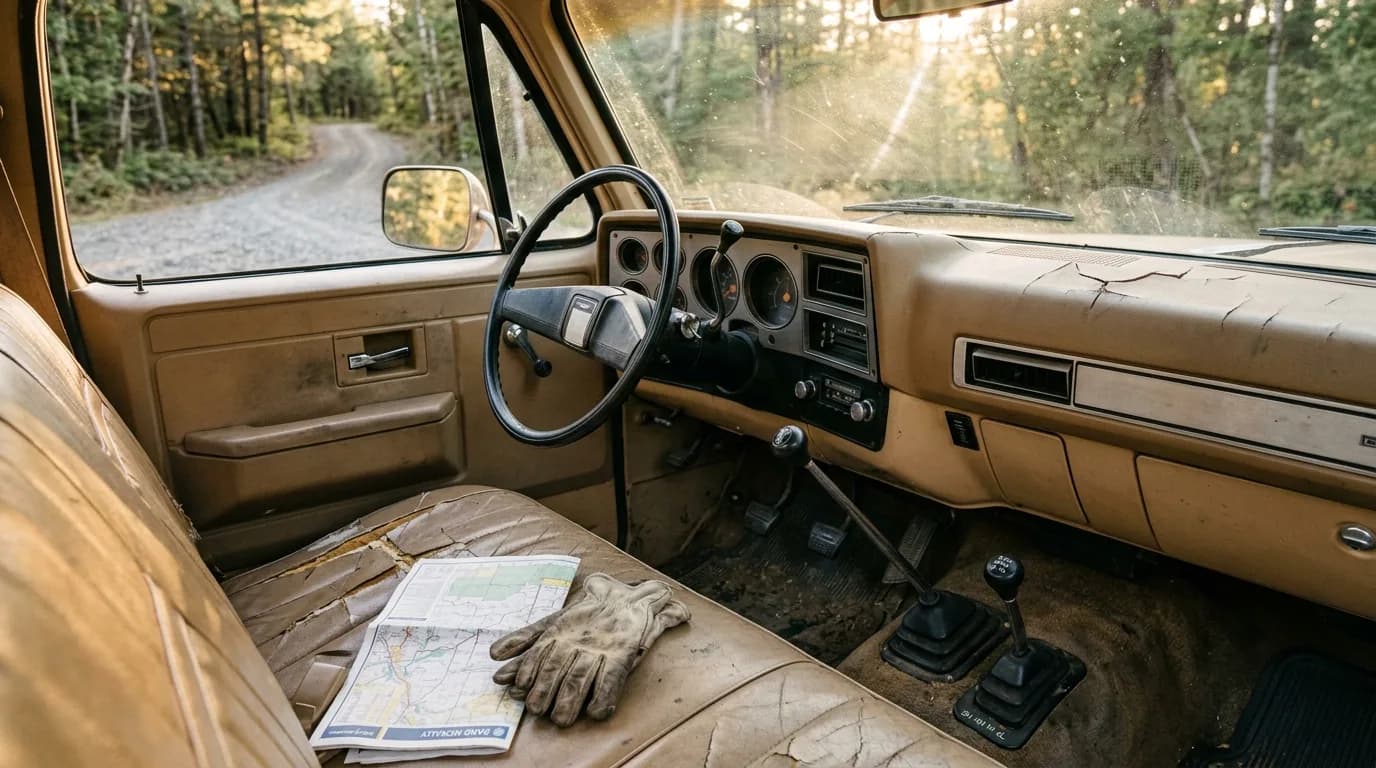
R/V Badges and the End of the Line
GM launched its new GMT400 trucks in April 1987 as 1988 models and redesignated the outgoing line R/V, R for rear-wheel drive and V for 4x4. The Blazer kept its old body under those badges through 1991. Wikipedia's production table, again uncited, lists roughly 7,300 built that final year, the lowest of the second generation.
For 1992 the full-size Blazer moved to the GMT400 platform. No longer a half-cab, it became a three-door wagon sharing its bodywork behind the doors with the Suburban, and GMC renamed the Jimmy the Yukon. The Chevrolet kept the Blazer name; it became the Tahoe for 1995, when a five-door version joined the line. So the naming switch came in two steps, 1992 for GMC and 1995 for Chevrolet.
What to Look For Today
Check the roof first: a 1973-75 truck with the full removable top is a different animal from the half-cab that followed. The headlights help narrow the year, since stacked dual square lamps became available with the 1981 refresh. Tread Magazine's K5 Blazer feature, published in November 2024, names the rocker panels, floor pans, fender wells and tailgate as notorious rust spots. Values vary widely with year, trim and condition, so check a current valuation guide such as Hagerty's and recent auction results before you buy.
Specs
- Second generation
- 1973–1991 (first generation 1969–1972)
- Wheelbase
- 106.5 in (first generation: 104 in)
- Top
- Removable convertible top 1973–75; half-cab from 1976
- Engines
- 250 inline-six; 305, 307, 350 and 400 V8s; 6.2 L Detroit Diesel V8 from 1982 (roughly 130–135 hp, 240 lb-ft)
- Fuel injection
- Throttle-body injection on the V8s from 1987
- Transfer cases
- NP-205 or NP-203 (1970s), NP208 (from about 1981), NP241 (late 1980s)
- Production
- About 91,000 in 1979 (peak); roughly 7,300 in 1991
- Successor
- GMT400 full-size Blazer for 1992; renamed Tahoe for 1995
FAQ
- What years was the K5 Blazer made?
- The K5 Blazer was built from 1969 to 1991 across two generations: 1969-1972 and the square-body 1973-1991. The full-size Blazer continued on the GMT400 platform for 1992-1994 before it was renamed Tahoe for 1995.
- What is the difference between a K5 Blazer and a K10?
- The K10 is the half-ton four-wheel-drive pickup. The K5 Blazer was built on a shortened K10 chassis, with the wheelbase cut from 115 to 104 inches in 1969, and is a two-door wagon rather than a pickup.
- When did the K5 Blazer get a half-cab roof?
- In 1976. The 1973-75 Blazers had a removable convertible top; from 1976 the Blazer had full doors and a fixed roof over the cab, with a removable section behind the doors.
- Did the K5 Blazer come with a diesel engine?
- Yes. From 1982 Chevrolet offered a 6.2-liter Detroit Diesel V8 rated at roughly 130 to 135 hp and 240 lb-ft of torque, available only with four-wheel drive.
Know someone who drove one? Share this guide
Get the Look
As an Amazon Associate we earn from qualifying purchases.
- Chevrolet K5 Blazer 1:24 scale die-cast model — A shelf-size version of the square-body Blazer.
- Chevy K5 Blazer history and restoration book — For more on the Blazer's history and how to restore one.
- Vintage-style camp lantern — The lakeside-camp look from the render above.