Chevrolet C10 1967-1972: The Action Line's History and Specs
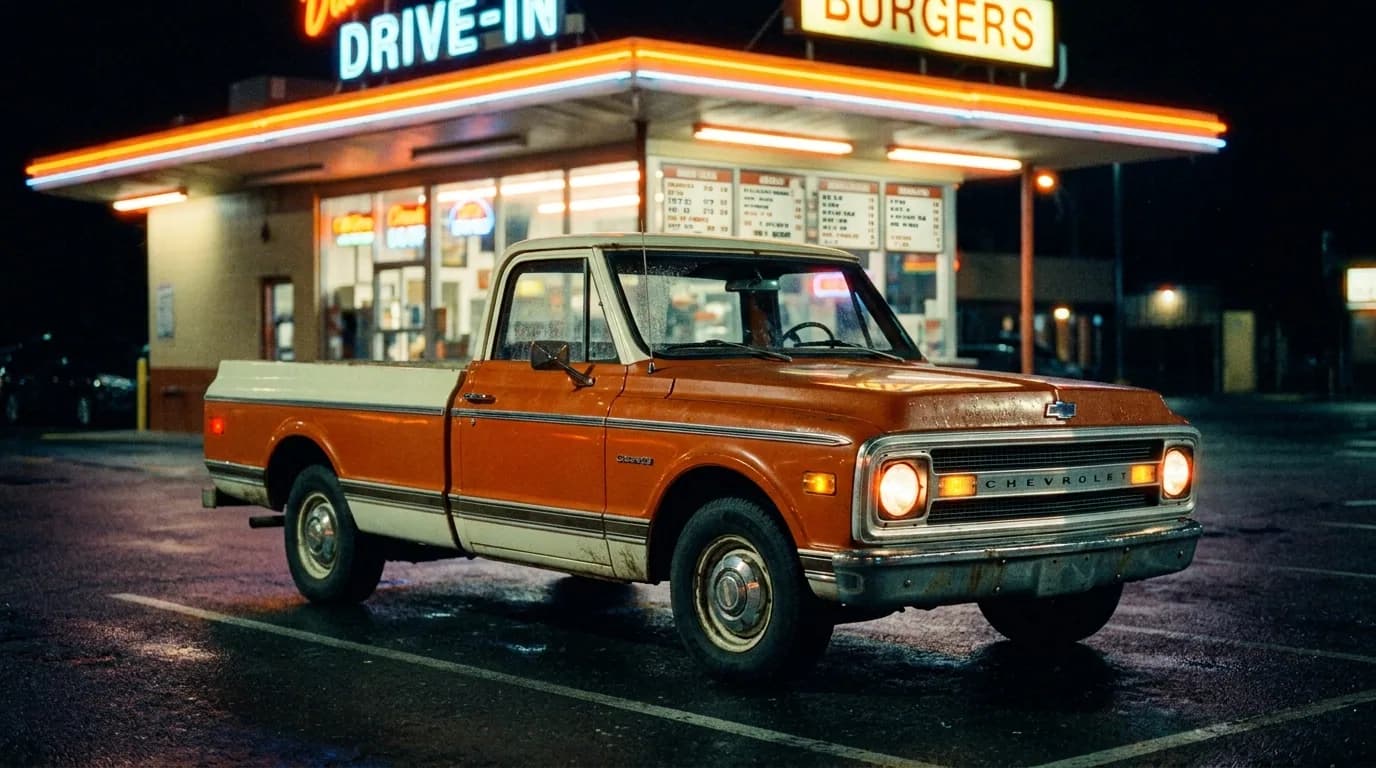
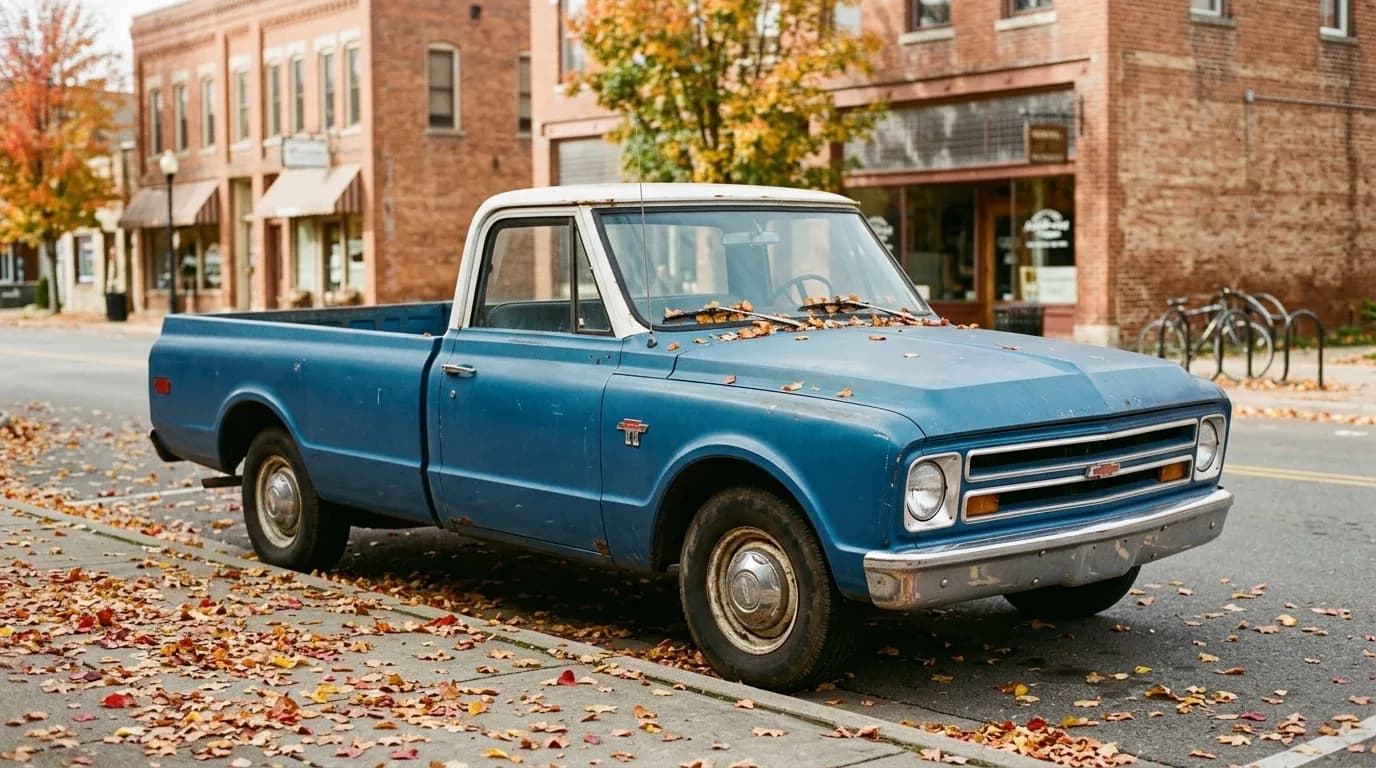
Chevrolet built the C10 for six model years without a full restyle, and collectors still call the whole run the Glamour Pickups. The AI render above pictures a well-worn one idling under the neon of a drive-in burger stand, a fair likeness of the shape Chevrolet called the Action Line: a redesigned cab and bed that sat lower and wider than before, a wraparound windshield, and just enough chrome to look dressed up without losing the work truck underneath it.
From Glamour Pickup to Action Line
Chevrolet's second-generation C/K trucks arrived for the 1967 model year, replacing the taller, boxier first generation that had run since 1960. The new body sat closer to the frame, with a redesigned cab, a double-walled steel pickup bed for extra rust resistance, and clean, uncluttered sheet metal that Chevrolet marketed as the Action Line. Collectors later nicknamed the whole 1967-1972 run the "Glamour Pickups," a name that's stuck around car shows and swap meets ever since. Underneath the new skin, the C10 (Chevrolet's half-ton badge) kept doing what GM half-tons had always done: hauling lumber and hay bales by day, while slowly, by the early 1970s, becoming something people wanted to drive for fun.
Engines and the Arrival of the Big-Block
The C10 launched in 1967 with a familiar lineup: 250 and 292 cubic-inch inline-sixes for buyers who wanted simplicity, and 283 and 327 cubic-inch V8s for those who wanted more push. 1968 brought two changes that mattered. Side-marker lights arrived to meet a new federal safety mandate, and the 396 cubic-inch V8 became optional, the first time Chevrolet had offered a big-block engine in a light-duty pickup. In 1969, the 327 grew into the 350, which Chevrolet made the standard V8 across the line by 1970. The 396 grew too: starting in 1970, Chevrolet enlarged the Mark IV big-block's bore across its entire lineup, pushing true displacement to 402 cubic inches. Muscle cars like the Chevelle and Camaro kept wearing "396" badges regardless, but Chevrolet's trucks, C10 included, got the honest "402" callout. By 1971, front disc brakes were standard equipment, and by 1972, the Action Line's final year, GM had cut compression ratios across the board for lower-octane fuel and switched to more realistic net horsepower ratings, so engines that year were actually rated lower than they had been just a couple of years earlier.
Custom, CST, and the Arrival of Cheyenne
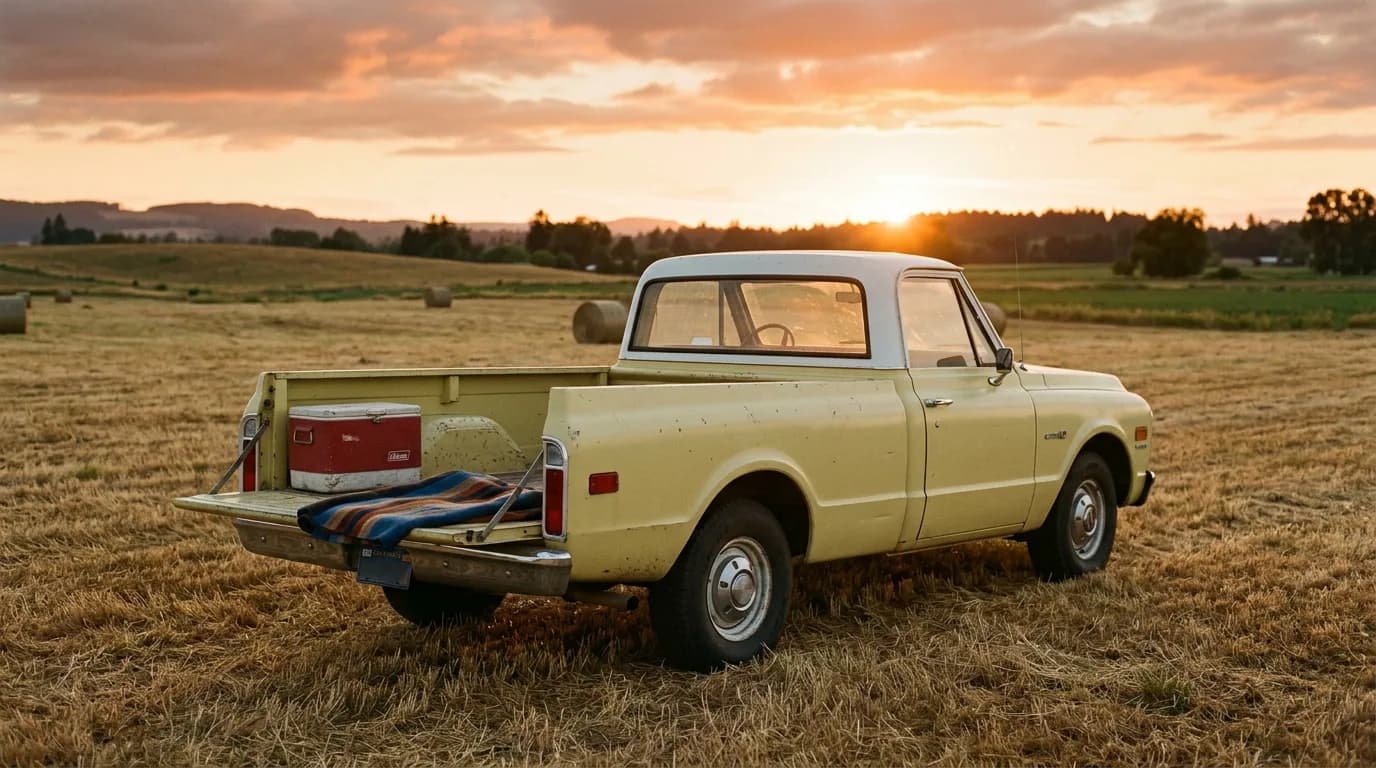
Trim strategy in this era started simple and got more layered as the years went on. Custom was the base appearance package throughout the run, adding chrome trim and better floor mats over a bare-bones work truck. In 1967, Chevrolet introduced the CST (Custom Sport Truck) package, blending comfort and dress-up items, nicer upholstery, more carpet and insulation, into one option, and CST stayed the top trim through 1970. In 1971, Chevrolet replaced it with the flashier Cheyenne, and partway through that same model year added an even more loaded Cheyenne Super above it, complete with woodgrain dash trim and extra chrome. By 1972, Custom, Custom Deluxe, Cheyenne, and Cheyenne Super rounded out the lineup, giving buyers a real range from stripped work truck to something closer to a personal pickup.
Spotting a 67-72 by the Front End
Because the Action Line ran six years without a full redesign, the grille is the fastest way to narrow down which era a truck belongs to. On 1967-68 trucks, the parking and turn-signal lamps sit low, under the bumper, with a Chevrolet bowtie centered on the grille. In 1969, the hood was reshaped with a steeper front angle, the parking and turn signals moved up into the grille's corners, and the grille bar itself picked up raised block "CHEVROLET" lettering in place of the bowtie; 1970 carried that same look with only minor changes. The biggest shift came in 1971, when Chevrolet gave the C10 a mid-cycle facelift: a new eggcrate-pattern grille, with the bowtie emblem back at its center. 1972 kept that eggcrate face but dropped a black trim strip that had run across the grille the year before. Because renders, restorations, and parts swaps can mix eras, the surest way to date a real truck is still the VIN tag rather than the grille alone, but knowing these three windows, 67-68, 69-70, and 71-72, gets you most of the way there at a glance.
Why the Action Line Still Sells
Six decades on, the 67-72 C10 remains one of the most heavily supported trucks in the restoration aftermarket, with reproduction sheet metal, interiors, and drivetrain parts available for nearly every part of the truck. That support, paired with the small-block V8s that power most surviving examples, is a big part of why the Action Line shows up so often as a resto-mod platform and as a first classic truck for new collectors. Whether it's still running its original inline-six or carrying a swapped-in 350, a clean C10 still looks like exactly what it was built to be: a truck that did the work and looked good doing it.
Specs
- Generation
- Second-generation Chevrolet C/K, "Action Line" (1967–1972)
- Configuration
- C10 = two-wheel-drive half-ton, Fleetside or Stepside bed
- Engines
- 250 & 292 cu in inline-six; 283, 307, 327 V8; 350 V8 (standard from 1970); 396 V8 optional from 1968
- First big-block option
- 1968 — the first big-block V8 offered in a light-duty GM pickup
- 396 grows to 402
- From 1970, Chevrolet's Mark IV big-block bore grew to a true 402 cu in; unlike cars, which kept "396" badges, C10 trucks were honestly labeled "402"
- Trim levels
- Custom (base); CST, 1967–1970; Cheyenne, 1971–1972 (Cheyenne Super added mid-1971)
- Front disc brakes
- Standard from 1971
- Major facelift
- 1971, eggcrate grille with the bowtie emblem back at center
Get the Look
As an Amazon Associate we earn from qualifying purchases.
A shelf-size version of the Action Line shape.
Check price at AmazonBackground reading on the trucks that built this era.
Check price at AmazonFor keeping the grille and bumper chrome show-lot bright.
Check price at AmazonFAQ
- What years make up the Chevrolet C10 "Action Line" generation?
- 1967 through 1972, GM's second-generation C/K pickup, nicknamed the Action Line (and later the "Glamour Pickup" by collectors) for its redesigned, lower-set body.
- When did the Chevy C10 get a big-block V8 option?
- In 1968, when the 396 cubic-inch V8 became available, the first time a big-block V8 was offered in a light-duty GM pickup.
- What's the difference between a Custom, CST, and Cheyenne C10?
- Custom was the base trim throughout the generation. CST (Custom Sport Truck) was the dressed-up package from 1967 through 1970, replaced in 1971 by the Cheyenne and, mid-year, the even more loaded Cheyenne Super.
- How can you tell a 1969-70 C10 from a 1971-72 model?
- Look at the grille. 1969-70 trucks use a grille bar with raised "CHEVROLET" block lettering, while the 1971-72 facelift brought back an eggcrate grille with a bowtie emblem, along with standard front disc brakes.