Mack B-61 (1953-1966): Thermodyne Diesel, Specs and History
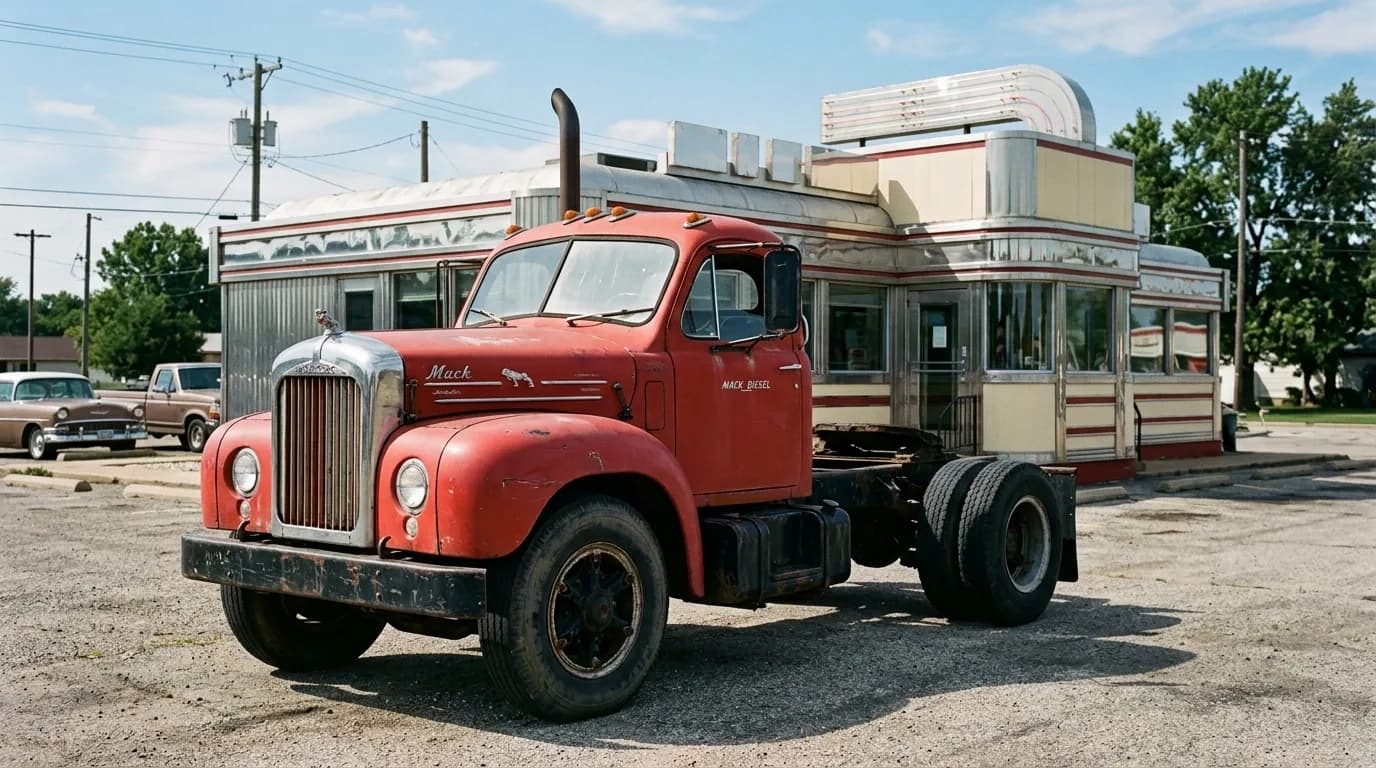
A round-shouldered red cab parked outside a chrome diner, the kind of scene that could have been shot any year between 1953 and the early 1970s, because trucks like this one just kept working. The B-61 wasn't the flashiest truck Mack ever built, but it might be the one that did the most to cement the company's reputation for being nearly impossible to kill.
The B Series Arrives
Mack introduced the B series in 1953 as a full replacement for its older L series, and the line stuck around for thirteen years, through 1966, before Mack handed the torch to the R series. In that time, Mack built roughly 127,000 B-series trucks across nine different chassis variants (sources put the exact count between 126,745 and 127,786), and the B-61 tractor was the runaway favorite: it alone accounted for roughly 47,000 of that total, more than any other configuration in the family. If you picture a classic rounded-nose Mack from the mid-20th century, odds are you're picturing a B-61.
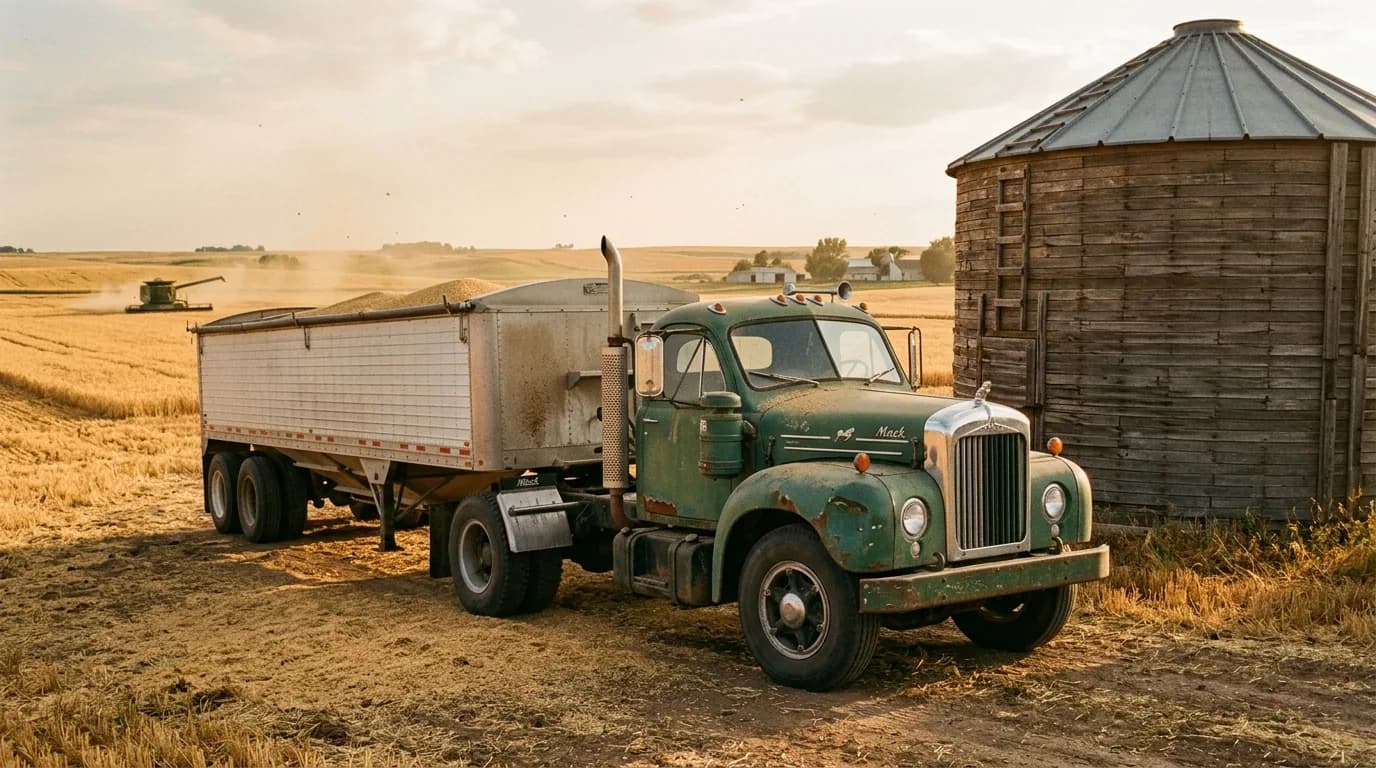
The Thermodyne Diesel
The same year the B series launched, Mack introduced the engine that would define it: the Thermodyne, an open-chamber, direct-injection diesel that became the company's signature powerplant for the next several decades. In the B-61, the standard Thermodyne was the END673, a naturally aspirated 673-cubic-inch (11.0-liter) inline-six that Mack rated at outputs from around 170 horsepower up to 237 horsepower depending on the model year and tune, with a turbocharged ENDT673 variant arriving later in production for still more power. Roughly 80 percent of all B-series trucks built between 1953 and 1966 left the factory with some version of the Thermodyne under the hood, though Mack also still offered ten different gasoline engines for buyers who wanted them, rated from 107 horsepower up to 232 horsepower. Multi-speed gearboxes, including Mack's own Quadruplex and Triplex setups, were built to keep the diesel in its narrow, efficient power band.
Rounded Fenders, a New Look for Mack
Compared to the flatter, more upright Mack trucks that came before it, the B series wore a genuinely new shape: a sloped, two-piece windshield, a tall chrome grille, and broad, sweeping fenders that curved over the front wheels instead of squaring off above them. It's that fender line, as much as the grille, that separates a B-model Mack from nearly anything else on the road from the same era, and it's why restorers say the fenders alone can eat hundreds of hours of bodywork to get right.
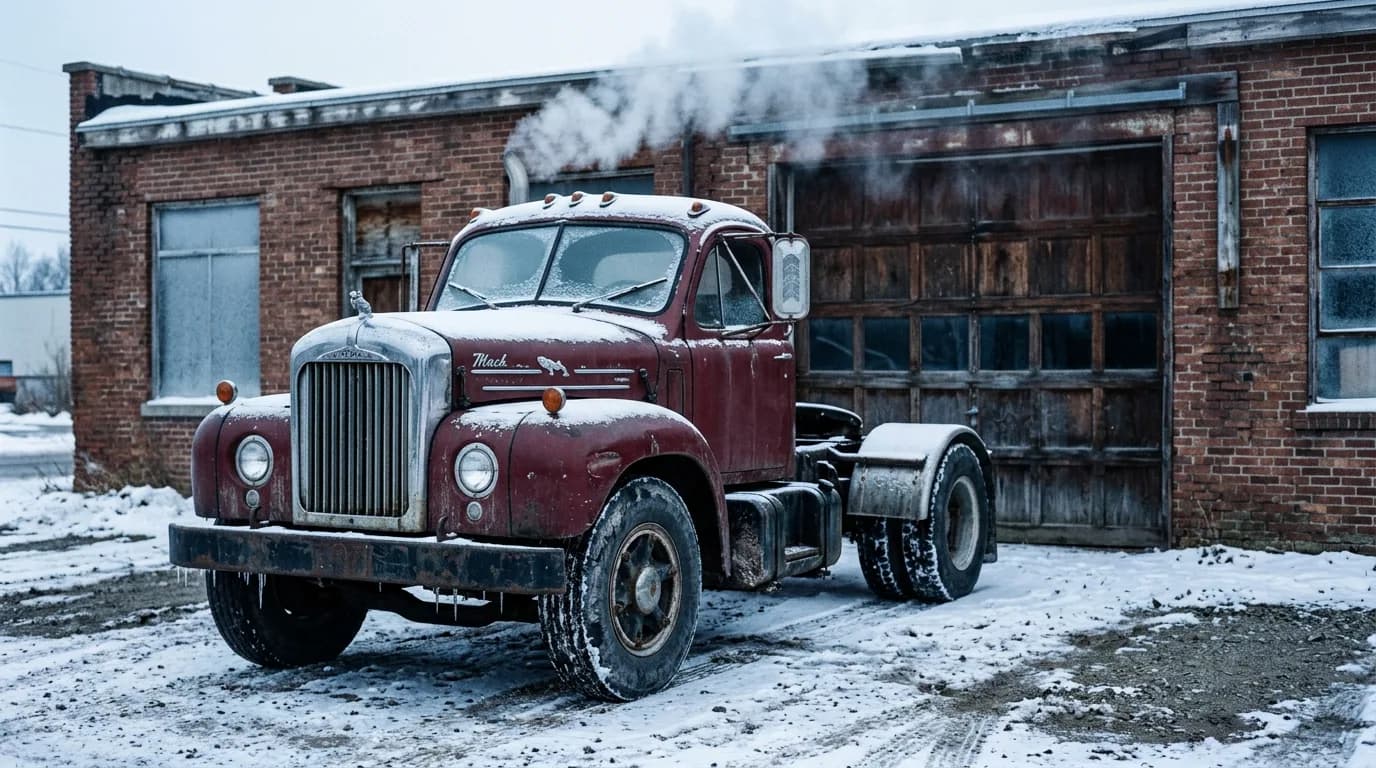
The Bulldog and "Built Like a Mack Truck"
The bulldog nickname wasn't invented for this truck. It traces back to World War I, when British soldiers driving Mack AC models reportedly called them "Bulldogs" for how tough and dependable they proved hauling supplies through the mud of the Western Front. The chrome bulldog hood ornament came later, patented in 1932, turning the nickname into a badge. That reputation followed the brand for the rest of the century, and it's traditionally credited as the root of the phrase "built like a Mack truck" that worked its way into everyday American English. By the time the B-61 came along in the 1950s, the bulldog on the hood wasn't decoration, it was a promise the trucks had already spent decades earning.
How to Spot a B-61
Look for the upright chrome grille flanked by round headlights, the humped, rounded fenders, and the bulldog hood ornament riding above it all. The cab sits noticeably higher and more upright than later Mack conventionals, and on tractors like the ones pictured here, the short bumper-to-back-of-cab length leaves the grille looking almost stubby next to the long trailers these trucks were built to pull.
Restoring and Owning One Today
B-61s remain some of the most actively restored classic Macks on the road. Mack's own historians keep detailed line-sheet records tied to each truck's serial number, and a healthy parts network, from dedicated Mack specialists to general vintage-truck suppliers, keeps engines, fenders, and trim pieces available for owners willing to put in the work. Plenty of these trucks are still hauling grain, running local routes, or just sitting proudly in a barn between shows, more than six decades after they left the factory.
The Legacy
The B-61 didn't just sell well, it built the reputation. Between the Thermodyne's staying power and a nameplate that turned into a compliment for anything sturdy, the B-61 is as close as trucking gets to a truck becoming a piece of the language itself.
Specs
- B series production
- 1953–1966
- B series total production
- About 127,000 units across nine chassis variants
- B-61 production
- About 47,000 units, the most popular B-series model
- Standard diesel
- Mack END673 Thermodyne, 673 cu in (11.0L) inline-six
- Diesel output
- About 170–237 hp depending on year and tune; turbocharged ENDT673 offered later
- Gasoline options
- Ten engines offered, about 107–232 hp
- Successor
- Mack R series, introduced 1966
Get the Look
As an Amazon Associate we earn from qualifying purchases.
The rounded fenders that make the B-61 a favorite restoration subject also make it a favorite kit build.
Check price at AmazonFor the full story behind the bulldog and the Thermodyne era.
Check price at AmazonThe emblem that turned into a promise of toughness.
Check price at AmazonMatches the chrome-and-neon backdrop a B-61 would have parked next to.
Check price at AmazonFAQ
- What years was the Mack B-61 made?
- The Mack B-61 was part of the B series, built from 1953 to 1966, when Mack replaced the line with the R series.
- What engine did the Mack B-61 use?
- The standard diesel was Mack's own END673 Thermodyne, a 673-cubic-inch (11.0-liter) inline-six rated at roughly 170 to 237 horsepower depending on year and tune, though ten gasoline engine options were also offered.
- Where does the phrase "built like a Mack truck" come from?
- It is traditionally traced to World War I, when British soldiers reportedly nicknamed Mack AC trucks "Bulldogs" for their toughness, a reputation that stuck with the brand and fed the popular phrase.
- How can you tell a Mack B-61 apart from other classic Macks?
- Look for the upright chrome grille, round headlights, sweeping rounded fenders, and the bulldog hood ornament, all features introduced with the B series' new styling in 1953.