Peterbilt 352 Pacemaker: The Cabover Built to Beat the Length Laws
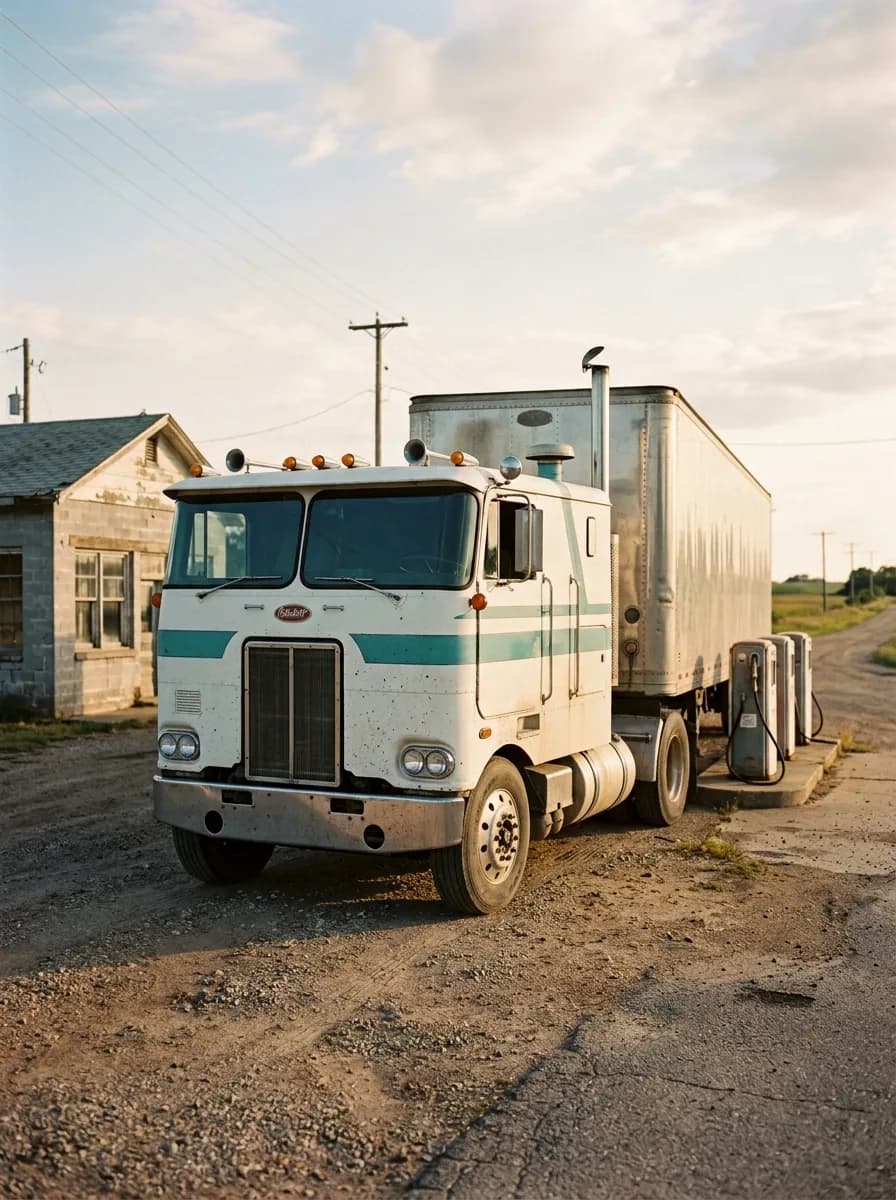
Two fuel pumps, a flat-fronted cab, and a low-slung trailer already hooked up and waiting, the scene above imagines a Pacemaker doing exactly what cabovers did best: fitting a full rig into a footprint a long-hood truck could never match. It's a shape that faded from American highways once the law that created it changed, which is most of why it still turns heads.
Why Cabovers Existed in the First Place
Cabover trucks were not a styling choice, they were a legal workaround. Mid-century length laws in many states capped the overall length of a tractor-trailer combination, and for years that cap counted the tractor's length the same as the trailer's. Every foot of hood in front of the driver was a foot of cargo box a fleet couldn't run. Flat-nosed cabover designs, with the driver sitting almost directly over the front axle, let operators maximize trailer length within those limits, and that made them a popular choice for long-haul fleets through the 1960s and 70s.
The Model 352 and the Birth of the Pacemaker
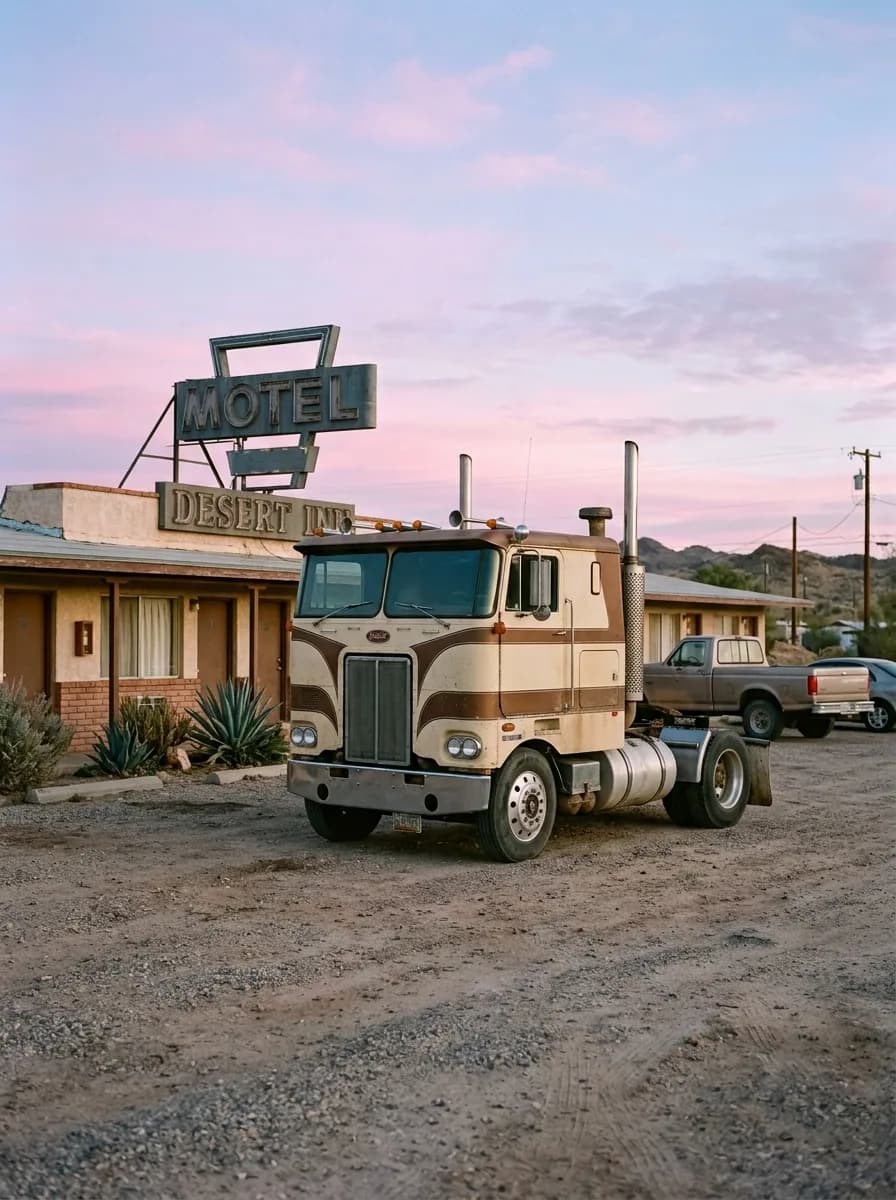
Peterbilt introduced the Model 352 in 1959 as the replacement for the earlier 281/351 cabover (the conventional needle nose 351 carried on separately until 1976), built around an aluminum cab for lighter weight and better corrosion resistance, with a 90-degree tilting front end that gave mechanics full access to the engine. The standard engine was a Cummins NHC-250, with Caterpillar and Detroit Diesel diesels offered as options depending on the buyer's routes and loads.
By 1969, a decade into production, the 352 had sold well enough that Peterbilt broke from its usual numeric naming and gave it an actual name: the Pacemaker. The name came with a wider cab and a real push toward driver comfort, ergonomic seats and more interior room in a cab that had started out cramped. Peterbilt kept refining the Pacemaker cab through the 1970s, offering it in cab and sleeper lengths from as short as 54 inches to as long as 110 inches bumper to back of cab, depending on how much the buyer wanted to actually live in it.
352 vs. 352H: What Changed
In 1975 Peterbilt introduced the 352H, a taller variant built to keep pace with bigger, more powerful diesel engines. The H rode about four inches higher than the standard 352, with a wider and taller front grille to fit the larger radiator that went with those bigger motors. Side by side, the extra cab height and the beefier grille are the fastest way to tell a 352H from an earlier standard 352.
How to Spot One
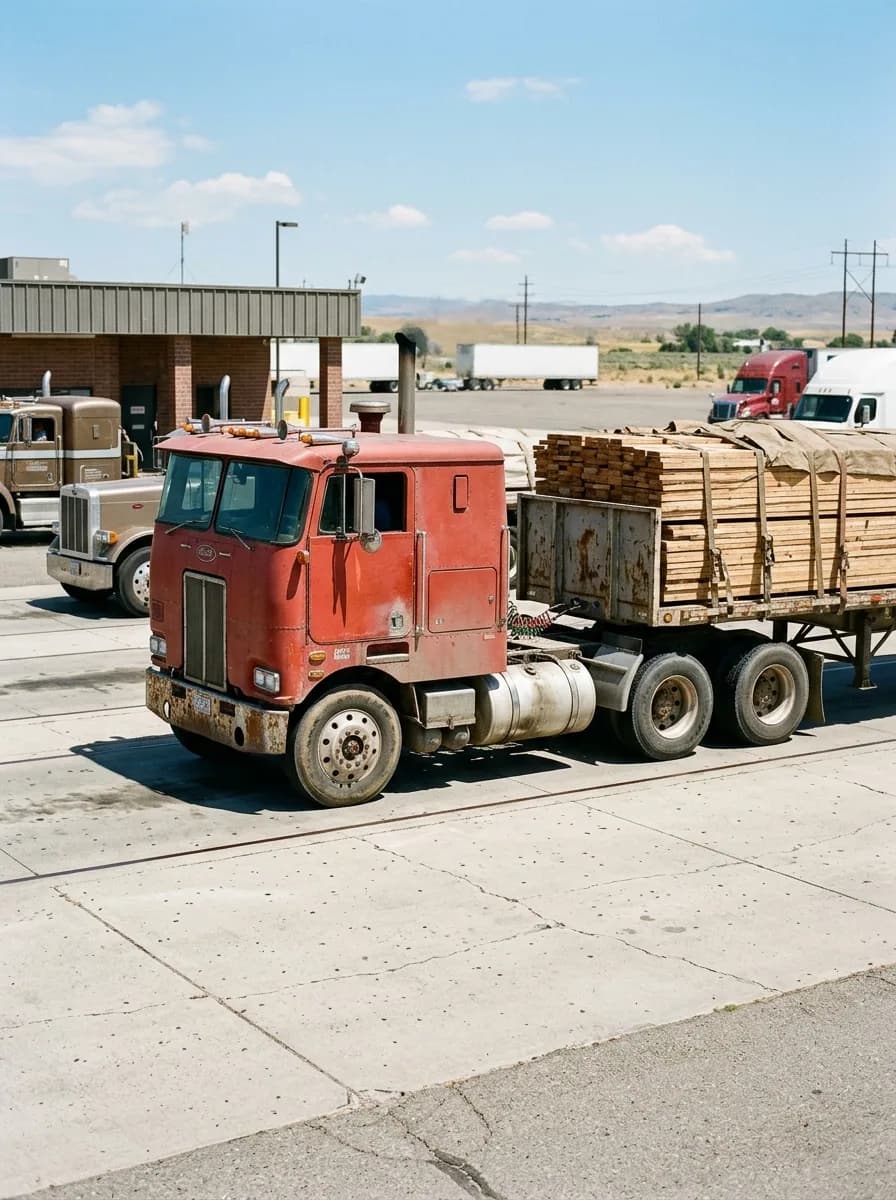
Look for the flat nose with no hood at all, the tilting front end, and round quad headlights, all features that separate a Pacemaker at a glance from any long-hood Peterbilt of the same era. The low bumper-to-back-of-cab measurement and the driver's seat sitting almost directly over the front wheels are the other giveaways: on a cabover, there's simply nowhere for a hood to be.
From Length Laws to the End of the Cabover
The law that created trucks like the 352 also killed them. The Surface Transportation Assistance Act of 1982 stopped counting a tractor's length against the overall combination limit on the national network of highways and set a federal floor guaranteeing fleets could run at least 48-foot trailers there, regardless of how long the cab in front of it was; states raised that further over the following years until 53-foot trailers became the highway standard. Once a conventional long-hood truck could pull the same trailer as a cabover, the flat nose lost its main reason for existing, and the U.S. cabover segment shrank steadily. Peterbilt kept building cabovers under the Model 362 name, which Heavy Duty Trucking calls the last of the great Peterbilt cabovers, but by the 1990s conventional long-hoods dominated the market.
Still on the Road
Despite all that, well-kept Pacemakers haven't disappeared. Some are still working trucks today, hauling flatbed loads for owners who like a cabover's tight turning radius. Parked next to a modern aerodynamic tractor, a 352 still looks like it drove in from a different era, because it did, and it's still doing the job.
The Legacy
The Peterbilt 352 and its Pacemaker name represent one of the clearest examples in trucking history of a law shaping a truck's entire design. It's a reminder that some of the most recognizable shapes on American highways weren't styling exercises at all, they were engineers solving a length problem the best way they knew how.
Specs
- Introduced
- 1959, replacing the 281/351 cabover
- Pacemaker name adopted
- 1969
- 352H taller variant introduced
- 1975 (about 4 in. taller cab, larger grille)
- Standard engine
- Cummins NHC-250, with Caterpillar and Detroit Diesel options
- Cab tilt
- 90 degrees, for full engine access
- Cab lengths offered
- 54 in. to 110 in. bumper to back of cab
- Production ended
- 1980 or 1981 (sources differ)
- Successor
- Peterbilt 362 cabover
FAQ
- Why did trucking companies use cabover trucks like the Peterbilt 352?
- Mid-century length laws counted a tractor's length against the overall rig limit, so a flat-nosed cabover let fleets run a longer, more profitable trailer within the same legal length.
- What is a Peterbilt Pacemaker?
- Pacemaker is the name Peterbilt gave the Model 352 starting in 1969, once the truck had proven popular enough to earn a name instead of just a number, along with a wider, more comfortable cab.
- What's the difference between a Peterbilt 352 and a 352H?
- The 352H, introduced in 1975, rides about four inches taller with a wider, taller grille to fit the larger radiators needed for more powerful engines.
- Why did cabover trucks like the 352 disappear from American highways?
- The 1982 Surface Transportation Assistance Act stopped counting tractor length against the overall length limit on the national highway network, so conventional long-hood trucks could run the same trailers cabovers could, removing the cabover's main advantage.
Know someone who drove one? Share this guide
Get the Look
As an Amazon Associate we earn from qualifying purchases.
- AMT Peterbilt 352 Pacemaker cabover 1:25 scale model kit — A real classic-kit subject, the flat nose builds up into a shelf centerpiece.
- Cabover trucking history book — For the length-law backstory behind the flat-nose era.
- Vintage motel or truck stop tin sign — The roadside decor that matches the Pacemaker's era.
Sources
- truckinginfo.com — great-american-trucks-the-peterbilt-model-352
- shorelinetruckparts.com — the-history-of-the-peterbilt-352
- en.wikipedia.org — Surface_Transportation_Assistance_Act_(1982)
- haletrailer.com — semitrailer-length-laws-by-state
- jalopnik.com — why-cab-over-semi-trucks-went-away
- en.wikipedia.org — Peterbilt
- en.wikipedia.org — List_of_Peterbilt_vehicles
- en.wikipedia.org — Cab-over
- fhwa.dot.gov — Vol2-Chapter2.pdf
- law.cornell.edu — 658.13