White Freightliner Cabover (1951-1970s): History and Specs
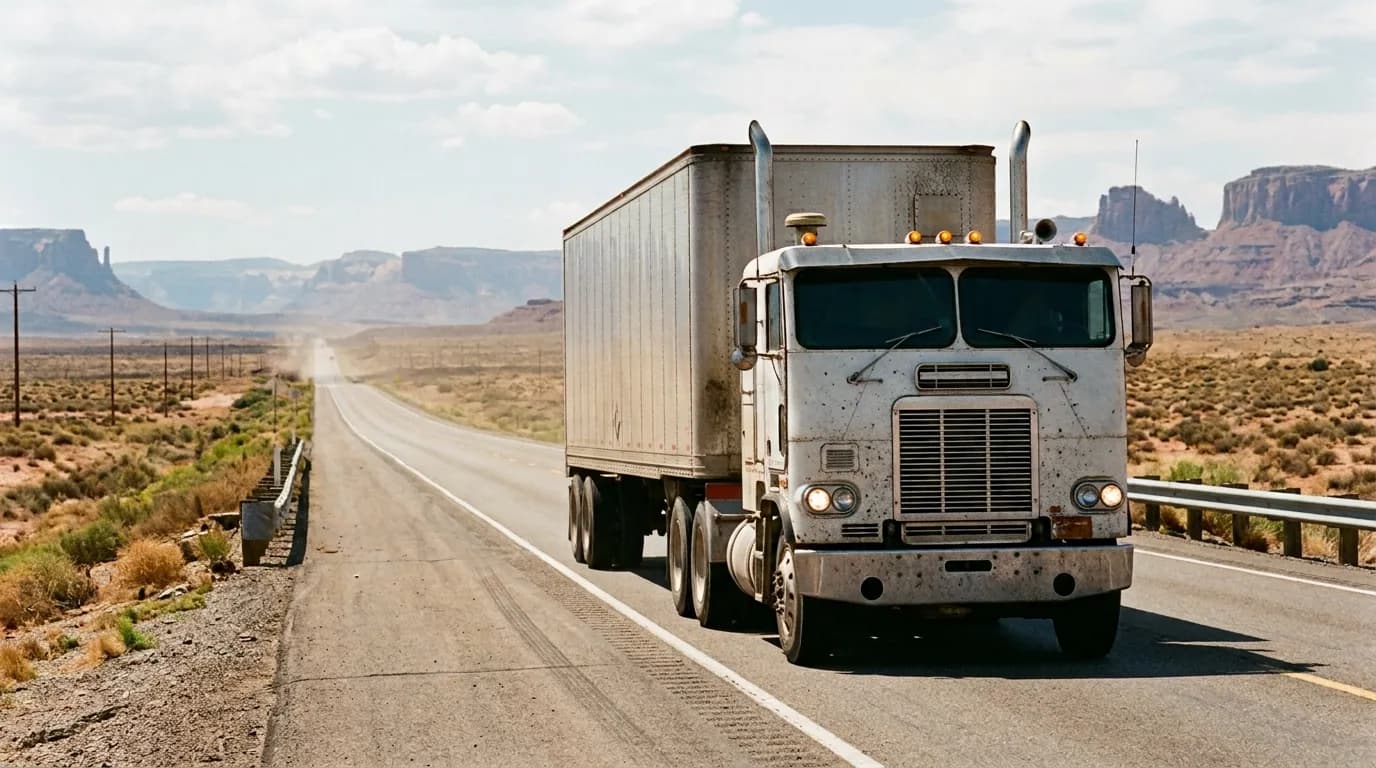
When established truck builders met Leland James's aluminum-cab idea with skepticism, he hired a team of engineers and built the trucks himself. The AI render above pictures where that idea ended up: a pale-metal cabover pulling a dry van down an empty desert highway, twin stacks upright and a row of amber marker lights across the roof. For roughly a quarter century, White dealers sold Freightliner's aluminum-cab cabover as the White Freightliner, one of the defining shapes of long-haul trucking in the American West and well beyond.
A Trucking Company That Built Its Own Trucks
Leland James founded Consolidated Freightways in Portland, Oregon, in 1929, and he was fussy about his equipment. He wanted trucks light enough to carry more paying freight on every trip. According to Daimler Truck North America's own history, the established truck builders he approached met his aluminum idea with resistance and skepticism, so he hired a team of engineers and built the trucks himself. Starting from used Fageol trucks as a platform, his team moved the cab over the front axle. That shortened the tractor and let Consolidated pull a longer trailer while staying inside the stringent length laws of the day.
In 1940, Consolidated and five other Western motor carriers formed Freightways Manufacturing Company, working out of a small garage in Salt Lake City. It became Freightliner Corporation in August 1942. The war interrupted truck production, and it resumed in Portland in 1947, with 30 trucks built that year and 40 in 1948. The first sale outside Consolidated, to a Portland forklift maker called Hyster, came in 1949 by most accounts, though the company's own history says Hyster placed its order in 1950. That truck is now in the Smithsonian's collection.
Why Aluminum
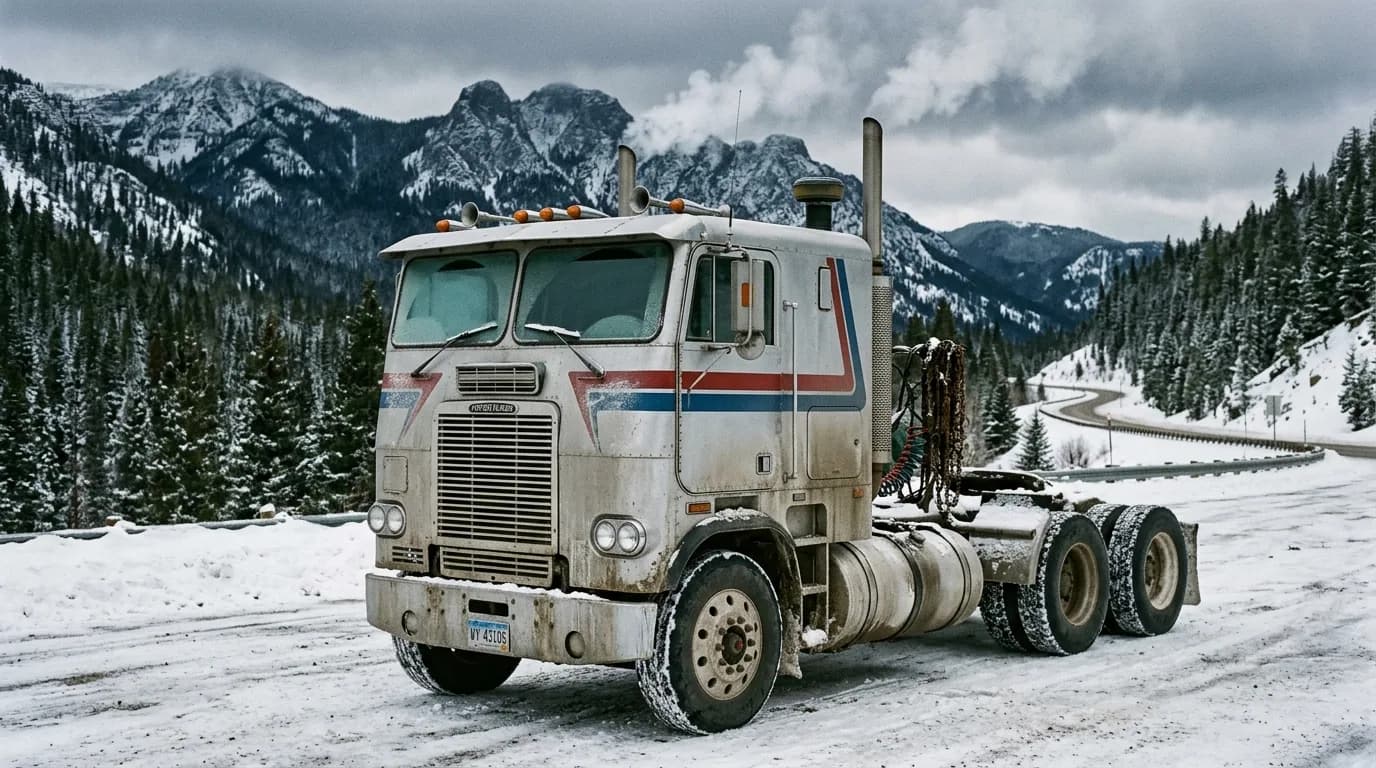
Aluminum was still a new material in trucking, more closely associated with aircraft than with highway equipment. James liked that it was light and easy to repair, and he reasoned that a lighter truck would give drivers the most from their engines on the steep grades of the West. It also gave drivers a metal they could fix themselves at a time when professional roadside service was close to nonexistent. Heavy Duty Trucking reports that the 1942 Freightliner cab-over, with its all-aluminum cab, ran at least a ton lighter than competing trucks, which meant more payload and more revenue for the operator.
The White Agreement
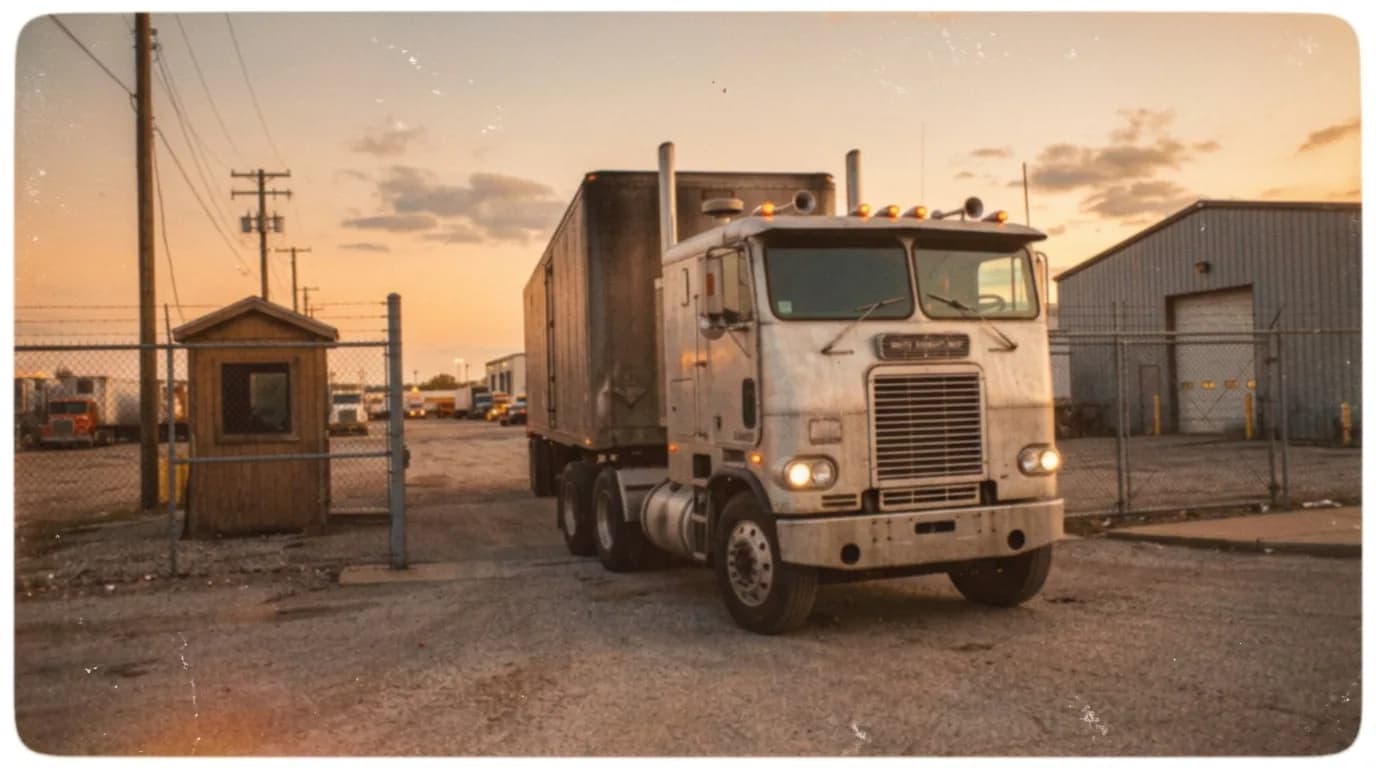
Freightliner began as a captive builder for Consolidated, and a dealer network would let it build more trucks at lower cost. Around 1951 it signed an agreement with White Motor Company of Cleveland, Ohio, then one of the largest truck makers in the country. Freightliner built the trucks and White dealers sold them. Those sold through White carried the "White Freightliner" name, while trucks built for Consolidated stayed plain Freightliners.
Sources disagree on the dates. Most put the start at 1951, though Freightliner's own 60th-anniversary history says 1950. For the end, Wikipedia's Freightliner article and Fullbay's company history say the distribution agreement was terminated in 1974, a Curbside Classic history says 1975, and Freightliner's anniversary history, a Consolidated Freightways company history and Wikipedia's White Motor Company entry say 1977. The Consolidated Freightways history says Freightliner had grown dissatisfied with White's sales efforts and began building its own network of dealers and agents, and Freightliner's anniversary history dates its independent dealer network to 1976. Many of the first dealers came from White's old network. White itself was in trouble through the 1970s: it filed for Chapter 11 in September 1980, and Volvo bought most of its assets in 1981.
From Shovelnose to WFT
Histories call Freightliner's first-generation cab the shovelnose, and Heavy Duty Trucking uses the name Bubblenose for its restored 1942 truck. In 1953 Freightliner added a cab with an overhead sleeper, which shortened the cab even further. For 1954 the shovelnose gave way to the taller, flatter WFT design, which Heavy Duty Trucking says set the template for North American cabovers for the next four decades. A "Mountaineer" four-wheel-drive system was an option. In 1958 the cab gained a 90-degree forward tilt for engine access, and a 104-inch sleeper followed in 1968.
Engines were the usual big three: Caterpillar, Cummins and Detroit Diesel. The wildest spec was the Powerliner, introduced in 1973 as a taller, wider cabover built around higher-horsepower engines. Heavy Duty Trucking and Curbside Classic both give its standard engine as a 400-horsepower Detroit Diesel 12V71 V12, with a Caterpillar 3408 as an option and a 600-horsepower, 1,150-cubic-inch Cummins KTA at the top. It arrived as the oil embargo sent fuel prices soaring and a 55-mph national speed limit followed, and it was discontinued after a few years of disappointing sales.
The End of the Cabover Era
The cabover's advantage was legal length. Wikipedia notes that tall cabovers held well over half of the U.S. market when interstate rules limited a tractor-trailer to 55 feet bumper to taillight. Conventionals rode better and were easier to get into and service, and Freightliner introduced its own first conventional in the 1970s. Trucking deregulation followed with the Motor Carrier Act of 1980, and the Surface Transportation Assistance Act of 1982 ended the limit on the overall length of semitrailer combinations, though some states kept stricter rules.
In 1981, Consolidated Freightways sold its truck manufacturing business, Freightliner, to Daimler-Benz. One company history puts the price at about $300 million for Freightliner and CF's few other remaining manufacturing subsidiaries. Freightliner kept building cabovers under its new owner. Wikipedia calls the Argosy the last Class 8 cabover marketed in North America. Complete trucks were withdrawn from sale there after 2006 production, though Heavy Duty Trucking notes the Argosy stayed on the books as a glider kit.
Specs
- Builder
- Freightliner Corporation, based in Portland, Oregon (production resumed there in 1947)
- Sold as White Freightliner
- From 1951 (1950 in Freightliner's own history); ended between 1974 and 1977, depending on the source
- All-aluminum cab
- 1942
- Overhead sleeper cab
- 1953
- Flat-nose WFT cab replaces the shovelnose
- 1954
- Tilt cab
- 1958, tilting forward 90 degrees
- 104-inch sleeper
- 1968
- Engines offered
- Caterpillar, Cummins and Detroit Diesel
FAQ
- What years was the White Freightliner made?
- Freightliner cabovers were sold through White dealers as White Freightliners starting around 1951 (Freightliner's own history says 1950). Sources put the end of the agreement anywhere from 1974 to 1977, with 1977 the date in Freightliner's anniversary history and a Consolidated Freightways company history.
- Did White Motor Company build Freightliner trucks?
- No. Freightliner built the trucks, and White dealers sold them under the White Freightliner name through an agreement that began around 1951.
- Why were Freightliner cabs made of aluminum?
- Leland James wanted a light truck that gave the engine the best chance on mountain grades and carried more freight per trip. Aluminum was also easy for drivers to repair themselves.
- When did Daimler buy Freightliner?
- Daimler-Benz bought Freightliner from Consolidated Freightways in 1981.
Know someone who drove one? Share this guide
Get the Look
As an Amazon Associate we earn from qualifying purchases.
- Freightliner cabover diecast model truck — A shelf-size version of the flat-nose cabover shape.
- Classic cabover trucks history book — Background reading on the era when tall cabovers ruled the interstate.
- CB radio for trucks — The classic cab accessory that goes with any big-rig build.
Sources
- en.wikipedia.org — Freightliner_Trucks
- truckinginfo.com — great-american-trucks-the-freightliner-cabover-tractors
- truckinginfo.com — freightliner-celebrates-60-years
- web.archive.org — freightliner-llc-celebrates-60-years-of-2002-03-21
- northamerica.daimlertruck.com — history
- fundinguniverse.com — consolidated-freightways-corporation-history
- en.wikipedia.org — White_Motor_Company
- fullbay.com — freightliner-history
- curbsideclassic.com — truck-history-1973-freightliner-powerliner-its-giant-1150-cubic-inch-19l-600-hp-cummins-kta-600-was-the-largest-diesel-in-production-highway-trucks
- en.wikipedia.org — Freightliner_Argosy
- truckinginfo.com — the-return-of-the-truck-that-never-went-away
- en.wikipedia.org — Motor_Carrier_Act_of_1980
- theautochannel.com — fs9745
- expeditersonline.com — a-look-back-at-cabovers-5739