1968 vs 1969 Camaro: How to Tell Them Apart, Engines and Value
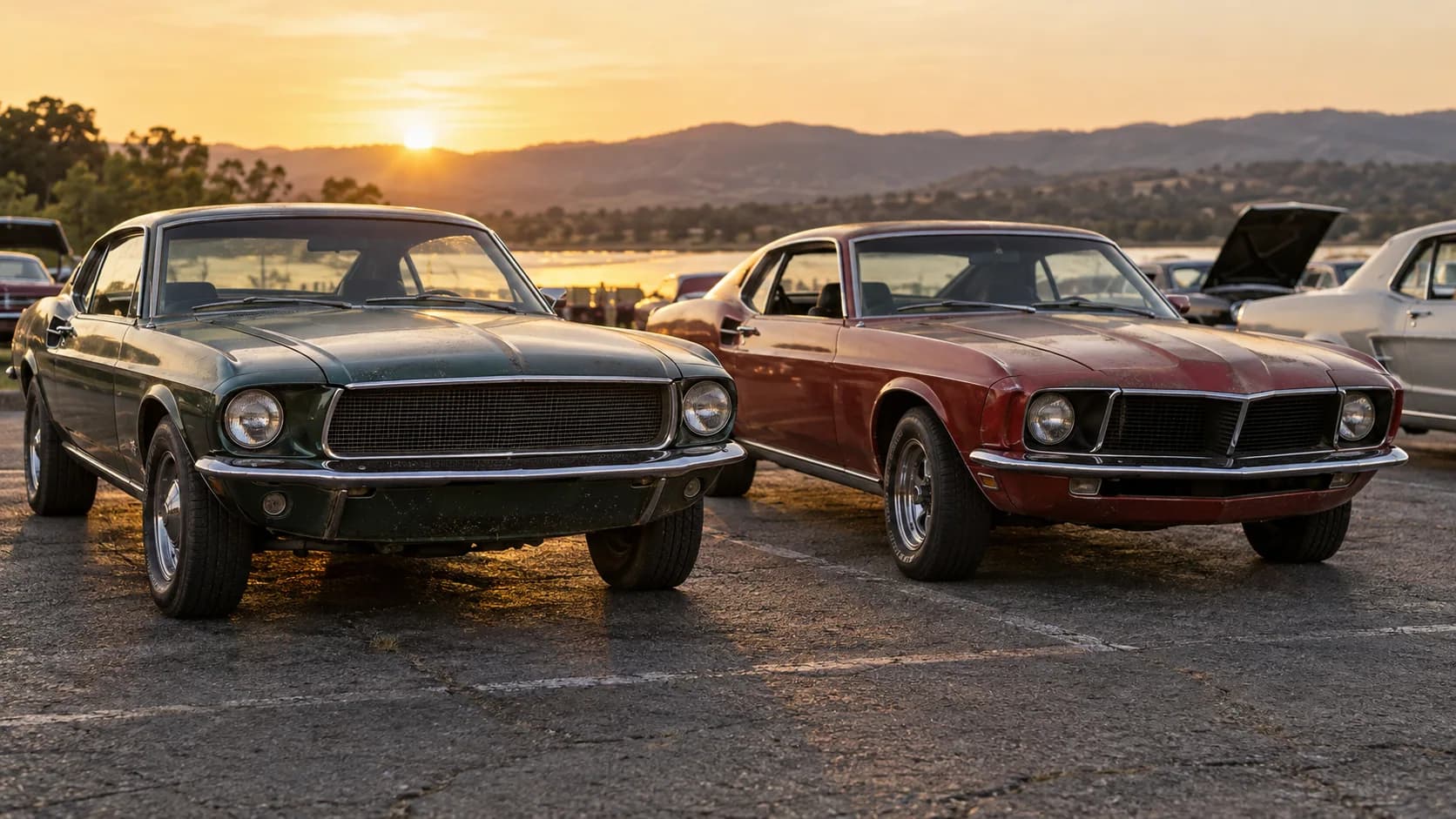
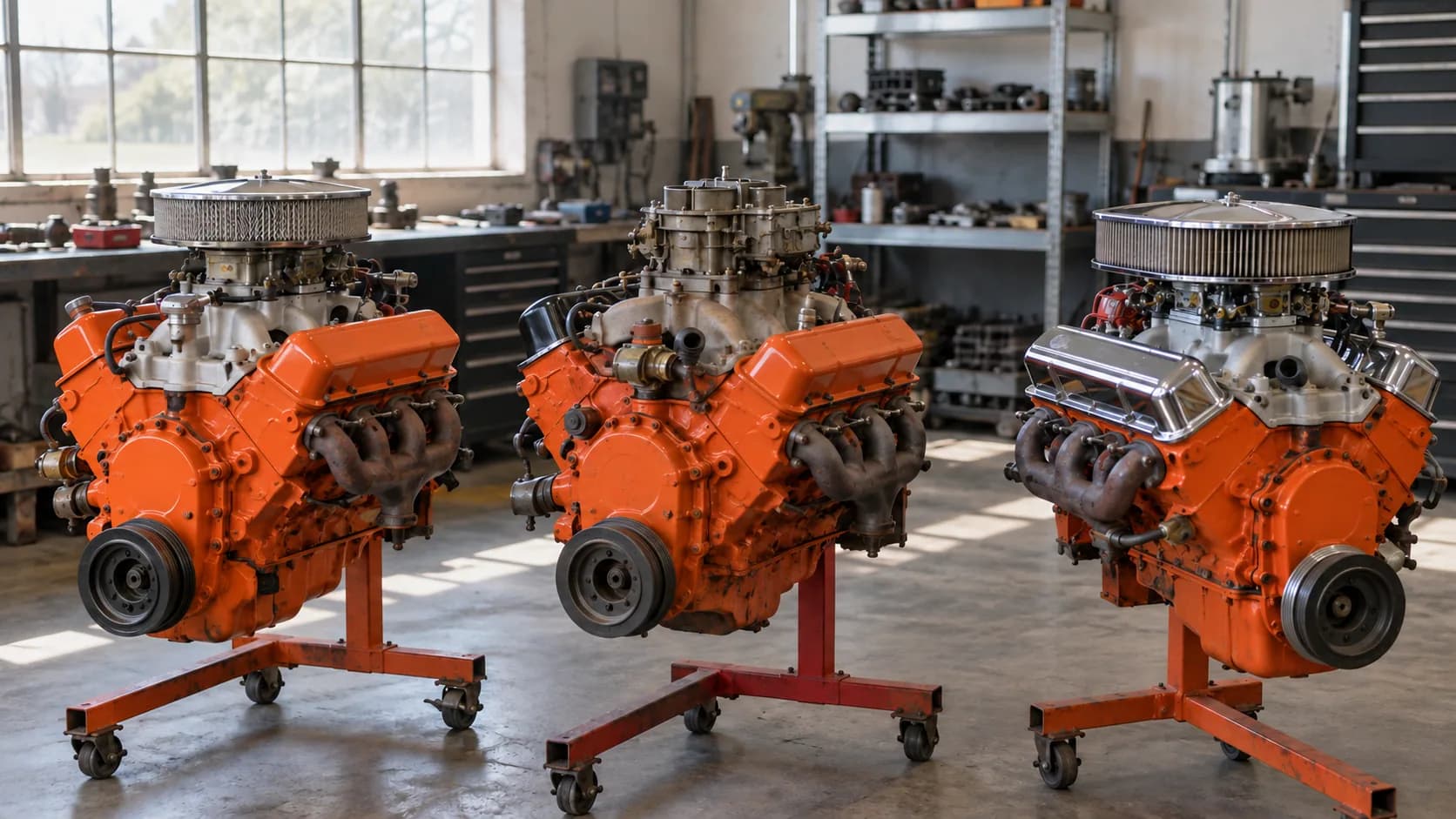
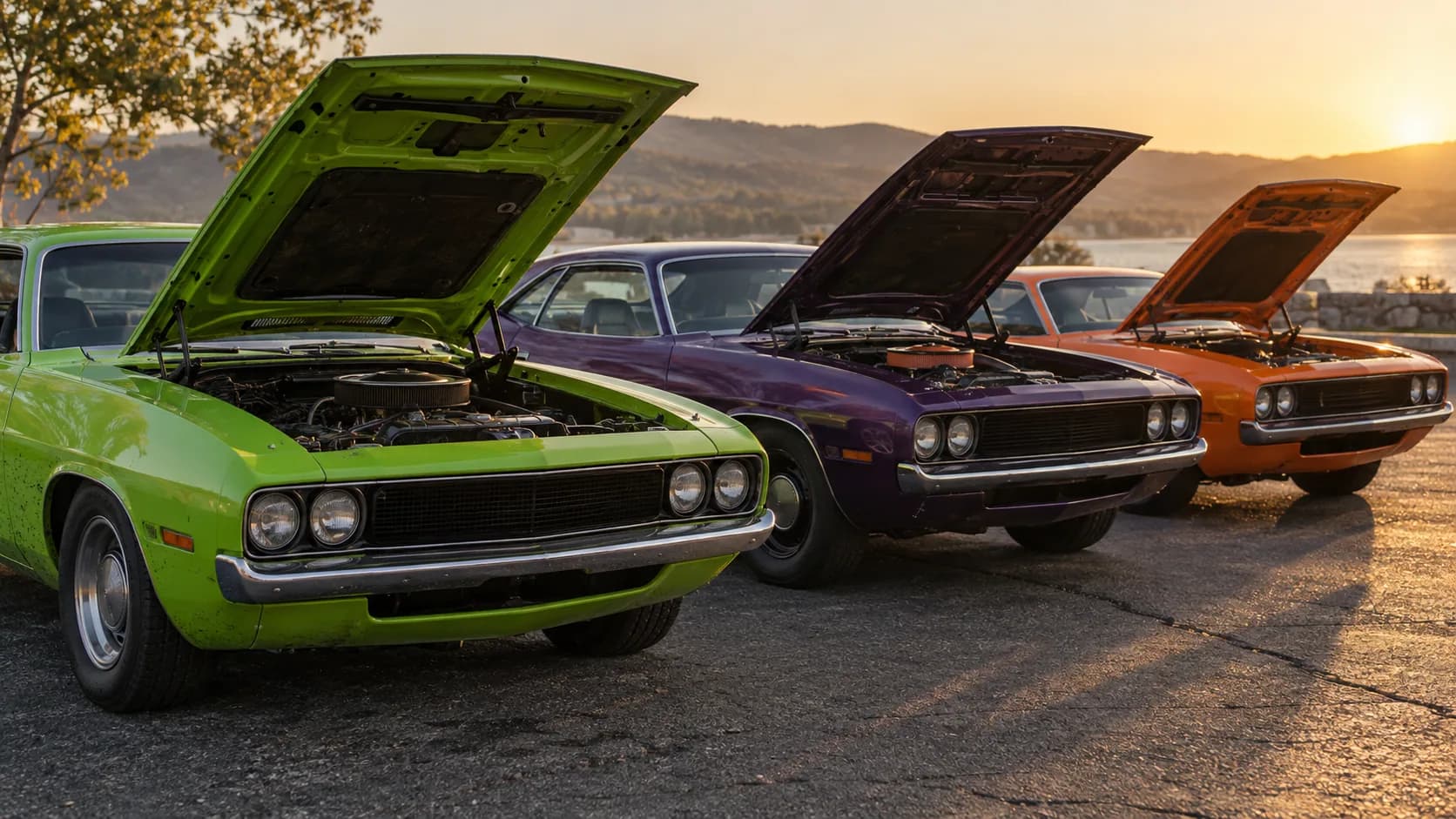
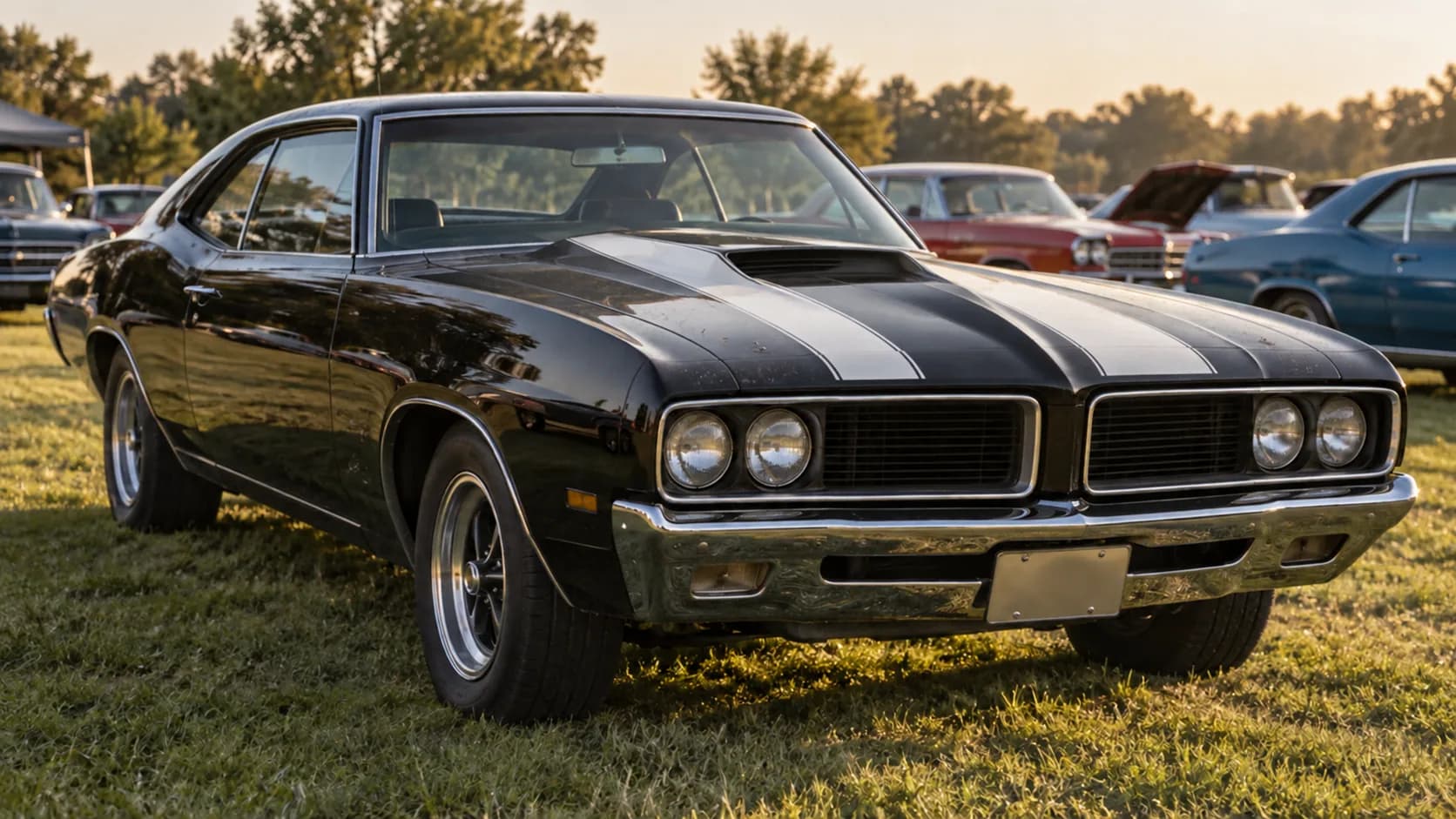
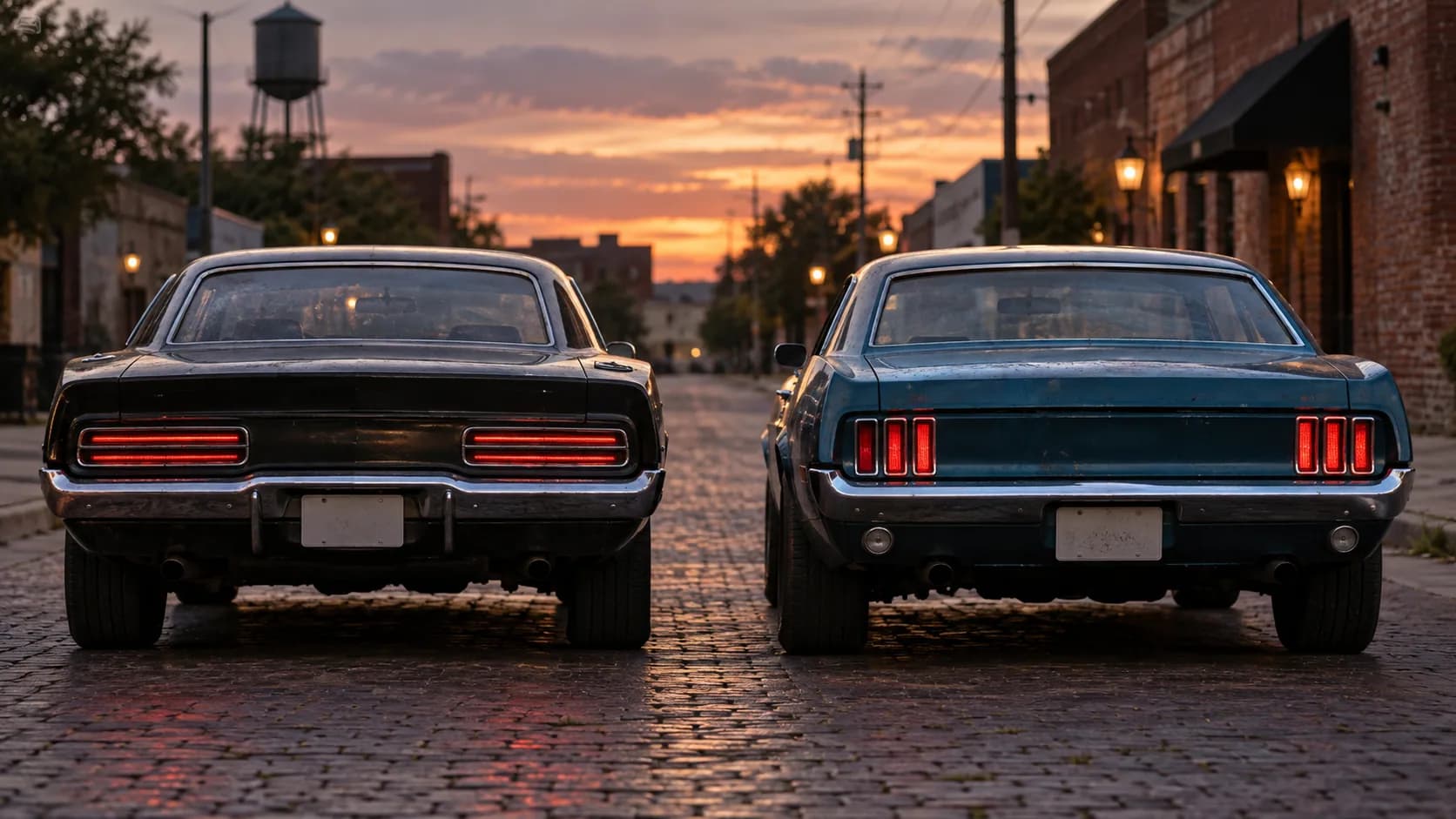
From fifty feet away, a 1968 and a 1969 Camaro can pass for the same car, and plenty of sellers are happy to let you think so. The renders above are AI images of late-sixties coupes at sunset, not photos of real Camaros, and they do not reproduce either year's details faithfully. The real cars, though, give themselves away in a handful of places once you know where to look: the side markers, the quarter panels, the taillights and the dash.
Two Years, One Generation
Both cars belong to the first-generation Camaro that Chevrolet launched for 1967. The 1968 was a refinement: it dropped the front vent windows in favor of Astro Ventilation, added side marker lights front and rear to meet new safety rules, and got a more pointed grille. The 1969 went further. It kept the hood, trunk lid and roof, but the rest of the sheet metal was new, including the door skins and rear quarter panels, which made the car look lower and wider.
The 1969 also ran long. Because the second-generation car was delayed, 1969 production was extended and ran into November 1969, and the 1970 Camaro did not reach the assembly plants until February 1970. That helps explain why 1969 production, at 243,085 cars, edged out the 235,147 built for 1968.
How to Tell Them Apart From the Outside
Start at the vent window. The first year had one and the later two do not, so a Camaro with a front vent window is almost certainly a 1967. Once that is ruled out, look at the side markers. The 1968 wears large rectangular lamps, with the front one sitting low, while the 1969 has a slimmer rectangular marker mounted higher on the front fender.
Next, check the quarter panel ahead of the rear wheel. The 1969 has a set of simulated gills there, and its body lines flow rearward from the tops of both the front and rear wheel arches. If a car has neither a vent window nor gills, and it has not been modified, it should be a 1968.
The tail is the most dependable tell. On non-RS cars, the 1968 lamps have two lights per bezel, while the 1969 uses a slimmer three-section lens with a small backup lamp in the center. RS cars differ again: the 1968 RS has a two-part red lamp and the 1969 RS has two horizontal panes, both with backup lamps under the bumper. Even the gas cap moved. On a 1968 it sits on the rear panel between the taillights, and on a 1969 it hides below the bumper behind the license plate.
Up front, the 1969 grille has a sharper point at the center and the headlights are set deeper. Standard 1968 cars carry soft-rectangular parking lamps in the grille, while standard 1969 cars move round signal lamps below the bumper. On the RS, the 1969 hideaway headlight doors have three slots that let the lamp show through. Badges help too: a 1968 RS has a lowercase "rs" on the grille, the 1969 an uppercase "RS," and the 1969 Z/28 added a grille emblem. A 1968 also has a chrome strip along the top of the doors that the 1969 lacks.
Inside the Cabin
The quickest interior check is the gauge cluster. The 1967 and 1968 cars used round gauges, and the 1969 switched to square ones. The 1969 also moved the ignition switch from the dash to the steering column, and Chevrolet fitted headrests to the 1969 cars as federal rules made them mandatory from January 1, 1969. Earlier 1969 builds could be ordered with a headrest delete, which only 335 buyers chose.
Engines and Options by Year
The 1968 Camaro offered 10 engines and the 1969 offered 12. The SS kept a 350 as its base engine, rated at 295 hp in 1968 and 300 hp in 1969, with 396 big-blocks at 325, 350 and 375 hp above it. The 375 hp L78 could also be ordered with aluminum heads as the L89, with the horsepower rating unchanged. In 1969 alone, 4,889 buyers paid extra for an L78.
The Z/28 used the same 302 cubic-inch V8 in both years, rated at 290 hp. It was built by putting a short-stroke 283 crank in a 327 block to stay under the Trans-Am series' 305 cubic-inch limit. All Z/28s were coupes with a four-speed and no automatic or air conditioning offered. The RS remained an appearance package that could be combined with the SS or Z/28.
The 1969 added a 307 V8 and new 350 variants on the lower end, and, through Chevrolet's Central Office Production Order system, a pair of 427s. The COPO 9561 cars carried the iron-block L72 rated at 425 hp, and Yenko ordered 201 of them. The COPO 9560 cars got the all-aluminum ZL1, rated at 430 hp, and only 69 were built.
Production and Value
| Model | 1968 | 1969 |
|---|---|---|
| Base | 159,087 | 150,078 |
| RS | 40,977 | 37,773 |
| SS | 27,884 | 34,932 |
| Z/28 | 7,199 | 20,302 |
| Total | 235,147 | 243,085 |
The table shows the main difference for collectors: there are almost three times as many 1969 Z/28s as 1968 ones, yet the 1969 is the year with the COPO cars. Neither year is automatically worth more; equipment and originality matter more than the model year. The top of the market is a 1969 car, though. A 1969 ZL1 COPO coupe, one of the 69 built, sold at Barrett-Jackson Scottsdale for $1,094,500 in January 2020. Original big-block, Z/28 and COPO cars carry the money, while a base six-cylinder coupe of either year is a different market.
Because so many parts interchange, verify the body tag and paperwork before paying a premium. A 1968 with 1969 taillights or gills, or a clone dressed as a Z/28 or COPO, can look right at a glance, and the details above are where those stories start to come apart.
Specs
- Generation
- First-generation Camaro, 1967-1969
- Production
- 1968: 235,147; 1969: 243,085
- Z/28 production
- 1968: 7,199; 1969: 20,302
- Z/28 engine
- 302 cu in V8, 290 hp (both years)
- Top SS engine
- 396 L78, 375 hp (L89 aluminum-head version available)
- 1969 COPO 427s
- L72, 425 hp; ZL1 aluminum, 430 hp (69 built)
- Quick tell
- 1968: two lights per taillamp bezel; 1969: three-section lens and quarter-panel gills
- Gauges
- 1968: round; 1969: square
FAQ
- How can you tell a 1968 Camaro from a 1969?
- Look at the taillights, side markers and quarter panels. A 1968 has two lights per taillamp bezel and large side markers, while a 1969 has a three-section lens, slimmer markers and simulated gills ahead of the rear wheels.
- Did the 1968 Camaro have vent windows?
- No. The 1968 dropped the front vent windows used in 1967 and added Astro Ventilation, and the 1969 did not have them either.
- How many 1969 Camaro Z/28s were made?
- Chevrolet built 20,302, compared with 7,199 for 1968. Both years used the 290 hp 302 V8.
- Is a 1969 Camaro worth more than a 1968?
- Not automatically. Equipment and originality matter more than the year, though the highest prices belong to 1969 COPO cars: a 1969 ZL1 COPO sold for $1,094,500 at Barrett-Jackson in January 2020.
Know someone who drove one? Share this guide
Get the Look
As an Amazon Associate we earn from qualifying purchases.
- 1969 Camaro diecast model car — Put a 1:24 or 1:18 version on the shelf and count the taillight sections.
- First-generation Camaro restoration guide book — Year-by-year details for checking originality.
- Camaro vintage metal garage sign — Wall decor for the garage that houses either year.
Sources
- en.wikipedia.org — Chevrolet_Camaro_(first_generation)
- en.wikipedia.org — Chevrolet_Camaro_(second_generation)
- streetmusclemag.com — at-a-glance-how-to-spot-differences-in-first-gen-camaro-1967-69
- chevyhardcore.com — differences-within-a-generation-the-1967-1969-camaro
- camaros.org — model.shtml
- camaros.org — headrest.shtml
- chevyhardcore.com
- autoevolution.com — uncle-s-1969-camaro-wrapped-in-blankets-and-plastic-uncovered-after-decades-rare-rpo-u46-option-273314
- camaros.org — geninfo.shtml
- classic.com — 1969-chevrolet-copo-camaro-zl1-W9JgVdp
- autoblog.com — most-expensive-barrett-jackson-scottsdale-2020