Pontiac GTO Judge 1969-1971: History and How to Spot a Real One
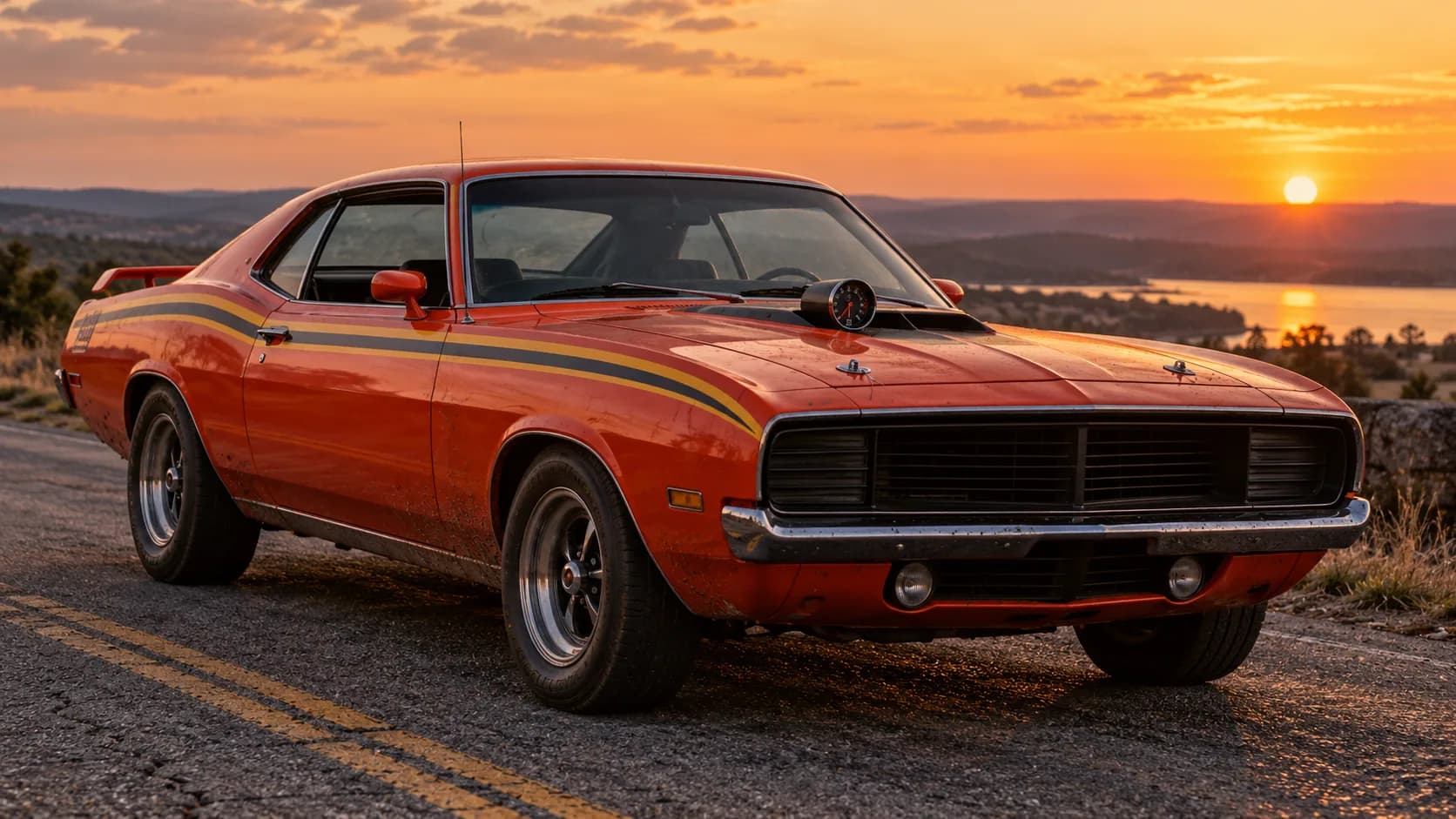
A bright orange coupe with a tall wing and loud stripes still stops a car show crowd, and for Pontiac fans that recipe has one name: the Judge. The renders above are AI images of orange, winged muscle cars and a blue V8 under the hood. They do not show a real car, and their body lines do not match a GTO, so use the checklist below rather than the pictures. The Judge itself was real, built from 1969 to 1971, and it is one of the most copied muscle cars ever made.
Built to Answer the Road Runner
Pontiac added the Judge to the GTO line for 1969. The first idea was a stripped, low-cost GTO to fight the Plymouth Road Runner, which was selling a lot of performance for little money. That plan did not survive. The Judge became a dressed-up, more expensive GTO, priced about $332 above a regular one.
The name came from the "Here come de Judge" routine, borrowed from comedian Dewey "Pigmeat" Markham and made famous again on Rowan & Martin's Laugh-In. Sources disagree on which Laugh-In performer made the line stick, with Flip Wilson and Sammy Davis Jr. both credited. Pontiac's ads played along with lines like "All rise for the Judge" and "The Judge can be bought."
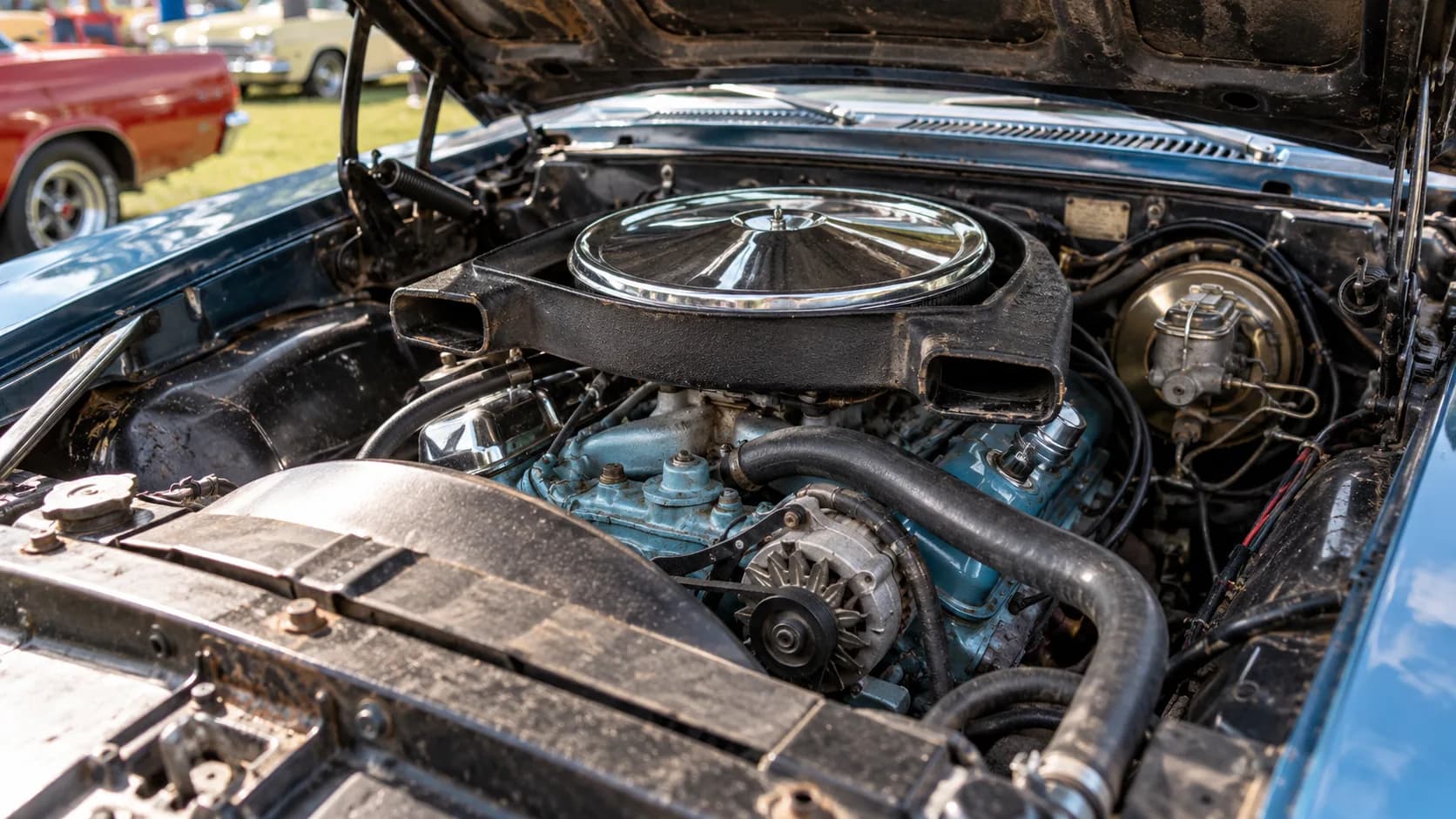
What Came Standard
The 1969 Judge package was built around the 400-cubic-inch Ram Air III V8, rated at 366 gross horsepower and 445 lb-ft of torque. A regular GTO started with a 350-horsepower 400. The Ram Air IV, rated at 370 horsepower, was optional on the Judge. Only a few hundred 1969 GTOs got the Ram Air IV, with counts varying by source, and no reliable figure shows how many of those were Judges.
The rest of the package was about looks and feel:
- A 60-inch rear spoiler on pedestals, with different deck lid torque rods to hold it up
- "The Judge" decals and multicolor side stripes
- 14x6-inch Rally II wheels with no trim rings, on G70-14 tires
- A Hurst T-handle shifter on four-speed cars
- A blacked-out center grille and a Judge emblem on the glove box
Carousel Red, a shade that looks more orange than red, was the launch color. Roughly the first 2,000 Judges were painted that way before Pontiac opened up the full GTO color list partway through the year.
1970 and 1971: The Last Rulings
For 1970 the Judge got the restyled GTO body, revised stripes and a new airfoil spoiler. Orbit Orange became the signature color. The Ram Air III stayed standard with the Ram Air IV optional, and the 455 HO arrived late in the model year.
By 1971 the Ram Air engines were gone. The 455 HO, rated at 335 gross horsepower, was the standard engine, and the stripes were toned down. Pontiac announced on February 11, 1971, that it would stop taking Judge orders after March 1.

Production by Year
Production fell fast, which is why late cars are so rare:
- 1969: 6,833 (6,725 hardtops, 108 convertibles), out of 72,287 GTOs
- 1970: 3,797 (3,629 hardtops, 168 convertibles), out of 40,149 GTOs
- 1971: 374 (357 hardtops, 17 convertibles)
Some references give 357 as the 1971 total including convertibles, so the final-year count depends on the source. Either way, the three years add up to roughly 11,000 cars, and fewer than 300 were convertibles.
How to Tell a Real Judge
The Judge was an option package, not its own model, so the VIN will not prove it. A GTO VIN starts with 242, while a LeMans starts with 237, so a 237 car wearing Judge stripes is a clone from the start. But plenty of real GTOs have been turned into Judges, and stripes, a spoiler and bare Rally IIs can be bought by anyone.
The key document comes from PHS Automotive Services, which holds dealer invoices for 1961 to 1986 Pontiacs. Send the VIN and PHS returns a copy of the factory invoice or billing history, plus a letter decoding the options when needed. If the Judge package is not on that paper, the car is not a factory Judge. The Judge package was ordered as option code WT1 in 1969 and 1970, so look for it on the documents.
After the paperwork, match the hardware. On a 1969 Ram Air III car, the engine code stamped on the block is typically WS on manual cars or YZ on automatics. Check the trim tag for the original paint and interior, and look at casting and assembly dates on the drivetrain. A real build sheet, if one survives, is a bonus. A car with a matching PHS invoice but a replacement engine is still a Judge, but it is worth less than one with its original motor.
What Judges Are Worth Today
Values swing hard with engine, transmission, body style and documentation. The same model can sell for very different money when the engine or paperwork is in question, so a PHS-backed car with its original drivetrain is the one that holds value.
The top of the market is the rare-option convertibles. In January 2023, a 1970 Orbit Orange Judge Ram Air IV convertible with an automatic sold for $1.1 million at Mecum's Kissimmee auction, reported as a record price for a Pontiac. Reports on the sale put it among only six or seven 1970 Judge convertibles built with that engine and transmission, depending on the source. Most Judges sell for far less, but every one of them should come with the paper trail.
Specs
- Model years
- 1969-1971 (GTO option package)
- 1969 price
- About $332 over a standard GTO
- 1969-70 standard engine
- 400 Ram Air III, 366 hp, 445 lb-ft
- Optional engine
- 400 Ram Air IV, 370 hp (1969-70)
- 1971 standard engine
- 455 HO, 335 gross hp
- Launch color
- Carousel Red (roughly the first 2,000 cars)
- Production
- 6,833 (1969), 3,797 (1970), 374 (1971)
- Documentation
- PHS factory invoice or billing history
FAQ
- How many Pontiac GTO Judges were made?
- About 11,000 over three years: 6,833 in 1969, 3,797 in 1970 and 374 in 1971, though some references give 357 for the final year.
- Why is it called the GTO Judge?
- The name came from the "Here come de Judge" comedy routine made popular on Rowan & Martin's Laugh-In. The car was first meant as a budget rival to the Plymouth Road Runner.
- How do I know if my GTO is a real Judge?
- Order the PHS documents with your VIN. The factory invoice or billing history shows whether the Judge package was ordered; stripes, a spoiler and Rally II wheels prove nothing on their own.
- What engine did the 1969 GTO Judge have?
- The 400 Ram Air III V8, rated at 366 horsepower, was standard. The 370-horsepower Ram Air IV was optional.
Know someone who drove one? Share this guide
Get the Look
As an Amazon Associate we earn from qualifying purchases.
- 1969 Pontiac GTO Judge diecast model — Carousel Red on the shelf, no restoration bill.
- Pontiac GTO history book — Year-by-year background on the GTO and the Judge.
- Pontiac GTO metal garage sign — A wall piece for the Pontiac corner of the garage.
Sources
- en.wikipedia.org — Pontiac_GTO
- news.classicindustries.com — pontiac-gto-judge
- oldcarsweekly.com — here-come-the-judge-the-first-year-1969-gto-judge
- musclecarsillustrated.com — pontiac-gto-judge-1969-1970-1971
- phs-online.com
- decodethis.com — 242379G112242
- yenko.net — t-161560
- carscoops.com — one-of-seven-1970-pontiac-gto-convertible-just-sold-for-1-1-million
- sportscarmarket.com — 1970-pontiac-gto-judge
- motorious.com — rare-1969-pontiac-gto-judge-ram-air
- rmsothebys.com — r109-1969-pontiac-gto-judge