Ford 428 Cobra Jet: History, Specs and Super Cobra Jet Guide

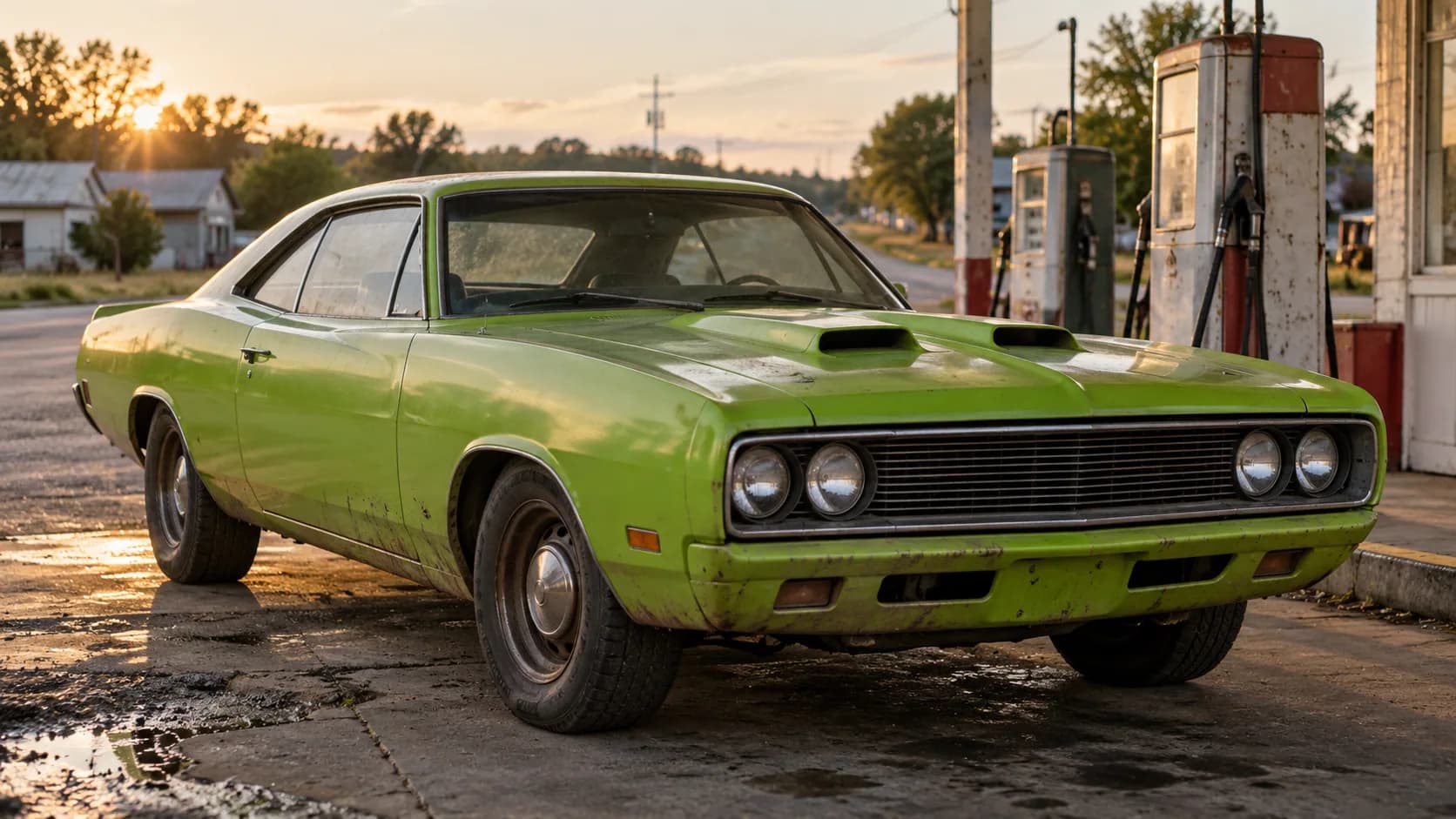
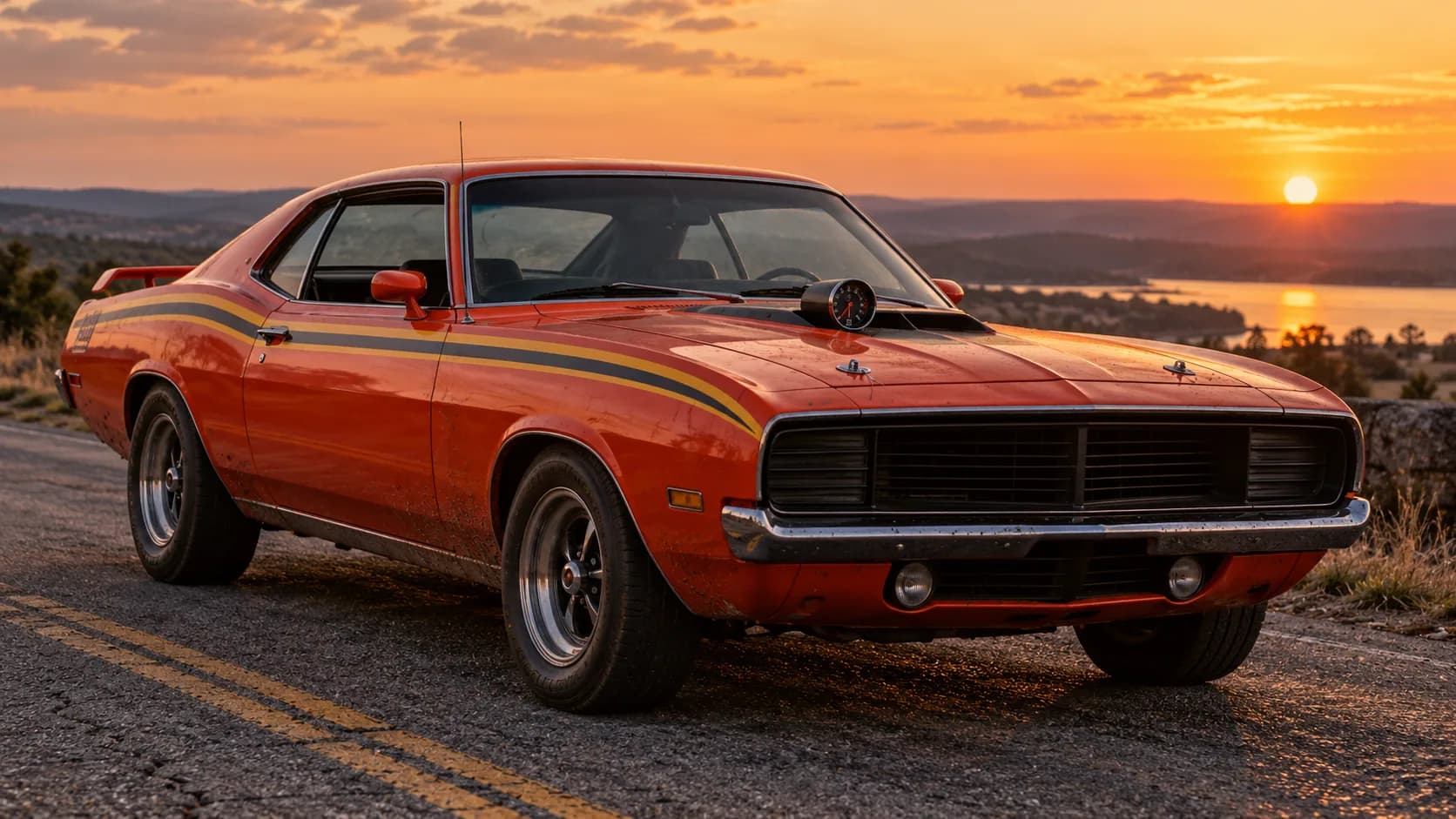
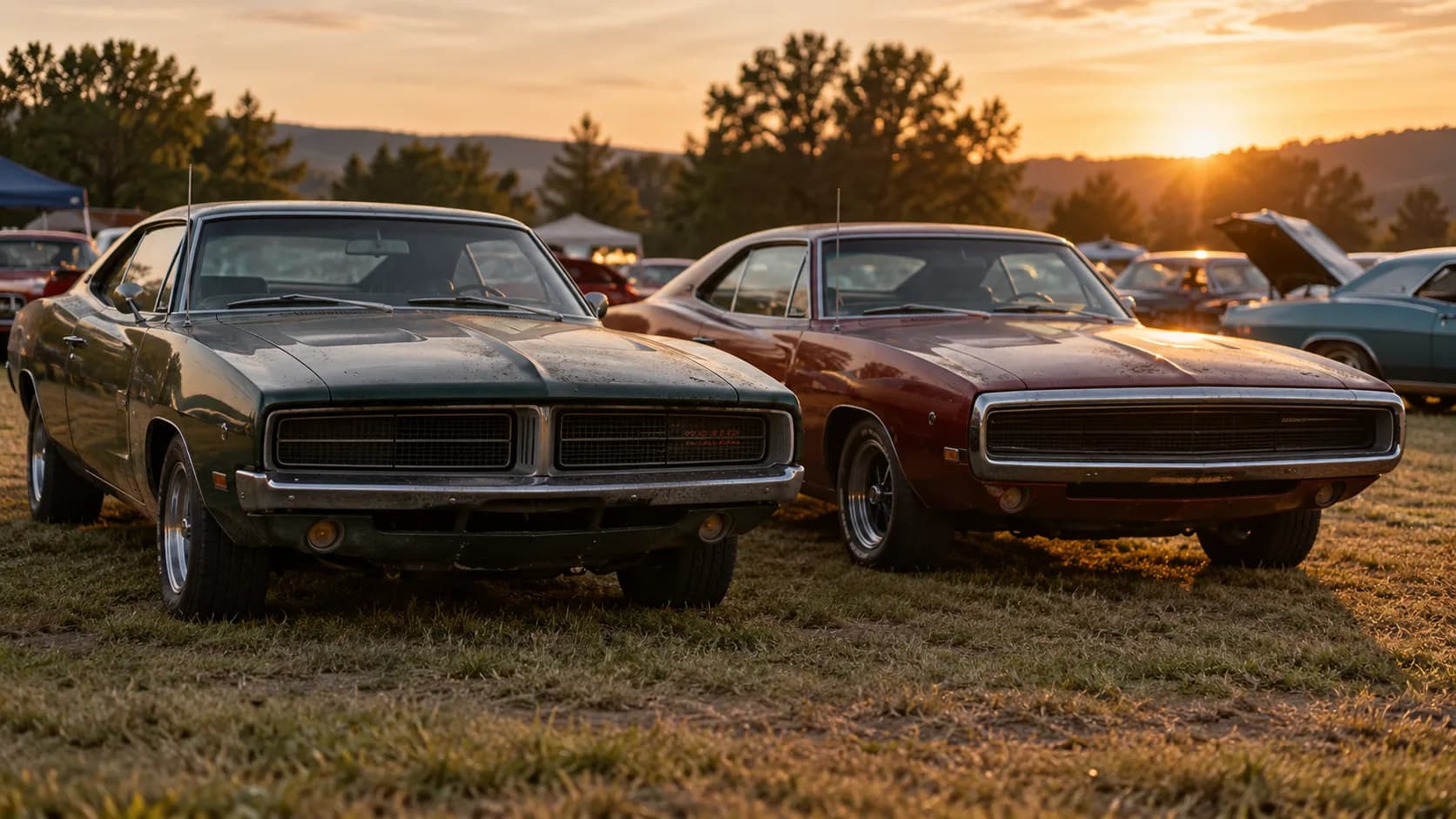
Few factory horsepower numbers have been doubted as loudly as the 335 Ford printed for its 428 Cobra Jet. The renders above imagine a blue big-block on an engine stand and a black shaker scoop poking through a hood, and they are AI-generated images, not photos of any real car. The engine behind them is real, and it turned Ford's Mustang from a stylish pony car into a street and strip contender almost overnight.
Origins: A Dealer's Idea Becomes a Factory Engine
The Cobra Jet started at a dealership, not in Dearborn. Bob Tasca of Tasca Ford in Rhode Island, tired of watching his Mustangs lose street races, built a car he called the KR-8, short for "King of the Road, 1968." The recipe paired a 428 Police Interceptor bottom end with high-flowing 427-style cylinder heads. Ford's first plan reportedly used a 427, but the company switched to the 428 combination Tasca had developed.
Ford took the idea seriously enough to build 50 lightweight Wimbledon White Mustangs for drag racing, with production reportedly starting in December 1967. To save weight they went without radio, heater, sound deadener and undercoating. Their VINs run from 8F02R135007 to 8F02R135056, which is why collectors call them the 135-series cars. At the NHRA Winternationals at Pomona in February 1968, Al Joniec drove the Rice-Holman entry to the Super Stock final and beat Dave Wren's Plymouth, the first national win for a Cobra Jet Mustang. The usual figure for his run is 11.49 seconds at over 120 mph, though one record lists 11.56. Street versions reached showrooms late in the 1968 model year, which is why the first cars are often called 1968 1/2 models.

Inside the FE: How the Cobra Jet Was Built
The 428 belonged to Ford's FE big-block family and was its largest member, a stroked version of the 406. Bore and stroke measure 4.13 by 3.98 inches. The ordinary 428 had arrived in 1966 for full-size Fords, along with a Police Interceptor version for police cars.
The Cobra Jet was mostly a clever mix of existing parts. It used a standard FE block with Police Interceptor connecting rods, a cast-iron intake patterned after the Interceptor's aluminum one, the camshaft from the 1968 390 GT, and a Holley 735 cfm four-barrel. The heads resembled the 427 Low Riser's, with 2.09-inch intake and 1.66-inch exhaust valves and intake ports sized like those of the 427 Medium Riser.
Ford rated it at 335 hp at 5,200 rpm and 440 lb-ft at 3,400 rpm. Almost nobody believed the horsepower figure. NHRA's history calls it laughable and suggests something like 375 to 390 hp, and other accounts cite a Ford engineer reporting about 410 hp on the dyno. The commonly given reason for the low number is insurance: a modest rating kept premiums and racing class placement friendlier.
Cobra Jet vs Super Cobra Jet
For 1969 Ford added the Drag Pack option, and a 428 with the Drag Pack is what enthusiasts call a Super Cobra Jet. Ford's description listed a Traction-Lok differential with a 3.91 or 4.30 axle, plus engine changes: an oil cooler, cap-screw connecting rods, and a modified crankshaft, flywheel and damper. The option was not available with air conditioning or other axle ratios.
The rods were Le Mans-style cap-screw pieces similar to those in the 427 Medium Riser, and the SCJ was externally balanced. The horsepower rating stayed at 335, so the difference was durability at high rpm, not a bigger number on paper. The easiest under-hood tell is the external oil cooler, since every SCJ got one.
Ram Air and the Shaker
Ram Air was part of the story from the beginning. All 1968 Cobra Jet Mustangs came with a Ram Air air cleaner as standard, fed through the hood scoop, and the design went through at least three revisions between April and July 1968.
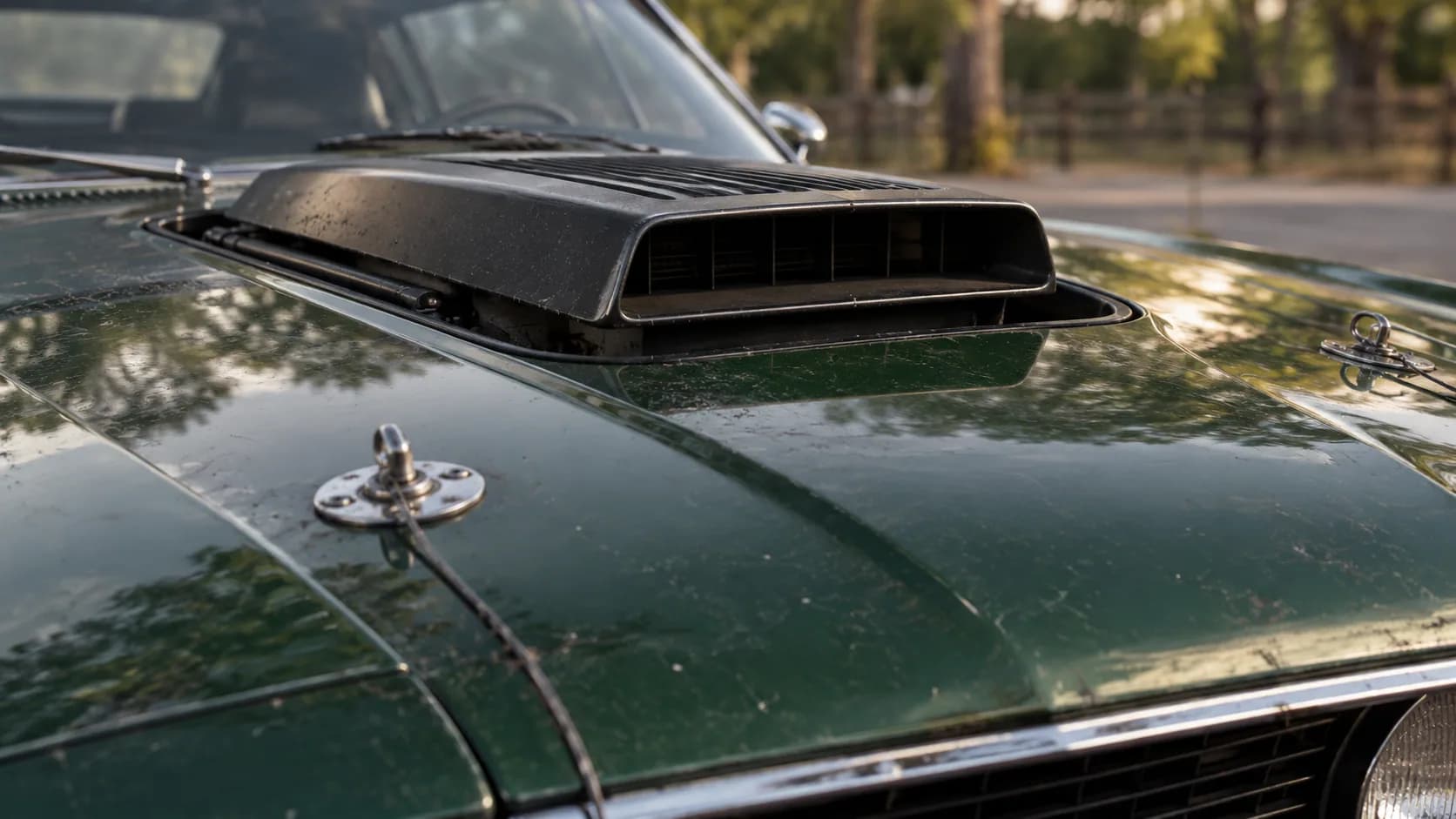
For 1969 and 1970, Ram Air Mustangs got the famous shaker. The scoop sits on the engine and sticks up through a hole in the hood, so it rocks as the engine moves, which gave it the name. A vacuum motor in the base controls a flapper that opens when vacuum drops under hard throttle. Non-Ram Air cars used an enclosed air cleaner with a chrome lid. Ford later offered the shaker on other engines and, for 1970, on the Torino.
Which Cars Got It
The Cobra Jet went into a wide spread of Ford and Mercury models from 1968 to 1970:
- Mustang GT, the 135-series race cars and the 1969 to 1970 Mach 1
- Shelby GT500KR for 1968 and Shelby GT500 for 1969 and 1970
- Torino GT and the 1969 Fairlane-based Cobra
- Mercury Cougar, including the GT-E, XR7-G and 1969 Eliminator
- Mercury Comet and Cyclone, including the 1969 Cyclone CJ
By one commonly cited count, Ford built about 14,600 Cobra Jet Mustangs in the 1969 model year alone. For 1971 the Mustang's top engine became the 429 Cobra Jet, from a different engine family, which ended the 428 CJ's run in the pony car.
How to Identify a Real Cobra Jet
Start with the VIN. On these Fords the fifth character is the engine code: R means the Ram Air 428 CJ and Q means the non-Ram Air version. A 1969 Mach 1 Super Cobra Jet VIN such as 9T02R162573 shows the R in that spot. The letter does not tell you whether the car had the Drag Pack, so a build sheet or Marti Report is the way to confirm an SCJ. On the engine itself, look for the external oil cooler on an SCJ and the correct shaker or Ram Air hardware on an R-code car.
Legacy
The Cobra Jet showed that a dealer and a drag strip could steer a carmaker's product plan. Ford has since reused the name on factory drag-racing Mustangs, and the 1968 race cars still headline Ford events. Whatever the real output was, 335 hp remains one of the most famous underrated numbers in muscle car history.
Specs
- Engine family
- Ford FE big-block V8
- Displacement
- 428 cu in (7.0 L)
- Bore x stroke
- 4.13 x 3.98 in.
- Factory rating
- 335 hp @ 5,200 rpm, 440 lb-ft @ 3,400 rpm
- Carburetor
- Holley 735 cfm four-barrel
- Years
- 1968 1/2 to 1970
- Super Cobra Jet (Drag Pack)
- 3.91 or 4.30 Traction-Lok, oil cooler, cap-screw rods
- VIN engine code
- R = Ram Air, Q = non-Ram Air
FAQ
- How much horsepower did the 428 Cobra Jet really make?
- Ford rated it at 335 hp and 440 lb-ft. Most accounts call that underrated, with estimates from about 375 hp up to a reported 410 hp on a Ford dyno.
- What is the difference between a 428 Cobra Jet and a Super Cobra Jet?
- A Super Cobra Jet is a 428 CJ ordered with the Drag Pack: a 3.91 or 4.30 Traction-Lok rear, an engine oil cooler, cap-screw connecting rods and a modified crankshaft, flywheel and damper. The power rating stayed at 335 hp.
- How do I know if my Mustang is a real Cobra Jet?
- Check the fifth character of the VIN: R is the Ram Air 428 CJ and Q is the non-Ram Air version. To confirm a Super Cobra Jet, use a build sheet or Marti Report, since the VIN does not show the Drag Pack.
- What years was the 428 Cobra Jet available?
- From late in the 1968 model year through 1970. The Mustang switched to the 429 Cobra Jet for 1971.
Know someone who drove one? Share this guide
Get the Look
As an Amazon Associate we earn from qualifying purchases.
- 1969 Mustang Mach 1 428 Cobra Jet diecast model — A shaker-hood Mach 1 for the shelf.
- Ford FE engine rebuild and history book — Background and build tips for the 390, 427 and 428 family.
- Ford engine blue engine enamel — For refreshing an FE block and heads.
Sources
- nhra.com — celebrating-50-years-cobra-jets
- mustangspecs.com — 1968-cobra-jet
- autohistorypreservationsociety.org — ford-and-mercury-428-cid-v8-1966-69
- jalopnik.com — every-car-powered-by-ford-cobra-jet-v8
- autoevolution.com — 1969-mustang-notchback-is-a-one-of-none-time-capsule-with-one-of-ford-s-greatest-v8s-underhood-273452
- fordmuscle.com
- 428cobrajet.org — id-air-cleaner-68
- 428cobrajet.org — id-air-cleaner-69-70-shaker
- hagerty.com — a8186e70-cd6c-4622-bf2c-ea590af41b3e
- en.wikipedia.org — 1968_NHRA_Winternationals
- sportscarmarket.com
- 428cobrajet.org — 8F02R135050