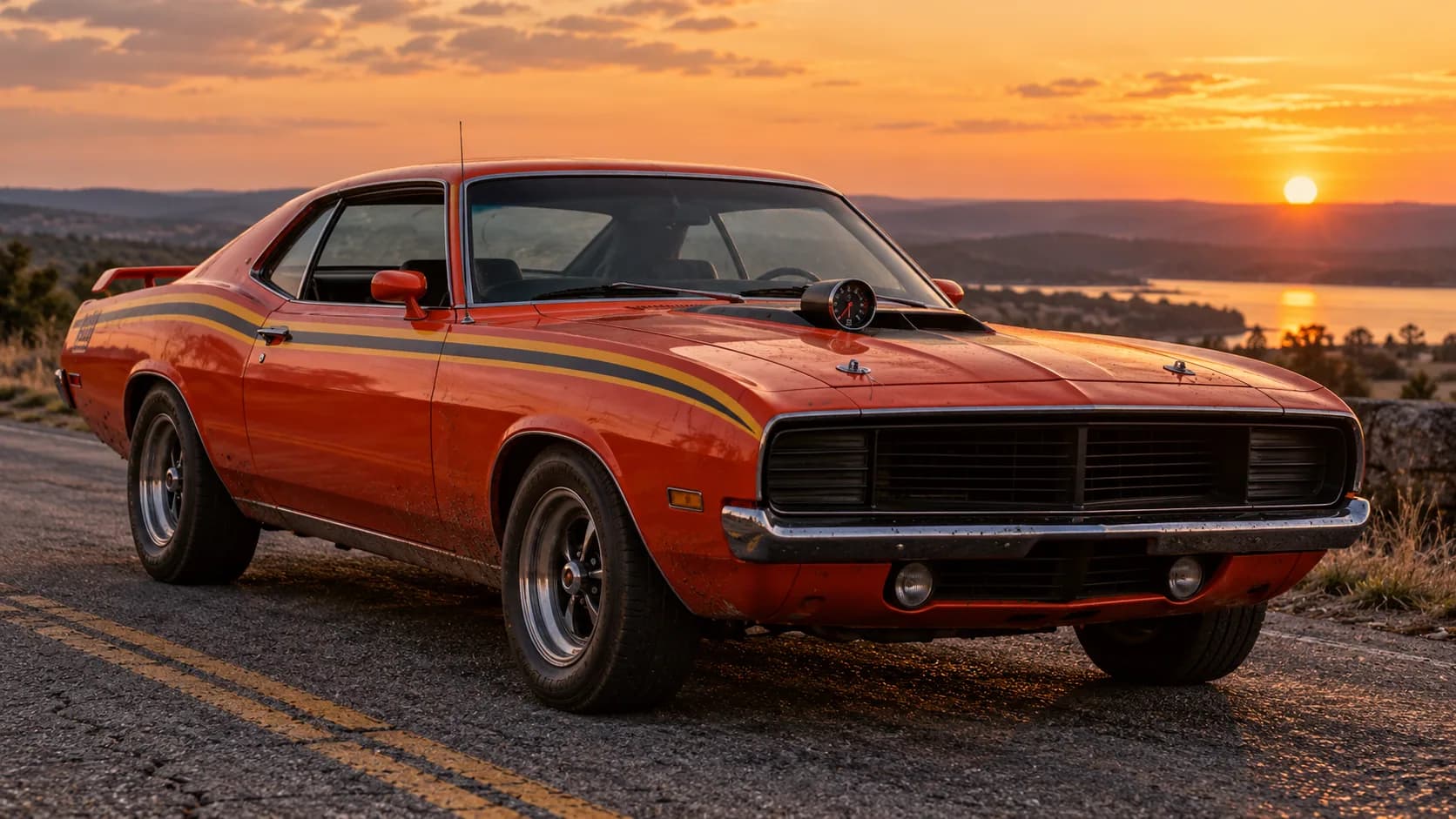
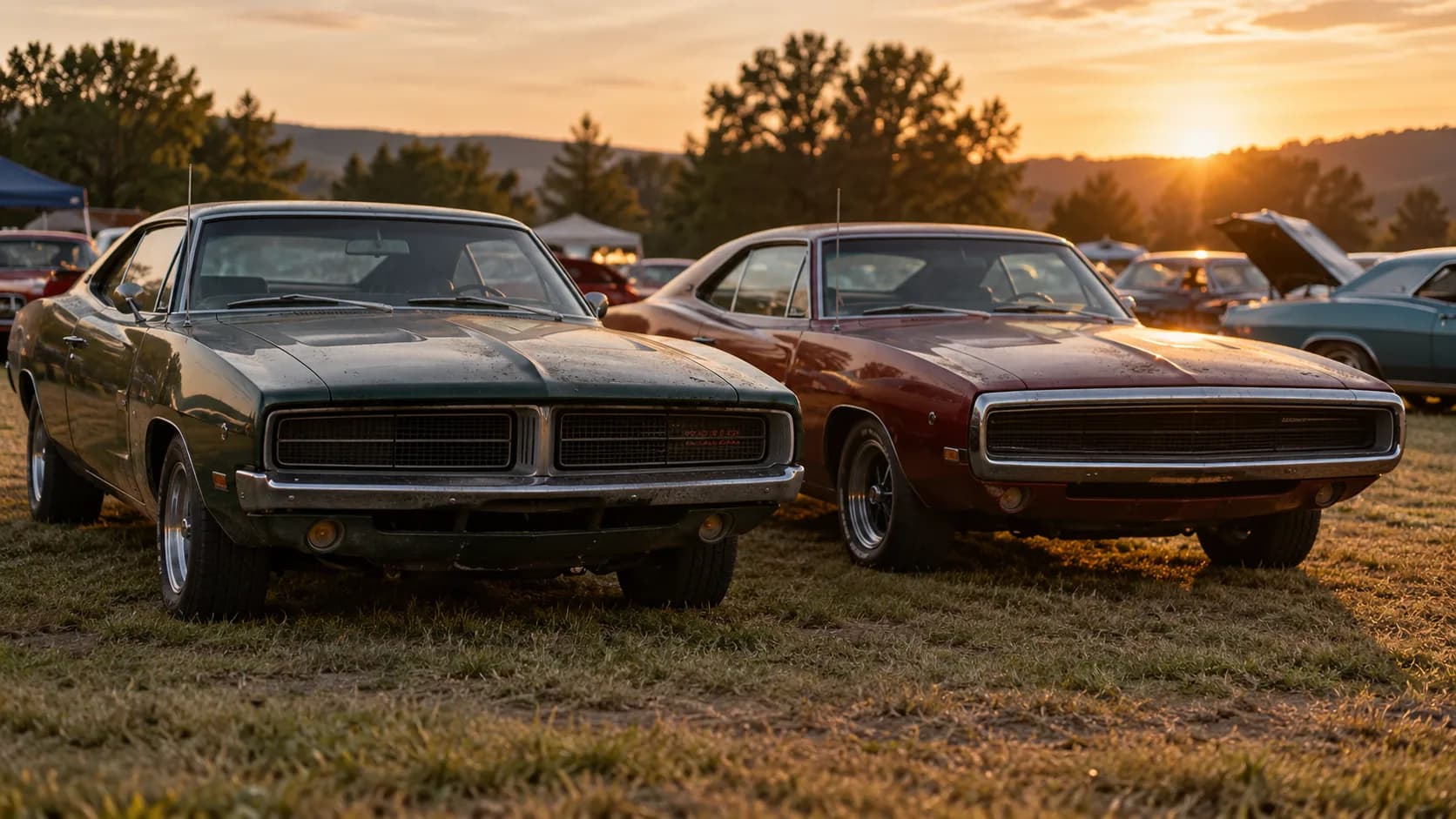
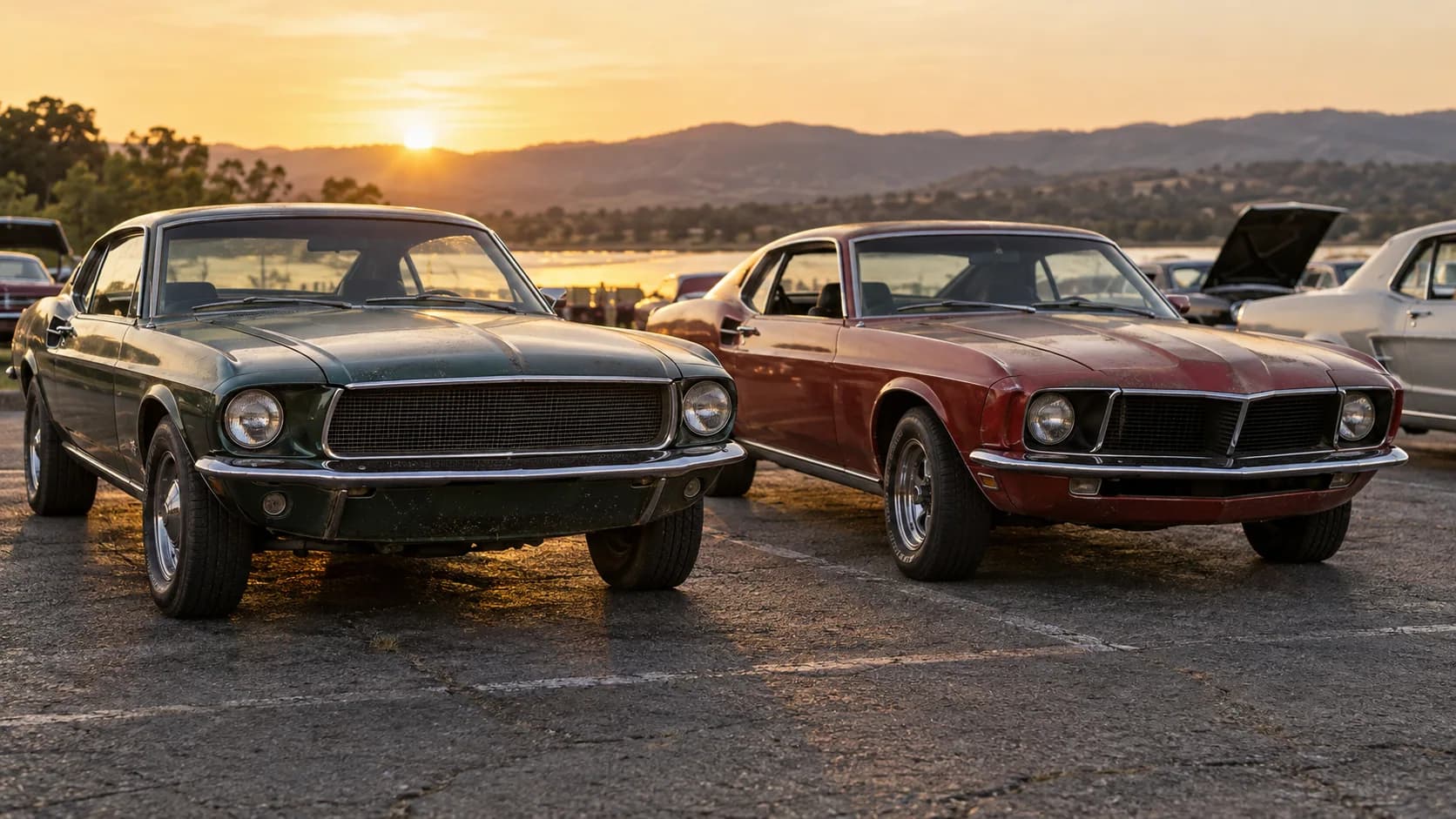
Ford Mustang Fastback: From 1967 GT to 1970 Mach 1
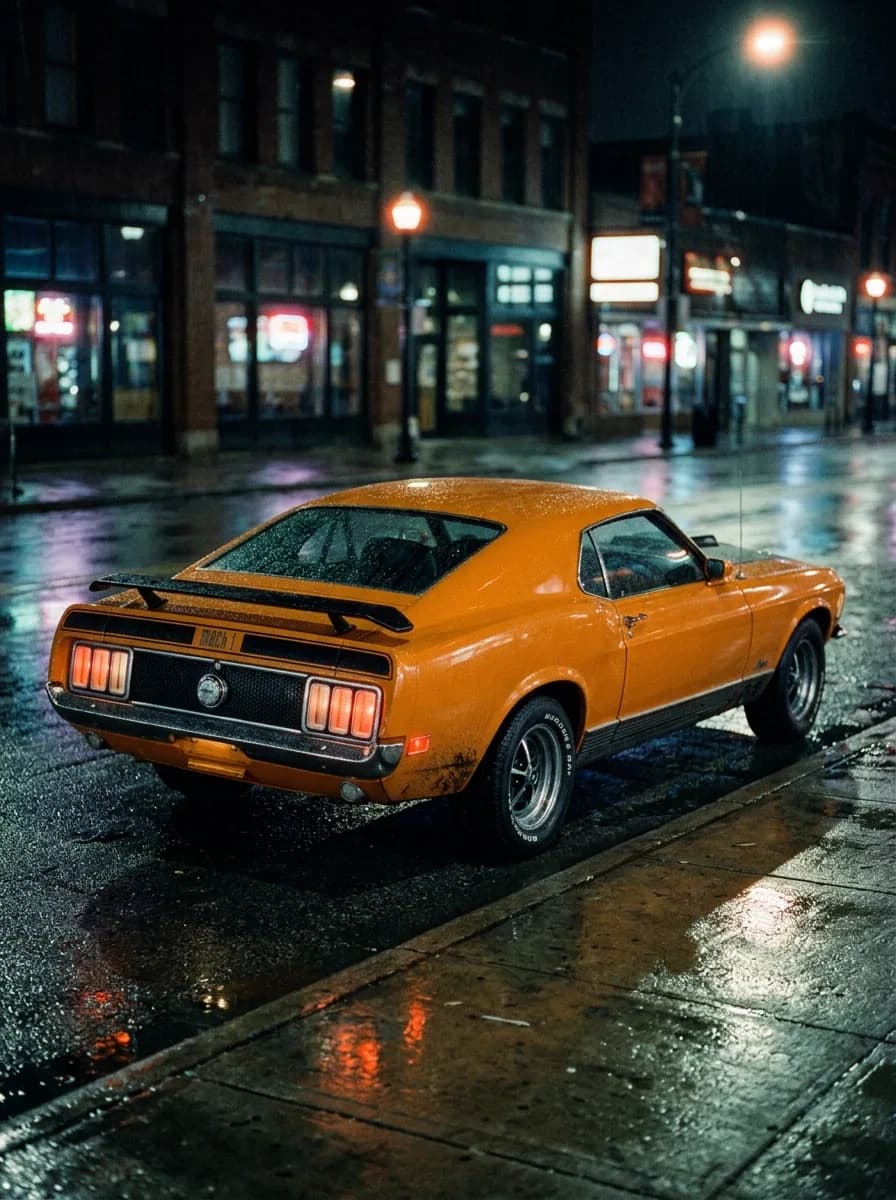
Rain on the windshield, neon bouncing off wet asphalt, and MACH 1 lit up across the decklid — the scene above is built around one of the most recognizable shapes Ford ever stamped out of sheet metal. The Mustang fastback went through more changes between 1967 and 1970 than almost any other muscle car body style of the era, all while staying instantly identifiable as a Mustang. Four model years, two completely different bodies, and one performance package — Mach 1 — that turned the fastback into the Mustang most people picture when they hear the name.
Fastback, SportsRoof, Same Idea
Ford called the sloped-roof Mustang a "fastback" from 1965 through 1968. When the car was redesigned for 1969, Ford renamed the body style "SportsRoof," and the name stuck through 1970 and beyond, even as most owners kept calling it a fastback out of habit. Whatever the badge said, the idea never changed: a notchback coupe's greenhouse stretched into a single sweeping line from windshield to tail, giving the car a lower, faster silhouette than the standard hardtop.
Two Body Generations in Four Years
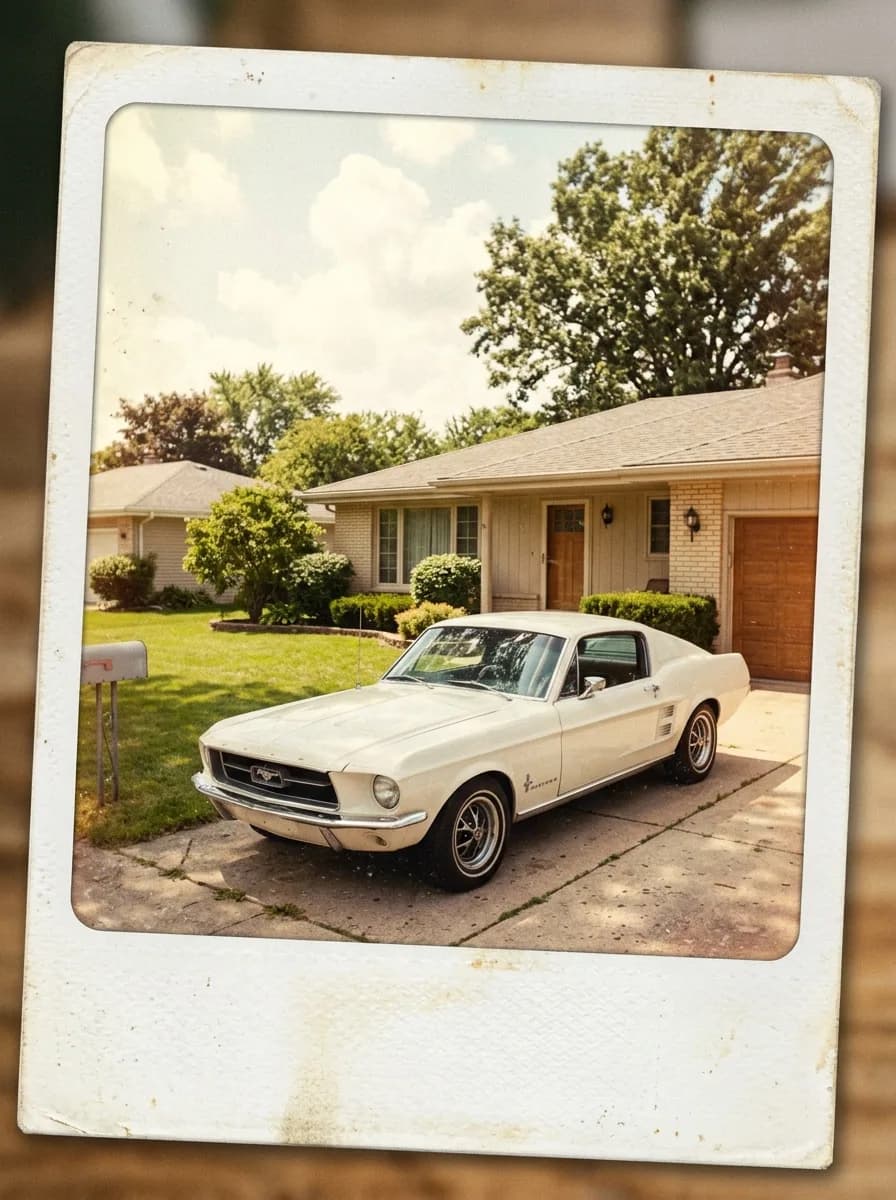
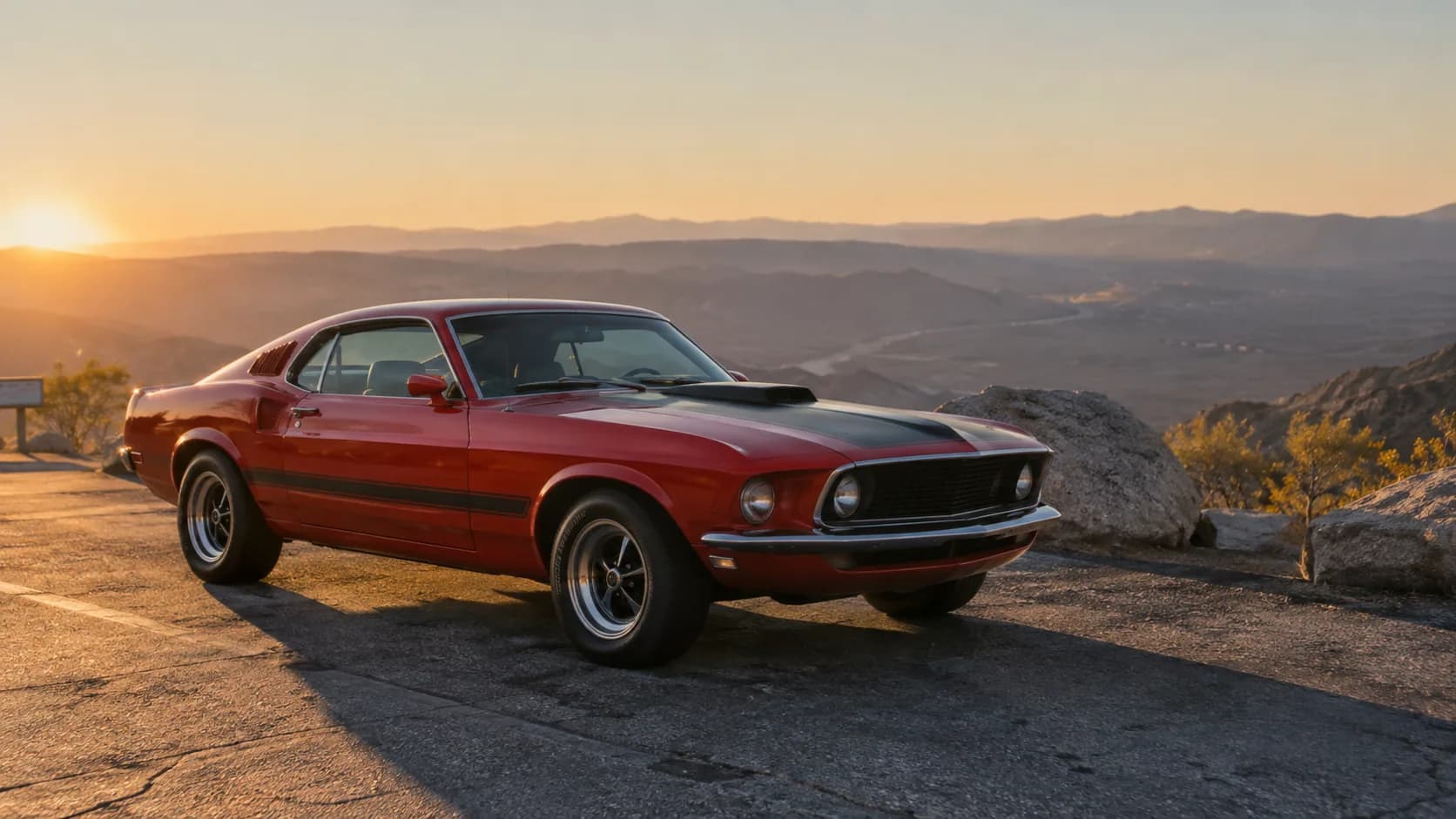
The 1967 and 1968 Mustangs share the same basic body, restyled from the original 1965-66 car with a wider grille, a concave rear taillight panel, and — starting in 1968 — front and rear side marker lights required by new federal safety rules. A 1969 model is easy to spot next to a '67 or '68: the whole car grew nearly four inches longer, and a heavy character line runs down the center of the hood that neither earlier year has. The 1969 restyle also introduced quad headlights and the Mustang's first factory performance nameplates beyond the GT — Mach 1, Boss 302, and Boss 429 all arrived that year. For 1970, Ford toned the quad headlights back down to a single pair, tucked inside the grille opening, with the outer headlight positions from '69 covered over and turned into simulated air intakes.
From 289 to 428 Cobra Jet: The Mach 1's Engines
A 1967 GT fastback could be ordered with anything from the base 200-horsepower two-barrel 289 up through the 320-horsepower 390 "S-code" big-block, with a 225-horsepower four-barrel 289 in between — 1967 was also the last year for the high-performance 289 Hi-Po engine. When the Mach 1 package launched for 1969, replacing the departed Shelby models as Ford's in-house factory hot rod, the standard engine was a 351 Windsor V8, with the 390 FE and the 428 Cobra Jet available further up the order sheet. Ford famously underrated the Cobra Jet at 335 horsepower to stay under insurance and racing-class radar; real-world output was significantly higher. For 1970, Ford dropped the 390 and leaned on the new 351 Cleveland for its performance four-barrel option, while the 428 Cobra Jet carried over as the top choice — though only 2,501 1970 Mach 1s got one, a little over half of them with the 4-speed manual.
Spotting the Year at a Glance
Line up a fastback from each of these years and the tells come quickly once you know them. A '67 has a plain script "MUSTANG" badge behind the front wheel and no side marker lights; a '68 adds the side markers and switches to a more stylized script badge. A '69 is longer overall, with that centered hood crease and four headlights. A '70 keeps the '69 body but goes back to two headlights, moves the pony badge to the center of the grille, and adds two small driving lights to the Mach 1's grille specifically. The rear-shot render above, with its single set of taillights, spoiler, and MACH 1 decklid script, lines up with the 1970 car.
Living With a First-Gen Fastback Today
Of this stretch of Mustangs, the 1970 Mach 1 sold in the smallest numbers — production fell from just under 73,000 in its 1969 debut year to about 40,700 for 1970 — which keeps clean originals in demand today. A 289 or 351 fastback is a genuinely usable classic and one of the more affordable ways into a first-generation Mustang; a documented Cobra Jet car is a different, much pricier conversation. Either way, checking cowl and torque-box rust and matching the engine code on the data plate to what's actually sitting between the shock towers remains the first move before writing a check.
Specs
- Body style names
- "Fastback" (1965-68), "SportsRoof" (1969-70)
- 1967 GT engine range
- 200-hp 289 2V up to 320-hp 390 S-code
- Mach 1 debut
- 1969, standard 351 Windsor V8
- 428 Cobra Jet (rated)
- 335 hp / 440 lb-ft
- 1969 Mach 1 production
- about 72,458 units
- 1970 Mach 1 production
- about 40,729 units (2,501 with 428 Cobra Jet)
- Headlights
- Quad (1969) vs. single pair inside grille (1970)
FAQ
- What's the difference between a Mustang fastback and a SportsRoof?
- Same body style, different names — Ford called it a "fastback" through 1968 and renamed it "SportsRoof" when the car was redesigned for 1969.
- What years did the Mustang Mach 1 come with the 428 Cobra Jet?
- The Cobra Jet was offered in the Mach 1 for 1969 and 1970; only 2,501 1970 Mach 1s were built with it.
- How can you tell a 1969 Mustang from a 1970?
- The 1969 has quad headlights and the pony badge set off-center in the grille; the 1970 goes back to a single pair of headlights moved inside the grille opening, with the badge centered.
- What was the standard engine in a 1967 Mustang GT fastback?
- A 225-horsepower four-barrel 289 V8, with the 320-horsepower 390 "S-code" big-block available as an option.
Know someone who drove one? Share this guide
Get the Look
As an Amazon Associate we earn from qualifying purchases.
- 1970 Ford Mustang Mach 1 1:18 Diecast Model — Captures the color-keyed spoiler and side stripe in a display-friendly scale.
- 1967 Ford Mustang Fastback 1:24 Model Kit — A build-it-yourself option styled after the earlier, driveway-photo generation of fastbacks.
- Ford Mustang: The Complete History Book — Covers the fastback-to-SportsRoof transition and the Mach 1's engine lineup year by year.
Sources
- velocityrestorations.com — ford-mustang-history
- cjponyparts.com — 1968-vs-1969-mustang
- cjponyparts.com — 1967-vs-1968-mustang
- powernationtv.com — 1969-vs-1970-mustang-pick-your-pony
- revologycars.com — 1967-mustang-gt-fastback-best-performance-features
- audrainautomuseum.org — 1969-ford-mustang-mach-1-cobra-jet
- autoevolution.com — rare-cobra-jet-manual-1970-mustang-mach-1-claims-you-probably-never-saw-another-like-it-267279
- en.wikipedia.org — Ford_Mustang_Mach_1
- 428cobrajet.org — production
- mustangspecs.com — 1969-mustang-production-numbers
- hotcars.com — 1969-ford-mustang-buying-guide-mach-1-boss-302-boss-429-and-gt500
- cjponyparts.com — k-code-mustang