1969 vs 1970 Dodge Charger: How to Tell Them Apart
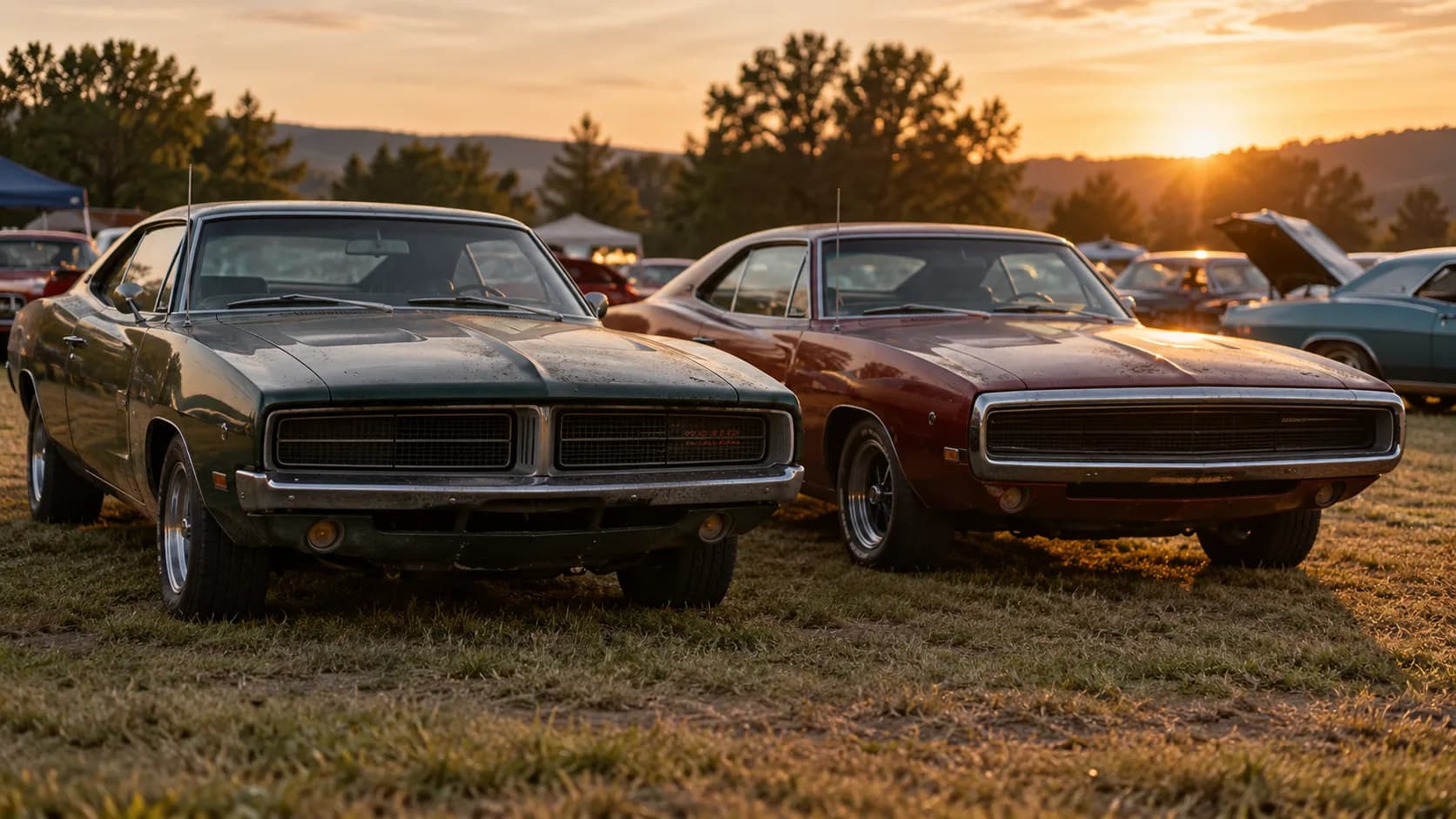
Walk a big Mopar show and someone will point at a hidden-headlight Charger and call the year from fifty feet away, usually by the grille alone. The render at the top imagines that moment at sunset, a dark green car with a divided grille parked beside a maroon one wrapped in a chrome loop bumper, and like every image on this page it is AI-generated, not a photo of a real car. The two model years share one body, so the tells are small but consistent once you know where to look.
The Front End: Split Grille vs Loop Bumper
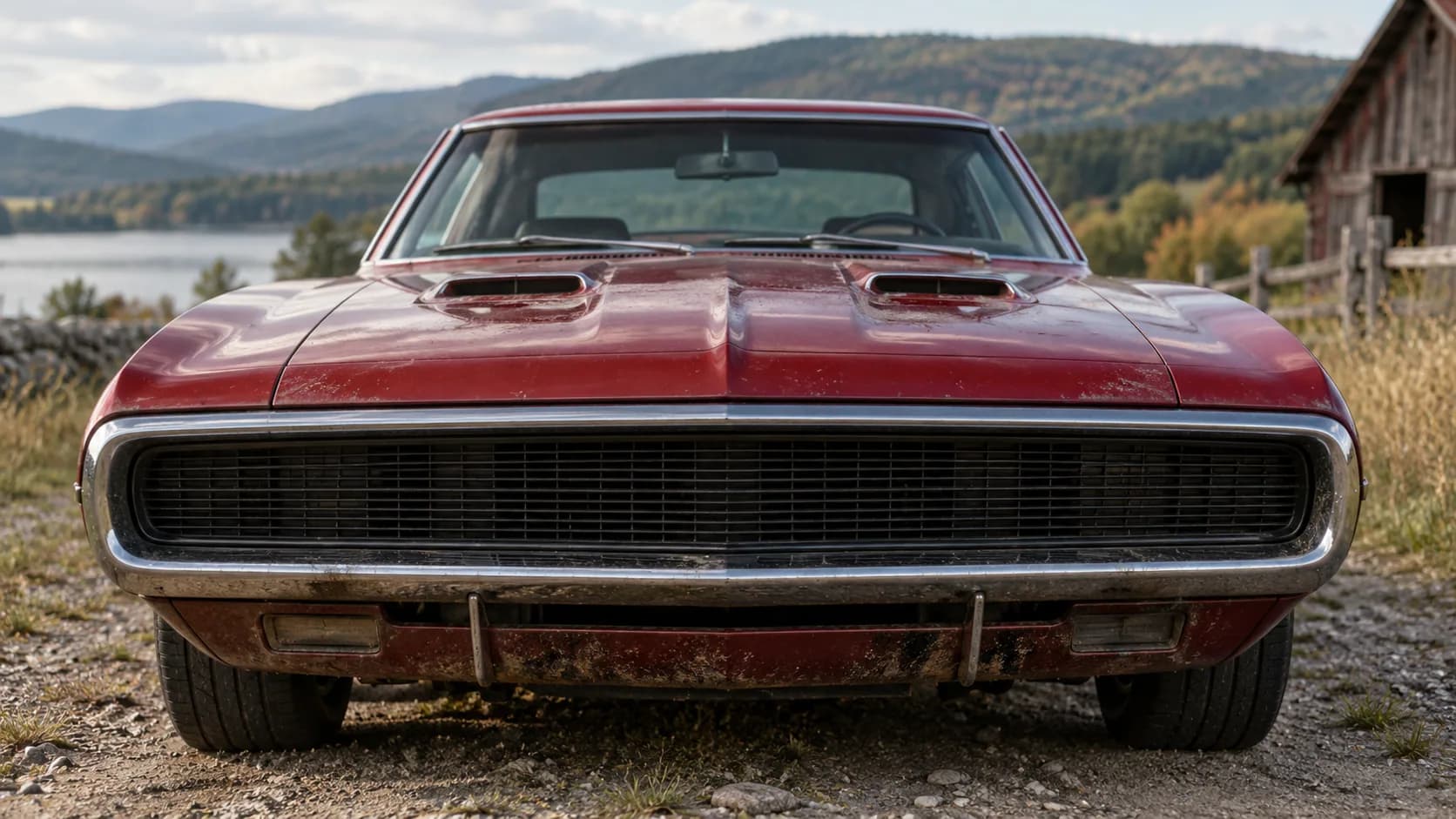
The quickest clue is the grille. The 1969 Charger got a new grille with a vertical center divider, which splits the hidden-headlight opening into two halves. For 1970 Dodge dropped the divider and surrounded the full-width grille with a large wraparound chrome loop bumper. That bumper is the single biggest visual change between the years, and it makes the 1970 nose look heavier and more chrome-forward.
The headlight doors changed under the skin as well. The 1970 car switched to electric headlight doors, replacing the vacuum-operated type used before. A 1970 R/T also picked up rear-facing scoops on the front doors, sitting over the door scallops and carrying the R/T logo, and a new 440 or Hemi hood option was offered for that year only.
The Rear and the Cabin
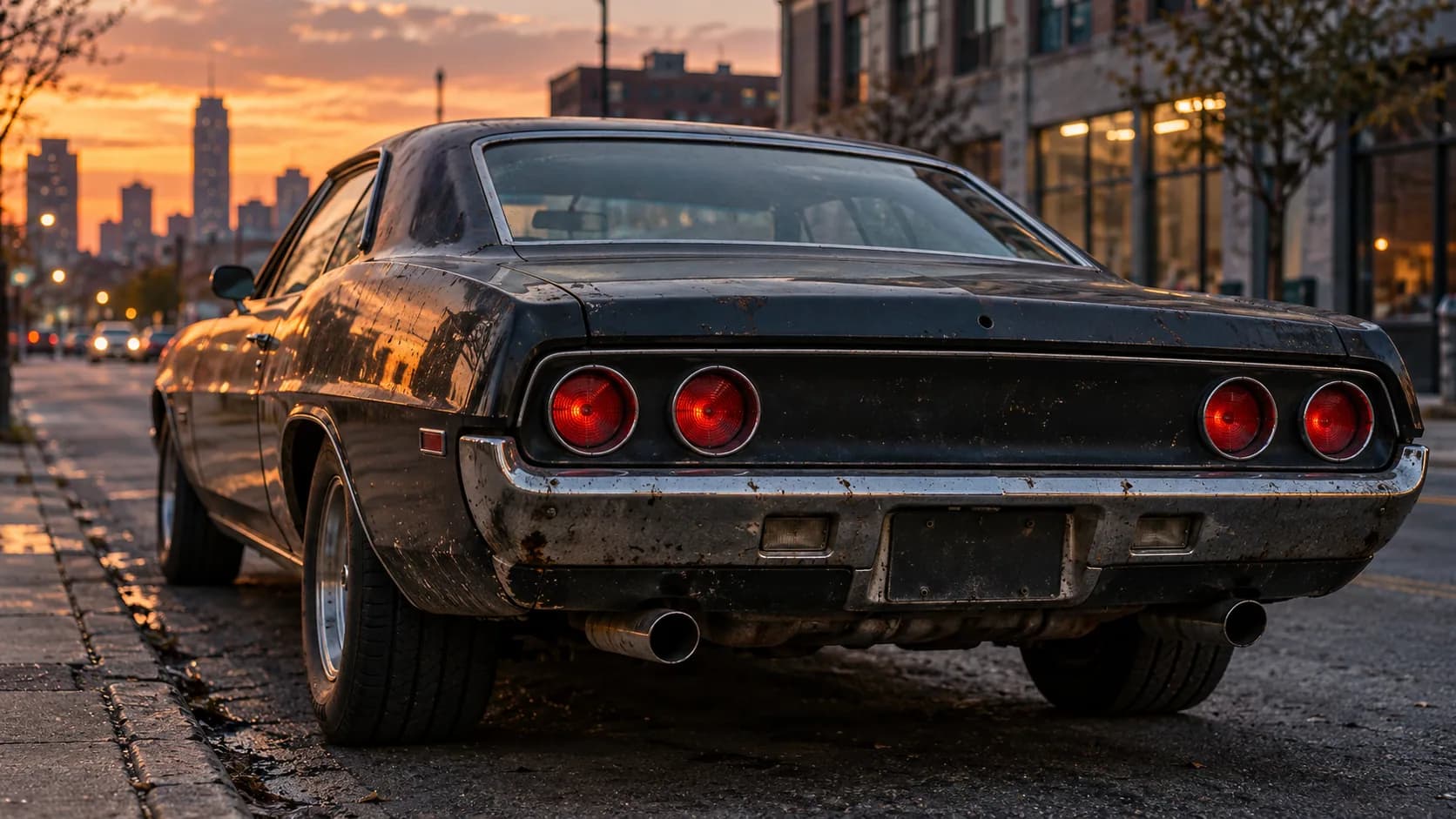
From behind, the two years look closer than they do from the front. The 1969 model introduced long horizontal rectangular taillights, replacing the four round lamps of 1968. The 1970 lamps were similar, but the 500 and R/T received a new taillight panel. If a car has four round taillights, it is not a stock 1969 or 1970 Charger.
Inside, 1970 brought more changes than the outside suggests. There were new high-back bucket seats, and a front bench seat was offered on the Charger for the first time. A pistol-grip shifter arrived for four-speed cars, the ignition switch moved from the dash to the steering column, and the glove box was hinged at the bottom instead of the top. The column-mounted key is one of the easiest ways to confirm a 1970 car once the door is open.
Engines by Year
The 1969 menu ran from economy to brutal. Factory ratings list a 225 cubic-inch six at 145 hp, a 318 V8 at 230 hp, a 383 two-barrel at 290 hp and a 383 four-barrel at 330 hp. Above those sat the 440 Magnum four-barrel at 375 hp and 480 lb-ft, and the 426 Hemi with two four-barrels at 425 hp and 490 lb-ft. The 330-hp 383 four-barrel was a Charger-specific rating that year, a step below the 335-hp 383 Magnum used in other Dodges.
The big news for 1970 was the 440 Six Pack, with three two-barrel carburetors and 390 hp, now offered on the Charger for the first time. In 1969 the Six Pack had appeared on the mid-year Super Bee and Road Runner, not the Charger. The 426 Hemi stayed on the option list in both years, and the 440 Magnum remained the standard R/T engine.
R/T, 500 and Daytona
The R/T was the performance Charger in both years. For 1969, U.S. R/T output was 18,776, split between 18,344 with the 440 and 432 with the 426 Hemi. For 1970 the R/T total falls to 10,337, and Hagerty says only 112 buyers paid for the Street Hemi while 116 chose the 440 Six Pack.
The 1969 Charger 500 was a different animal from the later trim of the same name. It was built for NASCAR with a flush grille and a flush rear window, and 392 were made: 325 with the 440 and 67 with the Hemi. When that car fell short on the track, Dodge built the Charger Daytona, with a sheet-metal nose cone, a 23-inch rear wing and fender-mounted scoops. The Daytona was a 1969 model; 503 were built for the U.S., 433 with the 440 and 70 with the Hemi. It won the inaugural Talladega 500 that year, and in 1970 Buddy Baker took one past 200 mph at Talladega. Plymouth's Superbird replaced it as the corporate wing car for 1970. The 500 name carried on in 1970 as a regular trim level without the aero bodywork, offered alongside the R/T and SE packages.
Production and Values Today
The total build fell sharply between the years. Sources disagree on the 1969 figure: about 89,200 in one count and 104,978 including export in another. For 1970 the figures range from 46,576 to about 49,800. Either way, the 1970 car is the rarer of the two.
Values swing hugely with engine, trim and documentation, and a Hemi multiplies the price of an otherwise similar car. At Mecum Harrisburg in 2025, a numbers-matching one-of-one Bright Green 1969 Hemi R/T automatic brought $176,000, reported by Mopar Insiders as a public-auction record for a 1969 Hemi Charger with an automatic. The Daytona sits in another league: a 1969 Hemi Daytona sold at Mecum Kissimmee in 2023 for a reported $1.43 million, a record for the model at the time.
Buying Tips
Because both years share a body and many parts, clones and conversions are common. A 1969 car can wear a 1970 loop bumper, and many base cars now carry R/T stripes or Hemi badges. Check the VIN and fender tag against the claimed engine and trim, look for build documentation, and remember that a column ignition, high-back seats and the door scoops on an R/T should all line up on a genuine 1970 car. Registry records matter most on Hemi, Six Pack, 500 and Daytona cars, where the money is.
Specs
- 1969 grille
- Vertical center divider
- 1970 grille
- Undivided, inside a wraparound chrome loop bumper
- Taillights
- Long horizontal units both years; new panel on 1970 500 and R/T
- 1970 interior
- High-back buckets, optional bench, column ignition, pistol-grip shifter
- New engine for 1970
- 440 Six Pack, 390 hp
- Hemi
- 426, 425 hp, offered both years
- R/T production
- 1969: 18,776 (U.S.); 1970: 10,337
- 1969 Daytona
- 503 U.S. cars (433 x 440, 70 x Hemi)
FAQ
- How can you tell a 1969 Charger from a 1970?
- Look at the front. The 1969 has a grille with a vertical center divider, while the 1970 has an undivided grille surrounded by a large chrome loop bumper. Inside, a 1970 has its ignition on the steering column instead of the dash.
- Did the 1969 Dodge Charger have a 440 Six Pack?
- No. The 440 Six Pack was new to the Charger for 1970, rated at 390 hp. In 1969 it appeared on the mid-year Super Bee and Road Runner instead.
- How many 1970 Dodge Charger R/Ts were made?
- About 10,337. Hagerty says 112 of the 1970 cars got the 426 Hemi and 116 the 440 Six Pack.
- Was the Charger Daytona made in 1970?
- No. The Daytona was a 1969 model, with 503 built for the U.S. It raced into 1970, when Plymouth's Superbird took over as the corporate wing car.
Know someone who drove one? Share this guide
Get the Look
As an Amazon Associate we earn from qualifying purchases.
- 1970 Dodge Charger R/T diecast model car — The loop-bumper nose in 1:24 or 1:18 scale.
- 1969 Dodge Charger model kit — Build the split-grille car and compare the two.
- Dodge Charger history book — Year-by-year background on the B-body Charger.
Sources
- en.wikipedia.org — Dodge_Charger_(1966)
- en.wikipedia.org — Dodge_Charger_Daytona
- musclecarsillustrated.com — 1969-dodge-charger-facts
- hagerty.com — 1970-Dodge-Charger
- oldride.com — 1970_dodge_charger
- moparinsiders.com — one-of-one-1969-dodge-hemi-charger-r-t-sells-for-176k
- foxnews.com — 1969-dodge-daytona-sold-for-record-1-43-million
- fastlanecars.com — dodge-charger-500
- classiccars.com — 1970-dodge-charger-for-sale-in-chatsworth-ca-91311
- autoevolution.com — this-1970-dodge-charger-r-t-se-flexes-a-special-order-paint-code-born-with-440-magnum-267107