426 Hemi Engine: History, Specs, Cars and How to ID One
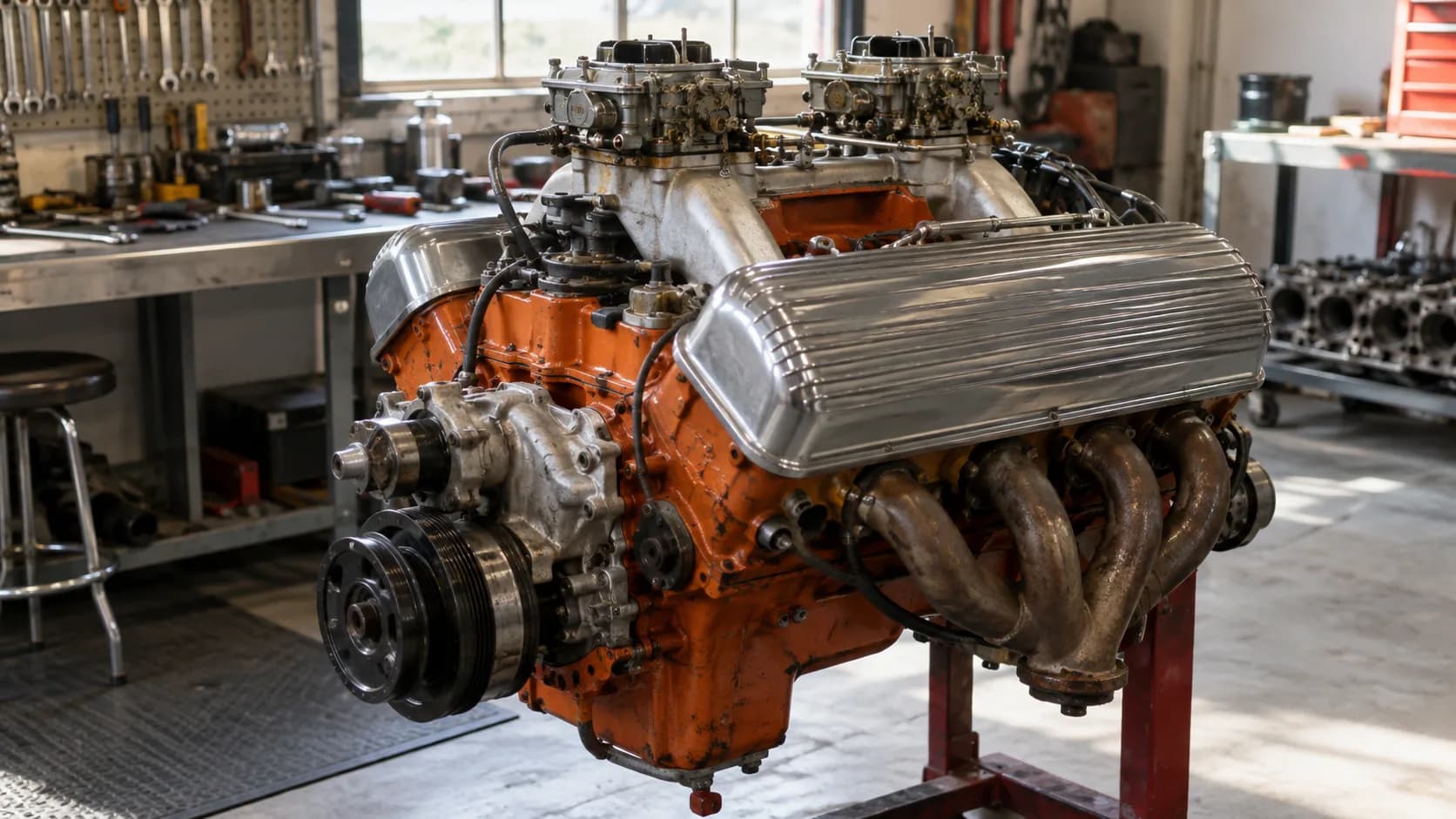
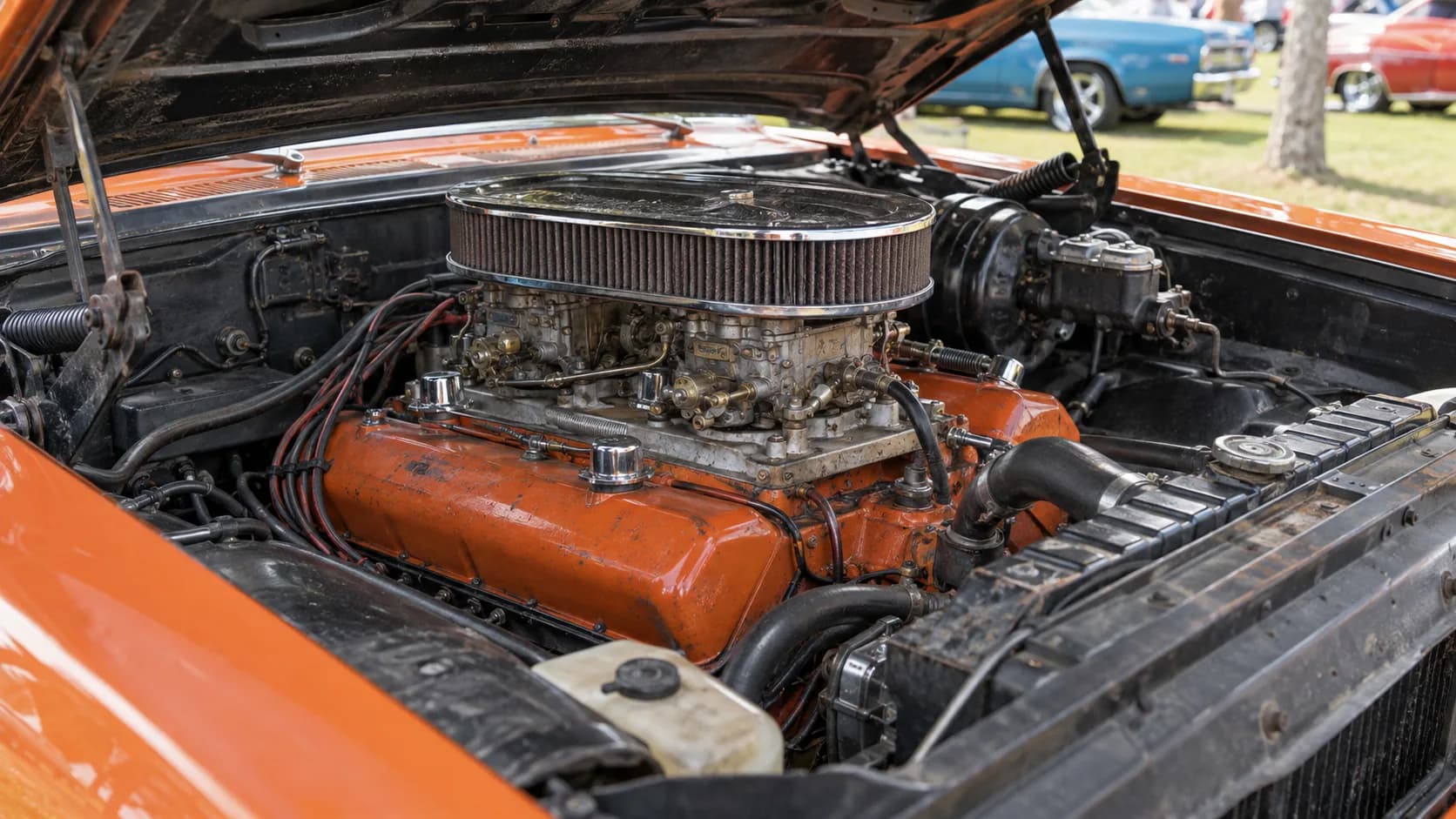
Few engines ever got banned for being too good, and the 426 Hemi is the one Mopar fans name first. The render above imagines one on a shop stand, orange block, two four-barrel carburetors on top and a set of tube headers hanging off the side, and it is an AI image, not a photo of a real engine. The story behind it is real, and it runs from the high banks of Daytona to some of the most expensive muscle cars ever sold.
Born for Daytona in 1964
Chrysler built the 426 Hemi as a pure racing engine. Wikipedia's Chrysler Hemi article says the first one ran on December 6, 1963, just weeks before the 1964 season. Stellantis, Chrysler's parent today, tells what happened next. At the 1964 Daytona 500 Richard Petty started on the front row, fell to 15th after a bungled pit stop, then led 184 of the 200 laps and won at a record average of 154.334 mph. The first three finishers were all Hemi-powered Plymouths, with Jimmy Pardue second and pole sitter Paul Goldsmith third. Petty went on to win the 1964 championship.
Ford and GM protested that nobody could buy this engine in a showroom, which NASCAR's rules required. NASCAR banned the race Hemi for 1965. Chrysler pulled its factory teams out of NASCAR in protest, Petty spent much of that year drag racing, and Chrysler went back to the drawing board for a version the public could order. In the meantime it kept the Hemi busy on the drag strip, selling lightweight Dodge and Plymouth cars with aluminum body parts for racers.
The Street Hemi, 1966 to 1971
The answer was the Street Hemi, introduced for 1966 and sold in enough numbers to make the engine legal for NASCAR again. Wikipedia lists the changes from the race engine: compression cut from 12.5:1 to 10.25:1, cast-iron bearing caps, a milder cam, cast-iron exhaust manifolds, a heated intake manifold and an automatic choke. It kept the two four-barrel carburetors that the render shows, Carter AFB units on the street engine. Its size and weight earned it the nickname "the elephant engine."
Chrysler rated it at 425 horsepower gross at 5,000 rpm, with 490 lb-ft of torque at 4,000 rpm.
Specs and What Makes It a Hemi
The name comes from the cylinder heads. Each combustion chamber is shaped like half a sphere, with the valves on opposite sides. That layout leaves room for big valves and a straight path for air, which is why the engine breathes so well at high rpm. The 426 shares the idea with Chrysler's first-generation Hemi of the 1950s, but it is a different engine.
Under the heads, the numbers are big. The bore is 4.25 inches and the stroke 3.75 inches, for 426 cubic inches. Bore spacing is 4.80 inches, which Wikipedia says made it the largest engine in racing at the time. The main bearing caps are cross-bolted, and the dry weight is listed at 843 pounds.
Which Cars Got the 426 Hemi
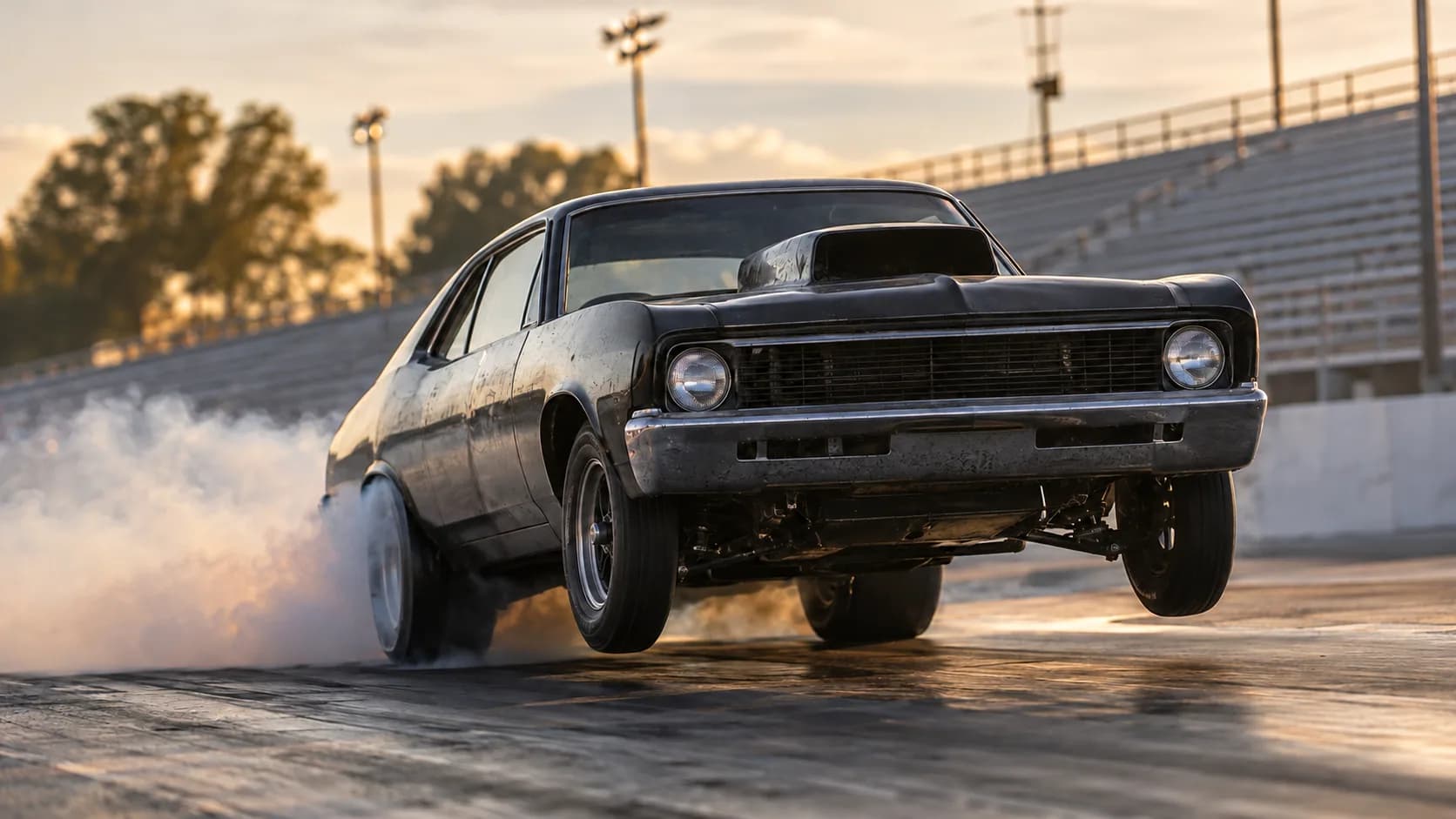
Wikipedia's list of Street Hemi applications includes:
- Dodge Coronet and Plymouth Belvedere, 1966 to 1970
- Plymouth Satellite and Dodge Charger, 1966 to 1971
- Plymouth GTX, 1967 to 1971
- Dodge Super Bee and Plymouth Road Runner, 1968 to 1971
- Dodge Charger Daytona, 1969, and Plymouth Superbird, 1970
- Plymouth Hemi 'Cuda and Dodge Challenger, 1970 to 1971
The 1968 Dodge Dart and Plymouth Barracuda race cars got the Hemi too, but those were Super Stock drag cars rather than street models. The 1971 model year was the end of the line for the Street Hemi.
How to Identify a Real Hemi Car
Because a Hemi car is worth far more than the same body with a 383 or 440, plenty of clones exist. Engines can be swapped in an afternoon, so the paperwork on the car matters more than what sits under the hood. Start with the VIN, where the fifth character is the engine code.
- 1966: H. A Plymouth Belvedere decode table and an RM Sotheby's listing for a 1966 Coronet 500 both identify H as the 426 Street Hemi.
- 1967: J, as seen on documented 1967 Hemi GTX cars with VINs starting RS23J.
- 1968 and 1969: also J. The 71superbee.com B-body VIN breakdown lists J as the 426 Hemi rated at 425 hp.
- 1970 and 1971: R, according to the same chart.
Published decode tables for 1967 are scarce, so confirm a '67 car with a dedicated Mopar decoder or a build sheet. The sixth character gives the model year's last digit, so a 1970 car carries a 0 there.
Next, read the fender tag. On the later cars the Hemi's engine sales code is E74, listed on a 1969 code chart as "426 HEMI (2) 4-bbl HP." On 1966 and 1967 cars the tag used a numeric engine code, and 73 is the code commonly cited for the Hemi. A matching VIN code, fender tag code and, ideally, an original build sheet together make a strong case. A VIN with the wrong letter in position five is not a factory Hemi car, no matter what is in the engine bay.
Why the Hemi Is Worth So Much
Rarity, racing history and raw power all stack up here. Classic & Sports Car reported that a 1971 Plymouth Hemi 'Cuda convertible, one of 11 built that year, sold for $3.5 million at Mecum's Seattle sale in June 2014, the hammer price before fees. Most Hemi cars bring far less than that, but the gap between a documented Hemi car and a clone is large enough that buyers should treat the VIN and the paperwork as the real product. Stellantis notes that the same basic Hemi design still powers NHRA drag cars today, more than sixty years after it first ran.
Specs
- Displacement
- 426 cu in (6,981 cc)
- Bore x stroke
- 4.25 in x 3.75 in
- Compression
- 10.25:1 street; about 12.5:1 race
- Carburetion (street)
- Two Carter AFB four-barrels
- Rated output (street)
- 425 hp gross; 490 lb-ft
- Dry weight
- 843 lb
- Race debut
- 1964 Daytona 500 (Hemi Plymouths finished 1-2-3)
- Street Hemi years
- 1966-1971
FAQ
- What years was the 426 Street Hemi made?
- The Street Hemi was offered from 1966 through 1971. The race version debuted earlier, in the 1964 NASCAR season.
- How much horsepower did the 426 Hemi have?
- Chrysler rated the Street Hemi at 425 horsepower gross, with two four-barrel carburetors and 10.25:1 compression.
- How do I know if a car is a real Hemi car?
- Check the fifth VIN character: H on 1966 cars, J on 1967-1969 cars and R on 1970-1971 cars. Then confirm the fender tag engine code, E74 on the later cars, and look for an original build sheet.
- Why was the Hemi banned from NASCAR?
- After Hemi Plymouths swept the top three at the 1964 Daytona 500, rivals protested that the engine was not sold in production cars. NASCAR banned it for 1965, and Chrysler answered with the Street Hemi in 1966.
Know someone who drove one? Share this guide
Get the Look
As an Amazon Associate we earn from qualifying purchases.
- Plymouth Hemi Cuda diecast model — The best-known Hemi car, in scale form.
- 426 Hemi engine history book — Deeper reading on the race and street engines.
- Mopar Hemi metal garage sign — For the wall above the engine stand.
Sources
- en.wikipedia.org — Chrysler_Hemi_engine
- blog.stellantisnorthamerica.com — 426-hemi-and-petty-two-legends-born-in-daytona
- speedsport.com — bourcier-here-comes-the-king
- 71superbee.com — VINBreakdown
- 71superbee.com — 1969 Codes
- oldride.com — 1966_plymouth_belvedere
- rmsothebys.com — r0203-1966-dodge-coronet-500
- carandclassic.com — C1362548
- classicandsportscar.com — 45002
- en.wikipedia.org — 1964_Daytona_500
- classic.com — 1967-plymouth-gtx-rs23j71162221-WvmQQyn
- oldcarsweekly.com — 1971-hemi-cuda-convertible-sets-record-3-5m-bid