Plymouth Hemi 'Cuda, 1970-1971: History, Specs, and Rarity
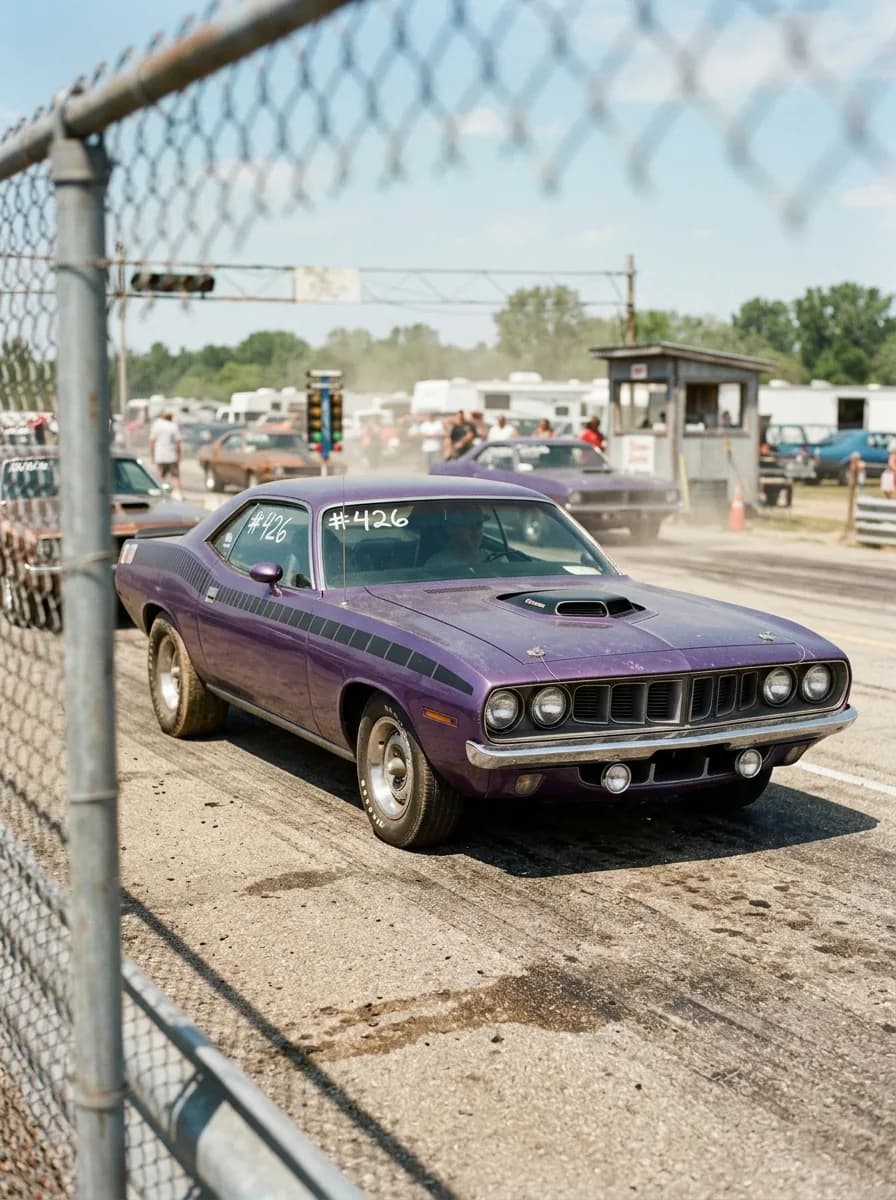
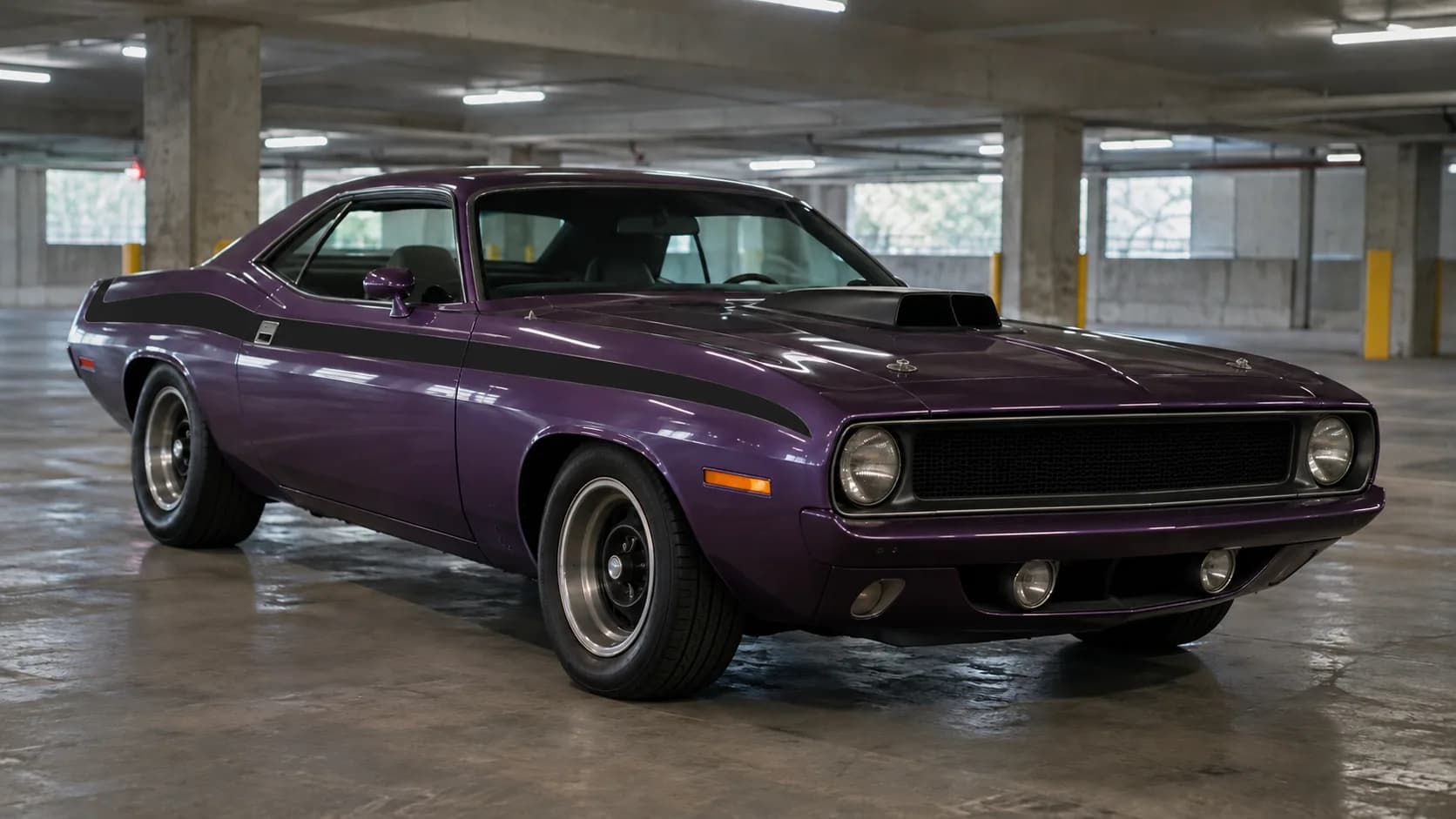
A purple 'Cuda staged at the line with "#426" chalked across the windows and dust still hanging over the return road — it's a scene built to remind you why the Hemi 'Cuda earns a spot on more bedroom-wall posters than almost any other muscle car. The render above imagines a car doing exactly what these were built for: stage, launch, and disappear down a quarter-mile of asphalt. The real story behind that scene is one of the shortest production runs in muscle car history.
The E-Body and the Hemi Gamble
Plymouth's Barracuda moved to Chrysler's new E-body platform for 1970, sharing its chassis with the Dodge Challenger but keeping its own sheet metal, a wider track, and a lower stance. For the first time, the Barracuda's engine bay was built to accept Chrysler's biggest engines — including the 426 Hemi — without the cramped fit that plagued the earlier A-body cars. Plymouth built the top trim as the 'Cuda, and checking the Hemi option box turned it into the most serious street car the brand ever sold. It didn't last: 1971 was the final year Chrysler offered the 426 Hemi in any E-body, and the option quietly disappeared after that.
Engine, Transmission, and the Shaker Hood
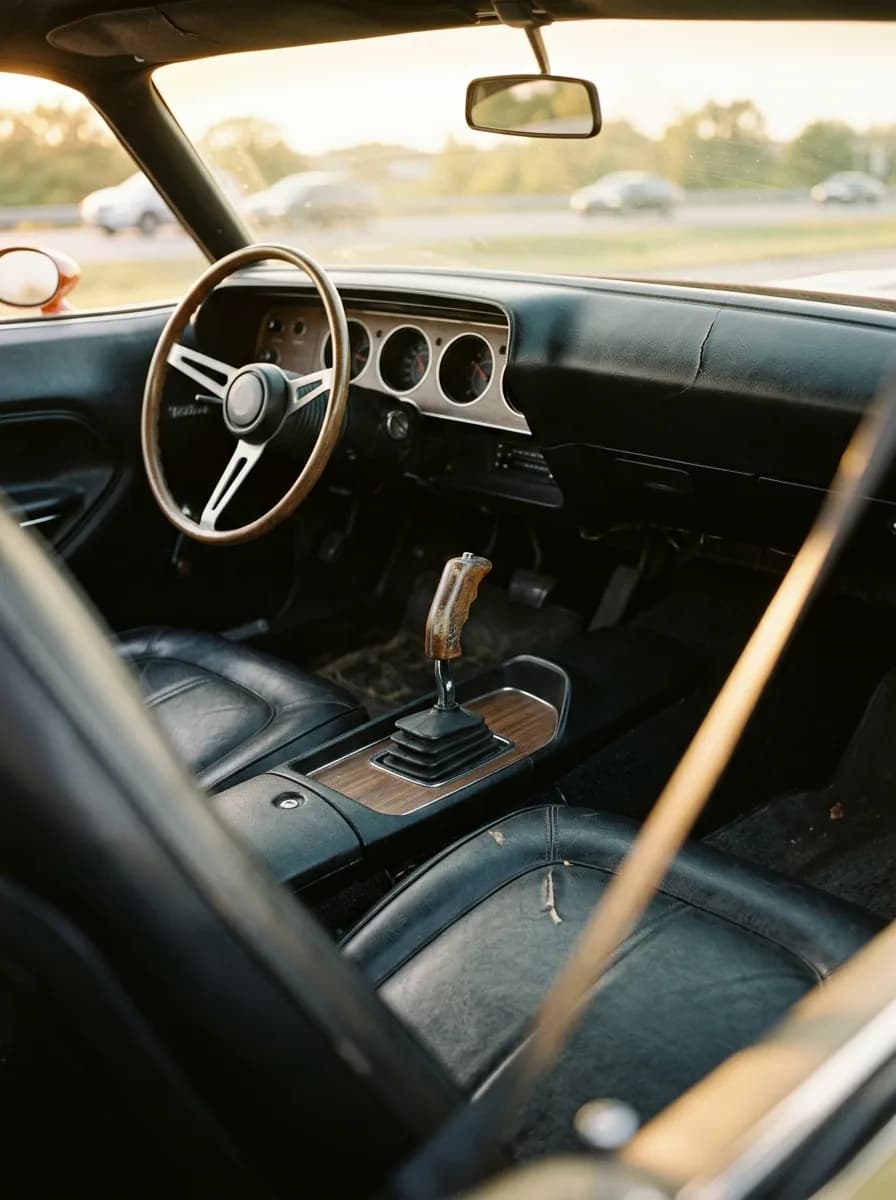
The 426 Hemi in the 'Cuda carried the same rating it had everywhere else: 425 horsepower at 5,000 rpm and 490 lb-ft of torque at 4,000 rpm, numbers widely regarded as conservative even by Chrysler's own standards. Buyers could pair it with a heavy-duty 4-speed manual, rowed through a Hurst pistol-grip shifter, or Chrysler's 727 TorqueFlite automatic. 1970 was also the first year for the Shaker hood option — a scoop bolted directly to the engine's air cleaner so it visibly shook at idle, poking through a cutout in the hood rather than sitting on top of it. It's one of the most recognizable options on any Mopar of the era, and it carried into 1971 largely unchanged.
1970 or 1971? The Grille Tells You
The two Hemi 'Cuda model years are close enough in spec that the fastest way to date one is to look at the nose. The 1970 'Cuda uses a single round headlight on each side set into a simple grille. For 1971, Plymouth restyled the front end with quad round headlights — the only year the 'Cuda wore four — set into a more complex grille split into six sections that earned the "cheese grater" nickname. 1971 also added fender gills: chrome-edged louvers set into each front fender just behind the wheel opening, again unique to that single model year. A 'Cuda with two headlights and smooth fenders is a 1970; four headlights and gills mean 1971. Given the grille and headlight layout on the car in the render above, it reads as a 1971.
What a Numbers-Matching Hemi 'Cuda Costs Today
Production numbers explain the money. Plymouth built 666 Hemi 'Cudas for 1970 — 652 hardtops and just 14 convertibles — before the number dropped even further in 1971: 108 hardtops, plus a handful of convertibles that sources count differently depending on whether they're counting U.S.-market cars alone (commonly cited as 7) or total worldwide production including export cars (up to around 12). Hagerty's valuation guide puts a concours-condition 1970 Hemi 'Cuda convertible in Bugatti money, and the 1971 convertible has produced some of the highest results ever recorded for a muscle car at auction — Mecum sold one for $3.3 million at its Kissimmee 2026 sale, and a Winchester Gray 1971 convertible drew an unsold $4.8 million bid at Mecum's 2021 Indianapolis auction. Hardtops trade for dramatically less than convertibles but still command six and seven figures when the Hemi and its paperwork are genuine.
Finding One
Because of what a real Hemi 'Cuda is worth, this is a muscle car worth being suspicious of. Fender tags, broadcast sheets, and third-party Mopar authentication — Galen Govier's tag service is the name most often cited in the hobby — are standard practice before money changes hands; a numbers-matching Hemi 'Cuda without documentation is not a car most serious buyers will touch. For everyone else, a 340 or 383 'Cuda wears the same shaker hood, the same fender gills if it's a '71, and the same pistol-grip shifter for a fraction of the price — and it's still one of the best-driving, best-sounding E-bodies Chrysler ever built.
Specs
- Platform
- Chrysler E-body (shared with Dodge Challenger)
- Engine
- 426 cu in Hemi V8 — 425 hp / 490 lb-ft
- Transmission
- 4-speed manual (Hurst pistol-grip) or 727 TorqueFlite automatic
- 1970 Hemi 'Cuda production
- 666 units — 652 hardtop, 14 convertible
- 1971 Hemi 'Cuda production
- 108 hardtop; convertibles vary by count, 7 (U.S. market) to ~12 (worldwide)
- 1971-only styling
- Quad headlights, 6-section grille, fender gills
- Shaker hood scoop
- Standard on Hemi cars from 1970, optional on other V8s (N96 code)
FAQ
- What's the difference between a 1970 and 1971 Hemi 'Cuda?
- The 1971 is the only year with quad round headlights, a six-section "cheese grater" grille, and chrome fender gills; the 1970 uses a single headlight per side and smooth front fenders.
- How many Hemi 'Cudas were built?
- Plymouth built 666 in 1970 (652 hardtops, 14 convertibles) and 108 hardtops in 1971, plus a handful of convertibles — commonly cited as 7 for the U.S. market, or up to around 12 counting export cars — making the 1971 convertible one of the rarest American muscle cars ever produced.
- What is a Hemi 'Cuda convertible worth today?
- Values vary widely by documentation and condition, but recent public auction results for 1971 Hemi 'Cuda convertibles have reached into the millions — Mecum sold one for $3.3 million at its Kissimmee 2026 sale.
- What is the shaker hood on a 'Cuda?
- An optional hood-mounted air scoop, introduced in 1970, that bolts directly to the engine's air cleaner so it visibly shakes at idle, poking up through a cutout in the hood rather than sitting on top of it.
Know someone who drove one? Share this guide
Get the Look
As an Amazon Associate we earn from qualifying purchases.
- 1971 Plymouth Hemi 'Cuda 1:18 Diecast Model — Renders the quad-headlight nose and shaker hood at a scale that actually shows the details.
- Mopar E-Body Barracuda and 'Cuda Reference Book — Useful for learning to read fender tags and broadcast sheets before shopping for a real one.
- Hurst Hurst Pistol-Grip Shifter Handle — The same shape as the lever in the console shot, and a popular add-on for Mopar four-speed builds.
Sources
- gearpatrol.com — 1971-plymouth-hemi-cuda-history
- supercars.net — 1970-plymouth-hemi-cuda
- dodgegarage.com — 1-of-48-1971-hemi-cuda
- slashgear.com — 1970-hemi-cuda-plymouth-how-much-horsepower-what-worth
- hagerty.com — 1970-plymouth-hemi-cuda-convertible-worth-a-premium
- autoevolution.com — holy-grail-1971-plymouth-hemi-cuda-convertible-sells-for-33-million-264256
- foxnews.com — rare-1971-plymouth-hemi-cuda-convertible-gets-record-4-8-million-auction-bid-but-its-not-enough.amp
- carscoops.com — even-a-4-8-million-bid-wasnt-enough-to-buy-this-71-plymouth-hemi-cuda-convertible
- holley.com — unearthed_1970_plymouth_cuda_340_with_the_shaker_scoop
- autoevolution.com — 1970-plymouth-cuda-hides-rare-v-code-setup-under-n96-shaker-hood-267399
- ultimatemusclecar.com — 426-hemi-specifications-complete-engine-specs
- galengovier.com
- news.classicindustries.com — the-unicorns-of-auburn-hills-1970-1971-hemi-cuda-convertibles
- en.wikipedia.org — Plymouth_Barracuda