1970 Chevelle SS 454: LS5 vs LS6 and Spotting a Real One
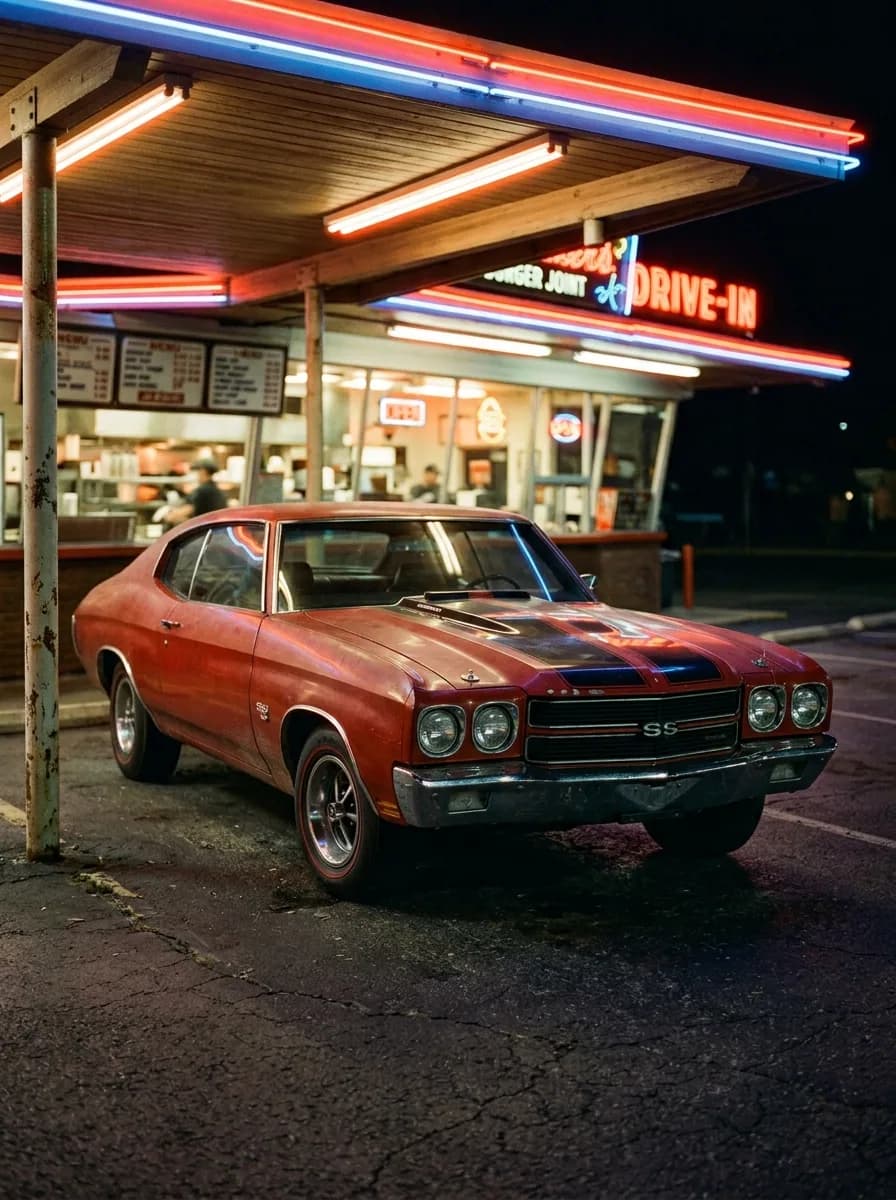
Chevrolet rated the 1970 Chevelle LS6 at 450 horsepower, then dropped the engine after a single model year. The scene above is an AI render of an SS 454 idling outside a drive-in on a Friday night, stripes catching the neon, about as period-correct as Chevrolet's biggest-engined muscle car ever got.
A Mid-Size Body, a Big-Block Heart
The Chevelle SS had carried a 396 (really a 402 cubic inch engine by 1970, still badged "396") since 1965, and that SS396 package, RPO Z25, remained on the order sheet with 350 or 375 hp ratings. For 1970 Chevrolet added a second, separate SS option: RPO Z15, the SS454, which swapped in a full 454 cubic inch big-block — the first time that displacement had been available in a Chevelle — in place of the 402, dropped into the same mid-size body that had made the nameplate a sales success since the mid-1960s. The SS454 kept the same heavy-duty suspension, power front discs and blacked-out styling cues that had defined the SS package for years, but under the cowl-induction hood sat GM's largest passenger-car engine of the era, and it turned the Chevelle into a direct rival for anything else parked at the drive-in that year.
LS5 vs LS6: The Real Difference
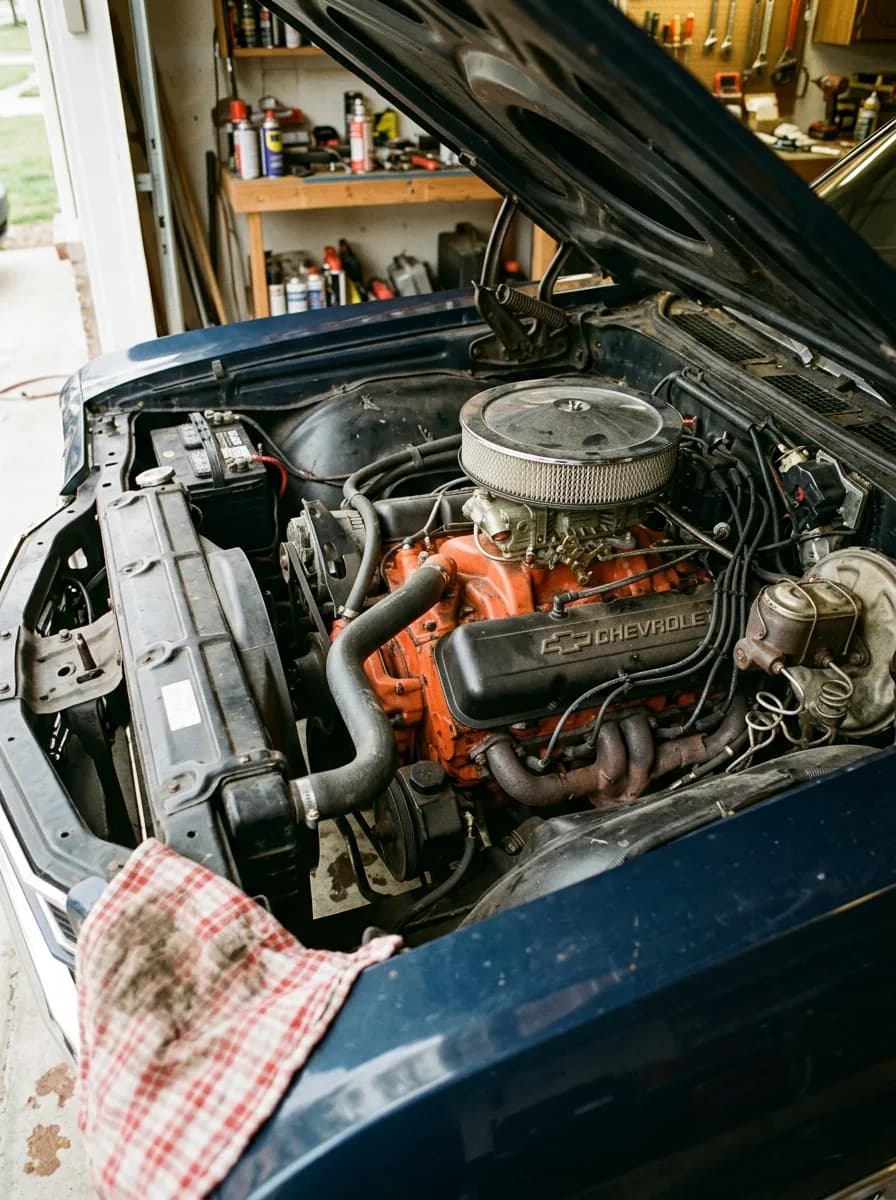
Ordering the SS454 meant choosing between two very different engines that shared a displacement and not much else. The base LS5 ran 10.25:1 compression with hydraulic lifters, rated at 360 hp at 4,400 rpm and 500 lb-ft of torque at 3,200 rpm — strong, but tuned to be livable on pump gas and everyday driving. The LS6 was the serious option: 11.25:1 compression, a forged crank, pistons and connecting rods, four-bolt main bearings, solid lifters, an aluminum intake manifold and an 800 CFM Holley carburetor, all adding up to 450 hp at 5,600 rpm on the same 500 lb-ft of torque. That 450 hp rating was the highest Chevrolet ever put on a regular-production Chevelle, and the LS6 was offered for exactly one model year before quietly disappearing from the order sheet, never to return in the Chevelle lineup.
Cowl Induction: More Than a Bulge
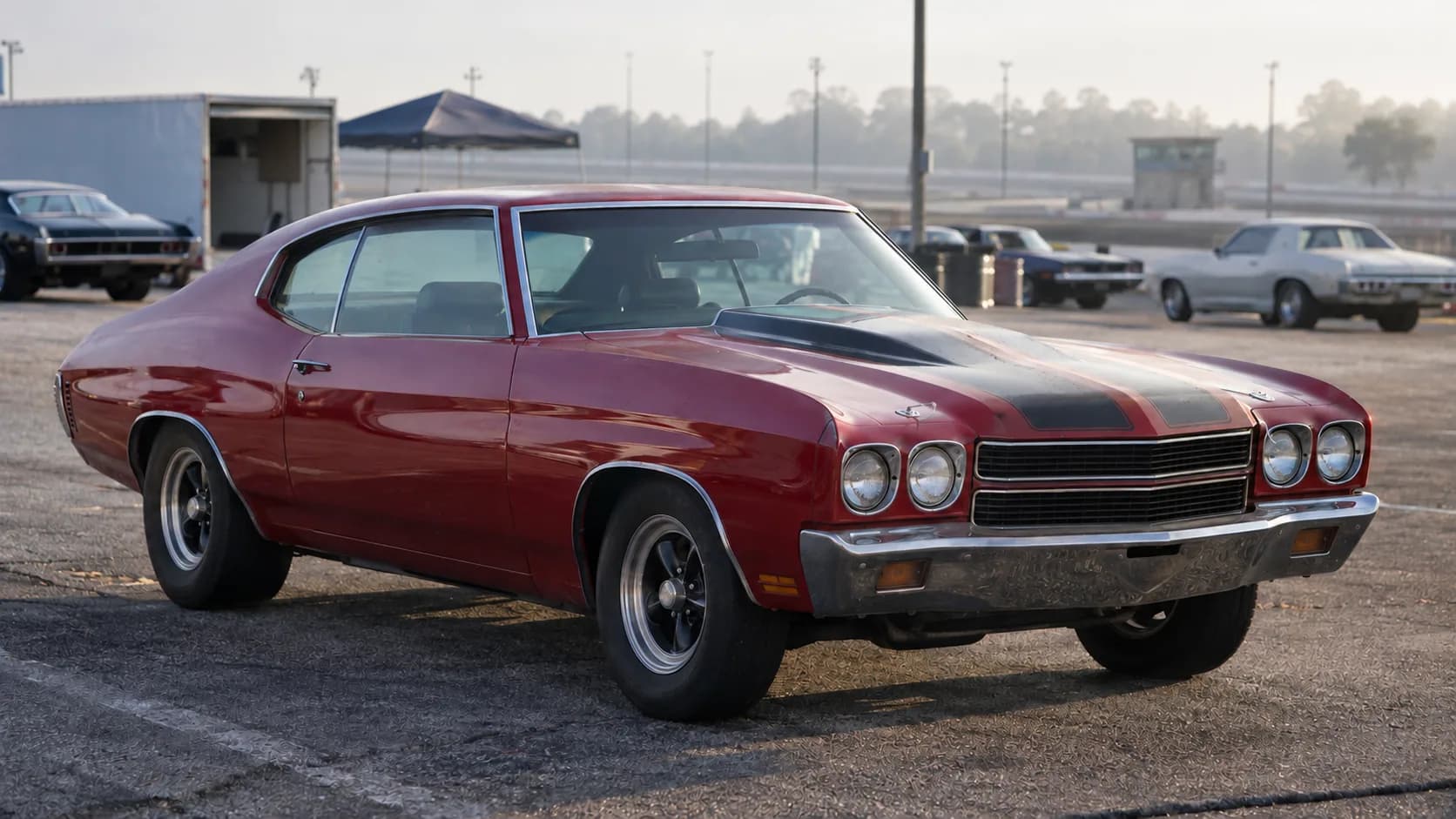
The hood bulge on a 1970 SS454 wasn't just styling. Ordered as the functional cowl induction system, it used a vacuum-operated flap at the rear of the hood that stayed shut at idle and popped open under wide-open throttle, pulling cooler, denser air in from the base of the windshield instead of hot air off the engine bay. A non-functional version of the same hood was also available for buyers who wanted the look without the plumbing underneath. Reproduction cowl hoods, functional and non-functional, are still available today for anyone restoring an original or finishing a tribute build, along with the correct hood-pin and emblem hardware that finished the look.
Spotting the Real Thing
Because the LS6 Chevelle is so valuable, verifying one matters more than with almost any other muscle car. Start with the cowl tag and the RPO Z15 code, then cross-check the engine block's casting numbers and stamped code against what the paperwork says the car left the factory with. Chevrolet's own 1970 production records are incomplete, which is part of why enthusiast groups like the LS6 Showcase & Registry exist — by its estimate, only around 300 LS6 Chevelles — coupes and convertibles combined — are still known to survive out of the roughly 4,475 LS6 engines Chevrolet built for the Chevelle that year. A car with a correct cowl tag, matching casting numbers and a documented history is worth pursuing; one missing all three deserves a much harder look before any money changes hands, no matter how good the stripes look.
Owning One Today
That scarcity shows up in the price. Hagerty's valuation guide puts a 1970 Chevelle SS 454 Sport Coupe with the LS6 in #3, or good driver, condition at around $122,000, with values having climbed steadily over recent years. An LS5-equipped car, built in far greater numbers, remains the more attainable way into SS454 ownership — same body, same big-block character, a smaller number on the horsepower sticker but a much easier car to insure, find parts for, and actually drive.
Legacy
More than fifty years on, the SS454 still represents the moment Chevrolet stopped compromising on the Chevelle's engine bay. The LS6 in particular set a horsepower ceiling the model never saw again, which is exactly why it's still the one collectors chase hardest, and why a real one is worth the extra paperwork it takes to prove.
Specs
- Package
- SS454, RPO Z15 (1970 model year only)
- Engine
- 454 cu in (7.4L) big-block V8
- LS5 Output
- 360 hp @ 4,400 rpm / 500 lb-ft @ 3,200 rpm
- LS6 Output
- 450 hp @ 5,600 rpm / 500 lb-ft @ 3,600 rpm
- LS6 Engines Built
- about 4,475 (Chevelle, 1970)
- Hood Option
- Functional cowl induction, vacuum-actuated flap
- 2026 Value (Hagerty, LS6, #3 condition)
- about $122,000
FAQ
- What's the difference between the LS5 and LS6 454?
- Both displaced 454 cubic inches, but the LS5 ran a milder 10.25:1 compression with hydraulic lifters for 360 hp, while the LS6 used 11.25:1 compression, solid lifters and a bigger Holley carburetor to make 450 hp - the highest factory rating of any 1970 Chevelle.
- How rare is the LS6 Chevelle?
- Chevrolet built roughly 4,475 LS6 454 engines for the Chevelle in 1970, and most went into coupes. Registry estimates put surviving examples at around 300 today, which is why they command such high prices.
- Did the cowl induction hood actually do anything?
- Yes, on the functional version. A vacuum-operated flap at the rear of the hood opened under hard acceleration, pulling cooler, denser air from the base of the windshield instead of hot air off the engine.
- How do you tell a real SS454 from a clone?
- Start with the cowl tag and RPO Z15 code, then check the engine block's casting numbers and stamped code against the car's documentation. Because Chevrolet's own 1970 production records are incomplete, a numbers-matching drivetrain and a paper trail matter more than badges alone.
Know someone who drove one? Share this guide
Get the Look
As an Amazon Associate we earn from qualifying purchases.
- 1:18 diecast 1970 Chevelle SS 454 — A shelf-scale stand-in for the real thing.
- Chevelle muscle car history book — For the full LS5-vs-LS6 story.
- Vintage Chevrolet SS metal garage sign — Garage wall decor with the right badge.
Sources
- chevyhardcore.com — muscle-cars-you-should-know-1970-chevelle-ss-454-ls6
- chevyhardcore.com — chevelle-engine-options-1970
- californiaspeedshop.com — 1970-chevelle-ss-454-ls6-identification-specifications-and-guide-1
- hagerty.com — 1970-chevrolet-chevelle-SS 454
- themusclecarvault.com — 1970-chevelle-buyers-guide
- ls6registry.com — models_sold
- chevelles.com — 1970-ss-396-rpo-code-z25-or-zl3.57345
- ss396.com — RH-70R-AMD
- chevellestuff.net — 70ss