Cat C15 Engine: History, Specs, 6NZ vs ACERT and Problems
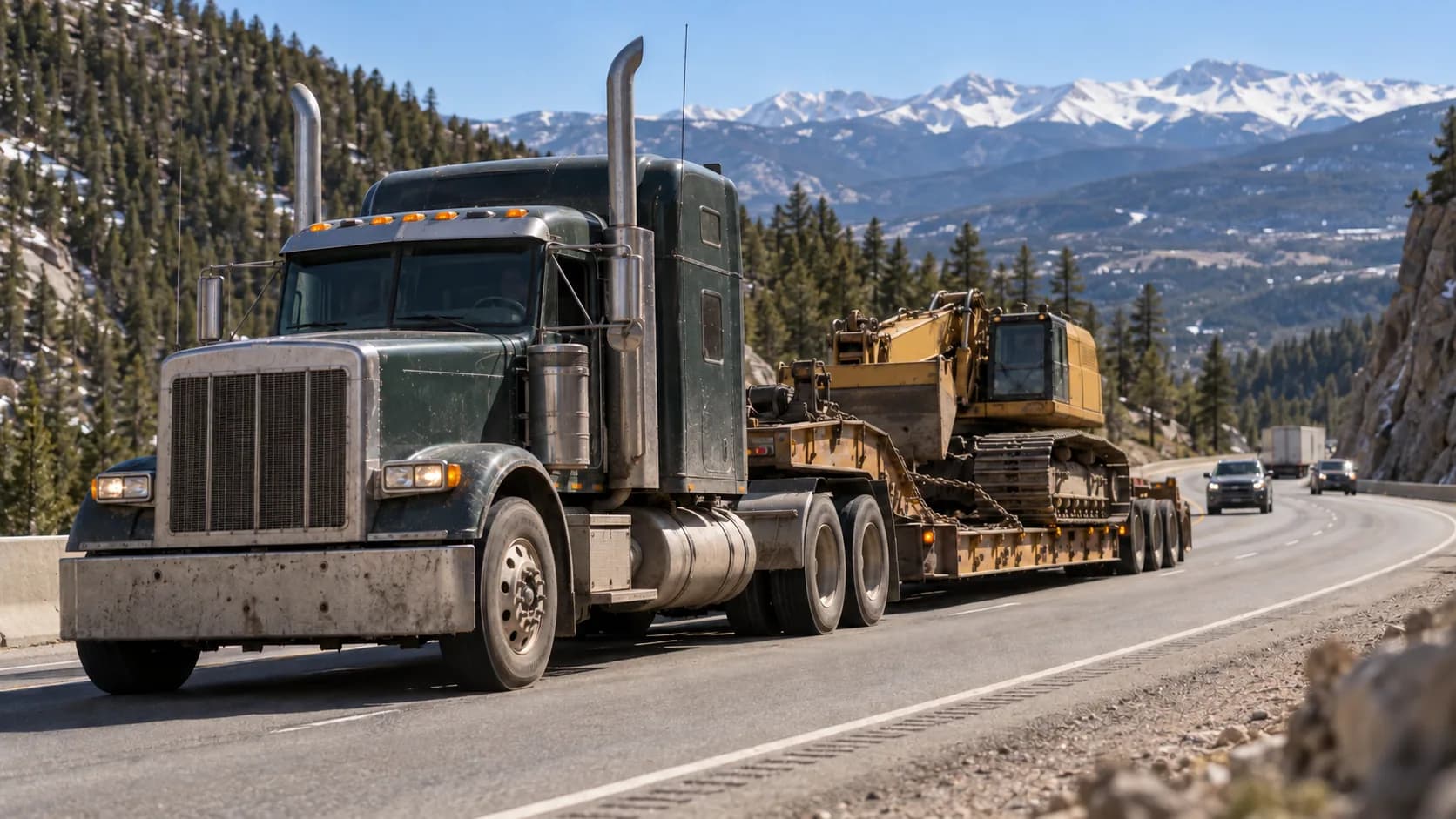
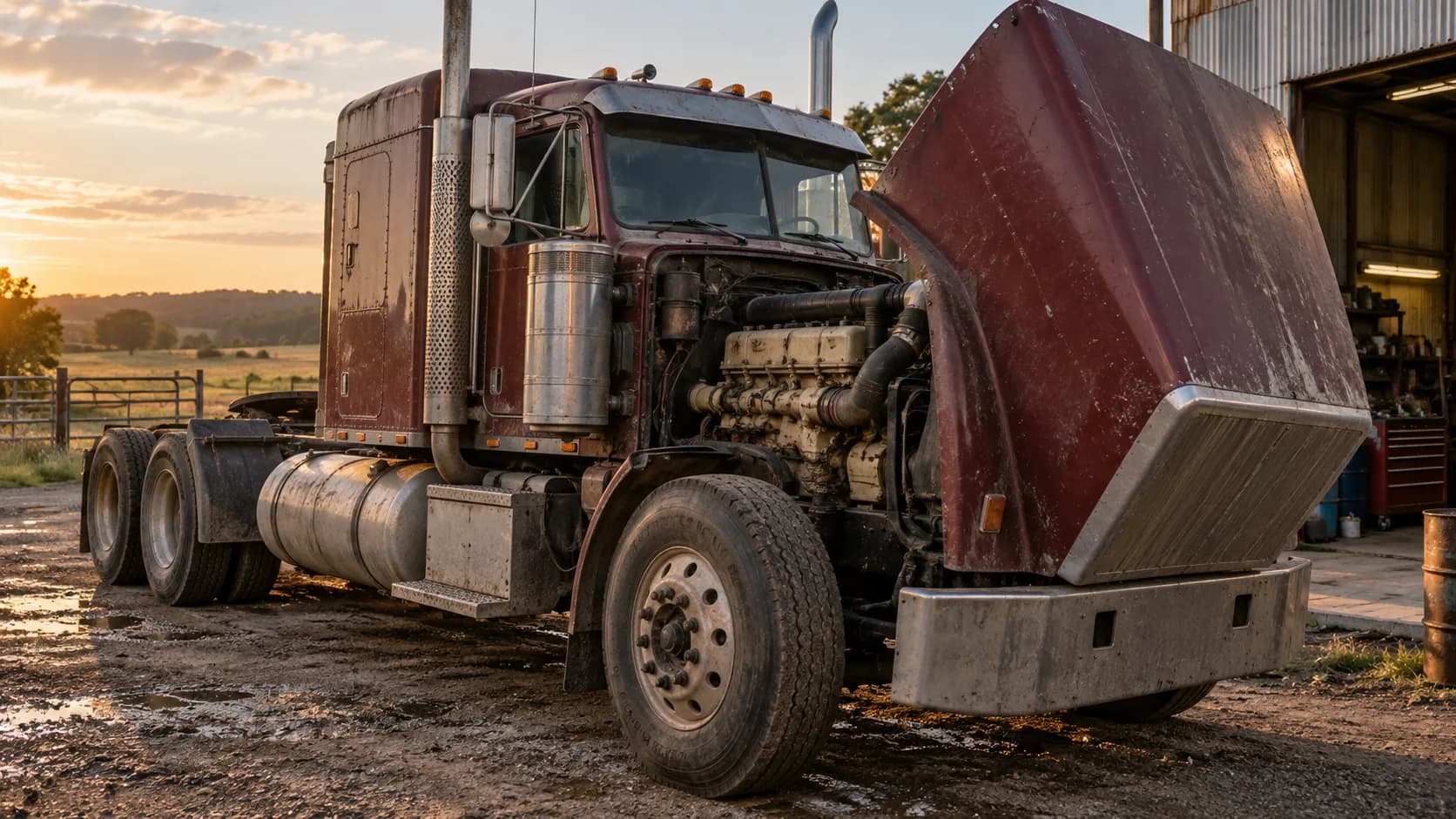
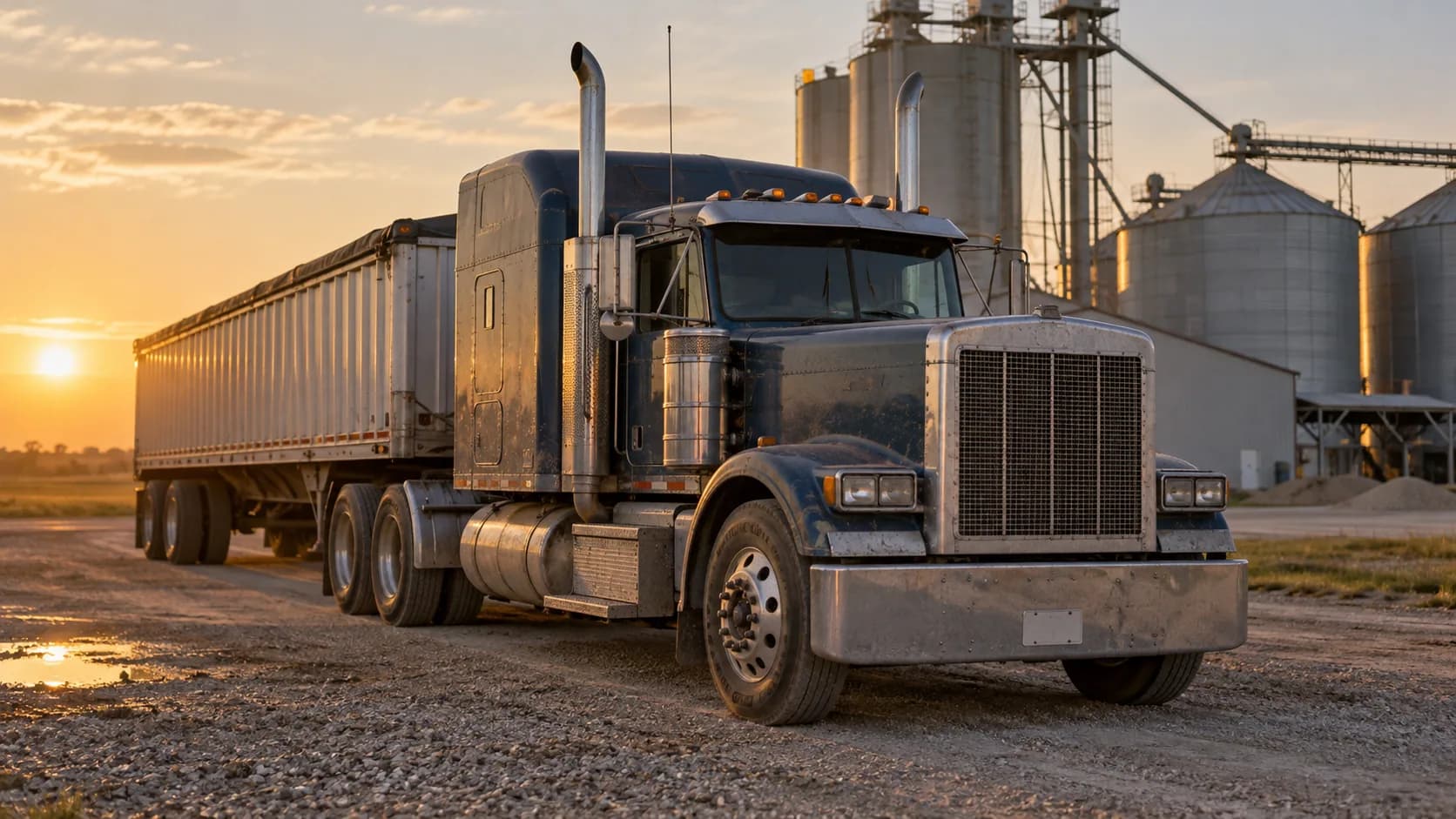
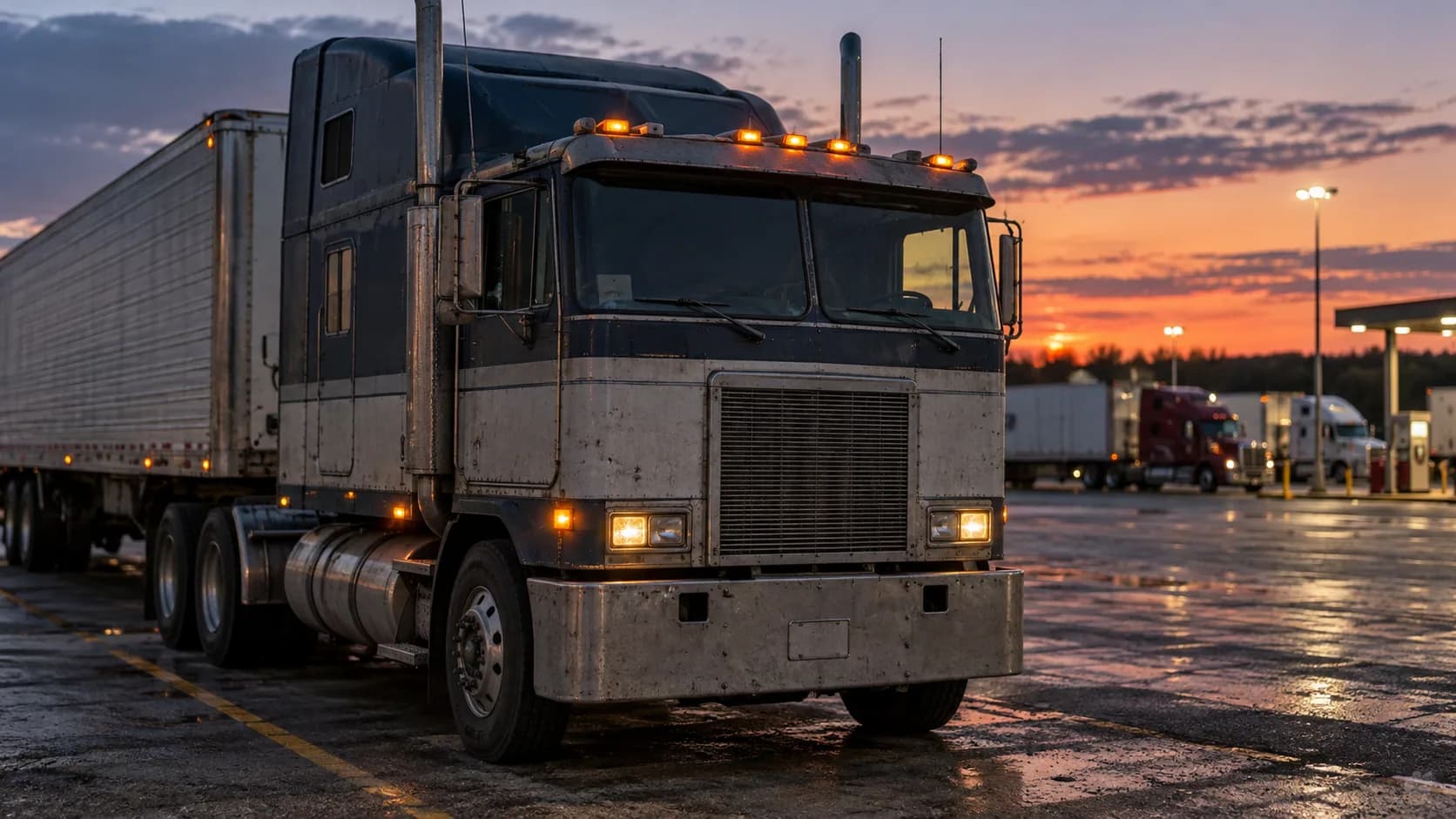
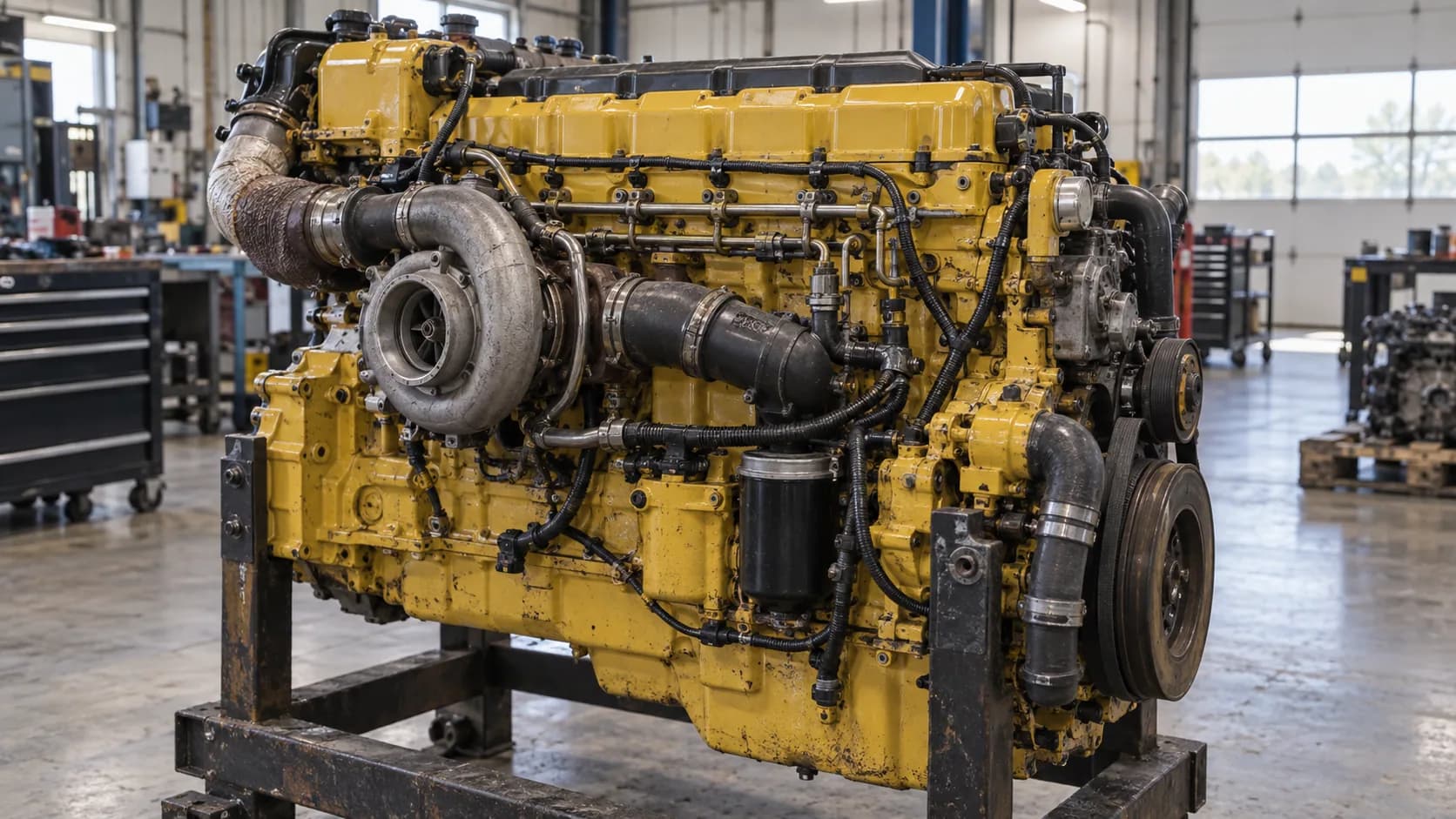
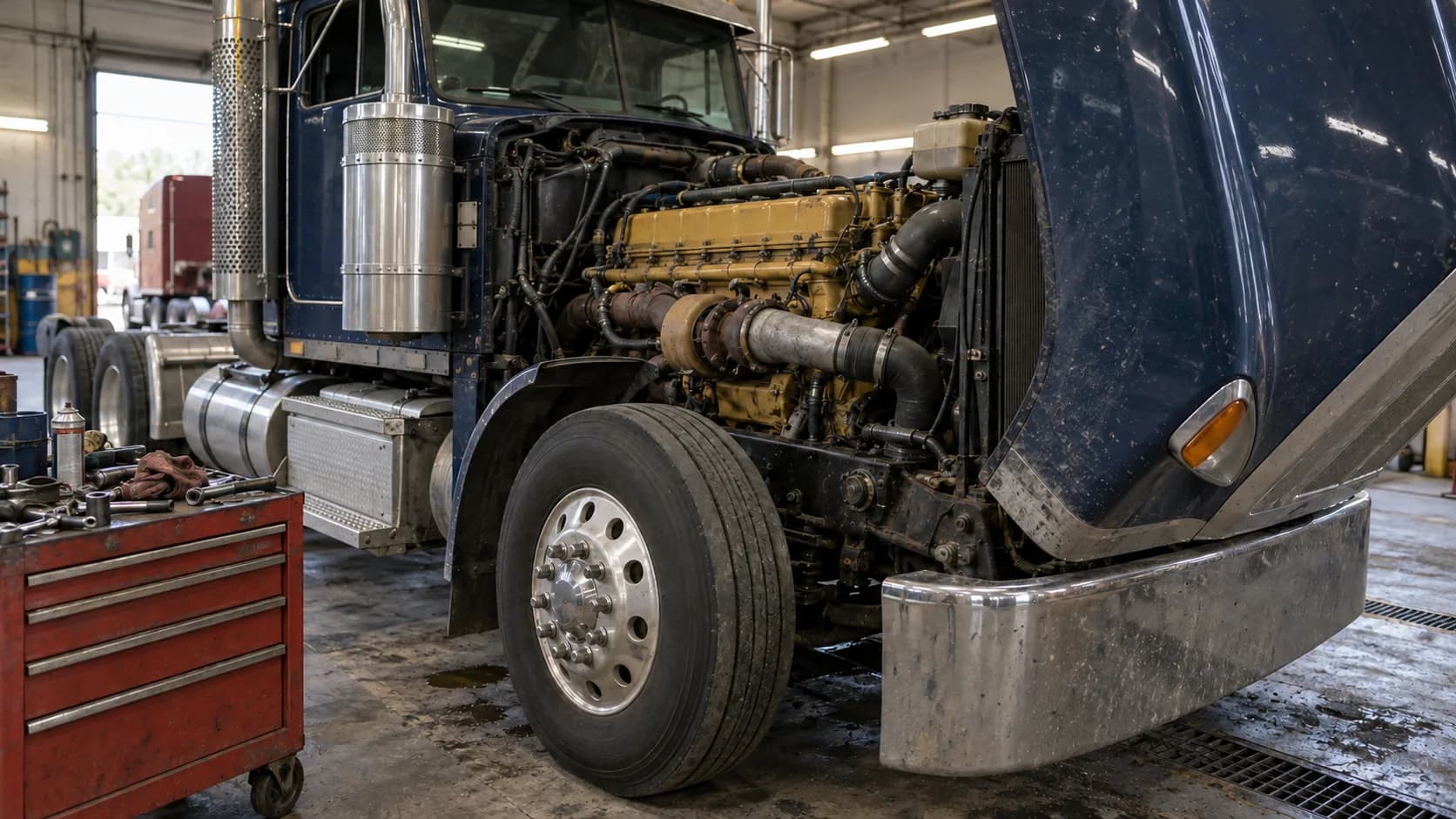
Ask a group of owner-operators which diesel they would put back in a long-hood if they could, and the Caterpillar C15 comes up fast, usually followed by an argument about serial prefixes. The images on this page are AI-generated renders, not photos of real trucks or engines: a yellow inline-six on a shop stand, a navy conventional with its hood tipped forward, and a dark long-hood pulling an excavator on a lowboy through the mountains. The engine they nod to is real, and its story runs from 1999 to Caterpillar's exit from North American truck engines around 2010.
From 3406E to C15
Caterpillar released the C15 in 1999 as the successor to the 3406E. It kept the same inline-six layout and the same 5.4-inch bore, but the stroke grew from 6.5 to about 6.73 inches, taking displacement from 14.6 liters to 15.2 liters (928 cubic inches). Like the 3406E, it is an overhead-cam electronic engine.
The early trucks used a single turbocharger. A serial-number table published by Diesel Laptops lists the 6NZ prefix as the original C15, with builds starting in July 1998 and model years 1998 to 2002. Builds overlap at the edges, so the same model year can carry different engines.
The Versions: 6NZ, MBN, ACERT and 2007
**6NZ.** The pre-ACERT C15 and the one most buyers ask for. IPD, a parts maker, calls it highly respected for reliability and says it is simpler and easier to work on than the ACERT engines, which makes it a favorite rebuild candidate.
**MBN.** The "bridge" engine, built between December 2001 and February 2003 according to the Diesel Laptops table, as Cat moved toward the 2002 EPA limits. Highway and Heavy Parts says these ran hot, used more fuel and pulled poorly, and repeats the nickname drivers gave the prefix: "Much Bad News." The reputation stuck.
**ACERT (BXS, MXS, NXS and others).** Caterpillar introduced the C15 ACERT at the Mid-America Trucking Show for the 2003 lineup, built to meet the 2002 EPA limits. This is the twin-turbo C15: two wastegated turbochargers in series, plus electronically controlled variable valve actuation to meter incoming air, mechanically actuated unit injectors and an oxidation catalyst in the muffler. Trucknews reported ratings of 435 to 550 hp with 1,350 to 1,850 lb-ft at launch. Highway and Heavy Parts notes the ACERT swapped the earlier two-piece aluminum-skirt pistons for one-piece steel pistons. In the Diesel Laptops table, BXS and MXS builds start in March 2003, and NXS takes over in July 2006.
**2007 (SDP).** For the 2007 emissions rules, Cat kept ACERT and added a diesel particulate filter with its own regeneration system. FleetOwner listed 2007 C15 truck ratings of 435 to 625 hp and torque from 1,550 up to 2,150 lb-ft. The Diesel Laptops table lists SDP for model years 2007 to 2010.
Horsepower, Torque and the Trucks That Used It
The C15 covered a wide range of ratings, and parts suppliers such as IPD put the family at 435 to 650 hp with up to 2,050 lb-ft. The top ratings arrived in 2004. Kenworth added the C15 to the W900L long-nose that July in 600 and 625 hp versions. The 625 made 2,050 lb-ft at 1,200 rpm, held flat to 1,500 rpm, peaked in power at 1,800 rpm and still produced 595 hp at 2,100 rpm. An optional Cat compression brake gave 600 retarding horsepower.
That September, Peterbilt began building the Model 379-127 and 379X with the C15 at 600 and 625 hp, aimed at long-haul and heavy-haul work. Wikipedia's 379 article lists the MBN bridge engine and later the MXS and BXS prefixes in that truck. These are examples, not a complete list of trucks that offered the engine.
Common Problems to Check
No engine runs a million miles without a list of complaints, and the C15's are well known in the shop:
- **Head gaskets.** Highway and Heavy Parts says the C15 head gained relief slots to reduce gasket pressure but that gasket failures became somewhat more frequent. IPD names head gaskets as a weak point in high-boost applications.
- **Rocker studs and exhaust manifolds.** Early ACERT engines broke rocker studs, though most have since been updated, and exhaust manifold studs and manifolds often cracked.
- **Turbochargers.** IPD lists turbo failure as common on the twin-turbo ACERT engines.
- **Injectors and camshaft wear.** Injectors wear with age and mileage, and IPD links cam wear to oil contamination or poor maintenance.
- **Emissions hardware.** The 2007 engines added the particulate filter and its regeneration system, which means more parts to maintain.
Before buying, read the serial number on the engine itself rather than trusting the truck's model year, and ask for oil analysis and service records.
Why Cat Left the Highway
On June 12, 2008, Caterpillar announced it would leave the North American heavy-duty truck engine market by 2010. Bulk Transporter reported two reasons: industry capacity of about 500,000 engines a year against demand of roughly 250,000, and Cat's decision not to use selective catalytic reduction for the 2010 emissions rules. Cat also announced a memorandum of understanding with Navistar, and planned a Cat-branded vocational truck powered by a 15-liter engine built by Navistar.
Cat promised that it and its dealers would keep supporting its on-highway engines beyond 2010, whatever truck brand they sat in. That is part of why so many C15s are still working. Pre-ACERT 6NZ engines remain among the most sought-after rebuild cores, while ACERT and 2007 engines fill the classifieds. A diesel that has been out of production for more than fifteen years still has a fan club, which says plenty.
Specs
- Production (on-highway)
- 1999 to about 2010
- Layout
- Inline six-cylinder diesel, overhead cam
- Displacement
- 15.2 L (928 cu in)
- Bore x stroke
- 5.4 x 6.73 in (137 x 171 mm)
- Predecessor
- Caterpillar 3406E (14.6 L)
- Main serial prefixes
- 6NZ (pre-ACERT), MBN (bridge), BXS/MXS/NXS (ACERT), SDP (2007)
- Turbocharging
- Single turbo early; two turbos in series on ACERT
- Truck ratings
- About 435 to 625 hp; up to 2,050-2,150 lb-ft depending on year
FAQ
- What years was the Cat C15 made for trucks?
- Caterpillar released the C15 in 1999 as the 3406E's successor and kept building on-highway versions until its exit from the North American truck engine market around 2010.
- What is the difference between a 6NZ and an ACERT C15?
- The 6NZ is the pre-ACERT C15 with a single turbo. The ACERT, introduced for 2003, added two turbos in series and variable valve actuation to meet the 2002 EPA limits.
- What is the best Cat C15 serial prefix?
- Buyers and rebuilders most often prefer the pre-ACERT 6NZ for its simplicity and reliability reputation. The MBN bridge engine has the weakest reputation.
- Why did Caterpillar stop making truck engines?
- Cat cited engine overcapacity, about 500,000 units of capacity against roughly 250,000 in demand, and chose not to adopt selective catalytic reduction for 2010. It announced the exit in June 2008.
Know someone who drove one? Share this guide
Get the Look
As an Amazon Associate we earn from qualifying purchases.
- Caterpillar C15 service manual — Torque specs and procedures for the shop bench.
- Diesel engine model kit — A buildable engine model for the desk or shelf.
- Long-hood semi truck diecast model 1:32 — The kind of rig a C15 usually pulled.
Sources
- highwayandheavyparts.com — the-primary-differences-between-caterpillar-c15-and-c15-acert-3406e
- ipdparts.com — history-of-the-caterpillar-15-engine
- repair.diesellaptops.com — caterpillar-truck-engine-explained
- trucknews.com — cat-introduces-first-acert-engines
- trailer-bodybuilders.com — kenworth-adds-caterpillar-c15
- trucknews.com — 1003116033
- en.wikipedia.org — Peterbilt_379
- fleetowner.com — caterpillar-releases-2007-engine-lineup
- bulktransporter.com — cat-to-exit-na-truck-engine-businesspartner-with-navistar