Eaton Fuller 13-Speed vs 18-Speed: What's the Difference?
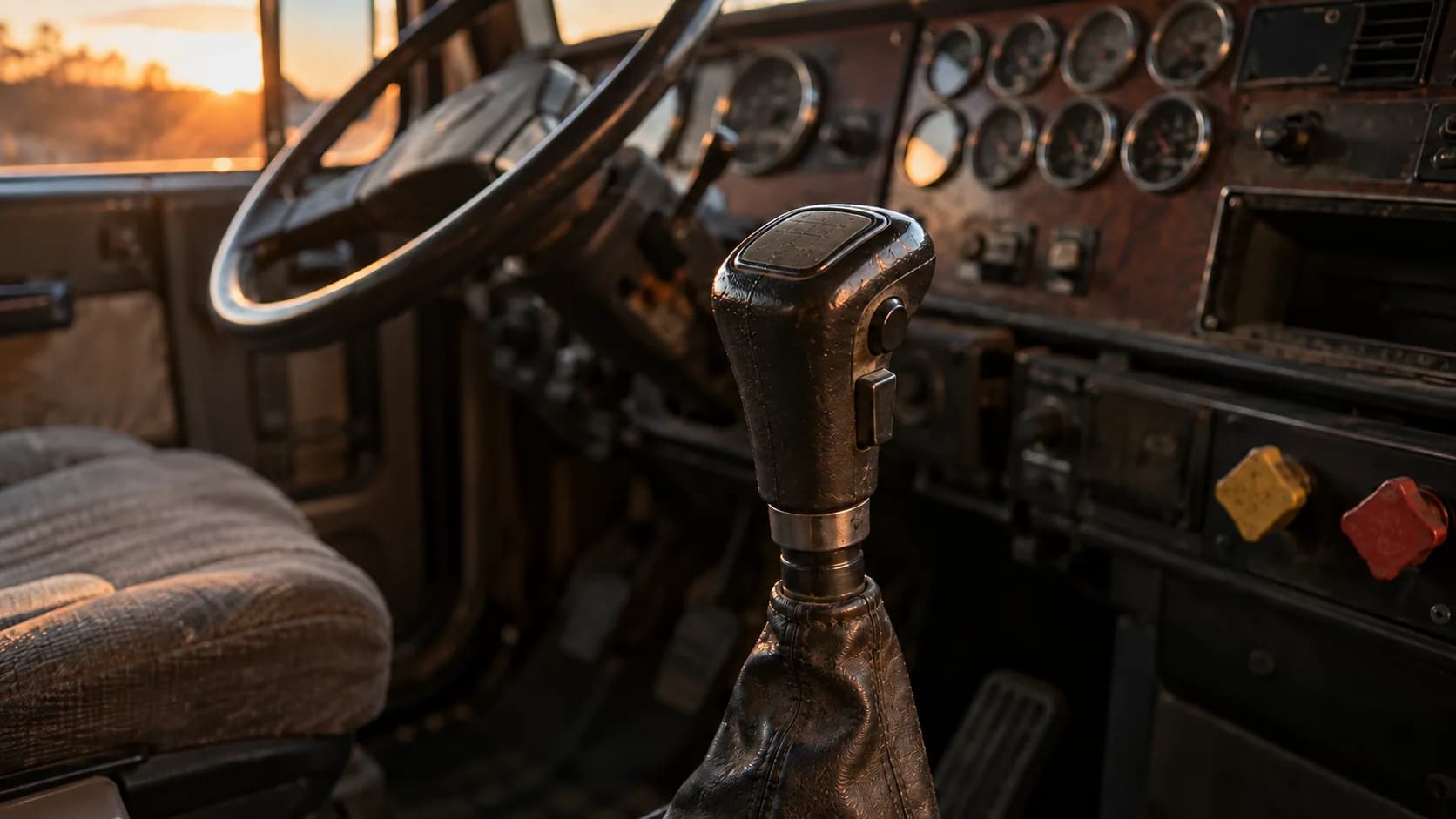
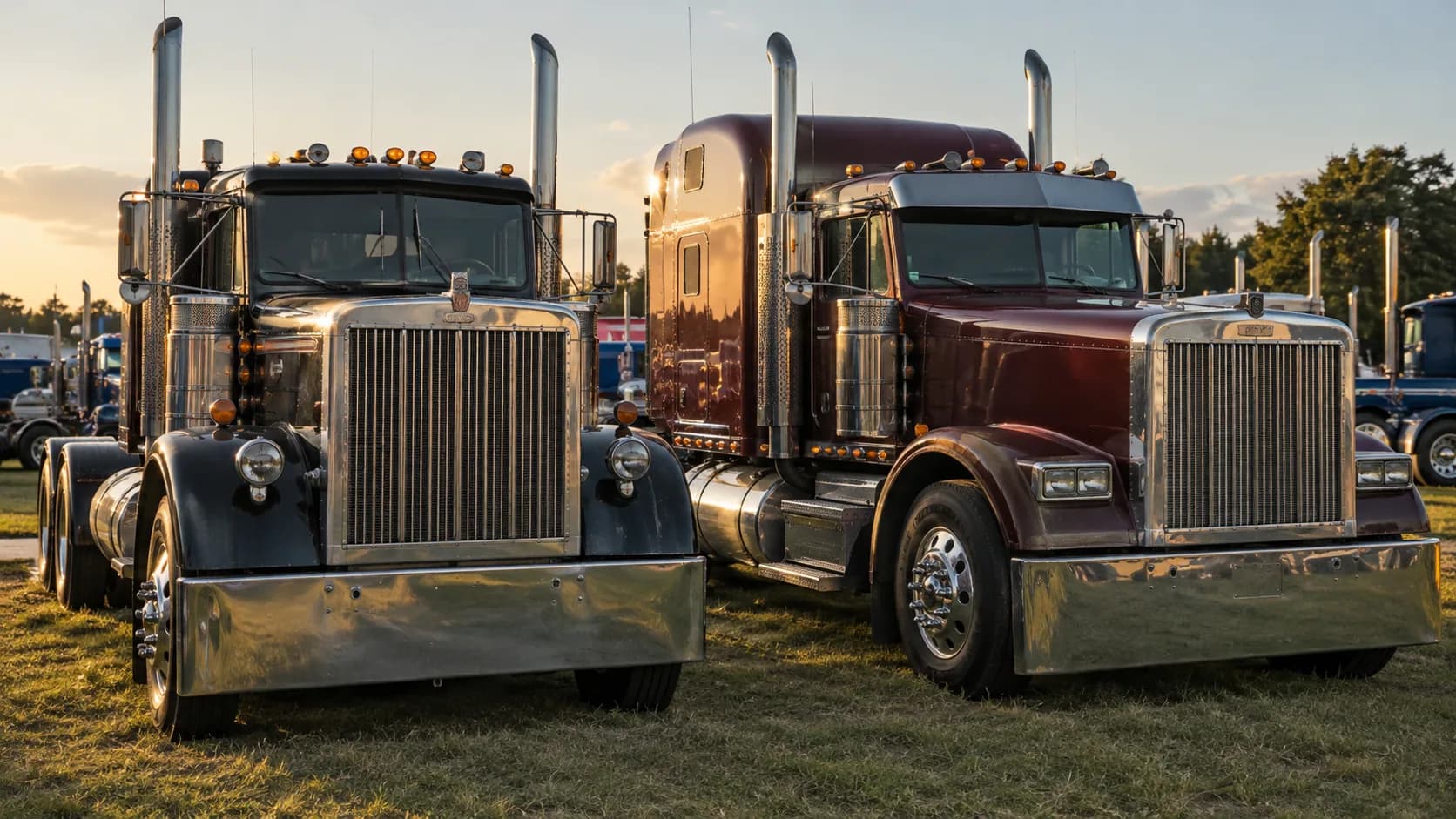
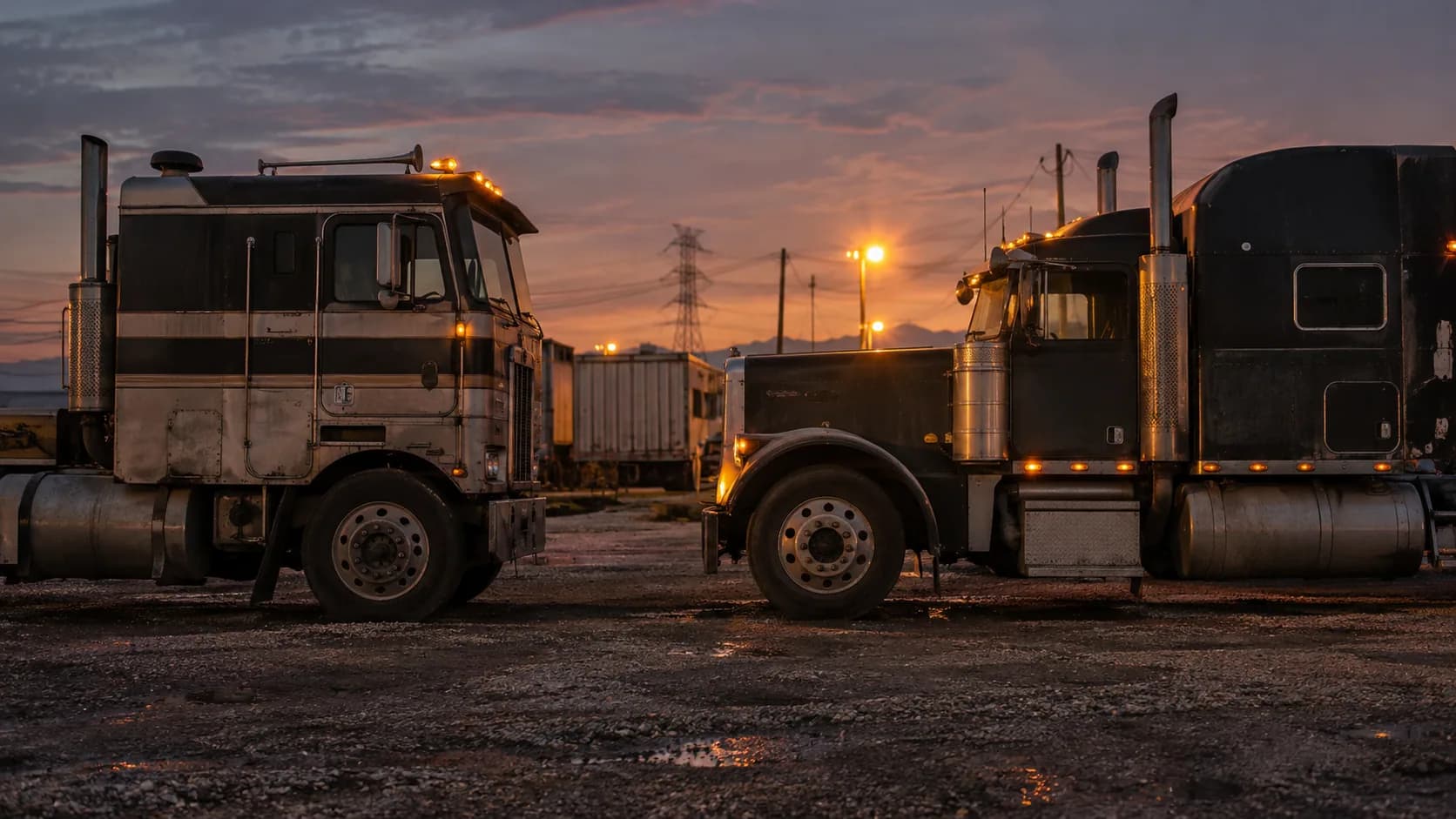
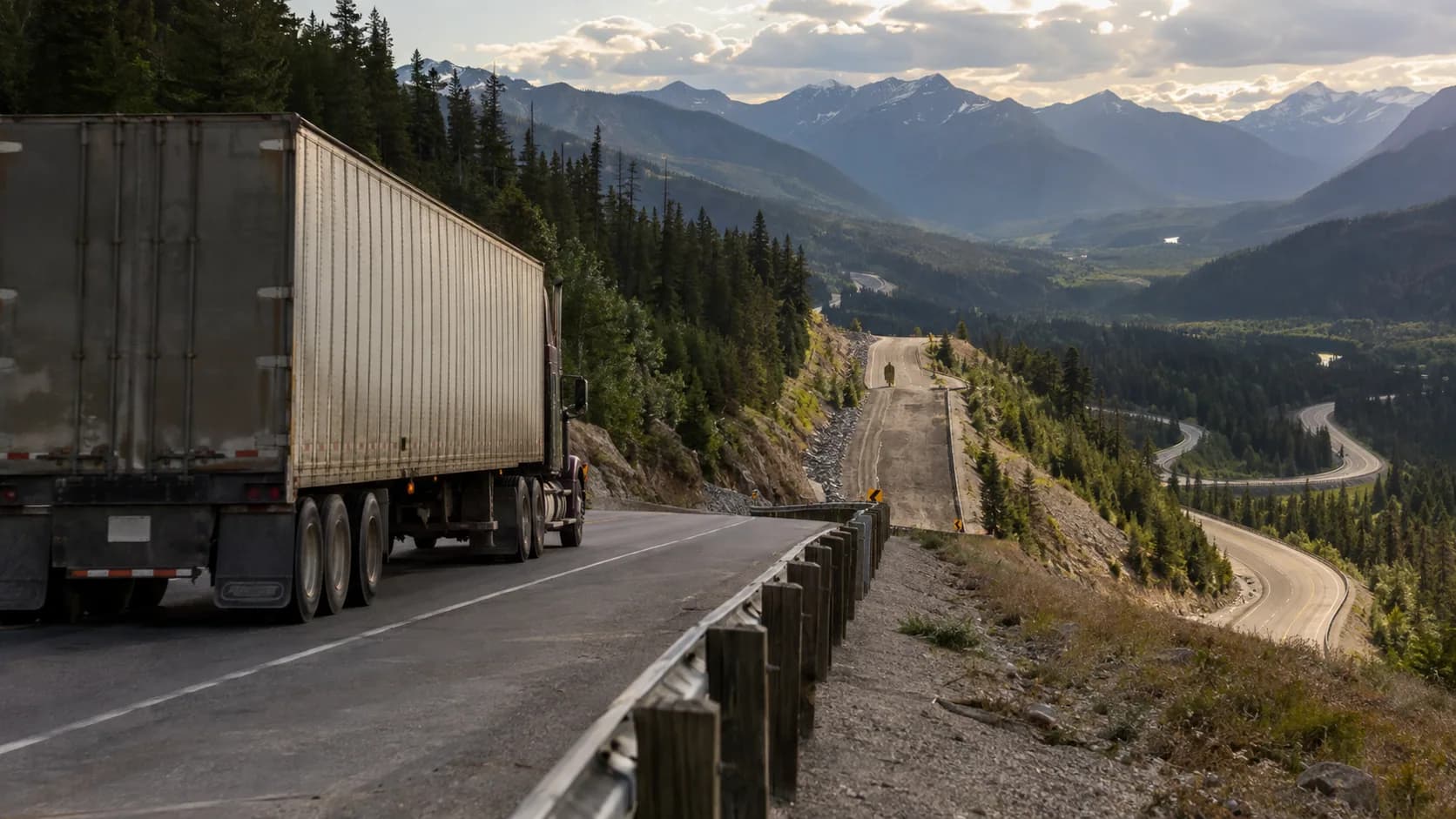
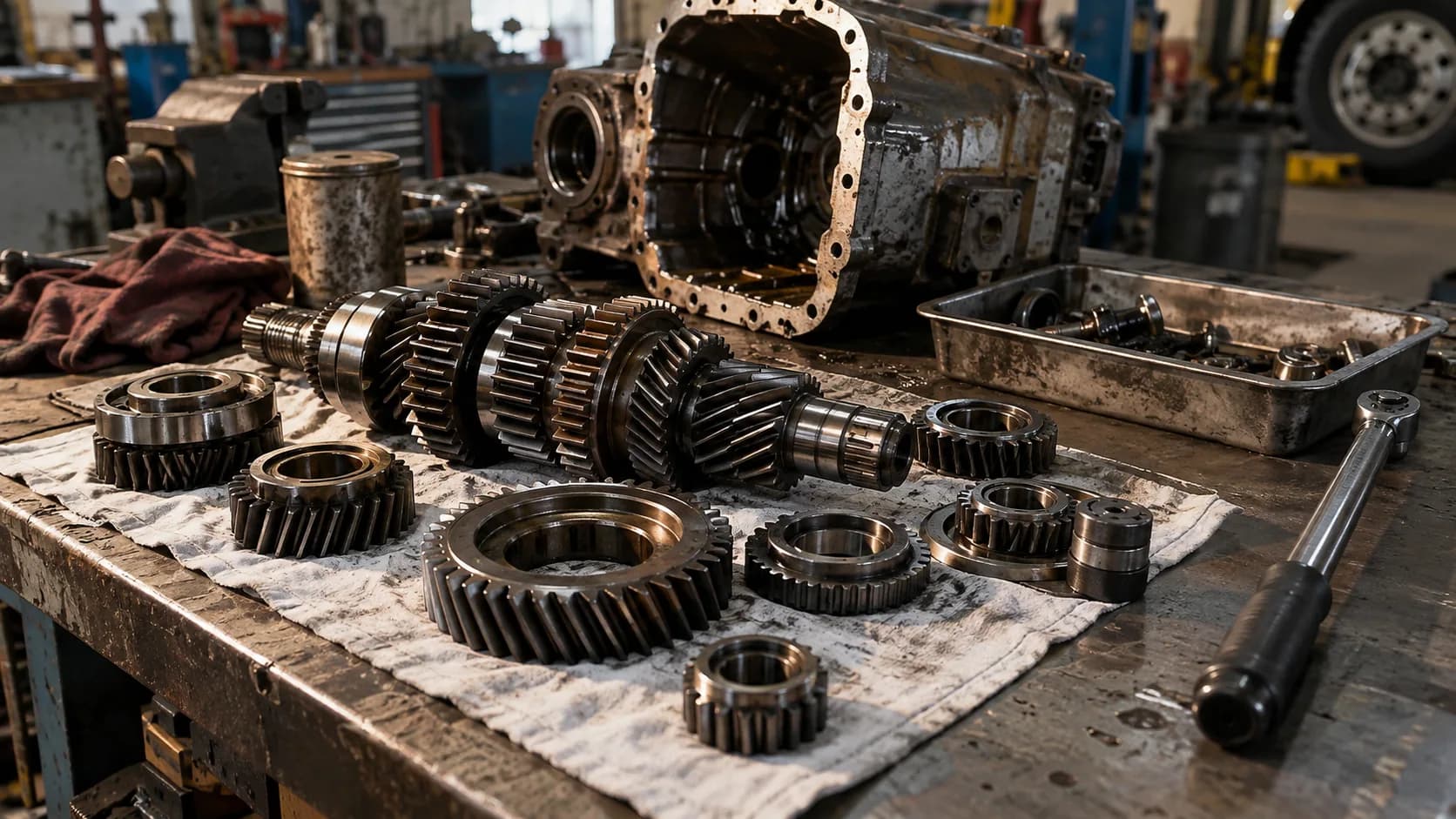
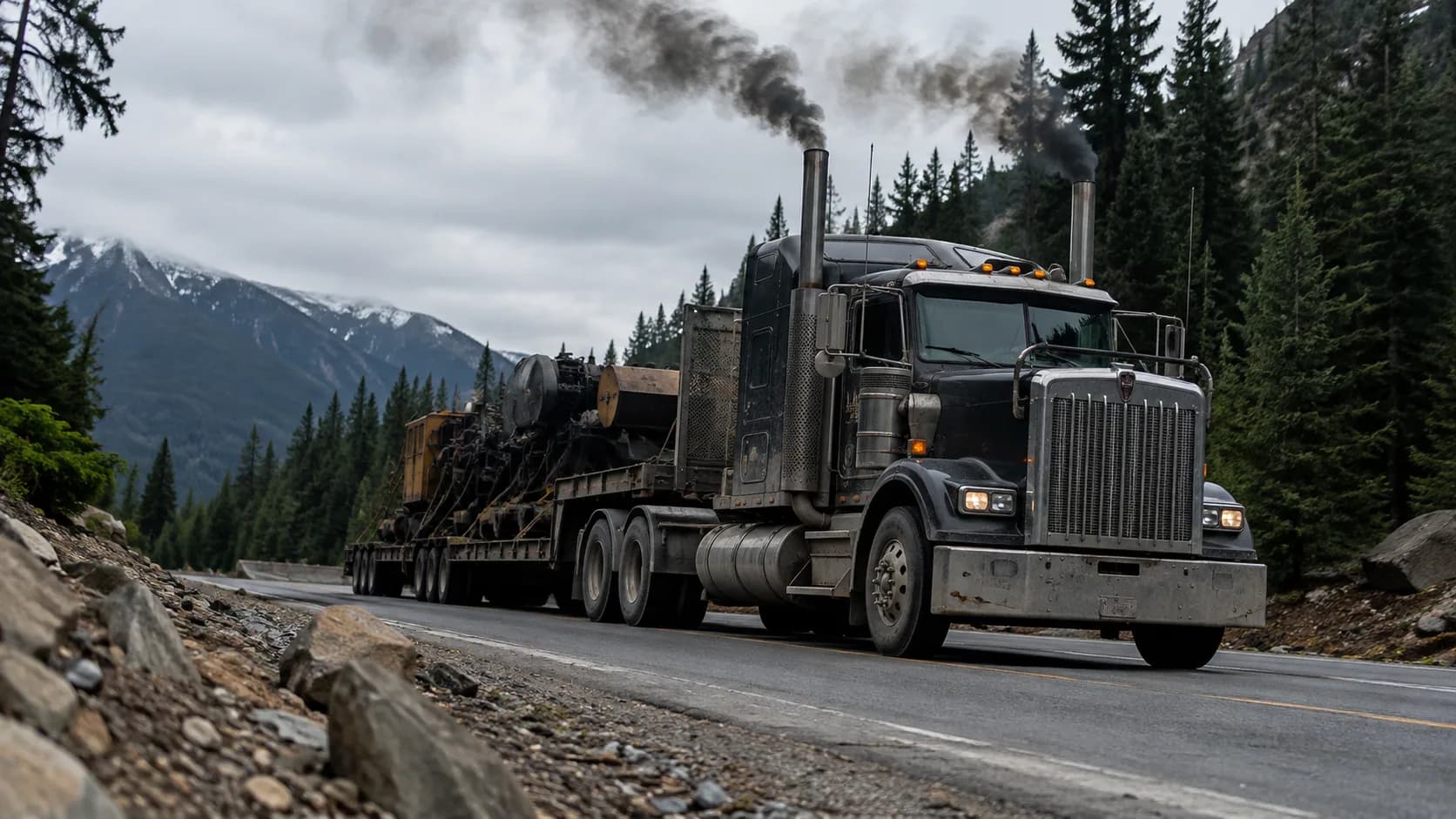
Eighteen gears sounds like a lot of lever, but an Eaton Fuller 18-speed is really a five-speed gearbox with two helpers bolted on behind it. The renders above imagine the pieces of that idea: a worn shift knob in a dusty cab, a gearbox laid out in a shop, and a long-hood grinding up a mountain grade with a heavy load. They are AI images, not photos of real trucks. This guide explains how the 13-speed and 18-speed differ, using trade and parts-supplier descriptions, so it does not teach shift patterns. For your own truck, follow Eaton's driver instructions and the decal on the dash.
How a Roadranger Gets From 5 Gears to 10, 13 or 18
Fuller transmissions were sold as Eaton Fuller after Eaton bought Fuller Manufacturing in 1958, according to a Kalamazoo local history, and a Western Michigan University archive record also notes the 1958 purchase. The baseline is the 10-speed. A parts-supplier guide describes five lever positions, each used once in low range and again in high range, selected with a range control. That is how five lever positions become ten ratios.
The 13- and 18-speed add a splitter, a second control that divides a gear into a lower and a higher step. The same guide says to preselect both the range and the splitter shift before moving the lever, which is why these boxes reward a driver who plans ahead.
The 13-Speed
A parts-supplier guide counts the 13-speed as LO plus four low-range gears and four high-range gears, with the splitter dividing the high-range gears. That is 1 plus 4 plus 8, which makes 13. The same guide says the splitter works only in high range. It spells out the sequence as starting with the range selector down, shifting LO through 4th, raising the range selector, then shifting 5th through 8th. Treat that as a description of how the gearbox is organized, not as a driving lesson.
The 18-Speed
The 18-speed uses a five-speed main section and a two-by-two auxiliary section, according to Truck Equipment Atlas, with 18 forward ratios and four reverse. The auxiliary section supplies the low and high range and the split between direct and overdrive. The key difference from the 13 is that the splitter works in every position, low range included. In the parts-supplier guide's counting, that is LO plus eight gears, with every one split, which gives 9 times 2, or 18. Another guide makes the same point differently: a 13-speed normally splits only the high-range gears, while an 18-speed lets both the low- and high-range positions be split.
Model numbers add some confusion. One guide says the speed count is the last two digits of the model number, so the RTLO-16913A and RTLO-18913A are 13-speeds, while an RTLO-18918B is an 18-speed. Eaton's catalog lists the RTLO-18913A as 13 forward, so the 18 in that number is not the gear count.
Which Jobs Suit Which
Heavy Duty Trucking reported in 2014 that the 10-speed was the most common manual in heavy highway trucks, and that 13- and 18-speeds were popular with owner-operators and usually paired with high-horsepower engines. Truck Equipment Atlas associates the 18-speed with heavy-haul, logging, oilfield, oversize-load, mining and construction hauling, plus some highway tractors, and says it takes more driver skill than a 10- or 13-speed. It lists input torque capacity from roughly 1,450 to 2,250 lb-ft depending on the model, and says the gearbox must be matched to the engine's maximum programmed torque.
The render of a loaded lowboy on a mountain grade fits that picture, but no source ties the 18-speed to a particular truck. Our Peterbilt 359 guide lists Eaton-Fuller Roadranger manuals among that truck's common transmissions, and our Cat vs Cummins truck engines guide covers the power that these boxes were built to handle.
Why Automated Manuals Took Over
Eaton's automated lineage runs from Cemat in the late 1980s to AutoShift in the 1990s, and Heavy Duty Trucking says the heavy UltraShift Plus line included 10-, 11-, 13- and 18-speed models in 2014. That article put self-shifters at about 30 percent of North American heavy gearboxes in 2013, against more than 8 in 10 Class 8 trucks sold in Europe, and said AMTs expanded the pool of potential drivers. Manufacturers claimed fuel savings of 2 to 6 percent, while NACFE's December 2014 confidence report put the gain at 1 to 3 percent over manuals.
In an August 2019 Transport Topics report, Eaton Cummins representatives put AMT penetration at upward of 80 percent (no year given for the figure), while Volvo reported about 93 percent of its own transmissions and Daimler 90 percent of its Cascadia models. The Eaton Cummins Endurant AMT arrived in 2017, and the same article says fleets reported lower maintenance costs, and seasoned drivers who first resisted AMTs accepted them quickly once they tried them. The manual did not disappear, but it became the exception.
Specs
- 10-speed
- 5 lever positions reused in low and high range
- 13-speed
- LO plus 4 low-range and 4 high-range gears; splitter works in high range only
- 18-speed
- LO plus 8 gears, splitter works in every position; 18 forward, 4 reverse
- 18-speed layout
- 5-speed main section plus a two-by-two auxiliary section
- 18-speed input torque
- About 1,450 to 2,250 lb-ft depending on model
- Eaton buys Fuller
- 1958 (Kalamazoo local history; WMU archive)
- Most common manual (2014)
- 10-speed, per Heavy Duty Trucking
- AMT penetration (2019)
- Upward of 80 percent, per Eaton Cummins reps (Transport Topics, 2019)
Get the Look
As an Amazon Associate we earn from qualifying purchases.
Shop-manual background on how heavy gearboxes are built.
Check price at AmazonCheck the truck's manual for the right spec.
Check price at AmazonFAQ
- What is the difference between a 13-speed and an 18-speed transmission?
- Both use a range control and a splitter. A 13-speed splits only its high-range gears, while an 18-speed lets the splitter work in every position, low range included.
- How many gears does an Eaton Fuller 10-speed have?
- Five lever positions, used once in low range and again in high range with a range control, which makes ten forward ratios.
- Is an 18-speed better than a 13-speed?
- Neither is better everywhere. Truck Equipment Atlas links the 18-speed to heavy-haul, logging, oilfield and oversize-load work and says it takes more driver skill, and Heavy Duty Trucking described 13- and 18-speeds as popular with owner-operators on high-horsepower engines.
- Why did automated manuals replace manual transmissions in trucks?
- Fleets cited easier hiring and driver recruiting, lower maintenance costs, and fuel savings that manufacturers put at 2 to 6 percent and NACFE at 1 to 3 percent. In 2019 Eaton Cummins told Transport Topics that AMT penetration was upward of 80 percent.