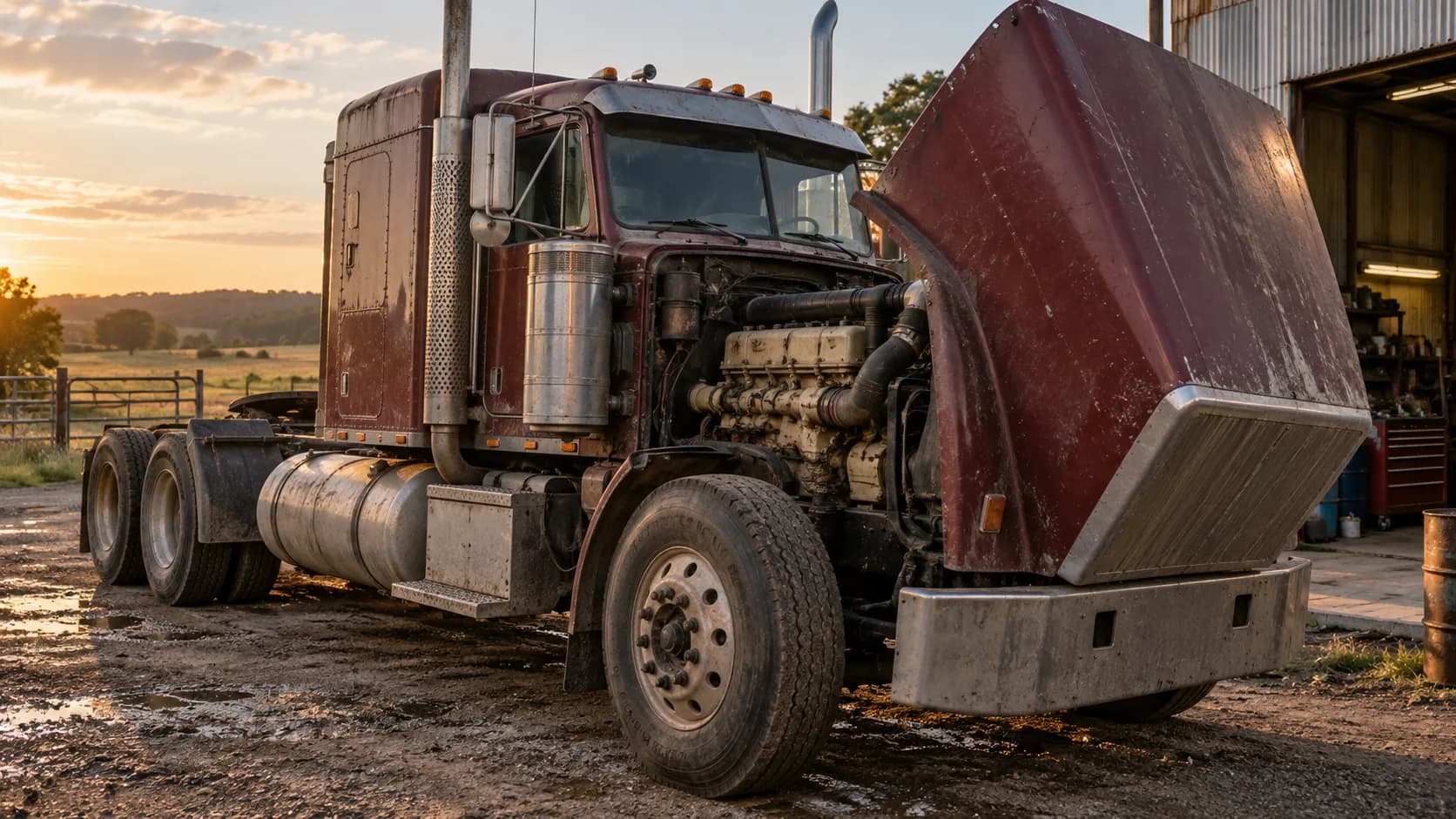
Peterbilt 351 and 281 (1954-1976): Needle Nose History & Specs
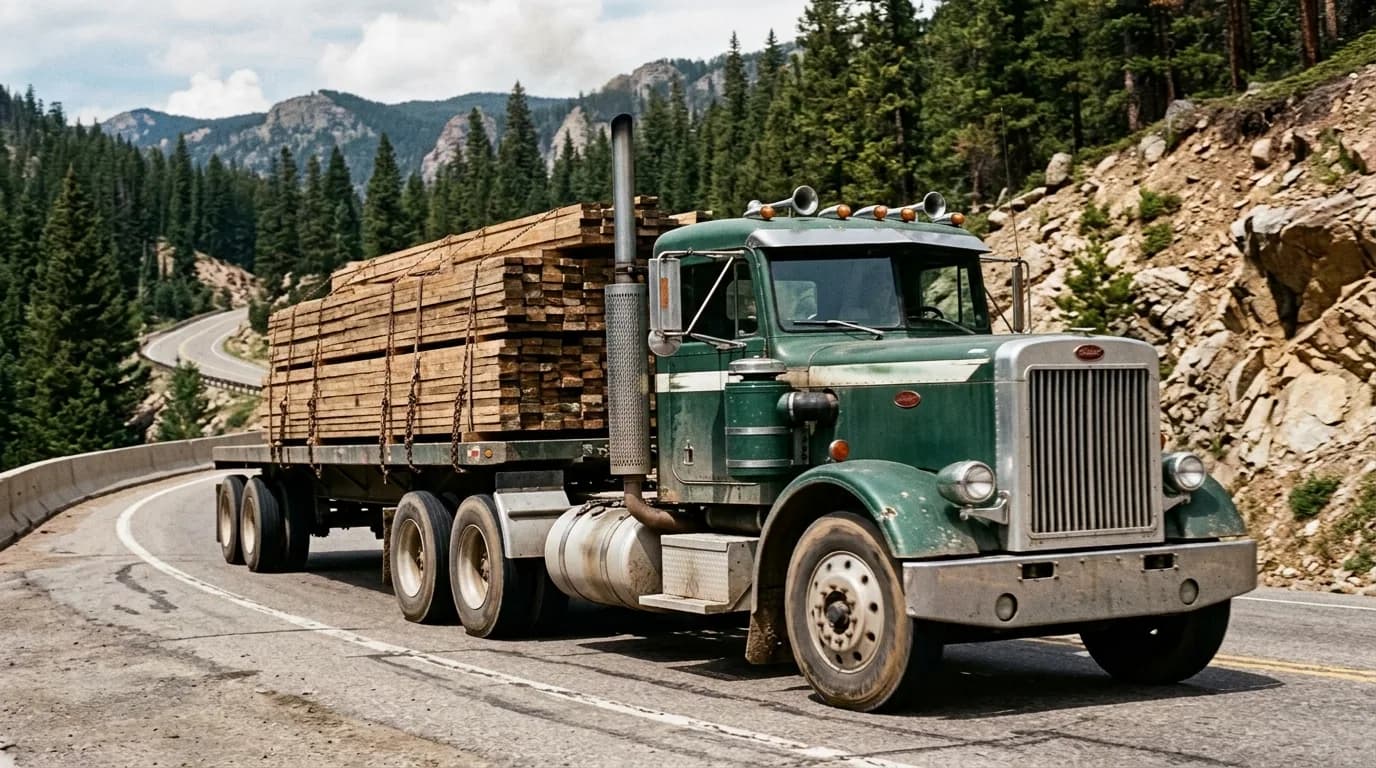
The villain of Steven Spielberg's Duel was a Peterbilt needle nose, and most sources call it a 281. The render above is AI-generated and shows a different job, a dark-green Peterbilt conventional taking a load of lumber around a mountain curve. It gives the family look rather than a strict portrait: the 281 and 351 this guide covers carried an even narrower nose, which is why enthusiasts still call them "needle noses."
From the 280 and 350 to the 281 and 351
In 1954 Peterbilt redesigned its 280 and 350 conventionals as the Model 281 and Model 351, with horizontal shutters across a new, narrow grille. The numbers tell you what is underneath: the 281 had a single drive axle, and the 351 had two. The line ran until 1976, about 22 years. It started at Peterbilt's Oakland, California, plant, the old Fageol works that had opened as Peterbilt Motors Company in 1939. Pacific Car and Foundry, later renamed PACCAR, bought the company in June 1958, four years into the run, and in 1960 production moved to a new plant in Newark, California.
One wrinkle for anyone hunting through old photos: the 281 and 351 numbers were also used on a cabover from 1954 to 1958. For 1959 that truck gave way to the 282/352 tilt-cab. Everything below is about the conventional.
Why They Call It the Needle Nose
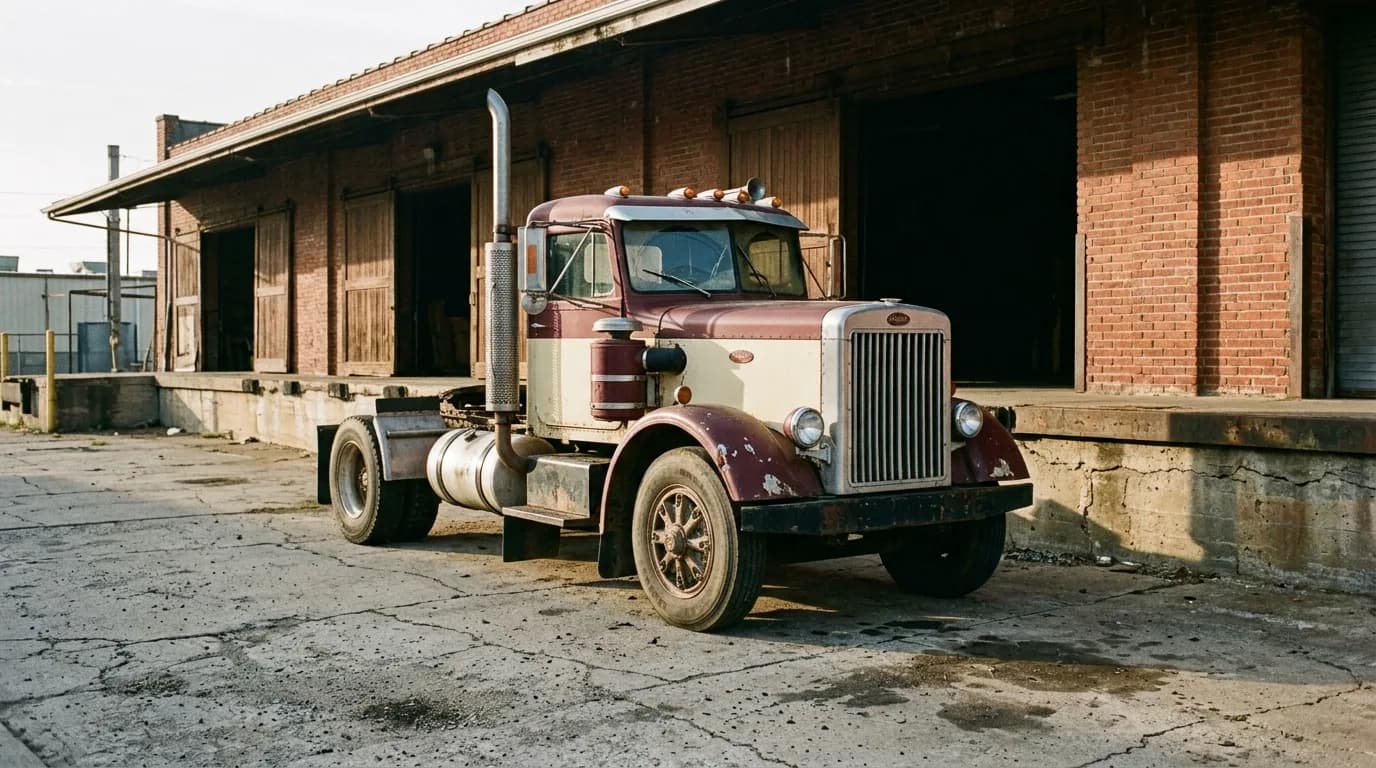
The nickname comes from the narrow nose and the butterfly hood, which truckers liked for easy engine access and good visibility. A butterfly hood opens out to both sides like wings, and the early fenders are the cycle-style type (flat steel fenders replaced them in the early 1970s). On a 351, the headlamps sit behind the radiator, set back from the face of the grille, and the truck was offered in 113-, 119-, 123- and 127-inch BBC sizes (bumper to back of cab). Early hoods have a short side and a ledge panel the hood sits on; later ones have a full-size side panel with a smaller ledge just above the frame rail. Tapered front frame rails were phased out in 1966, and the rear taper was gone by 1971, so the frame is a useful dating clue.
The family also had specialists. The Model 341 was a short-hood version for vocational work, built from 1954 to 1972. There was a 351L logger with aluminum diamond-plate fenders, and an SBFA (set-back front axle) version with "pit style" fenders for dump-truck work. The 353, a construction truck that reused the 359 grille with a butterfly hood, ran from 1973 to 1987.
Engines: Cummins and Caterpillar
Owners picked their own power. Cummins is the name most often attached: the 281 is listed with a Cummins NTC350 small cam making 350 hp, and listings include a 1965 tandem-axle 351 with a Cummins turbo diesel rated at 350 hp and a 1972 truck advertised with a 400-horsepower Cummins, both with 13-speed transmissions. Caterpillar appears too: the main truck in Duel ran a Caterpillar while its backup ran a Cummins. Transmission options listed for the 281 include a 5-speed Spicer, a 10-speed manual and the 13-speed Fuller Roadranger.
The Truck in Duel
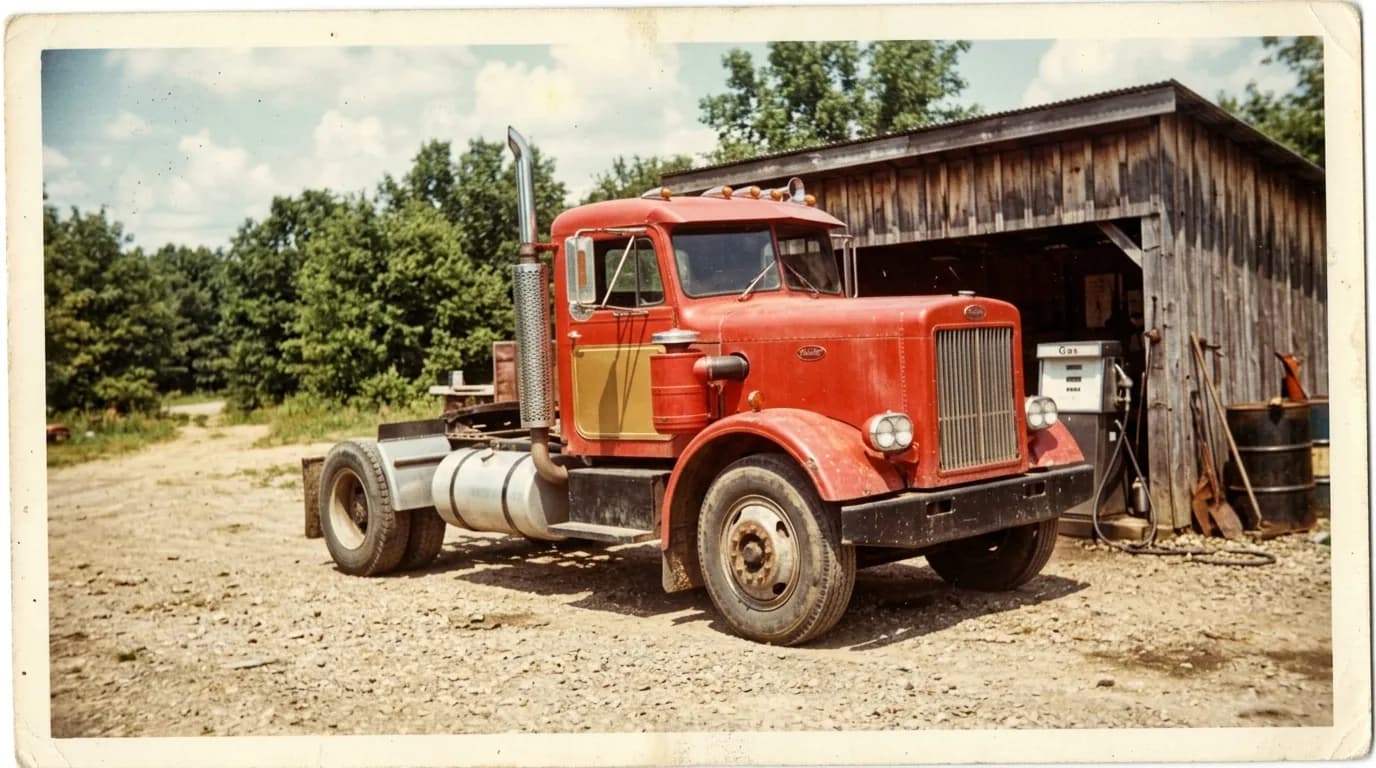
A Peterbilt needle nose played the villain in Steven Spielberg's Duel, a made-for-TV thriller that ran as an ABC Movie of the Week on November 13, 1971. Sources disagree on exactly which one: most call it a 281, one trucking magazine says a 1955 351, and the model year is given as either 1955 or 1957. Spielberg has said the multiple license plates on the front bumper hint that the driver is a serial killer. The main truck went over the cliff in the final scene and was destroyed, but a backup truck built as insurance survives. That 1960 Cummins-powered backup sat in a yard in Agua Dulce, California, for about 30 years before a buyer found it in 2003. For the longer theatrical release, extra scenes were shot in April 1972 with a second truck, reported as a 1962 Peterbilt 351, modified to match the original as closely as possible.
What Replaced the Needle Nose
Peterbilt's first conventional with a tilting hood arrived in 1965 as the Model 358, which ran through 1976 and introduced the bird hood ornament. In 1967 came the Model 359 highway tractor, with a wider grille for a larger radiator. From then on the highway work went to the 358 and 359, while the 351 carried on mainly as a heavy-duty vocational truck until it was retired in 1976. The 359 itself ran until 1987, when the Model 379 took over.
Finding One Today
Needle noses still surface. A 1965 tandem turned up at an online auction, a 1972 truck listed in 2020 had last been registered in 2008 and still ran, and a Las Vegas collection shows a 1959 351 with a 400 Cummins and a 13-speed transmission. When you search, use both names, "351" and "needlenose," then check the drive axles to sort out a 281 from a 351. Scale collectors are covered as well, with 1:64 needle nose models on the market.
Specs
- Production
- 1954-1976
- Introduced as
- 1954 redesign of the 280 and 350 conventionals
- 281 vs 351
- 281 has a single drive axle; 351 has two
- Body style
- Narrow nose, butterfly hood, horizontal grille shutters, cycle-style fenders (flat steel fenders from the early 1970s)
- Engines seen
- Cummins (including NTC350 at 350 hp) and Caterpillar
- Transmissions listed
- 5-speed Spicer, 10-speed manual, 13-speed Fuller Roadranger
- Tilt-hood cousin
- Model 358, 1965-1976
- Successor
- Models 358 (1965) and 359 (1967) took over highway work; 281 and 351 retired in 1976
FAQ
- What years was the Peterbilt 351 made?
- Peterbilt built the 281 and 351 from 1954 to 1976, about 22 years. The 358 and 359 took over highway work in the mid-1960s, and the 351 finished its run mainly as a vocational truck.
- What is the difference between a Peterbilt 281 and a 351?
- The 281 has a single drive axle, while the 351 has two. Otherwise they share the same narrow-nose conventional design.
- Why is the Peterbilt 351 called a needle nose?
- The nickname comes from its narrow nose and butterfly hood, which truckers liked for easy engine access and good visibility.
- What truck was in the movie Duel?
- A 1950s Peterbilt needle nose, most often described as a 281 (one magazine says a 351). Extra scenes for the theatrical release were shot in 1972 with a second truck, reported as a Peterbilt 351.
Know someone who drove one? Share this guide
Get the Look
As an Amazon Associate we earn from qualifying purchases.
- Peterbilt 351 needle nose diecast model truck — The narrow-nose profile in 1:64 or larger scales for a shelf.
- Peterbilt trucks history book — Background reading on the company behind the long-hood Petes.
- Duel (1971) Spielberg Blu-ray — The film that turned a Peterbilt needle nose into a movie villain.
Sources
- en.wikipedia.org — Peterbilt_281
- en.wikipedia.org — Peterbilt
- en.wikipedia.org — List_of_Peterbilt_vehicles
- en.wikipedia.org — Duel_(1971_film)
- tenfourmagazine.com — the-duel-truck-10-years-later
- timstrucks.com — pbs1
- proxibid.com — 1965-peterbilt-351-needlenose-ta-tractor
- barnfinds.com — needlenose-cab-1972-peterbilt-351
- nostalgiastreetrods.com — 1959-peterbilt-model-351-sheris-ride
- machinesinaction.com — road-rage-icon
- encyclopedia.com — peterbilt-motors-company
- carmodel.com — 118018