Peterbilt 362 (1981-2005): Cabover History, Engines and Specs
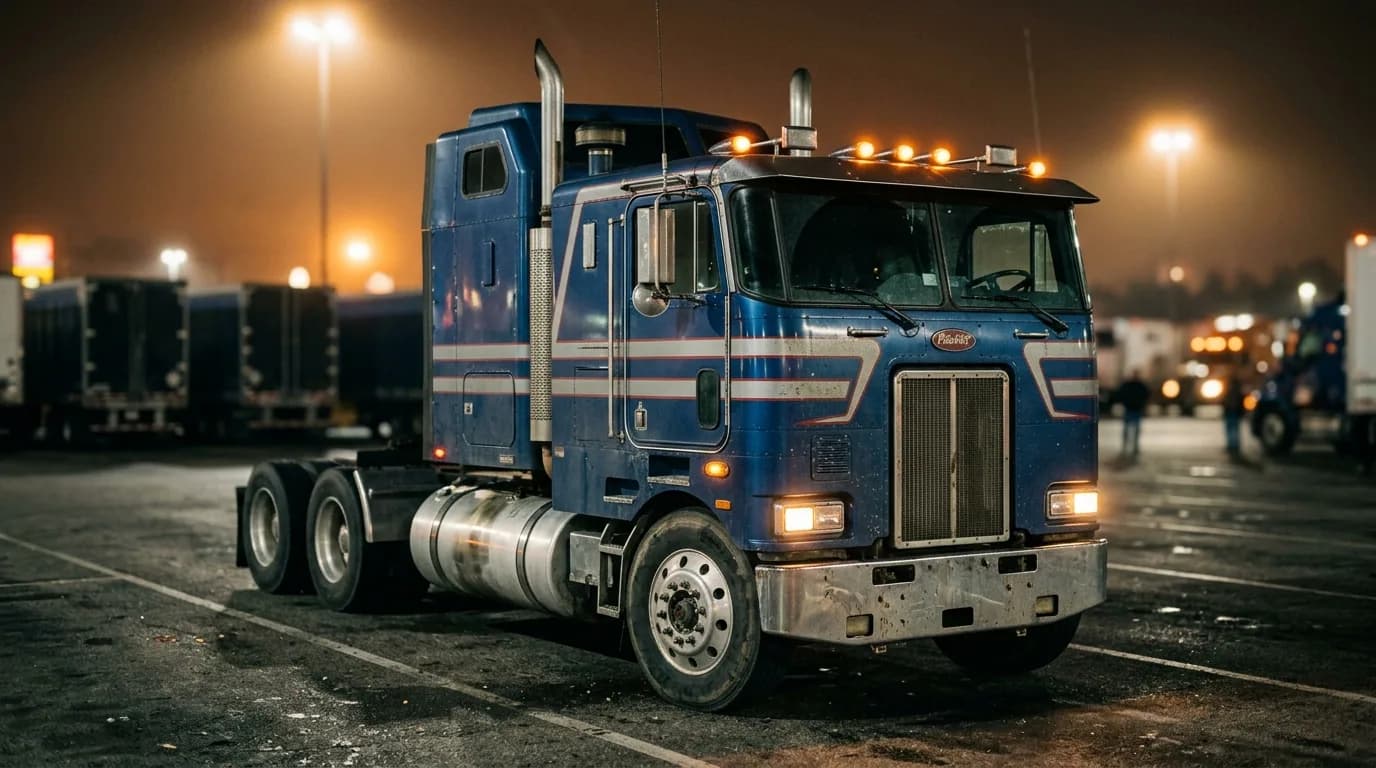
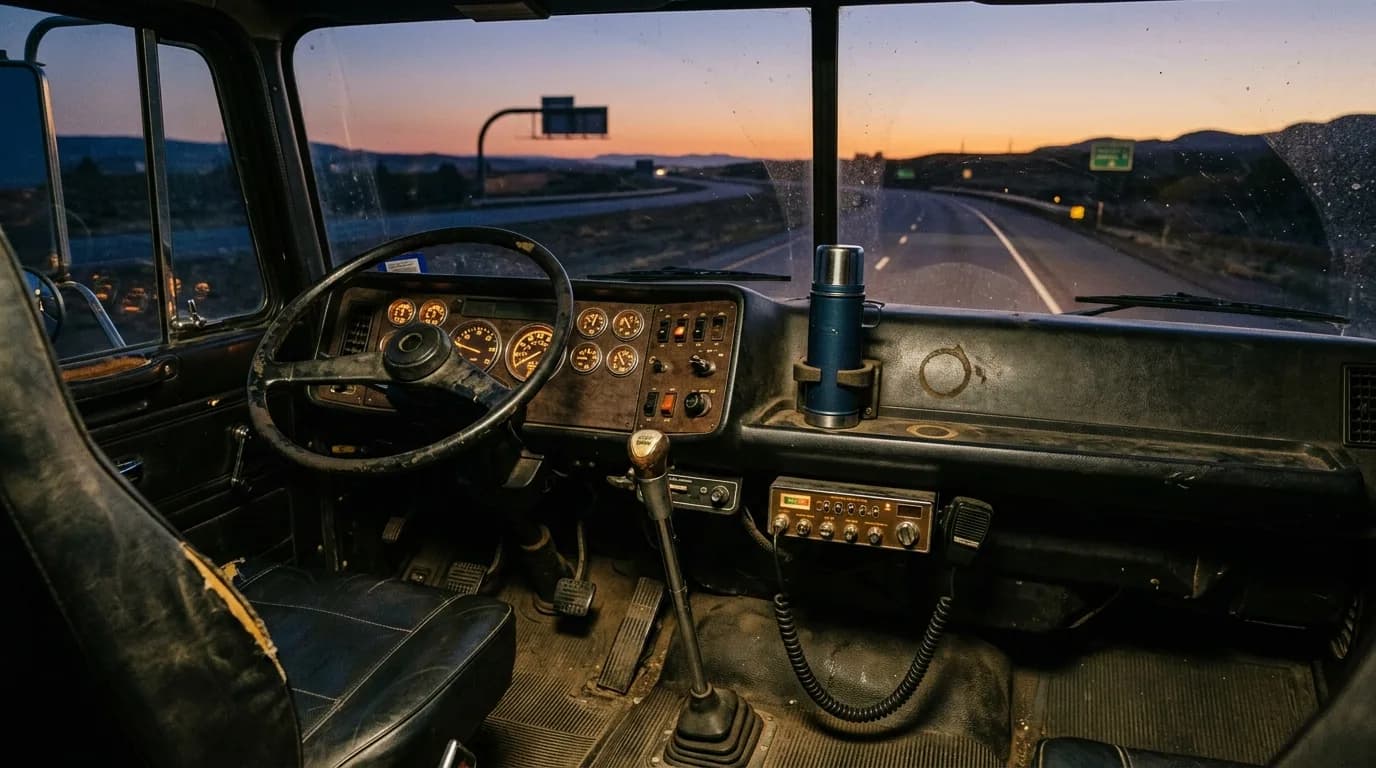
Peterbilt's last Class 8 cabover showed up just as the reason for building cabovers was about to disappear. The 362 arrived in 1981, shortly before the Surface Transportation Assistance Act of 1982 (signed in January 1983) began taking that reason away. In the AI render above, a blue cabover idles in a truck-stop lot at night, twin stacks up and cab-roof marker lights glowing through the sodium haze, and that flat face, with the driver sitting over the engine, is the signature of the 362.
The 362 Replaces the 352
Peterbilt's first tilt-cab cabover was the 352, which replaced the 281/351 cabover for 1959 with a tilting cab for better engine access. In 1975 it became the 352H, with a high-mounted cab that rode 4 inches higher to make room for larger engines. In 1981 the Madison, Tennessee, plant in suburban Nashville began assembling the 362. It replaced the 352H and was the first completely new cabover Peterbilt had built in 22 years. Peterbilt ended production at that plant in 2009. The 352's standard engine had been the Cummins NHC-250, with Caterpillar and Detroit Diesel diesels available as options, and the 362 kept that three-brand menu.
What Made the 362 Different
At a glance the 362 looks a lot like the 352 it replaced, but it was an all-new design, with a larger, more aerodynamic cab and a larger, more functional interior. Its curved three-piece windshield carried three wipers, with a four-piece, two-wiper layout offered as an option. Buyers could order set-back front axles, twin-steer setups and all-wheel drive, and Peterbilt offered six cab configurations ranging from 54 to 110 inches BBC. BBC stands for bumper to back of cab, the measurement used to describe how long a truck's cab section is. A later 362E variant appeared around 1990.
Engines: Caterpillar, Cummins and Detroit
Peterbilt let buyers choose the engine, with Caterpillar, Cummins and Detroit Diesel all on the option list. Surviving trucks show the spread. One 1987 362 came out of the factory with a 425-hp Caterpillar 3406B and a nine-speed Eaton transmission, spent about 35 years moving beehives around California, and was later given a second life by Summit Bodies and Vanair. Another 1987 truck was advertised with a 350-hp Cummins, a 13-speed overdrive manual and a 36-inch sleeper.
Why the American Cabover Faded
Cabovers thrived in the U.S. through the 1970s because of strict length laws in many states. A tractor with no hood left more of the legal length for the trailer, and that meant more freight per trip. The Surface Transportation Assistance Act of 1982 changed the math. Under the federal rule that grew out of it, no state may set a length limit under 48 feet on a semitrailer, or under 28 feet on each trailer in a double, and states may not impose an overall length limit on tractor-semitrailer combinations on the national network of highways.
With the tractor no longer eating into trailer space, conventional trucks could pull the same trailers while offering roomier cabs, better sleepers and a more comfortable ride. The federal bridge formula, which is unique to the U.S. and encourages spreading a load out, is also cited as a reason cabovers became less practical for heavy hauling. The 362 launched in 1981, so it spent nearly its entire career in the world that law created.
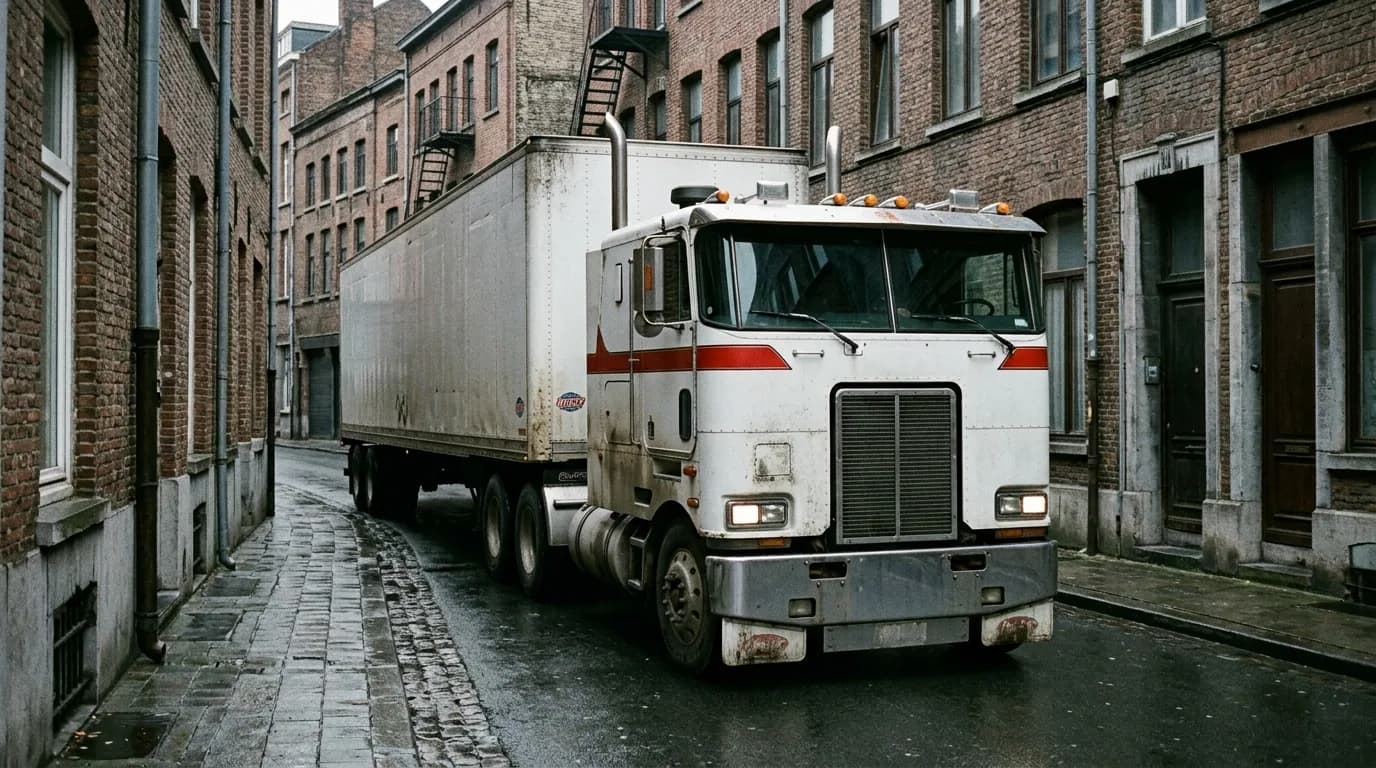
The design didn't vanish everywhere. Cabovers remain common overseas, where road-length rules are still strict, and in the U.S. they live on in refuse collection and terminal tractors, where a tight turning radius matters more than a long hood.
The End of the Line
Peterbilt's last all-new cabover design was actually the Model 372, built from 1988 to 1994. Its unusual, aerodynamic look earned it nicknames like "Winnebago" and "football helmet," and the older-style 362 outlasted it by more than a decade. Peterbilt ended 362 production in 2005, and parts suppliers say few were built after 2004, when updated emission standards took effect; one reports that the latest VIN it has found is from 2003. Either way, the 362 was the last Class 8 cabover Peterbilt built.
Owning One Today
362s still turn up in commercial truck listings and at auction, and some are still working. Scale modelers have had HO-scale tractors and resin conversion cabs in 1/24, 1/25 and 1/32 scale to work with. If you're shopping, look at the windshield first: the 362 is distinguished by curved three-piece glass and three wipers, though the four-piece, two-wiper layout was optional. Then check the cab length in BBC, the engine and transmission combination, and the axle setup.
Specs
- Production
- 1981-2005
- Replaced
- Peterbilt 352H (the 352 cabover line)
- Assembled at
- Madison, Tennessee, near Nashville
- Cab configurations
- Six, from 54 to 110 inches BBC (bumper to back of cab)
- Windshield
- Curved three-piece with three wipers; four-piece, two-wiper layout optional
- Axle setups
- Set-back front axle, twin-steer, all-wheel drive
- Engines
- Caterpillar, Cummins, Detroit Diesel
- Later variant
- 362E, introduced around 1990
FAQ
- What years was the Peterbilt 362 made?
- Peterbilt announced the 362 in 1981 and ended production in 2005, though parts suppliers say few were built after 2004, when updated emission standards took effect.
- What did the Peterbilt 362 replace?
- The 362 replaced the 352H, the final form of Peterbilt's 352 cabover, in 1981. It was the first completely new Peterbilt cabover in 22 years.
- Why did cabover trucks disappear in the US?
- Cabovers thrived under state length laws that counted the tractor against the rig's overall length. The Surface Transportation Assistance Act of 1982 barred overall length limits on tractor-semitrailer combinations on the national network, so conventionals could pull the same trailers with roomier cabs.
- What engines did the Peterbilt 362 use?
- Buyers could choose Caterpillar, Cummins or Detroit Diesel power. Examples include a 1987 truck with a 425-hp Caterpillar 3406B and another with a 350-hp Cummins.
Know someone who drove one? Share this guide
Get the Look
As an Amazon Associate we earn from qualifying purchases.
- Peterbilt 362 cabover model truck (1:24 or 1:25 scale) — The flat-faced cabover profile for a shelf or a display case.
- Classic cabover trucks book — Background reading on the era when cabovers ruled the highways.
- CB radio for trucks — The cab accessory no long-haul look is complete without.
Sources
- en.wikipedia.org — Peterbilt
- en.wikipedia.org — List_of_Peterbilt_vehicles
- repair.diesellaptops.com — peterbilt-truck-models-explained
- shorelinetruckparts.com — telling-the-story-of-the-peterbilt-362
- shorelinetruckparts.com — the-history-of-the-peterbilt-352
- truckinginfo.com — great-american-trucks-the-peterbilt-model-352
- mwsmag.com — how-summit-bodies-and-vanair-helped-resurrect-a-1987-peterbilt-362-cabover
- showroom.auction123.com — ID_1236681123
- pricedigests.com — bumper-back-cab-bbc
- law.cornell.edu — 658.13
- jjkellercompliancenetwork.com — length-requirements
- en.wikipedia.org — Surface_Transportation_Assistance_Act_(1982)
- en.wikipedia.org — Cab-over
- jalopnik.com — why-cab-over-semi-trucks-went-away
- truckpaper.com — trucks-and-trailers
- equipmentfacts.com — 16045
- walthers.com — american-trucks-tractor-only-peterbilt-362-cabover-w-sleeper
- globalscalemodeltrucks.com — peterbilt-362-cab-over-sleeper-resin-model-truck-conversion-cab-1-24-1-25-1-32
- fhwa.dot.gov — Vol2-Chapter2.pdf