Jake Brake: How an Engine Brake Works and Why Towns Ban It
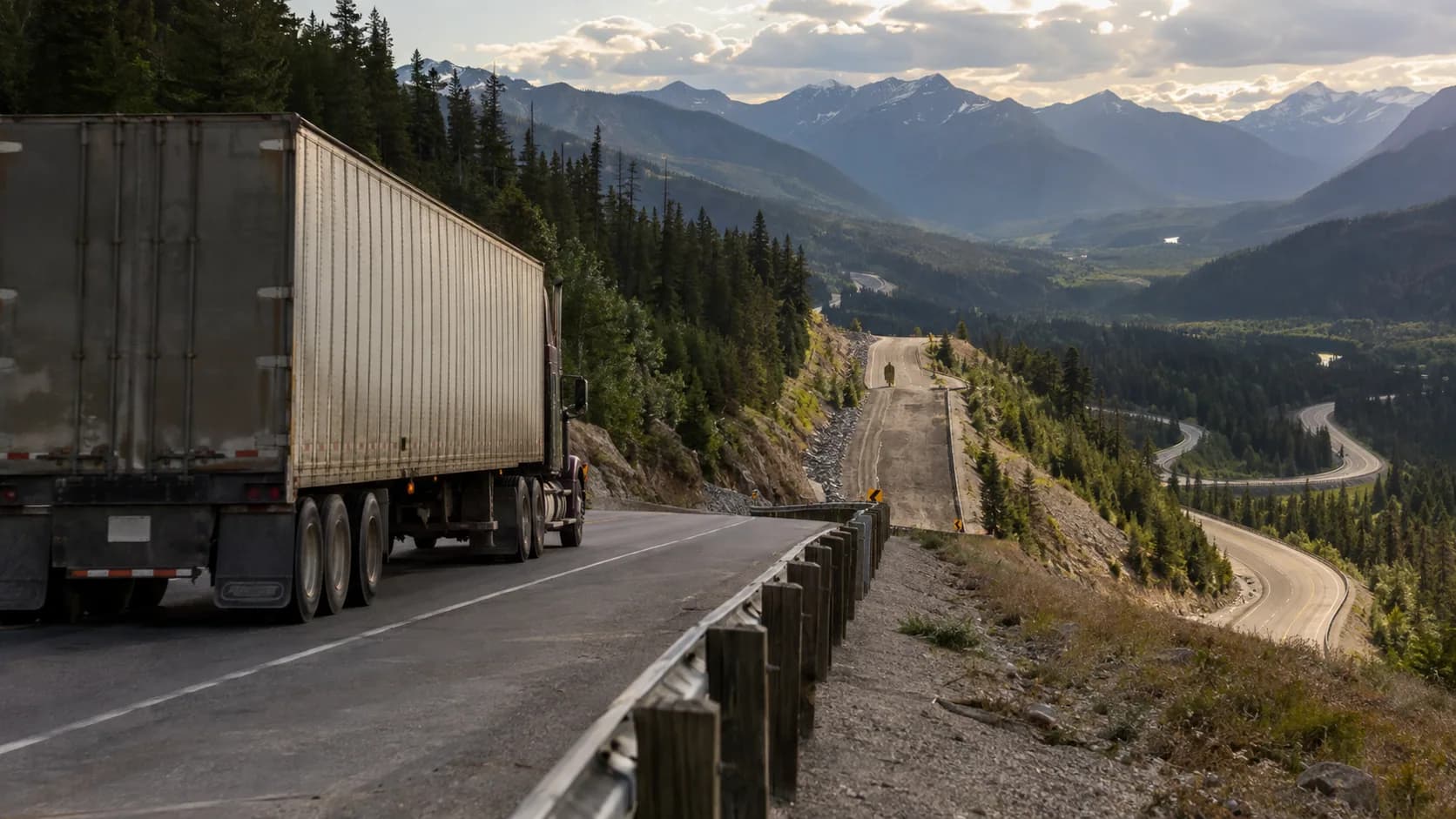
Anyone who has lived near a steep grade knows the sound before they know the name: a rolling, ripping rattle that rises as a loaded truck leans into the hill. The scene above is an AI-generated render, not a real photograph, but it shows the moment the sound is made for, a trailer rig on a mountain road with a long valley stretching out below. That rattle is the Jake Brake, and it has a stranger history than most people expect.
Where the Jake Brake Came From
The story starts with a scare. In August 1931, Clessie Cummins and two colleagues drove a Cummins diesel truck from New York to Los Angeles to set a speed record. On the descent of Cajon Pass in California the brakes would not hold, and the truck nearly went into a freight train crossing the road. According to the ASME history of the device, the memory never left him.
Cummins began studying the problem in 1955, after he retired. Wikipedia says he conceived a practical method in 1957, using the third cam already on the camshaft that drives the injectors to open the exhaust valve. In April 1960, Jacobs Manufacturing Company decided to set up a Clessie L. Cummins Division to build it, the start of what is now Jacobs Vehicle Systems. The first production units, for Cummins NH series engines, shipped in 1961, followed by a unit for the Detroit 71 series. ASME later designated the Jacobs Engine Brake a historic mechanical engineering landmark, dated October 17, 1985. In February 2022 Cummins announced a deal to buy Jacobs Vehicle Systems, which its 10-K says closed in April 2022, and the company has described it as bringing Clessie's invention back under its own roof.
How a Compression-Release Brake Works
A gasoline engine slows a car when you lift off the throttle because it has to pull air past a nearly closed throttle plate. A diesel has no such restriction, so it offers less natural braking, which is exactly the problem Cummins ran into in 1931.
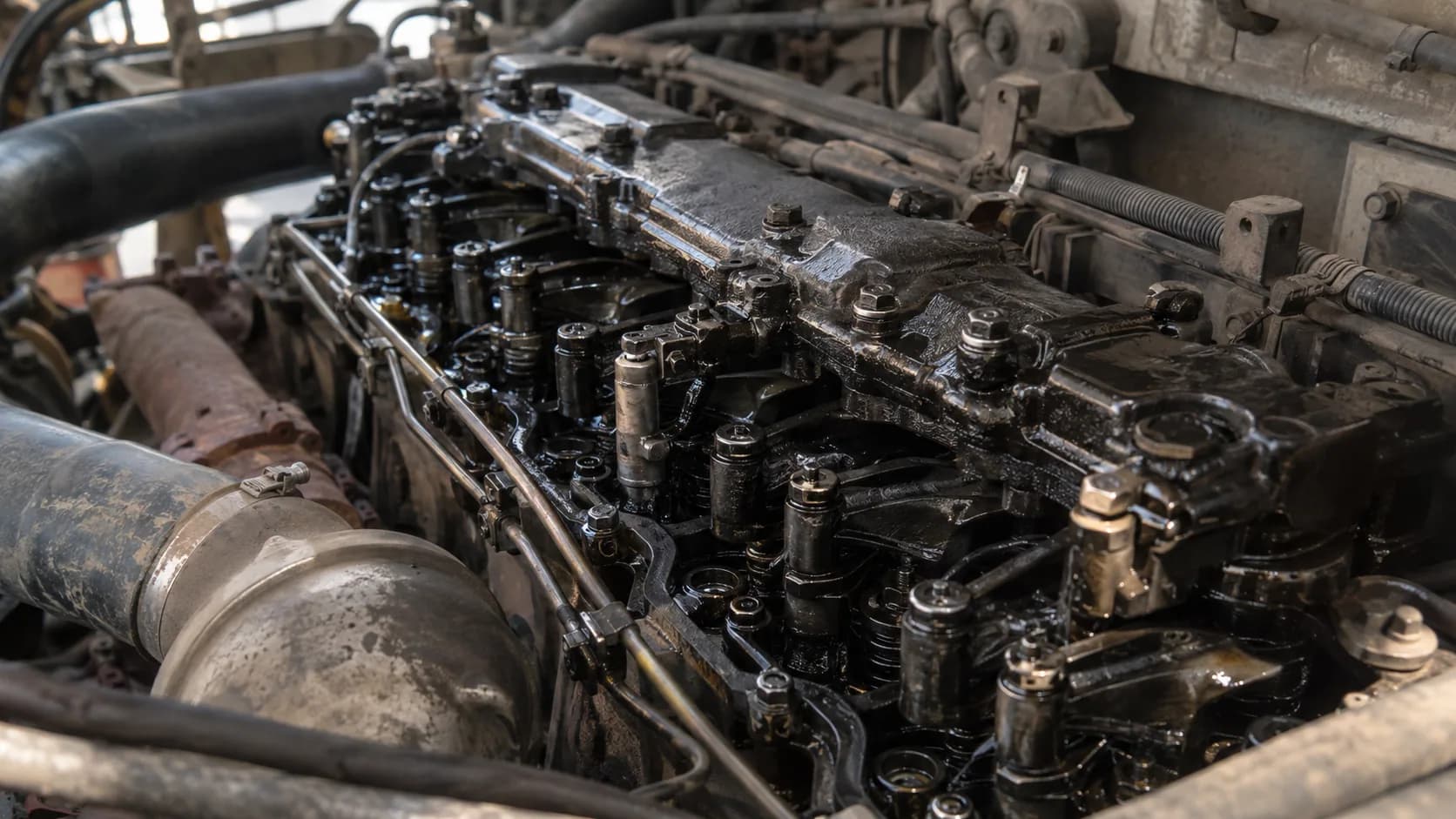
The Jake Brake changes that. As the piston rises on its compression stroke, the air in the cylinder is squeezed hard. Normally that stored energy would push the piston back down like a spring. The brake instead opens the exhaust valve near the end of that upward stroke, so the compressed air is released to the atmosphere. With the pressure gone, nothing pushes the piston down, and the engine has to spend energy to pull it. In effect the diesel becomes an air compressor driven by the wheels.
ASME's history says the result is braking effort at the wheels about equal to what the engine produces when it is making power. Wikipedia gives an example of a 565-horsepower diesel producing up to 600 horsepower of braking at 2,100 rpm. The engine also stays near normal temperature on a long downgrade, and a turbocharged engine can keep up boost to raise the retarding effort.
Why It Is So Loud
That sudden release of compressed air is the noise. ASME describes a characteristic popping exhaust sound, and Wikipedia compares it to gas escaping a firearm's muzzle when there is no muffler to calm it down. A properly fitted muffler reduces the noise and vibration a great deal.
Why Towns Ban It
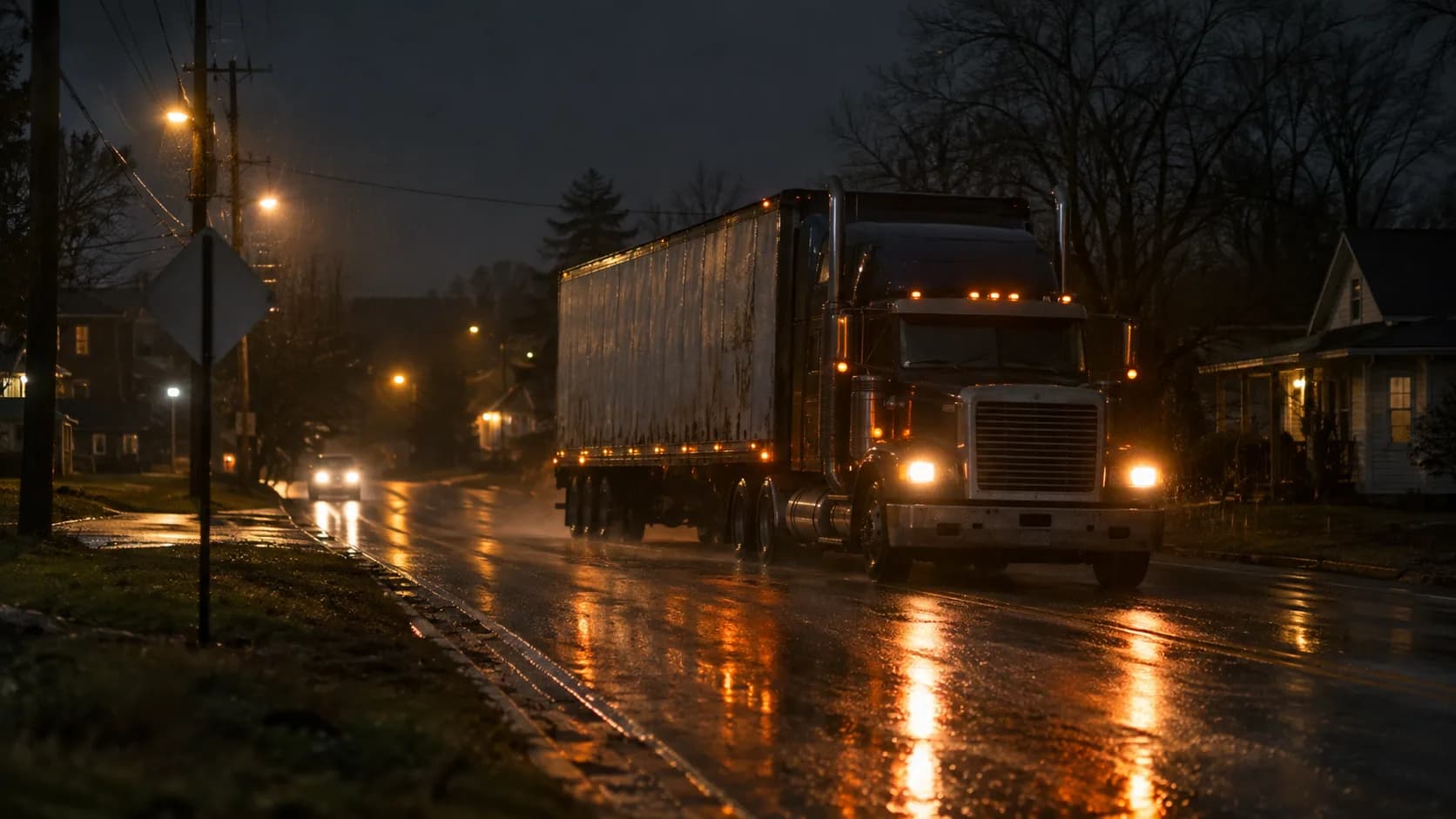
Residents who live along a grade hear that sound at all hours, and the rule that follows is usually aimed at the noise, not the braking. Wikipedia says numerous cities, states and provinces have banned unmuffled compression brakes, and Ontario's truck handbook notes that some municipalities restrict engine braking, so posted signs matter.
State practice shows how it works. North Carolina DOT's standard practice for these signs is built around "Unmuffled Engine Braking Prohibited" and requires a county, city or town to adopt a noise ordinance first. The same document calls appropriate engine braking an essential safety practice and says the sign does not apply in emergency situations. Tennessee takes a similar line, according to its municipal advisory service: cities may regulate but not prohibit engine compression braking by ordinance, and state law bars a truck tractor from using one unless it has an operational, approved muffler. Because cities lack the equipment to test decibels, Tennessee's municipal advisory service suggests a visual muffler inspection.
The signs you see differ from place to place. The plaques that say "Use Low Gear" or "Trucks Use Lower Gear" are something else entirely: the federal sign manual lists them as optional supplemental plaques for grade warnings, where downshifting might be advisable, not as bans.
How Drivers Use It on a Grade
The practical rules are old and simple. Ontario's truck handbook says to use engine braking as the principal means of controlling speed on long grades, to pick the same gear going down that you would use going up, and to choose it before the descent begins so you do not miss a shift. The reason is heat: overheated service brakes are dangerously inefficient, and leaning on them all the way down is how trucks end up in trouble.
Many engine brakes let the driver choose how many cylinders to activate, which sets how hard the engine holds the truck back. MotorBiscuit says most truck drivers avoid engine brakes in towns even where they are allowed. For the heavy diesels of this era, see our Cat 3406 and Cummins N14 guides.
Specs
- Inventor
- Clessie Cummins
- Practical method conceived
- 1957 (study began 1955)
- Maker
- Jacobs Manufacturing's Clessie L. Cummins Division, set up April 1960; now Jacobs Vehicle Systems
- First production units
- 1961, for Cummins NH series engines
- Principle
- Opens exhaust valve near end of compression stroke
- Landmark
- ASME landmark, October 17, 1985
- Typical sign
- Unmuffled Engine Braking Prohibited (North Carolina DOT wording)
Get the Look
As an Amazon Associate we earn from qualifying purchases.
A display piece for anyone who has ever heard a truck on a grade.
Check price at AmazonExplains compression, valves and turbochargers in plain language.
Check price at AmazonPhoto-heavy history of the rigs the Jake Brake was built for.
Check price at AmazonFAQ
- What is a Jake Brake?
- A Jake Brake is a compression-release engine brake, made by Jacobs Vehicle Systems, that helps slow a diesel truck. It opens the exhaust valves near the top of the compression stroke so the engine acts like an air compressor and resists the wheels.
- Who invented the Jake Brake?
- Clessie Cummins, founder of Cummins, who began studying it in 1955 and conceived a practical method in 1957. Jacobs Manufacturing began making it, and the first production units shipped in 1961.
- Why are Jake Brakes so loud?
- The brake releases compressed air through the exhaust in a sudden burst, producing a popping sound. A properly fitted muffler cuts the noise a great deal.
- Why do towns ban engine brakes?
- Mostly noise. Many jurisdictions ban unmuffled compression brakes, and some locations restrict engine braking more broadly. Some signs and ordinances make an exception for emergencies.