1968 Dodge Charger R/T: History, Specs, and How to Spot One
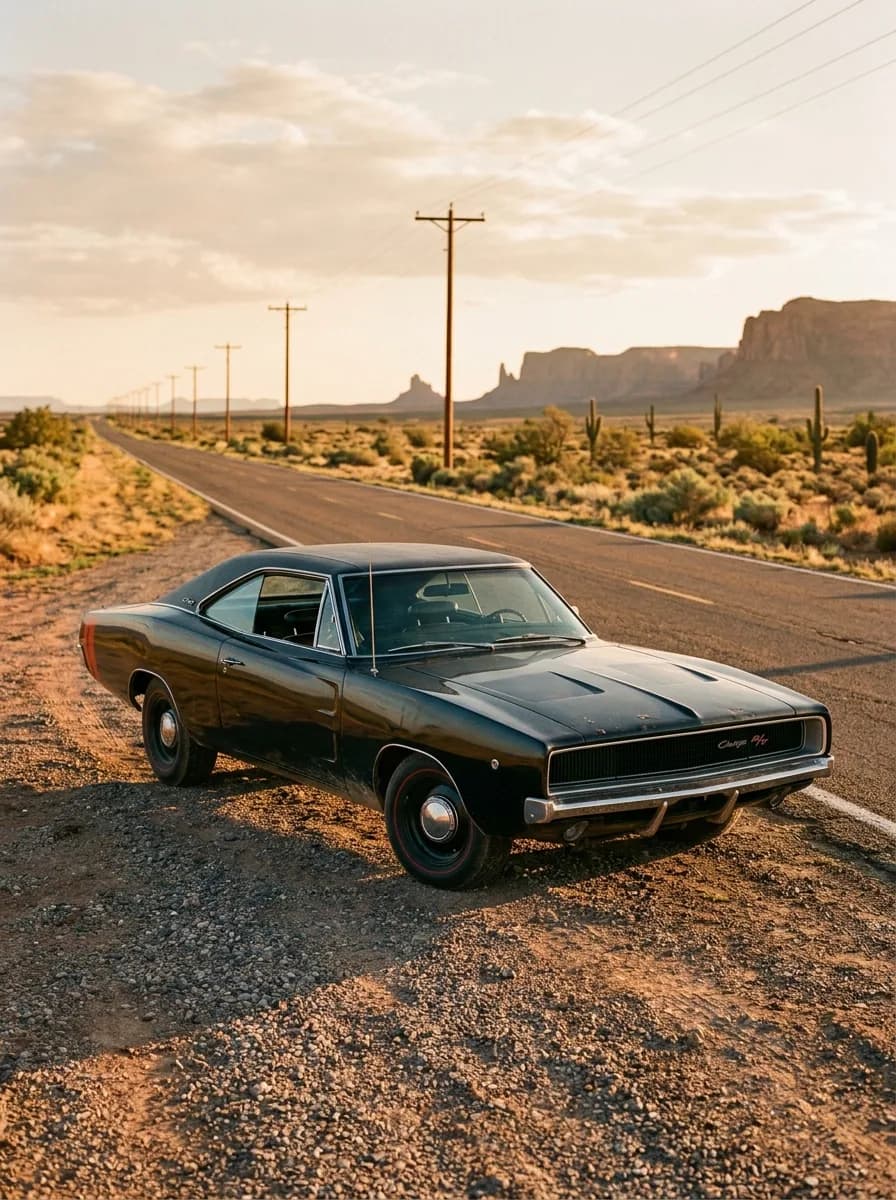
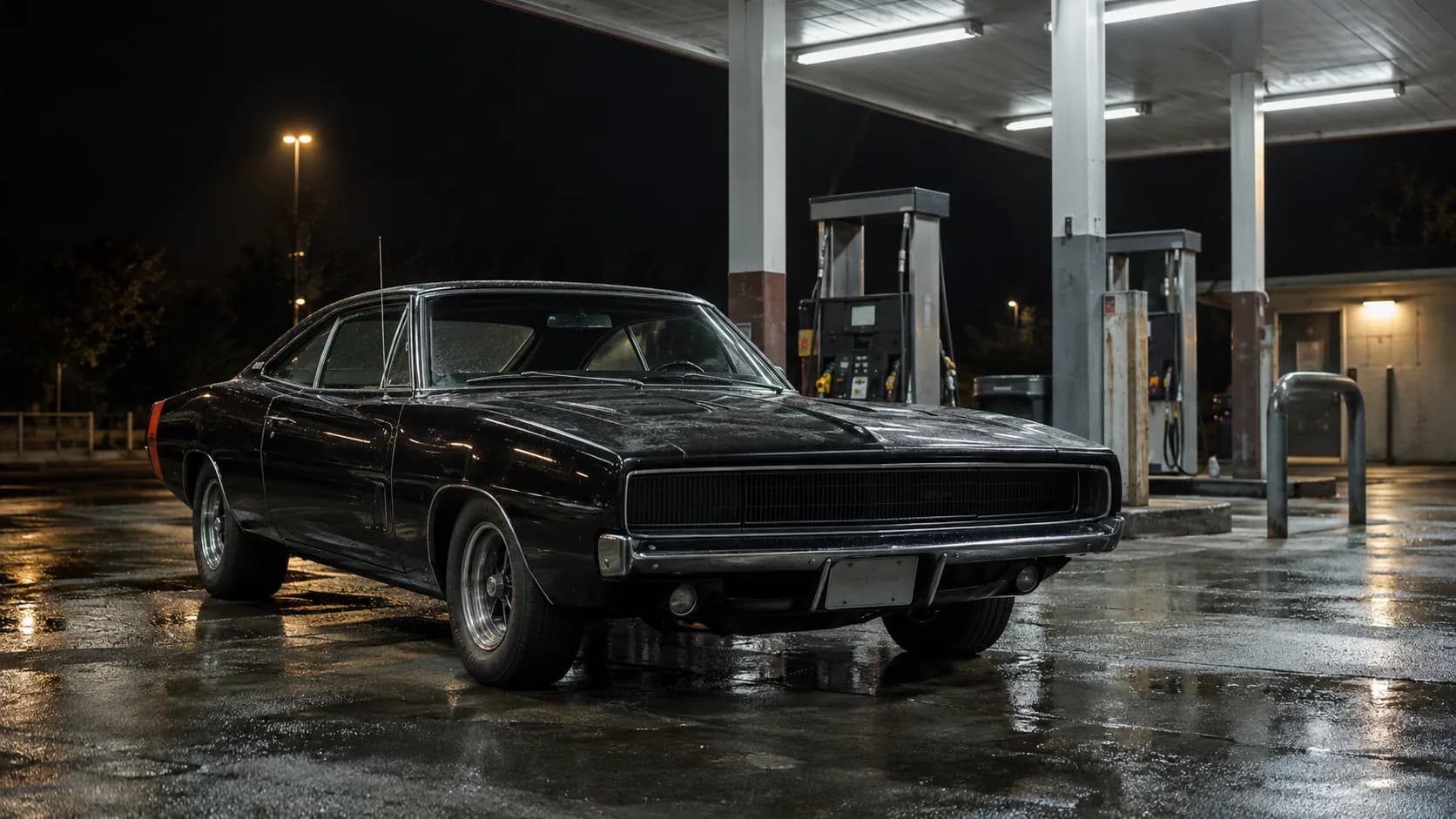
A black fastback sitting alone on a ribbon of desert asphalt, sun dropping behind the mesas — it's the kind of scene that makes you want to know the car's whole story. Whether or not you've ever seen a real 1968 Dodge Charger R/T in person, the shape has a way of sticking in your head: a low, blacked-out grille with the headlights tucked out of sight, and a fastback roofline pinched in at the C-pillars like a fighter jet's canopy. This is the year the Charger stopped being a niche fastback and became one of the meanest-looking cars Detroit ever put a Road/Track badge on.
A Complete Redesign for '68
The first Charger, launched in 1966, never quite caught on — its fastback roofline and full-length taillights looked sharp, but sales lagged. For 1968, Dodge started over with a "coke bottle" body: pronounced hip haunches, scalloped side panels, and a fastback roof with pinched-in rear pillars that Dodge called a "flying buttress" design. Some buyers at the time just called it a tunnel roof, since it framed a small, recessed rear window. Up front, the full-width grille hid the headlights behind vacuum-operated doors — a simpler setup than the fully rotating lights of the first-generation car, but every bit as clean when closed. It worked: Charger sales jumped from under 16,000 units in 1967 to more than 96,000 for 1968.
R/T Means 440 or Hemi, No In-Between
1968 was also the first year Dodge offered the Charger R/T — Road/Track — package, and it didn't leave buyers guessing about intent. Every R/T came standard with the 440 cubic-inch Magnum V8, rated at 375 horsepower and 480 lb-ft of torque, backed by either a heavy-duty 4-speed manual or Chrysler's 3-speed TorqueFlite automatic. For buyers who wanted more, Dodge would build a Charger around the 426 Hemi — 425 horsepower and 490 lb-ft on paper, widely believed to be more in practice. Car and Driver ran a stock Hemi R/T to 60 mph in 4.8 seconds and through the quarter-mile in 13.5 seconds at 105 mph, numbers that held up against anything else on a showroom floor that year. Dodge built 17,582 Charger R/Ts for 1968, but only 475 of them left the factory with a Hemi — the rest wore the 440, which was plenty of car for the money. Every R/T also carried the "bumblebee" stripe, a wide band wrapping around the trunk and rear quarters in black, red, or white, though Dodge would delete it at no charge for buyers who wanted a sleeper look.
Telling a '68 from a '69 or '70
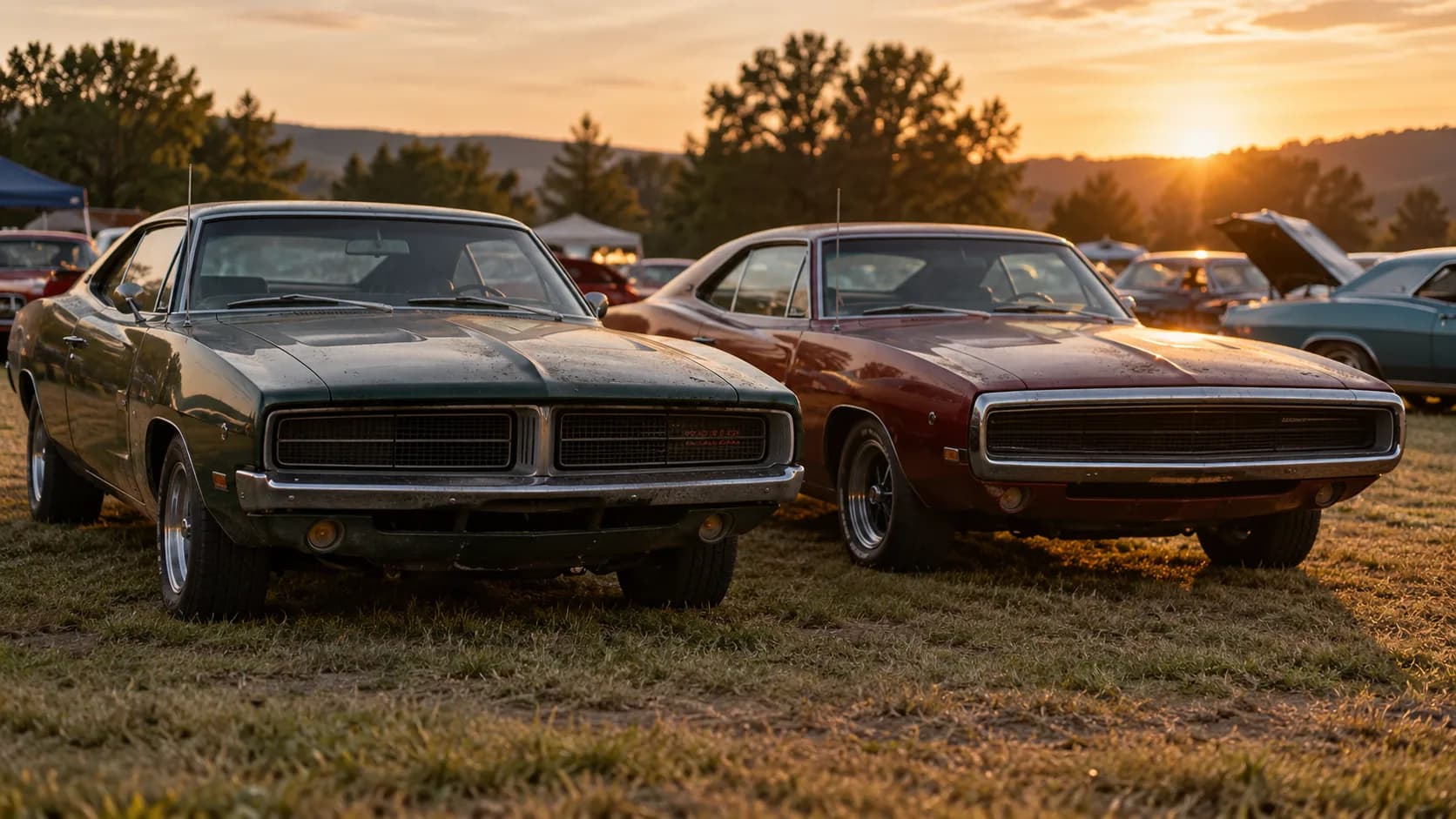
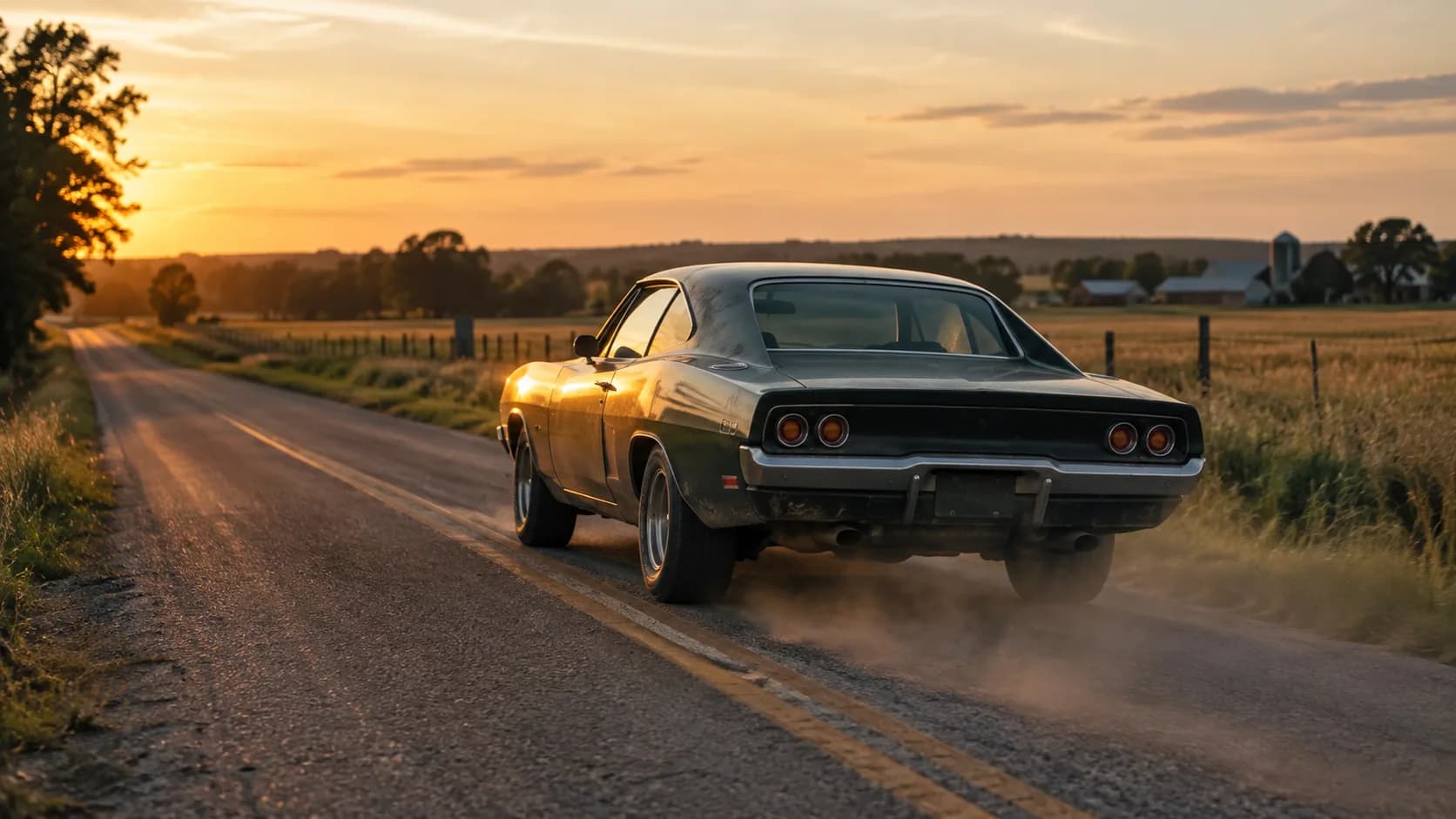
The second-generation Charger ran for three model years, and the nose and tail changed enough each year that spotting a '68 isn't hard once you know what to look for. The 1968 has a solid, undivided grille and round taillights. For 1969, Dodge split the grille with a center divider and switched to a full-width horizontal taillight panel. By 1970, the whole nose gained a chrome loop bumper that wraps around the grille opening — the fastest way to identify a '70 from fifty feet away. If the grille reads as one unbroken black opening and the taillights are round, you're looking at a 1968.
The Car That Chased Steve McQueen
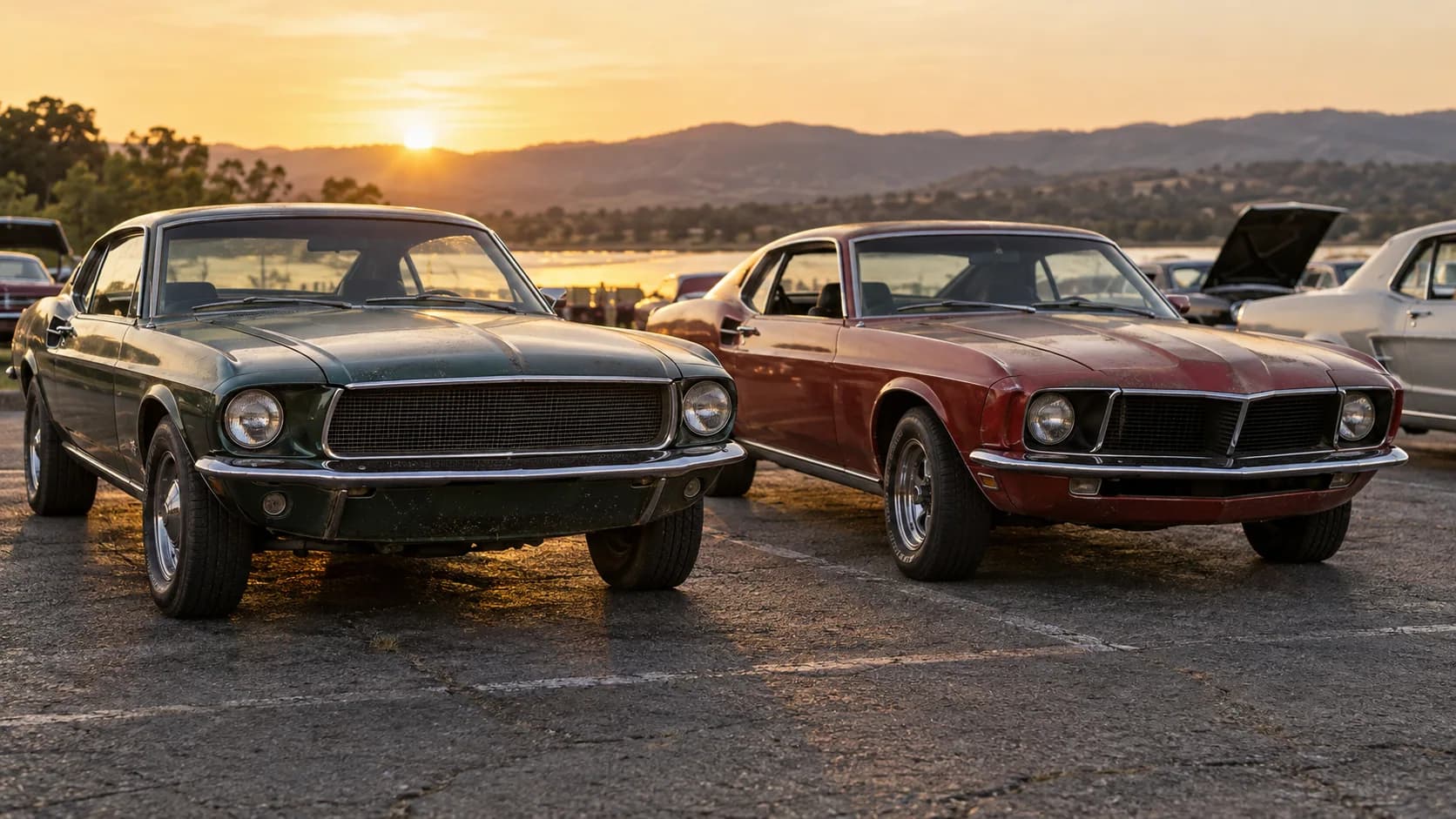
A year after its debut, the Charger R/T landed one of the most famous supporting roles in movie history. In Bullitt (1968), a 440 Magnum-powered Charger R/T tears through the hills of San Francisco chasing — and being chased by — Steve McQueen's Mustang GT390 fastback in a ten-minute sequence still studied by stunt coordinators today. The chase didn't just sell tickets; it cemented the Charger's reputation as the car a movie villain would drive, a reputation that has followed the '68-'70 body style ever since.
Finding One Today
A numbers-matching 440 Charger R/T is a serious collector car, and a documented Hemi car is a different conversation entirely given how few were built. Buyers shopping this generation should ask for the broadcast sheet or fender tag before anything else — with only 475 Hemi R/Ts built in 1968, more than a few "Hemi" cars on the market are 440s with a swapped engine and a good story. Beyond documentation, the usual B-body concerns apply: check the trunk floor and torsion bar crossmember for rust, and confirm the VIN's engine code actually matches what's under the hood before it matches what's in the listing.
Specs
- R/T production (1968)
- 17,582 units
- Hemi R/Ts built (1968)
- 475 units
- Standard engine
- 440 cu in Magnum V8 — 375 hp / 480 lb-ft
- Optional engine
- 426 cu in Hemi V8 — 425 hp / 490 lb-ft
- Transmission
- 4-speed manual or 3-speed TorqueFlite automatic
- 0-60 mph (426 Hemi, tested)
- about 4.8 sec
- Quarter mile (426 Hemi, tested)
- 13.5 sec at 105 mph
- Body
- 2-door fastback hardtop, Chrysler B-body
FAQ
- What years was the Dodge Charger R/T available?
- The R/T package launched for 1968 and ran through the end of the second-generation Charger in 1970, with a new grille and taillight design each year.
- How many 1968 Hemi Charger R/Ts were built?
- Dodge built 17,582 Charger R/Ts for 1968, but only 475 of them were ordered with the 426 Hemi — the rest used the standard 440 Magnum.
- What's the difference between the 440 Magnum and 426 Hemi in a Charger R/T?
- Both were big-block V8s, but the 440 Magnum was the R/T's standard engine at 375 hp and 480 lb-ft, while the optional 426 Hemi made 425 hp and 490 lb-ft and turned the car into one of the quickest things Chrysler sold.
- What car chased Steve McQueen in Bullitt?
- A 1968 Dodge Charger R/T with the 440 Magnum engine, driven by stunt coordinator Bill Hickman, in the film's famous San Francisco chase scene.
Know someone who drove one? Share this guide
Get the Look
As an Amazon Associate we earn from qualifying purchases.
- 1968 Dodge Charger R/T 1:24 Diecast Model Car — A shelf-scale stand-in for the real thing and an easy way to study the flying-buttress roofline from every angle.
- Mopar Muscle Car History Book — Background reading on how the B-body Charger went from also-ran to icon in two model years.
- Vintage Dodge Charger Metal Garage Sign — Retro wall art for a Mopar corner of the garage.
Sources
- automobile-catalog.com — dodge_charger_rt_440_v-8_magnum_torqueflite
- automobile-catalog.com — dodge_charger_rt_426_v-8_hemi_4-speed
- autoevolution.com — 1968-dodge-charger-r-t-has-the-full-package-rare-hemi-4-speed-numbers-match-234080
- team.valvolineglobal.com — 1968-dodge-charger
- hagerty.com — definitive-1968-70-dodge-charger-buyers-guide
- performancecargraphics.com — 68_Bumblebee
- streetmusclemag.com — robs-movie-muscle-the-baddies-1968-dodge-charger-r-t-from-bullitt
- slashgear.com — heres-what-happened-to-the-1968-dodge-charger-from-bullitt
- en.wikipedia.org — Dodge_Charger_(B-body)