Kenworth T600 Anteater: History, Specs and How to Spot One
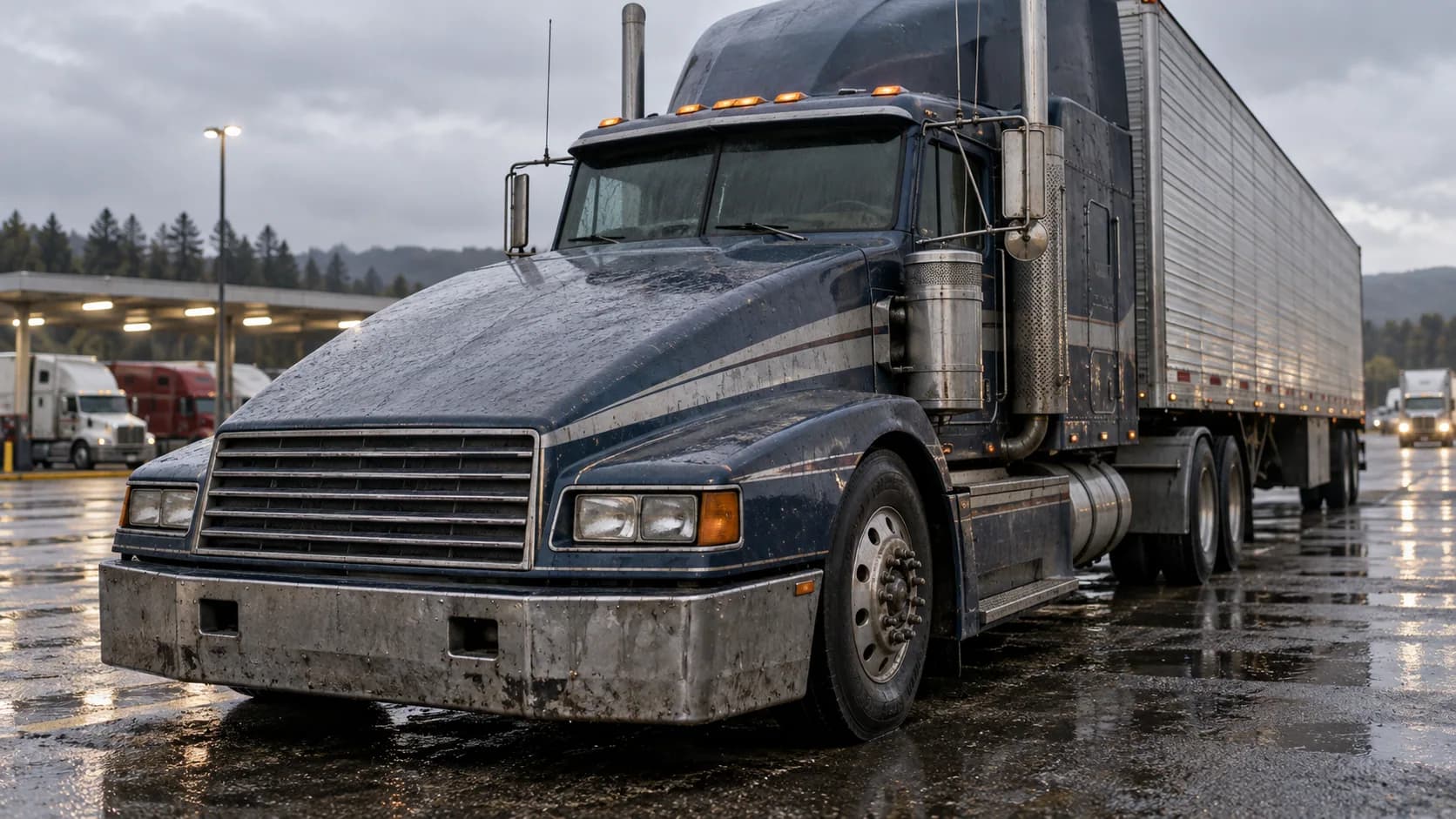
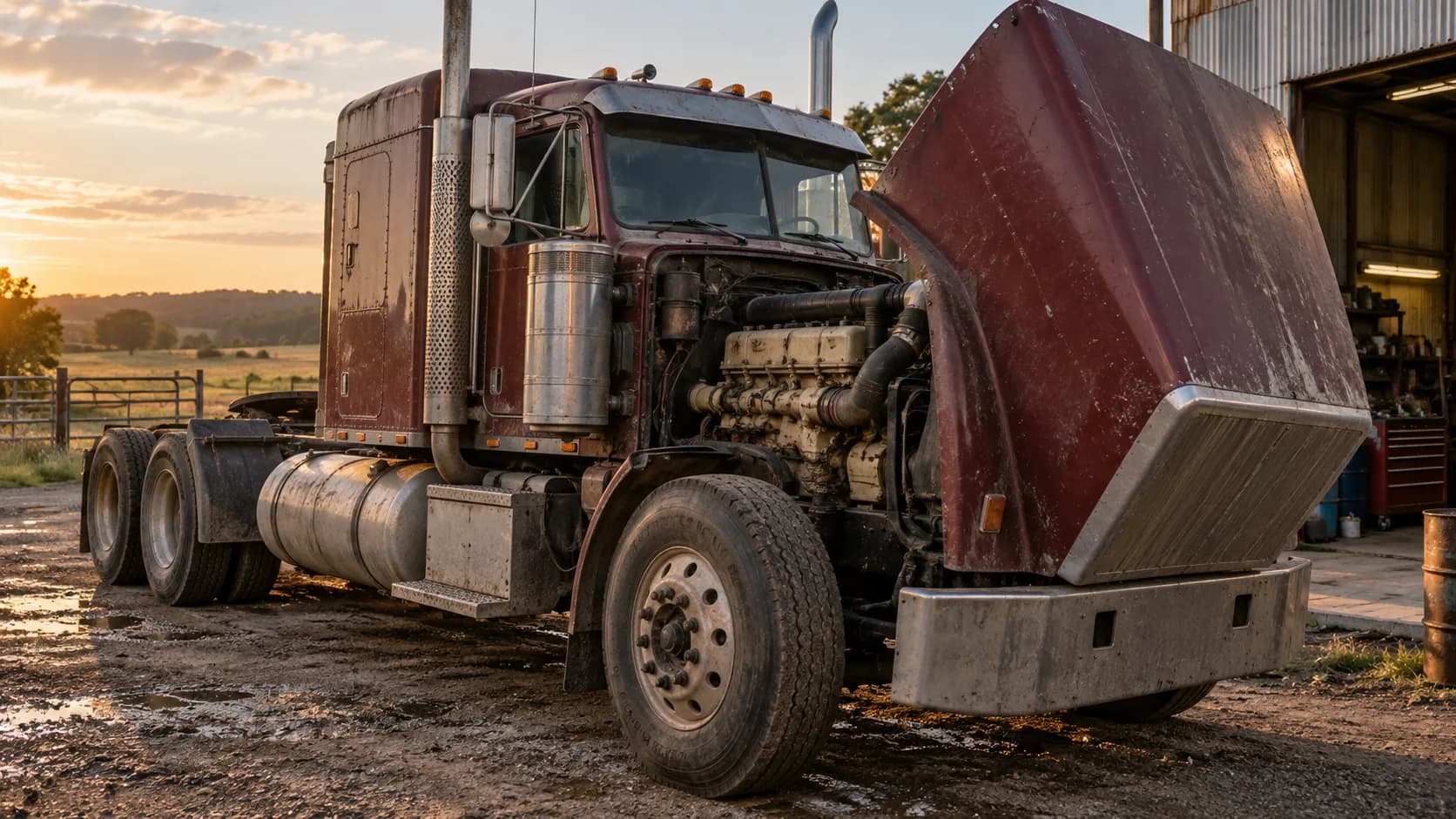
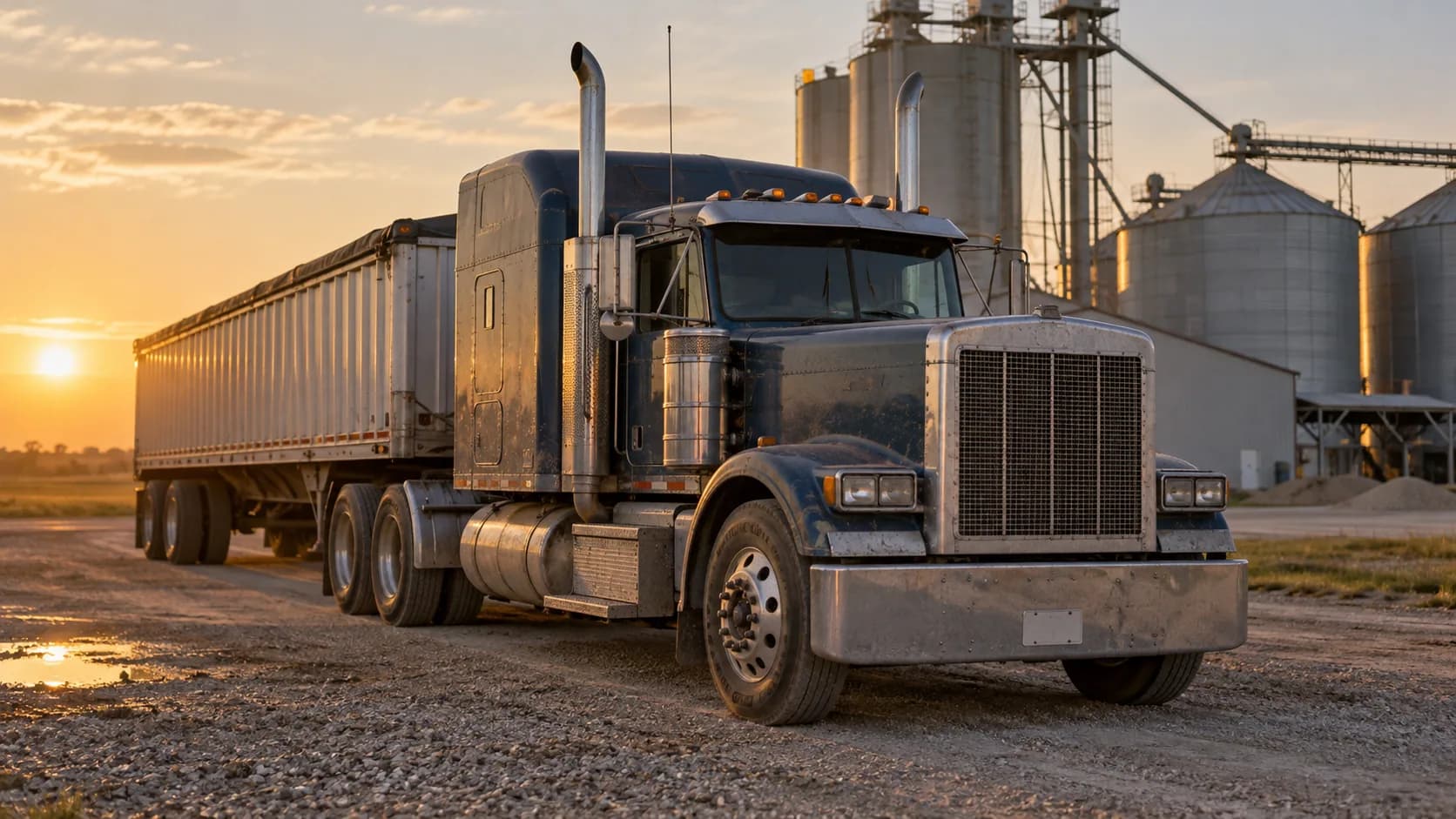
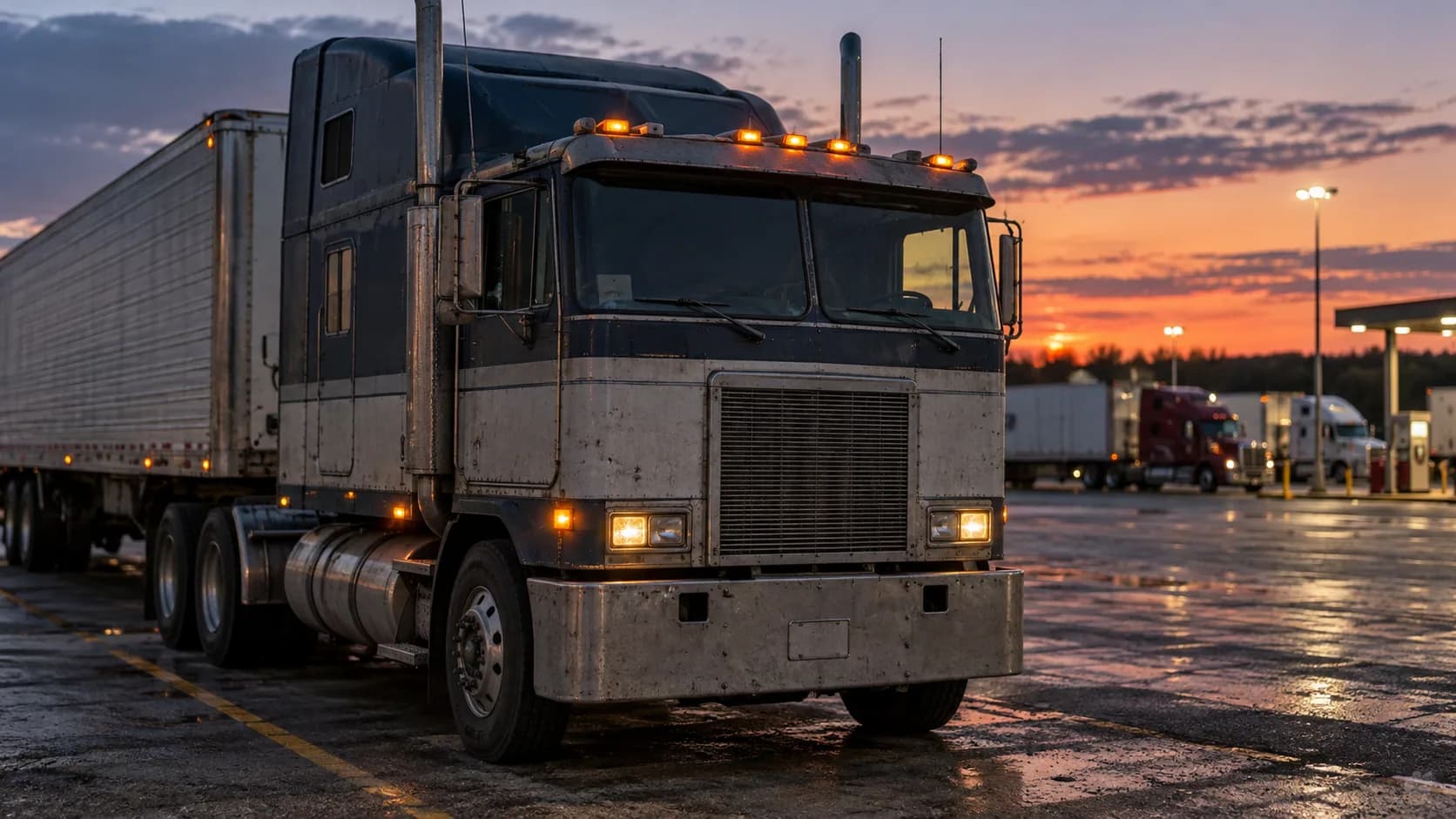
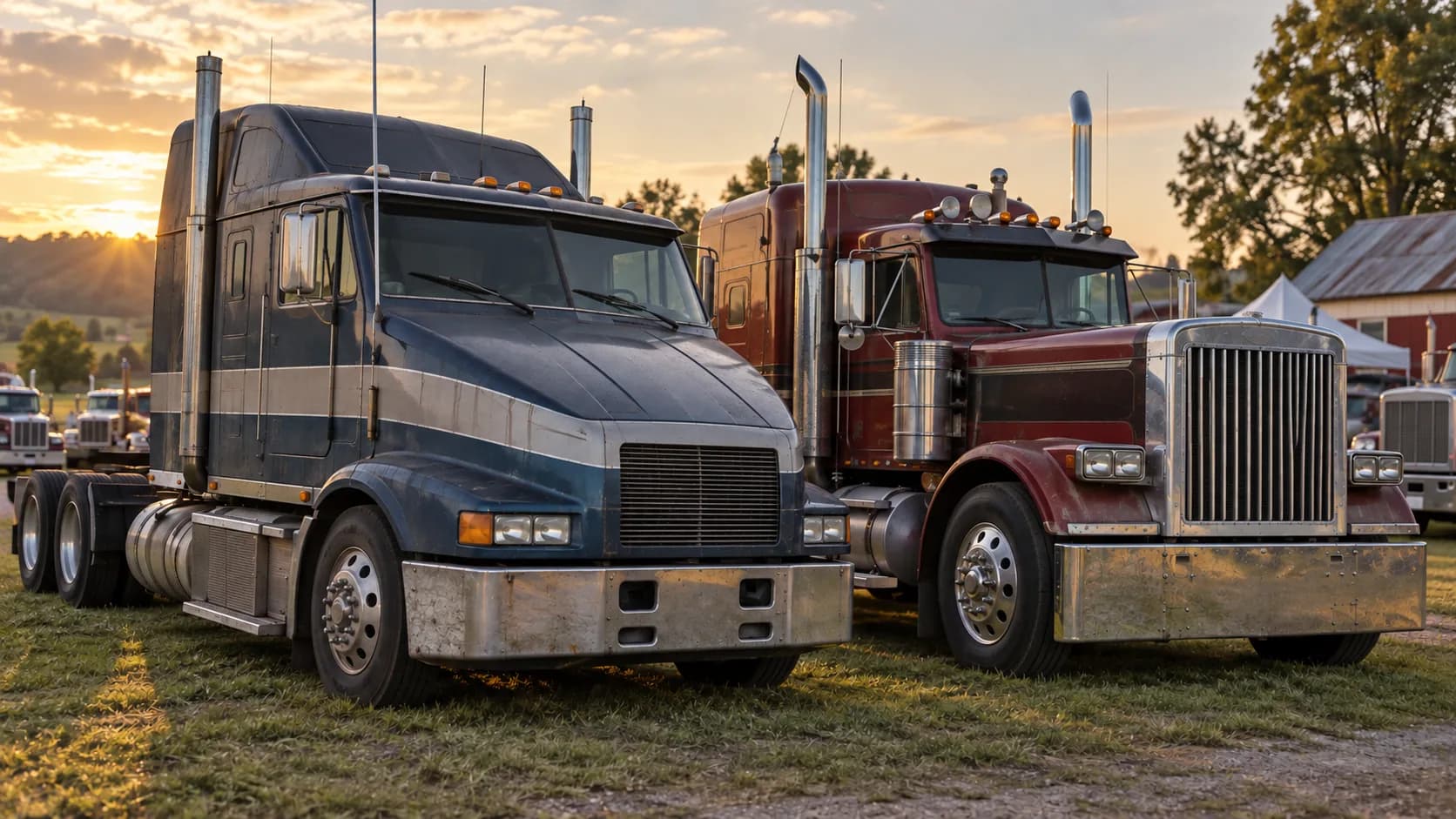
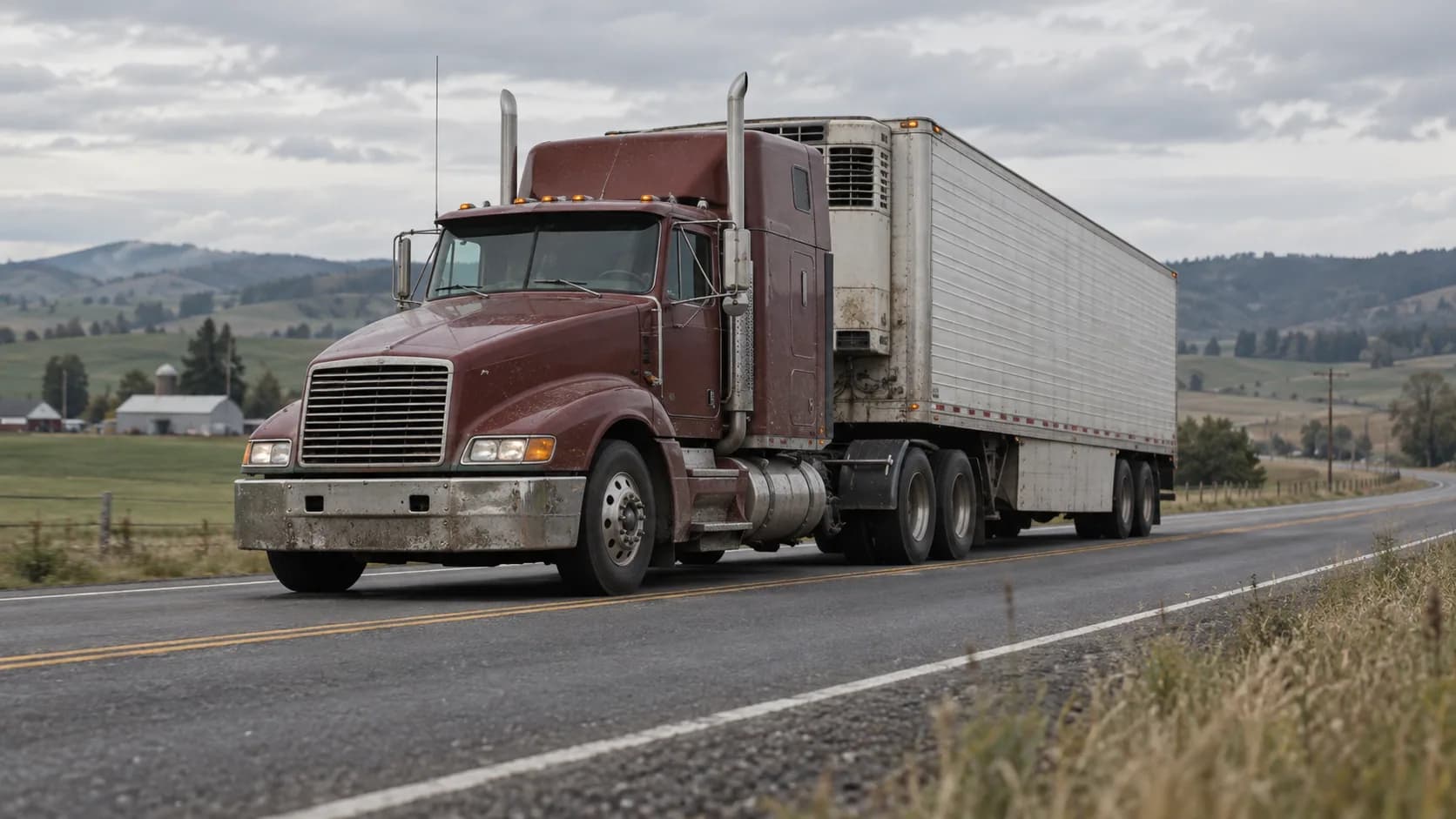
In 1985, when most American long-haul trucks were either flat-faced cabovers or square-nosed conventionals, Kenworth rolled out a tractor whose hood dropped away toward the road, and truckers promptly called it the Anteater. The renders on this page imagine that sloped-nose shape at a rainy truck stop and at a sunset truck show, and they are AI-generated images, not photos of real trucks. The story behind the shape is real, though, and it changed how American highway tractors look.
Born From the Oil Crisis
FleetOwner traces the T600 back to the 1973 oil crisis. Diesel had become expensive, and a team led by Larry Orr, then Paccar's head of research and development, began the project in 1976. According to Truck News, the work started as a cabover study and turned into a conventional in the early 1980s, after U.S. rules removed the 55-foot overall length limit for tractor-trailers on Interstate highways. That change made a longer nose affordable again, so the team could shape one for the wind.
Kenworth engineers tested wooden and clay scale models in the University of Washington's wind tunnel in Seattle, using the W900 as the starting point, and prototypes were later built on W900 cabs and powertrains. Kenworth unveiled the T600 at a dealer meeting in 1985, and Truck News reports that the Canadian launch took place that summer at a truck stop in Milton, Ontario. Sources give slightly different start dates for production (Wikipedia's infobox says 1986), so early trucks may carry either a 1985 or 1986 date.
The Fuel-Economy Claim
The headline number is 22 percent. Bulk Transporter reports that in real-world testing the T600 was 22 percent more fuel efficient than a straight-hood conventional with the same powertrain, and FleetOwner cites the same figure against a long-nose conventional. Wikipedia describes the prototype as more than 20 percent better than a comparable W900.
Fleet results were smaller but still large for the era. Truck News says drivers reported gains of half a gallon or more, and that Contract Freighters of Joplin, Missouri, which ordered 100 trucks in 1985, saw its fleet average improve by almost 2 mpg in one account and 1.5 mpg in another. Treat the 22 percent as a test result, not a promise for any single truck.
The market answered quickly. Wikipedia says the T600 made up 40 percent of Kenworth's tractor sales by the end of 1985, and Truck News quotes a Toronto dealer who said the model reached half of his sales almost overnight. By 2005, more than 108,000 had been sold across North America. In 1994 Kenworth received the U.S. Department of Transportation's National Award for the Advancement of Motor Vehicle Research and Development.
Set-Back Axle and Engineering
The sloped hood was only part of the package. Wikipedia calls the set-back front axle a first for a Kenworth conventional; it was used to accommodate the new hood and made room for longer front springs. Kenworth fitted 64-inch taper-leaf springs. Sources put the tighter turning radius at 23 percent (Bulk Transporter) to nearly 25 percent (Wikipedia) smaller than a standard conventional.
Instead of separate cycle-style fenders, the front fenders were integrated into the bumper and carried back into side skirts over the fuel tanks on most versions. The lower hoodline also improved forward visibility.
Under the hood, Wikipedia lists the Caterpillar 3406 and C15, the Cummins N14 and ISX, and the Detroit Diesel Series 60 across the run. Transmissions included Eaton 10-, 13- and 15-speed manuals and Allison automatics. Which engine a given truck has depends on its year, so read the engine tag rather than assume.
T600A and T600B
Kenworth kept refining the truck. Wikipedia dates the T600A to 1990 through 1994. It brought a twin-segment grille, curved windshield glass, integrated side and convex mirrors, the Aerodyne II sleeper with twin roof windows, and an optional digital dashboard developed with Boeing.
The T600B replaced it in late 1994 and ran through 2007. Its big change was the Aerocab sleeper, which is fully open to the cab. Once the T2000 arrived, Kenworth simply called the truck the T600 again. Bulk Transporter says the 2006 model's drag coefficient was 26 percent lower than the original's, and the same year brought a new cab interior.
How to Identify a T600
Start with the profile. A T600 hood slopes steadily down to a low bumper, and the front fenders blend into the bumper rather than standing alone as on a W900. Side fairings cover the fuel tanks on many trucks.
Next, look at the glass and grille. Truck News notes that later trucks gained a curved one-piece windshield, while Wikipedia places curved glass and the twin-segment grille on the T600A. A truck with an open walk-through sleeper points toward the T600B's Aerocab. Because parts were updated and swapped over two decades, confirm the year with the VIN and build paperwork. The renders here show sloped hoods and rectangular lamps, but they are not reference photos of any model year.
Legacy: T660 and T680
The T600's replacement arrived in March 2006, when Kenworth showed the T660 at the Mid-America Trucking Show in Louisville. FleetOwner calls the T600 trucking's first aerodynamic tractor and says the T660 replaced it as a 2007 model built for EPA '07 engines. Wikipedia says the T660 kept the T600 cab and Aerocab sleeper with an updated hood and fenders, and launch coverage noted a grille about 5 percent larger for the cooling needs of the 2007 engines.
The T680 followed around 2012, and in 2016 Kenworth announced the end of the T660 after more than 60,000 had been sold. The Anteater nickname stuck to the original, but every sloped-hood Kenworth on the road today descends from it.
Specs
- Introduced
- 1985 (production into 2007)
- Development
- Began 1976 under Larry Orr; scale models tested in the University of Washington wind tunnel
- Fuel claim
- 22% better than a straight-hood conventional in Kenworth testing
- Chassis
- Set-back front axle, 64-inch taper-leaf springs
- Turning radius
- About 23-25% tighter than a standard conventional
- Versions
- T600A 1990-1994; T600B late 1994-2007
- Engines
- Cat 3406 and C15, Cummins N14 and ISX, Detroit Series 60
- Successors
- T660 (2007 model year), T680 (around 2012)
FAQ
- Why is the Kenworth T600 called the Anteater?
- Truckers gave it the nickname because of its long, steeply sloped hood, which looked nothing like the square-nosed conventionals of 1985.
- What year did the Kenworth T600 come out?
- Kenworth unveiled it in 1985, and production ran until 2007, when the T660 took over.
- What is the difference between a T600A and a T600B?
- The T600A (1990-1994) added a twin-segment grille, curved windshield glass and the Aerodyne II sleeper. The T600B (late 1994-2007) introduced the Aerocab sleeper, fully open to the cab.
- What replaced the Kenworth T600?
- The T660, shown in March 2006 and built as a 2007 model, replaced it. The T680 followed around 2012.
Know someone who drove one? Share this guide
Get the Look
As an Amazon Associate we earn from qualifying purchases.
- Kenworth T600 diecast model truck — The original sloped hood for the shelf.
- Kenworth trucks history book — Background on the W900, T600 and the models that followed.
- CB radio for trucks — The cab accessory every Anteater driver had.
Sources
- en.wikipedia.org — Kenworth_T600
- trucknews.com — the-anteater-comes-of-age
- trucknews.com — ground-breaker-kenworths-t600-celebrates-20th-birthday
- bulktransporter.com — happy-anniversary
- fleetowner.com — eye-beholder
- fleetowner.com — kenworth-rolls-out-t660
- trucknews.com — kenworth-offers-new-t660
- vehicleservicepros.com — kenworth-truck-company-kenworth-to-say-goodbye-to-its-t660-offering