International 9300 Eagle: History, Specs and How to Identify One

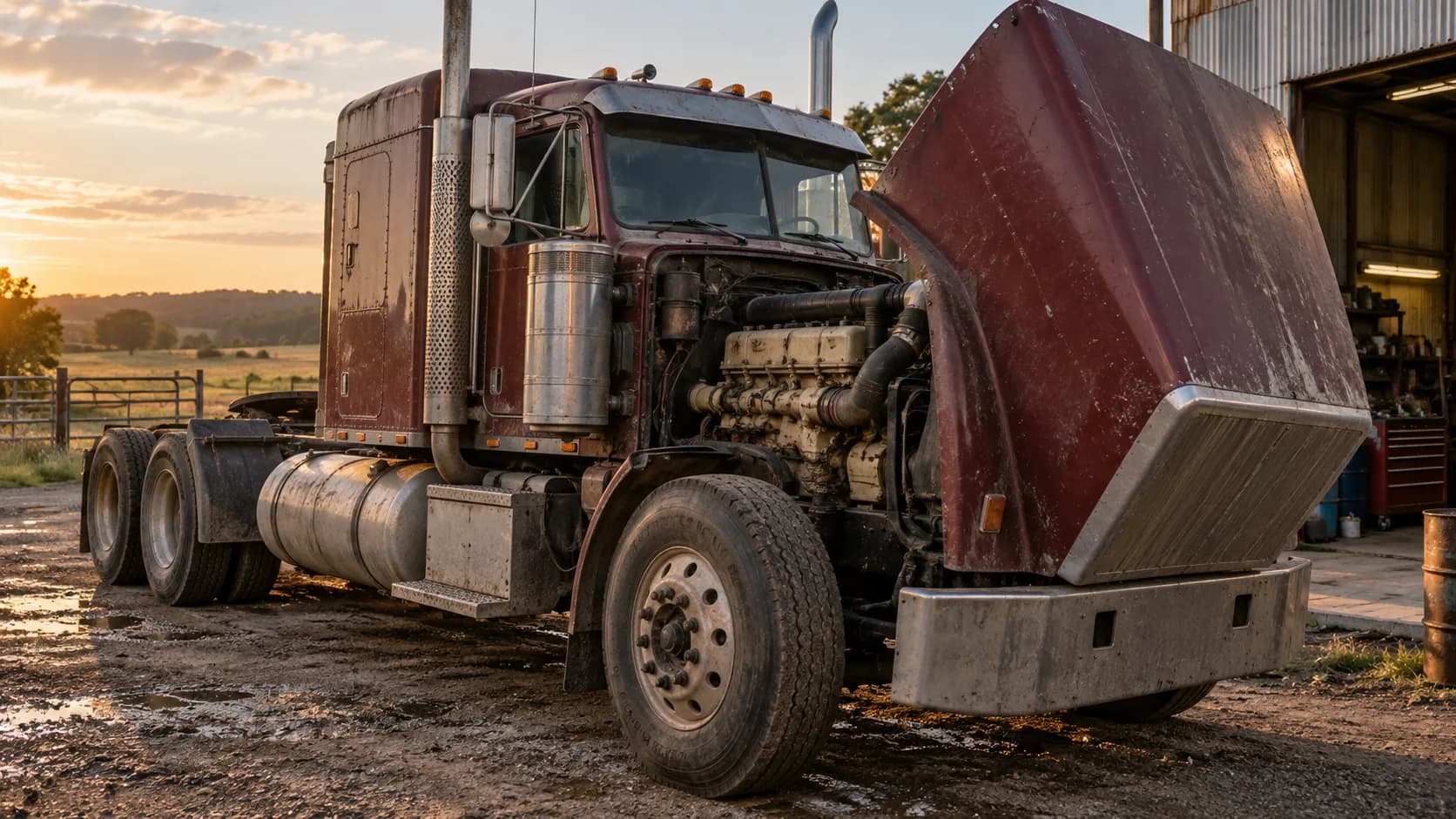
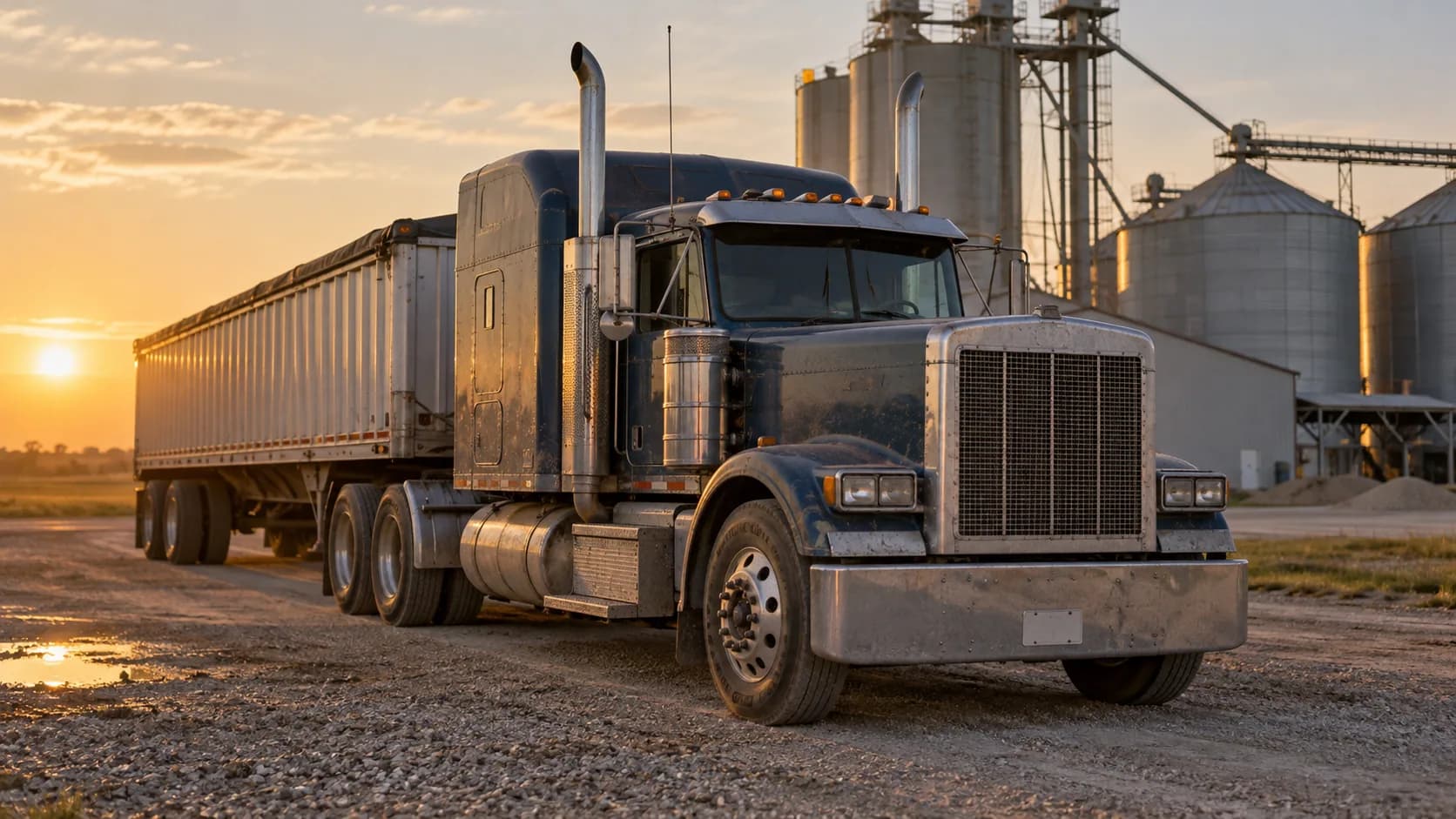
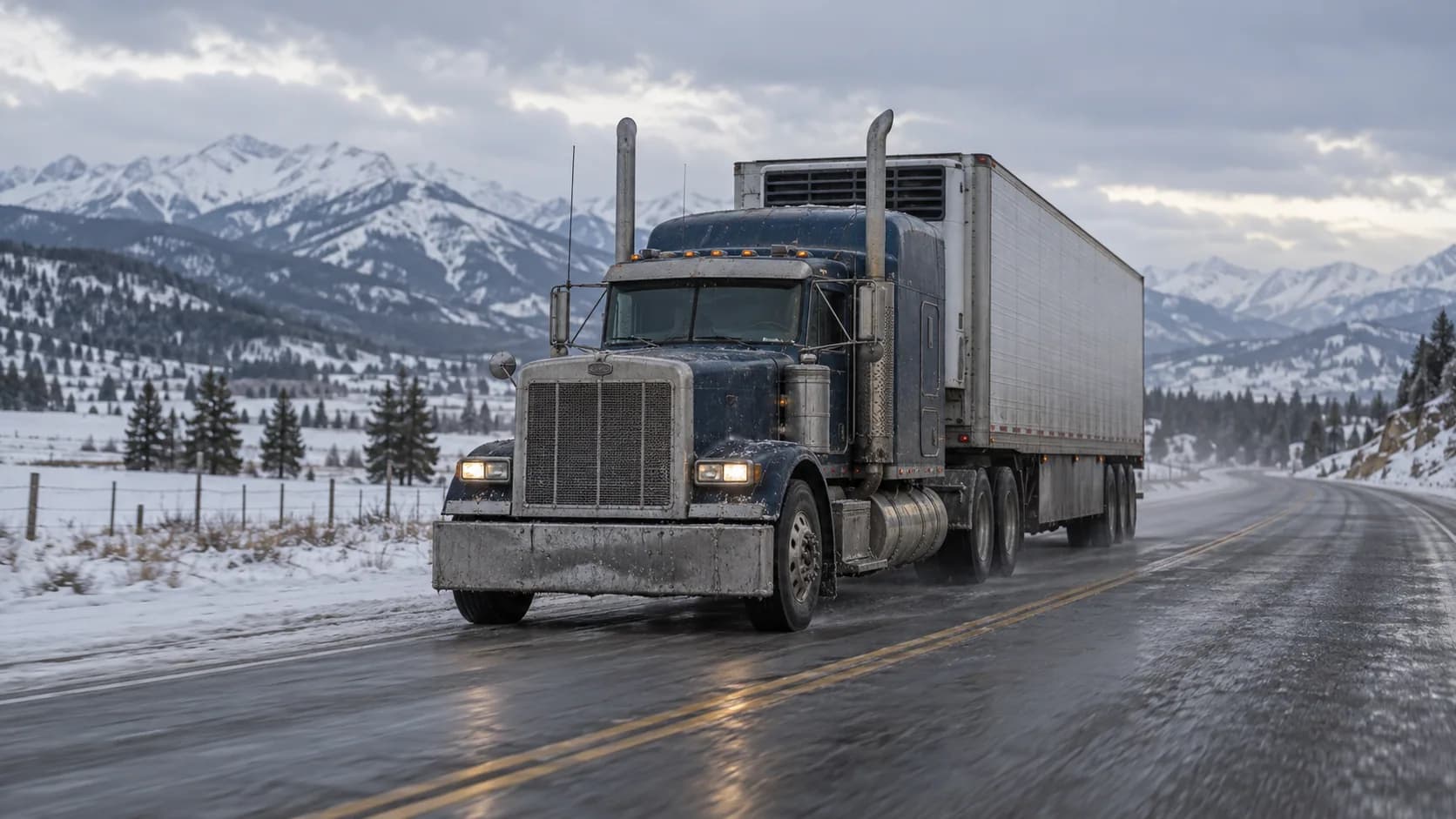
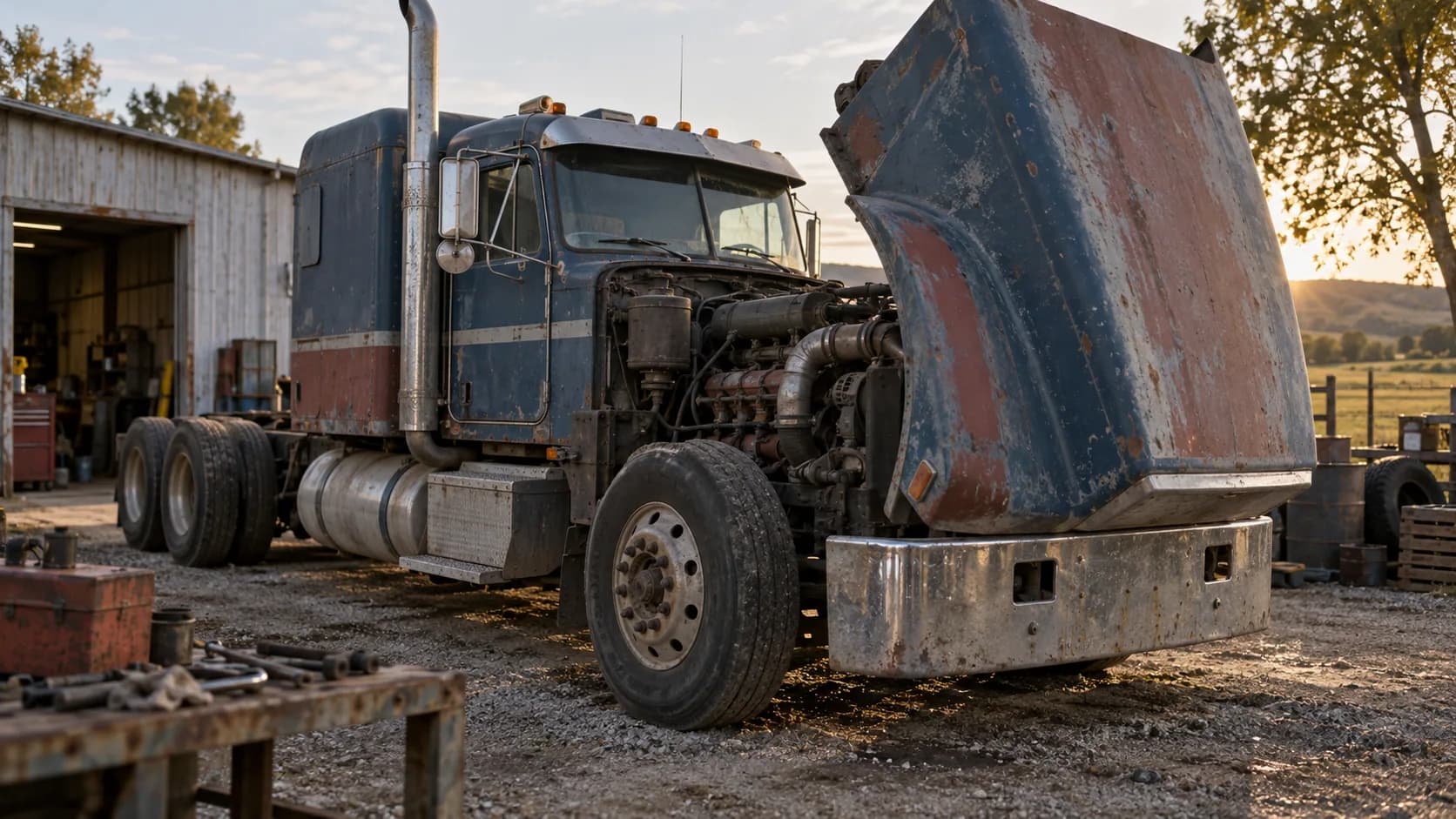
Ask a room full of truckers to name a classic long hood and the Peterbilts and Kenworths come up first, while the International 9300 waits its turn like the quiet one at the truck stop. The renders above imagine long-hood conventionals at a grain elevator, on a snowy mountain highway and in a farm-shop yard with the hood tipped open. They are AI images, not photos of real trucks, and their grilles and lamps should not be read as factory International details. The story behind the 9300, the 9370 that came before it and the Eagle name that rode on both is real, and it is easy to mix up.
From Transtar to 9370 to 9300
The roots go back to 1971. International Harvester replaced the Transtar 400 that year with the short-hood Transtar 4270 and the long-hood 4370, on a new, larger cab. That cab replaced the old "Emeryville" cab from 1957, with steel standard and aluminum optional, and lists assembly in Chatham, Ontario.
In 1985, as International Harvester's truck business became Navistar, the 4370 got a major update and dropped the Transtar name. It became the International 9370. Navistar kept the cab and added a more prominent hood and grille with vertically stacked headlamps.
The switch from 9370 to 9300 is where sources disagree. The 9370 was renamed 9300 in 1989, in line with other International product lines. Diesel Laptops' model guide says the 9300 replaced the 9370 for the 1990 model year. Yet the Wisconsin Historical Society holds a 1987 International brochure for a "9300 Premium Conventional" with a set-back front axle, so the 9300 badge was already in use in the late 1980s. Treat any truck from 1987 to 1990 as one to check by its paperwork, not its badge.
The Eagle Name
Eagle was a trim and marketing name, not a separate model. The Wisconsin Historical Society also holds an "Introducing the New Eagle" brochure, catalogued as from about 2000, covering the 9200, 9300 and 9400 Eagle, so the name spanned several hood styles. Heavy Duty Trucking reported that Navistar's 2000 Eagle Tour included a Richard Petty Limited Edition 9300 Eagle. The best-documented Eagle of the 1990s is the 1992 9400 Midnight Eagle Limited Edition which came only with the Caterpillar 3406 and had a leather interior with wood trim.
No factory brochure or spec sheet listing exactly what the 9300 Eagle package included turned up. Overdrive's Pride & Polish feature on a 1995 International Eagle 9300 shows how owners use them today: a Cummins N14 with an Eaton 13-speed, pulling a step deck for general and oversize freight. That truck also carries a Jones Performance hood, a fiberglass bumper and double-hump fenders, so it is not a factory-stock example.
Engines and the Set-Back Axle
Diesel Laptops lists the Caterpillar 3406, the Detroit Diesel Series 60 12.7L and the Cummins NT855 among its engines, and the Overdrive truck shows the Cummins N14 in a 9300 as well. Factory option lists by year were not found, so take these as common examples rather than a complete menu. Our guides to the Cat 3406 and Cummins N14 cover those engines in depth.
The 9300 also matters for one engineering first. It was the first International offered with a set-back front axle, with the standard set-forward axle still available. Reference sources date that option to 1989, though the 1987 brochure already advertises it; the set-back 9300 configuration was dropped in 1993. By then the 1990 International 9400 had taken over that job, with a sloped aerodynamic hood over a set-back axle. That left the 9300 as the square-shouldered, traditional long hood in the lineup.
9300 vs 9900, 9900i and 9900ix
For 1999, International introduced the 9900 to replace the 9300, although the 9300 Eagle still appeared in Navistar's 2000 Eagle Tour, so the two overlapped for a time. It has a squared-off long hood and twin headlamps surrounded by chrome trim faired into the fenders. Diesel Laptops says the 9900 offered a 120-inch bumper-to-back-of-cab dimension.
For 2000 the cab was redesigned for the first time since 1971. The firewall moved forward, the windshield became a single-piece curved design and the vent windows were deleted. The new 9900i used a 120-inch BBC, and the 9900ix stretched it to 130 inches and was offered only with premium Eagle trim. The 9900i outlived the rest of the line. From 2012 to 2017 it was the only remaining 9000i model, and the final trucks ran a Cummins ISX15 with up to 600 hp. After 2017 the 9000 series ended with no direct successor. The LoneStar, introduced in 2009, covers the extended-hood highway role.
How to Identify a 9300
Start with the cab glass. A 9300 or 9370 uses the original cab, so it lacks the one-piece curved windshield of the 2000-on 9900i and 9900ix. If the truck has a curved single-piece windshield and no vent windows, it is a later i-series truck.
Next, look at the lamps and hood. The 9370 has vertically stacked headlamps, while the 9900 brought chrome-trimmed lamps faired into the fenders. A sloped hood points to a 9400 or 9200 rather than a 9300.
Finally, check the axle. A set-back front axle on a 9300 suggests an earlier truck, since that configuration was dropped in 1993. Badges, grilles and hoods can be swapped, as the custom hood on the Overdrive truck shows, so confirm the model from the VIN and title.
Buying One Today
A 9300 was built as a working truck, and many that come up for sale have worked hard. Overdrive's 1995 Eagle 9300 was still hauling freight when the magazine featured it, and aftermarket suppliers such as 4 State Trucks still list cab, sleeper, hood and interior trim pieces for the 9300 and 9370. That support makes the look easier to keep up than many orphaned models.
No major collector valuation guide covering the 9300 was found, so treat any asking price as just that. Judge a truck on documented engine work, frame condition and the cab and sleeper, and confirm the engine family before you shop for parts, because a 3406, Series 60 or Cummins N14 truck will each need a different parts supply.
Specs
- Lineage
- Transtar 4370 (1971), renamed 9370 in 1985 (per Wikipedia), then 9300
- 9300 name
- Wikipedia says 1989, Diesel Laptops says MY1990; a 1987 brochure already uses it
- Replaced by
- 9900 for 1999 (9300 Eagle still shown in 2000); 9900i and 9900ix from 2000
- Assembly
- Chatham, Ontario (per Wikipedia)
- Engines (examples)
- Caterpillar 3406, Detroit Diesel Series 60 12.7L, Cummins NT855, Cummins N14
- Front axle
- Set-forward; set-back offered early (dropped 1993 per Wikipedia)
- Successor hoods
- 9900i 120 in. BBC; 9900ix 130 in. BBC, Eagle trim only
FAQ
- What years was the International 9300 made?
- Sources disagree on the start: Wikipedia dates the 9370-to-9300 rename to 1989 and Diesel Laptops to the 1990 model year, though a 1987 brochure already uses the 9300 name. The 9900 replaced it for 1999, although a 9300 Eagle still appeared in Navistar's 2000 Eagle Tour.
- What replaced the International 9300?
- The International 9900 replaced it for 1999, followed by the 9900i and 9900ix on a redesigned cab for 2000. The 9900i ran until 2017.
- What engine is in an International 9300 Eagle?
- Common examples include the Caterpillar 3406, Detroit Diesel Series 60 and Cummins NT855 and N14. Overdrive featured a 1995 Eagle 9300 with a Cummins N14 and an Eaton 13-speed.
- What is the difference between an International 9300 and 9900?
- The 9900 has a squared-off long hood with chrome-trimmed headlamps faired into the fenders. From 2000 the 9900i and 9900ix also got a one-piece curved windshield, which the 9300 cab never had.
Know someone who drove one? Share this guide
Get the Look
As an Amazon Associate we earn from qualifying purchases.
- International 9900i diecast model truck — The long-hood International shape for the shelf.
- International Harvester trucks history book — Background on the Transtar and the trucks that came before the 9300.
- CB radio for trucks — The cab accessory every working long hood still carries.
Sources
- en.wikipedia.org — International_9000
- en.wikipedia.org — International_Transtar
- repair.diesellaptops.com — international-truck-models-explained
- overdriveonline.com — scott-arthurs-1995-international-eagle-9300
- wisconsinhistory.org — introducing-the-new-eagle
- wisconsinhistory.org — international-9300-premium-conventional-semi-truck
- 4statetrucks.com — international-9300-9370-interior-acc
- truckinginfo.com — navistar-launches-annual-eagle-tour