Peterbilt 359 vs 379: Differences, Years and Engines
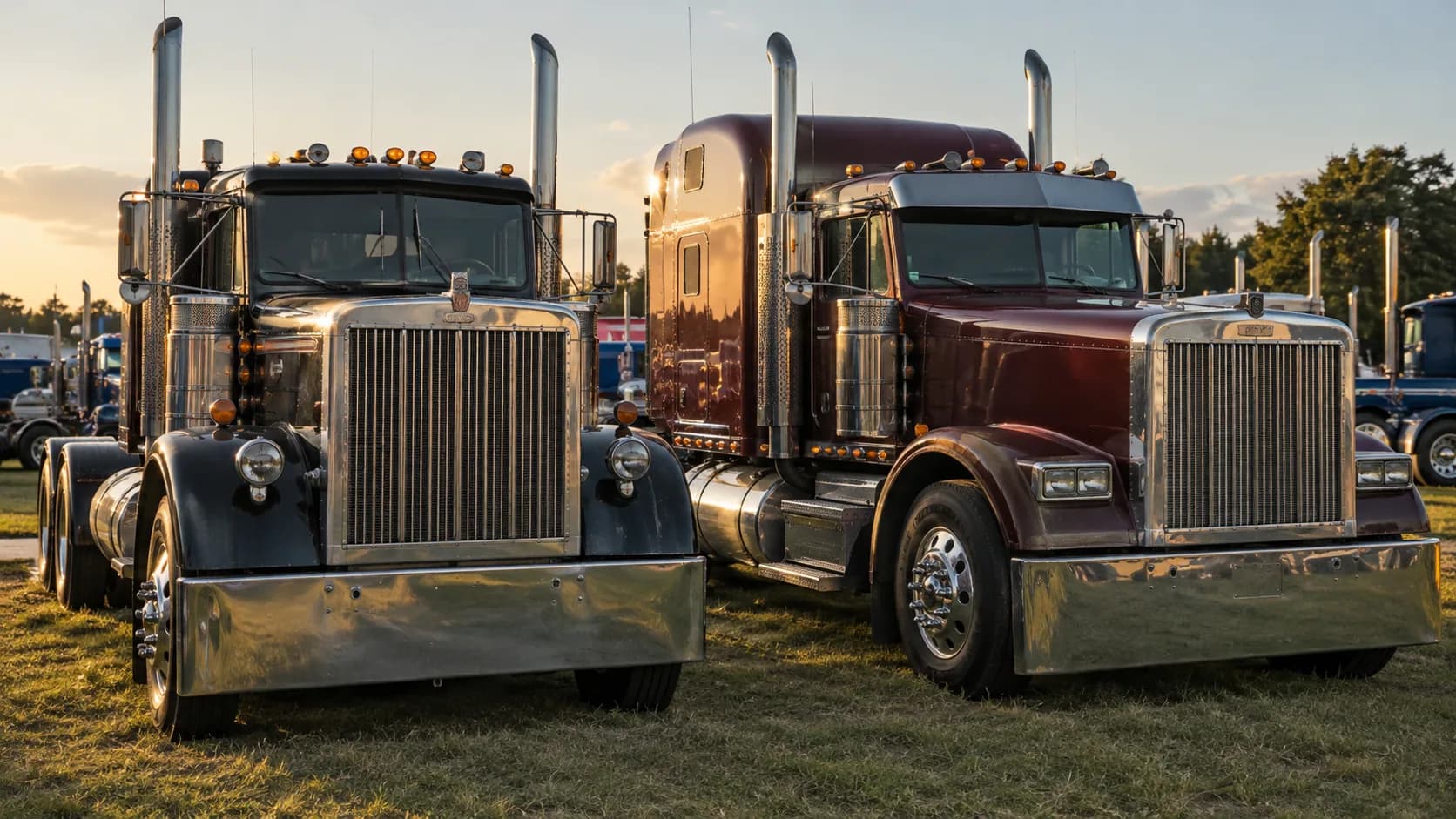
Park two long-hood Peterbilts nose to nose and plenty of people can't say which is the 359 and which is the 379 until they study the glass and the lamps. The renders above imagine that standoff at sunset, a black truck with round headlamp pods beside a maroon one with rectangular lamps, and they are AI images, not photos of real trucks. The question behind them is real, because the two models share a family face. For the full story of either one, see our Peterbilt 359 guide and our Peterbilt 379 long-hood guide. This page puts them side by side.
359 vs 379: The Years in Short
Wikipedia's list of Peterbilt models shows the 289/359 highway tractor arriving in 1967 and the 379 replacing the 359 in 1987. The 359 was Peterbilt's long-hood flagship for about two decades, and in 1977 the company's 100,000th vehicle was a long-hood 359. Sources disagree on the 359's last model year: Wikipedia's 379 article gives 1967 to 1986, while Wikipedia's Peterbilt article, Tim's Trucks (which dates the last 359 to January 1987) and a classic-truck history say 1987. The 379 is dated 1987 to 2007 there, although Peterbilt's own 2007 release on the last truck counts more than 230,000 Model 379s built since 1986. A truck from 1986 or 1987 could be either model, so check it in person.
How to Tell Them Apart
Start with the windshield. Wikipedia says the 379 is externally distinguished from the 359 by an enlarged windshield that allows horizontally mounted wipers. The 359 had moved to the 1100-series cab in 1972, named for its 1,100 square inches of glass, but the 379 glass is bigger still.
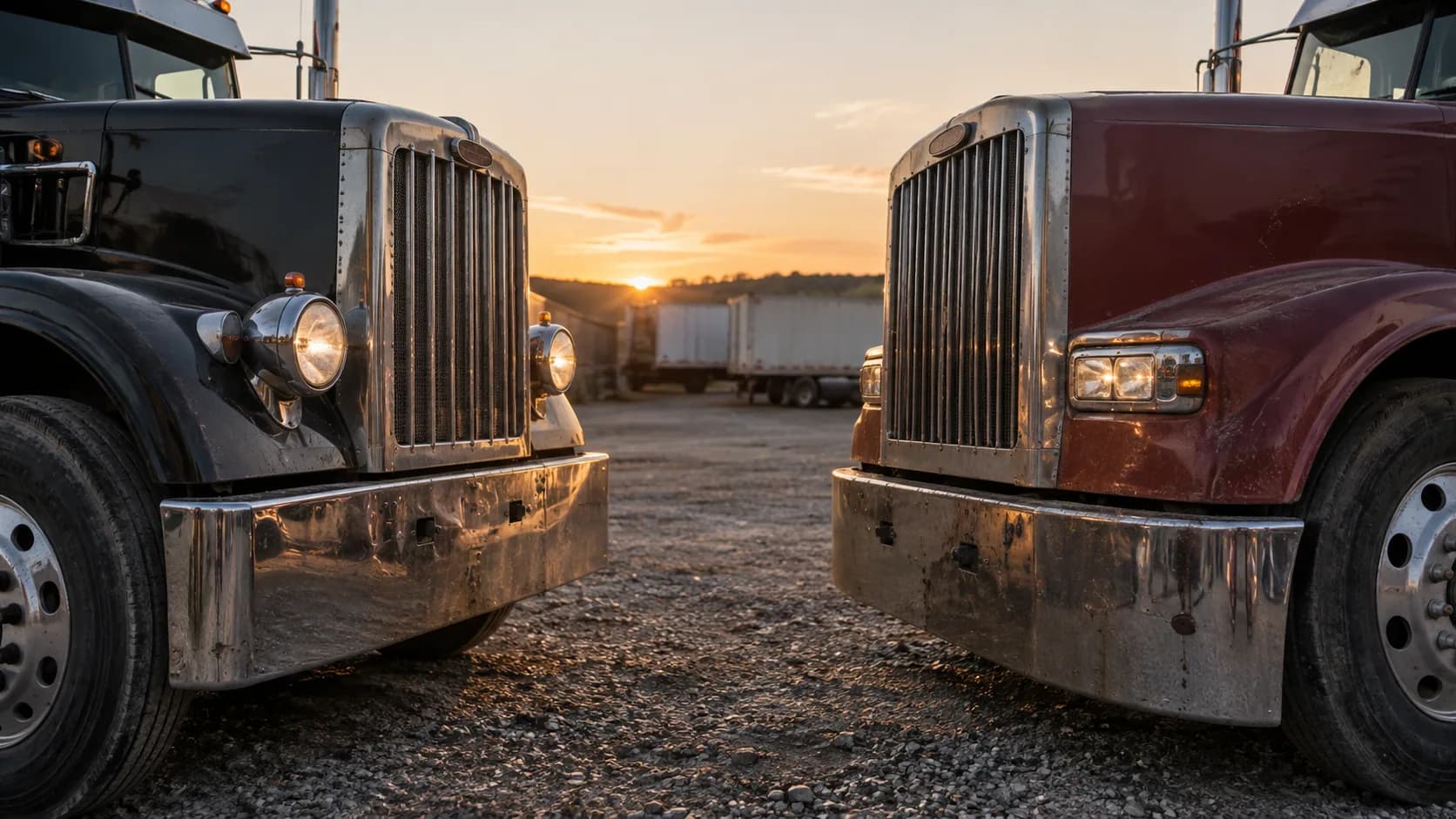
Next, look at the turn signals. The 379 introduced headlamp-mounted turn signals, moved up from the fender, and made rectangular headlamps standard. On a 359 the signal sits on the fender.
Do not lean on lamp shape alone. A spotter's guide from Tim's Trucks says rectangular quad headlamps became available on the 359 by 1980, and that square fender turn signals became optional by the mid-1980s. It describes late trucks with square turn signals, roof lights and rectangular bumper fog lamps. A classic-truck history describes the numbered 359 Classics with polished round headlamp pots. In the render, the left truck shows round pods with a small amber lamp on the fender, and the right shows rectangular units, but real trucks can mix and match.
One more clue comes from enthusiast forums rather than factory literature: posters say the 359 shows a hood cutout for the air-intake tube, while on the 379 the intake feeds into the cowl out of sight. Treat that as hearsay. Hood length is a weaker tell. Wikipedia lists the 379 in 119-inch and 127-inch bumper-to-back-of-cab versions, and forum posters say the same two lengths were used on 359s.
Engines and Transmissions
The 359 era was Caterpillar and Cummins country. Smart-trucking.com, an enthusiast site, names the Cat 3406 and 3408 as common choices and lists the Spicer SST 6/1241 among transmissions, and it describes one numbered Classic with a 444 Cummins and a 13-speed. Dealer listings for 1984 and 1987 trucks show a Cummins 350 rebuilt as a 400, and a Cat 3406B, both with 13-speed manuals. We found no solid source for exact factory option lists, so treat these as examples, not a complete menu. If you want the engine story, see our Cat 3406 and Cummins N14 guides, and our Eaton Fuller 13-speed vs 18-speed guide for the gearbox side.
Wikipedia's 379 article lists a wider menu: Caterpillar's 3406 (B, C, E and P), C10, C11, C12, C13, C15 and C16; Cummins' NTC, N14, ISM, ISX and Signature 600; and the Detroit Diesel Series 60. It notes the C15 arrived with MXS and BXS prefixes from 2004. That list shows the real change between the trucks: the 379 outlived the old mechanical era and was sold with electronic and emissions-era engines.
Why the 379 Replaced the 359
Tim's Trucks notes that 1986 brought an entire new line of Peterbilt conventionals, and Wikipedia lists the 377 and 379 together in 1987. We found no Peterbilt statement on why the 379 replaced the 359, so we won't guess at the factory's reasons. One enthusiast site says the 379 kept the 359's roomy engine bay, and that its light cab and bunk were also like the 359's. Peterbilt sold the 379 for about twenty years and finished with the Legacy Class Edition, a run of 1,000 trucks marking the end.
Which Is More Collectible?
It depends on what you want. The 359's strongest collector card is the numbered 359 Classic, the final run, with a plaque on the dash showing the truck's number. Sources cannot agree on how many were numbered. One says 359, another the last 400, and the same site elsewhere implies far more. Classics are described with dual exhaust, aluminum fenders and hood, polished round headlamp pots and 63-inch flat-top bunks, and some have two sticks. The same enthusiast site warns that fake ID tags exist and says to match ID numbers through an official Peterbilt dealer. It also mentions loosening body rivets and electrical problems.
The 379 is the easier truck to find. Peterbilt says over 89 percent of the 230,000-plus it built were still in service when the last one was delivered, and the Legacy Class trucks carry production numbers of their own. We could not find a price guide from a major valuation source for either truck, so treat any asking price as just that.
Specs
- 359 production
- 1967 to 1986 or 1987, depending on the source
- 379 production
- 1987-2007 (Peterbilt's 2007 release counts from 1986)
- Windshield
- 359: 1100-series cab from 1972; 379: enlarged glass with horizontal wipers
- Turn signals
- 359: fender-mounted; 379: built into rectangular headlamps
- 379 hood lengths
- 119 in. and 127 in. BBC
- 359 engines (common)
- Caterpillar 3406 and 3408 (per enthusiast sources); Cummins also seen
- 379 engines
- Cat 3406/C-series, Cummins NTC/N14/ISX/Signature 600, Detroit Series 60
- Final editions
- 359 Classic (numbered, count disputed); Legacy Class 379 (last 1,000)
Get the Look
As an Amazon Associate we earn from qualifying purchases.
The round-lamp long hood in 1:64 or 1:32 scale.
Check price at AmazonPut it next to the 359 and compare the windshield.
Check price at AmazonFAQ
- What is the difference between a Peterbilt 359 and a 379?
- The 379 has an enlarged windshield with horizontally mounted wipers and turn signals built into rectangular headlamps, where the 359 had its signals on the fender. Rectangular lamps were available on late 359s, so check the windshield and signal position, not the lamps alone.
- What years was the Peterbilt 359 made?
- It debuted in 1967. Wikipedia's 379 article gives 1967 to 1986, while Wikipedia's Peterbilt article and Tim's Trucks put the end in 1987, when the 379 arrived.
- What replaced the Peterbilt 359?
- The Peterbilt 379, introduced for 1987, replaced it. The 379 ran until 2007 and was followed by the Model 389.
- Is a Peterbilt 359 worth more than a 379?
- We found no price guide from a major valuation source for either. The numbered 359 Classics and the 1,000-truck Legacy Class 379 are the editions collectors single out, so condition and documentation matter more than the badge.