Peterbilt 377 vs 379: Aero Hood vs Long Hood Differences
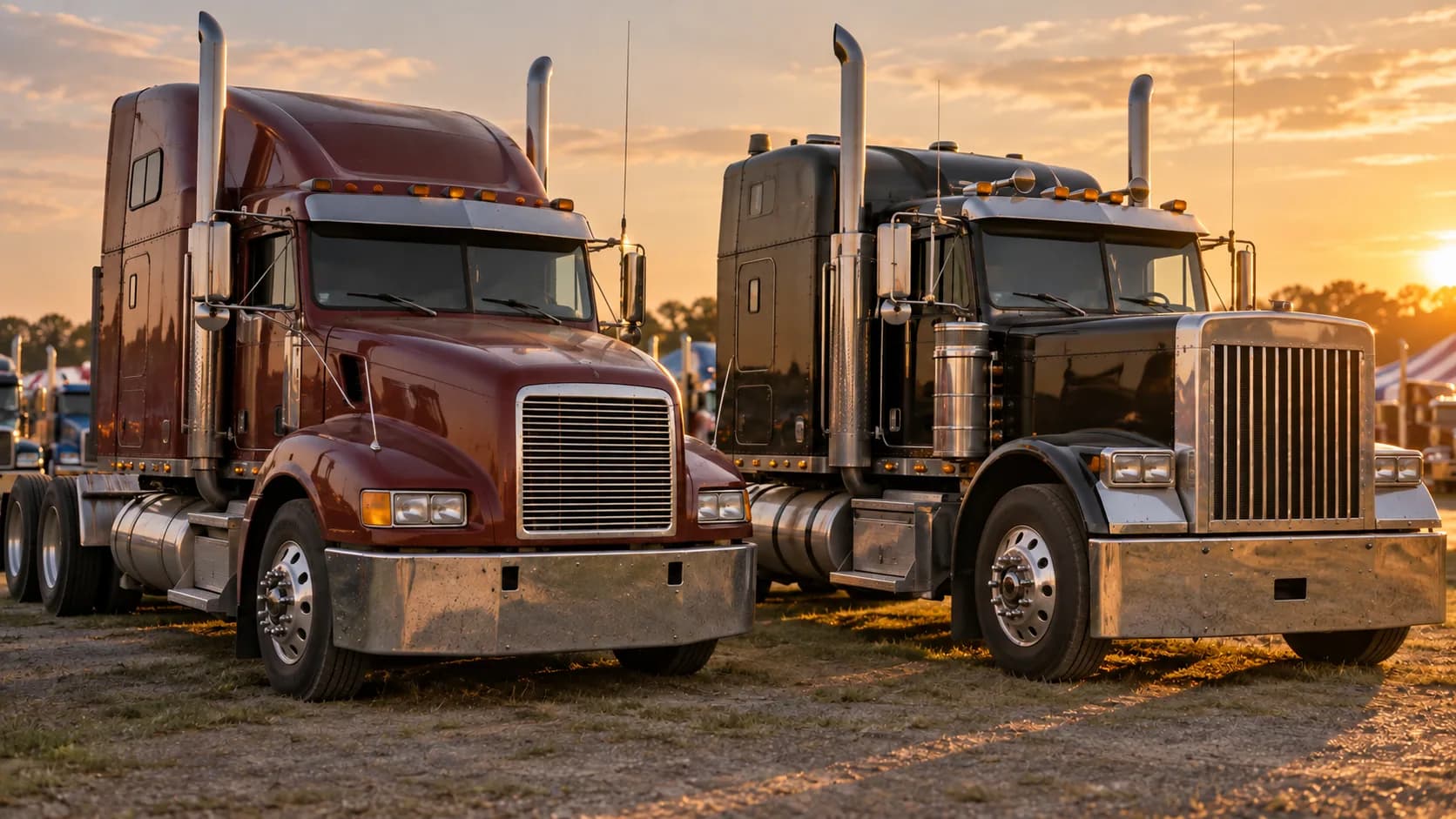
One Peterbilt drops its nose toward the road, the other keeps it square and level all the way to the grille, and that single line on the hood tells most of the story. The render above imagines that contrast at sunset, a maroon truck with a sloped hood and lamps set into wide fenders next to a black long hood with a tall square grille, and it is an AI-generated image, not a photo of real trucks. The two Peterbilt models behind the idea, the 377 and the 379, arrived at almost the same moment and went after very different buyers. For the long-hood side in depth, see our Peterbilt 379 long-hood guide and our Peterbilt 359 vs 379 comparison.
Years: Two Trucks, One Launch Window
Wikipedia's list of Peterbilt models dates the 377 from 1986 to 2000 and calls it the first Peterbilt aerodynamic conventional, similar in concept to the Kenworth T600. The Autopian's history of Peterbilt's aero experiments makes the same link: Kenworth's T600, often credited as the first mainstream semi built from the ground up for aerodynamics, came in 1984, and Peterbilt followed in 1986 with the 377 A/E. A 1987-model-year NHTSA recall for the 377, over windshield wiper linkages that could lock up, lists production dates starting September 1, 1986, so the earliest trucks are 1987 models built in late 1986.
The 379 ran from 1987 to 2007 as Peterbilt's flagship conventional, replacing the 359. Peterbilt's own count, reported by FleetOwner when the last one rolled out of Denton, Texas, was more than 230,000 Model 379s built since 1986. The 377 bowed out earlier: Wikipedia says it was directly replaced by the 120-inch 385, along with the 387. The 379 handed its role to the 389 in 2007.
Hoods and Axle Positions
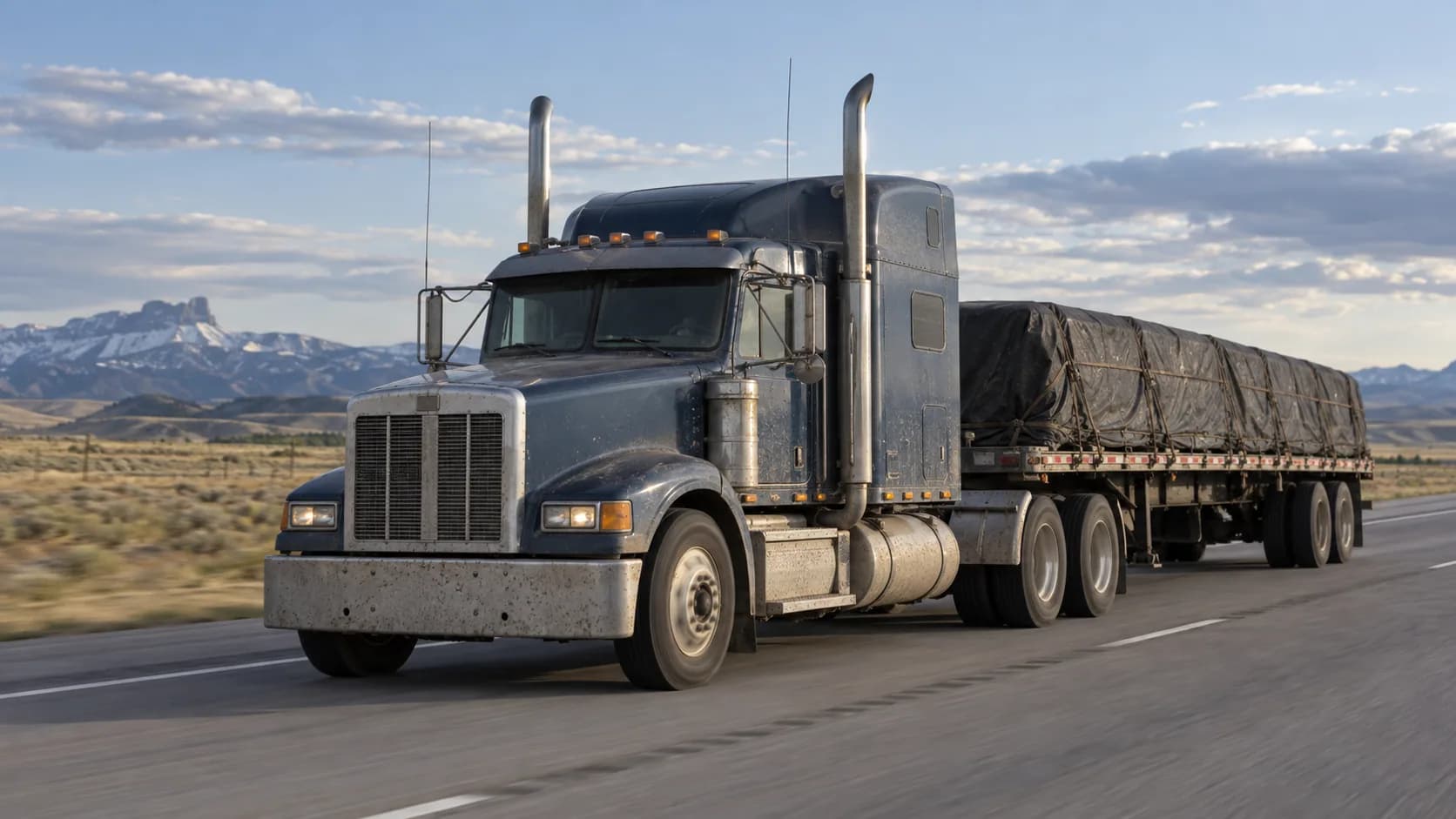
The hood is the giveaway. Wikipedia describes the 377 with a fiberglass hood sloped like the 349's and large fenders that carry the headlamps and turn signals. The 379 kept the traditional square, flat-topped long hood. Owner forums and aftermarket parts sellers describe the factory 379 hood as aluminum, which fits the 379's reputation as the premium owner-operator truck.
Axle position is the other big difference. Wikipedia lists the 377 at a 120-inch bumper-to-back-of-cab (BBC) with a set-back front axle, or 122 inches with a set-forward axle. Set-back axle bumpers sold for 1987 to 1996 377s show how common that layout was. The 379 came in 119-inch and 127-inch BBC lengths, the longer one being the extended hood that gives the truck its stretched profile.
Engines and Drivetrains
Both trucks drew from the same 1980s and 1990s diesel shelf. The 379 was offered with Caterpillar, Cummins and Detroit Diesel engines, and late trucks could be ordered with some of the highest-rated versions of each. Used 377 listings show the same family at work, with Cat 3406B engines and, in later trucks, Cummins N14s paired with Eaton Fuller manual gearboxes of 9, 10 or 13 speeds. Those are individual trucks, not a factory option sheet, so treat them as examples. For more on the engines themselves, see our Cat 3406 and Cummins N14 guides.
Fuel Economy: What the Aero Hood Was For
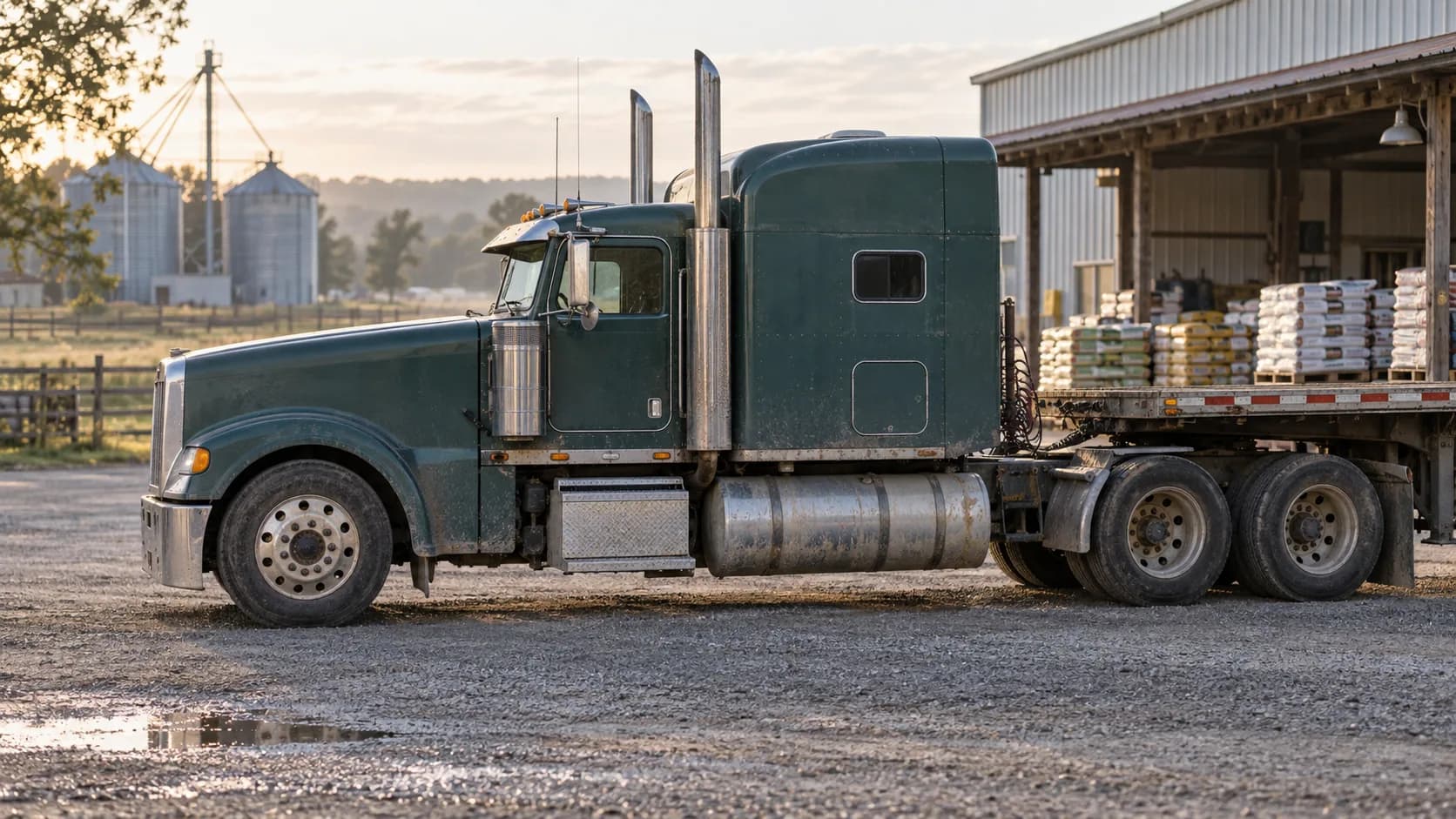
The 377 existed because the industry was chasing fuel savings after the T600 showed what a smoother nose could do. A sloped hood and fenders that blend into the bodywork move air around the truck more cleanly than a flat grille and a squared-off hood. That was the pitch to fleets, and forum veterans describe the 377 as a fleet-oriented truck.
What does not exist in any source checked for this guide is a published head-to-head mileage figure for a 377 against a 379. Real-world numbers depend heavily on engine, gearing, speed, trailer and fairings, so any single mpg figure would be a guess. The fair summary is that the 377 was built to cheat the wind and the 379 was built to look like a Peterbilt.
How to Tell a 377 From a 379
- **Hood line:** a 377 hood slopes down toward the grille; a 379 hood stays flat and square.
- **Headlamps:** on a 377 they sit in the big fenders. A 379 carries rectangular headlamps with built-in turn signals, mounted alongside the hood.
- **Grille:** the 379's tall, upright chrome grille stands proud at the front of the hood. The 377 grille sits lower and is framed by the sloping nose.
- **Length:** a 127-inch BBC truck with a long, level hood is a 379. A 377 tops out around 122 inches.
- **Front axle:** many 377s have the set-back front axle, with the wheel well tucked well behind the bumper.
Which Is Worth More?
In almost every market, the 379. Ritchie Bros.' auction blog calls the 379 a semi that carries its value, citing Rouse Services estimates that climb with model year, and notes that a 1992 379 from the Transformers film sold at auction for $121,000. That truck is an outlier, not a price guide. FleetOwner reported Peterbilt's figure that over 89 percent of 379s were still in service when the last one was built, and owner-operators remain the truck's core buyers.
The 377 lives at the working end of the market. Truck sale sites list plenty of them, mostly with high mileage and modest asking prices, and no major valuation guide singles it out as a collectible. That can make a clean 377 a cheap way into an older Peterbilt. Buy either one on condition, engine history and paperwork, not badge alone.
Specs
- 377 production
- 1986-2000 (first trucks were 1987 models)
- 379 production
- 1987-2007 (Peterbilt counts from 1986)
- Hood
- 377: sloped fiberglass aero hood; 379: square long hood
- BBC lengths
- 377: 120 in. set-back or 122 in. set-forward axle; 379: 119 in. or 127 in.
- Headlamps
- 377: in the fenders; 379: rectangular with built-in turn signals
- Engines
- Caterpillar, Cummins and Detroit Diesel (379); Cat 3406B and Cummins N14 common in 377s
- Replaced by
- 377: Model 385 and 387; 379: Model 389
- 379s built
- More than 230,000 (Peterbilt)
FAQ
- What is the difference between a Peterbilt 377 and a 379?
- The 377 is Peterbilt's first aerodynamic conventional, with a sloped fiberglass hood and headlamps in the fenders. The 379 is the square long-hood flagship with rectangular headlamps and 119-inch or 127-inch BBC lengths.
- What years was the Peterbilt 377 made?
- Wikipedia dates it from 1986 to 2000. The first trucks were 1987 models, with production starting in September 1986.
- Does the Peterbilt 377 have a set-back axle?
- Many do. It was offered at 120 inches BBC with a set-back front axle or 122 inches with a set-forward axle.
- Is a Peterbilt 379 worth more than a 377?
- Generally yes. The 379 is the owner-operator favorite and holds its value, while 377s usually sell as high-mileage working trucks.
Know someone who drove one? Share this guide
Get the Look
As an Amazon Associate we earn from qualifying purchases.
- Peterbilt 379 diecast model truck — The square long hood on a shelf.
- Peterbilt trucks history book — Background on the 377, 379 and the rest of the line.
- Chrome and aluminum polish for trucks — For grilles, bumpers and stacks on either model.
Sources
- en.wikipedia.org — List_of_Peterbilt_vehicles
- en.wikipedia.org — Peterbilt_379
- theautopian.com — four-decades-ago-peterbilt-tried-making-trucking-35-percent-more-efficient-by-turning-its-truck-into-a-helmet
- auto-recalls.justia.com — 88v047000
- fleetowner.com — peterbilt-delivers-its-last-model-379
- blog.ritchiebros.com — the-classic-peterbilt-379-a-semi-truck-that-carries-its-value
- 4statetrucks.com — 16-inch-chrome-set-back-axle-bumper-with-tow-holes-for-peterbilt-377-1987-1996-01-010016022
- 4statetrucks.com — peterbilt-379-short-hoods-vs-long-hoods
- truckpaper.com — 1989-peterbilt-377-sleeper-trucks
- tractorhouse.com — 1994-peterbilt-377-sleeper-trucks