Peterbilt 389 (2006-2023): History, Specs and 379 vs 389
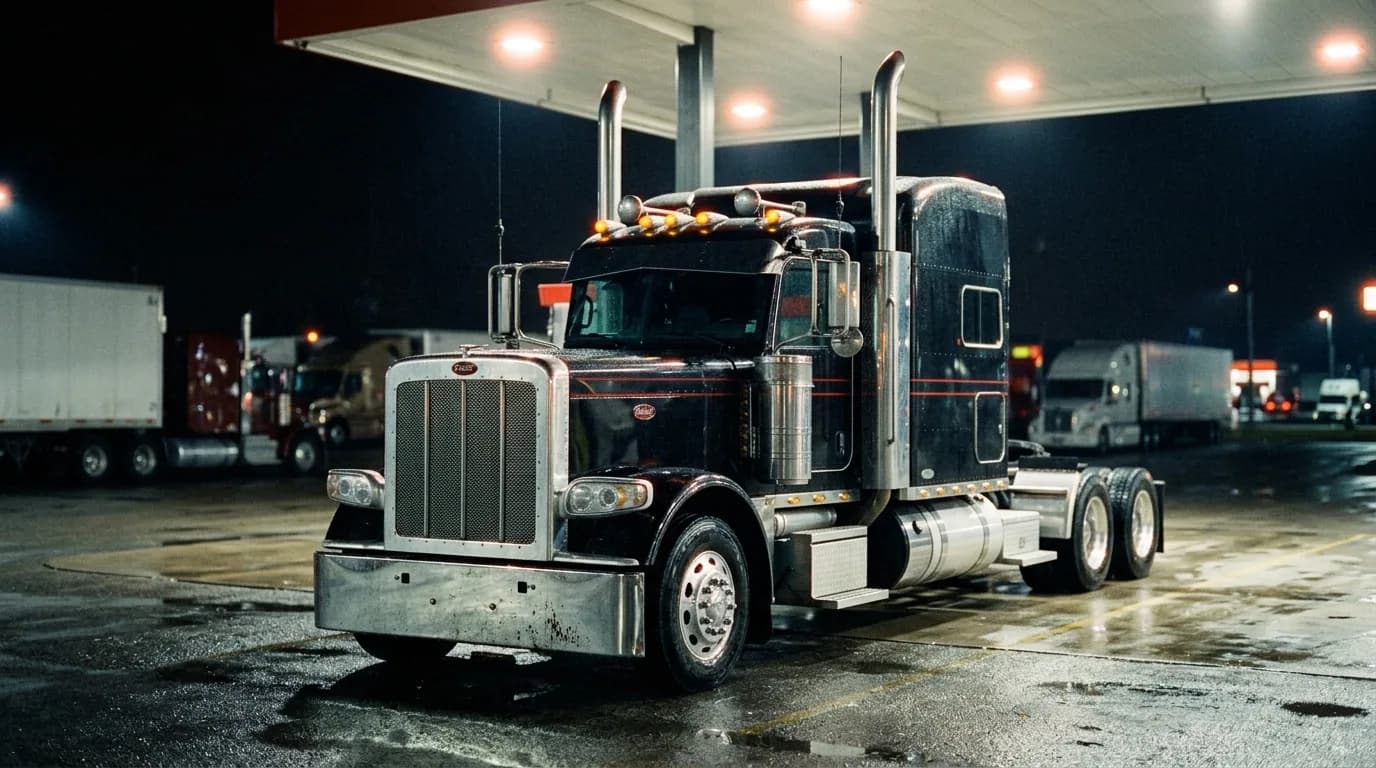
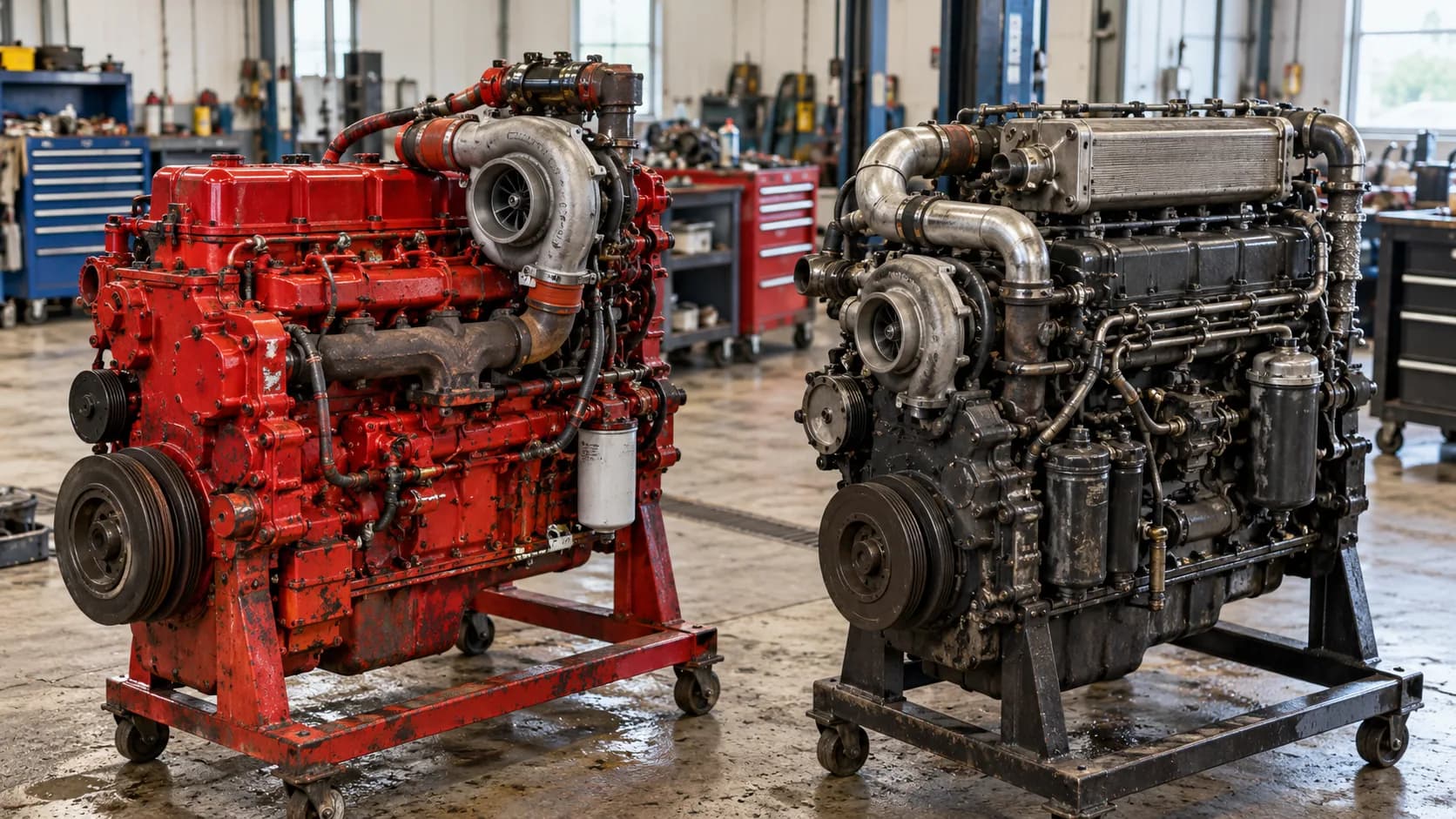
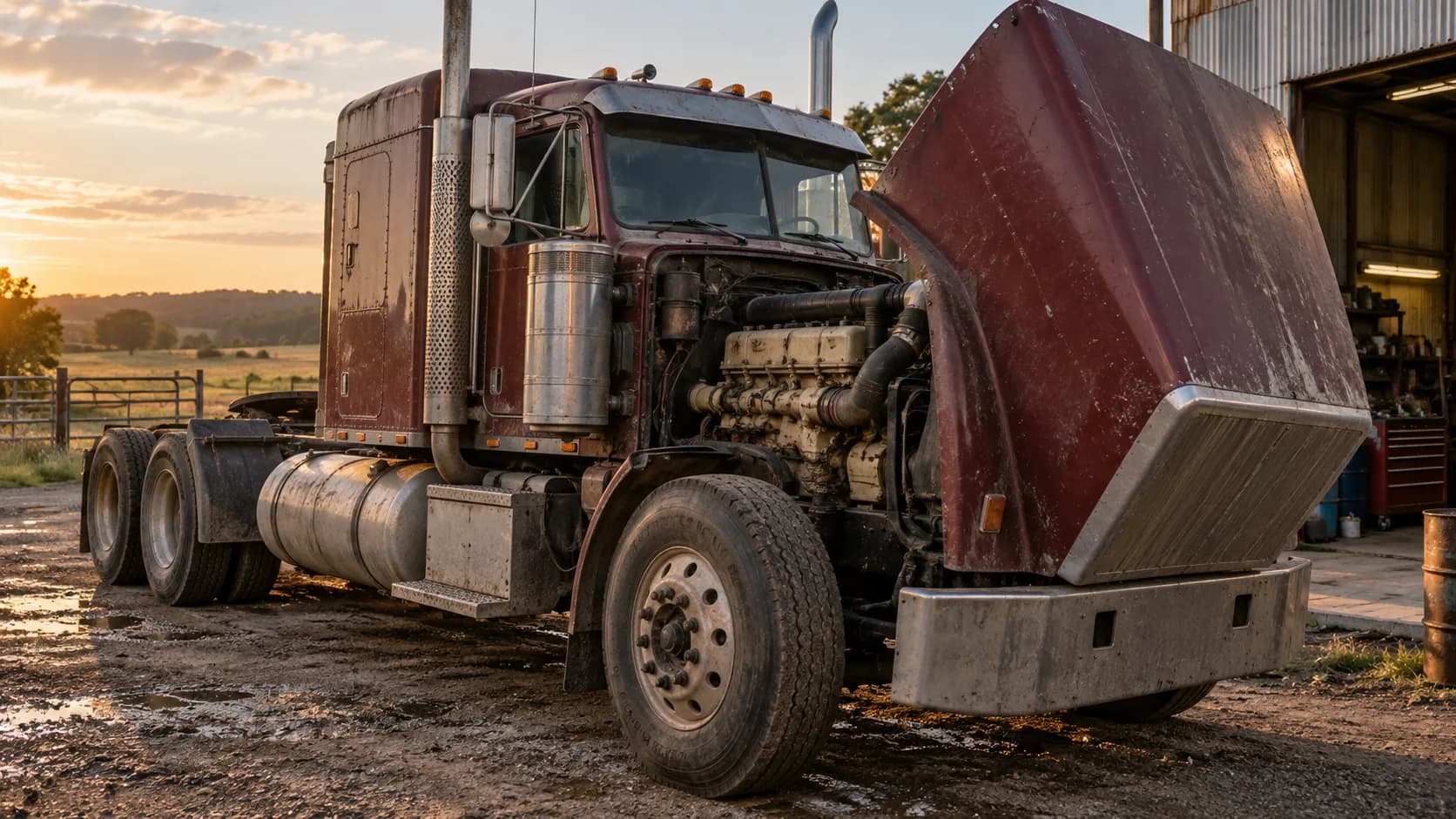
A black long-hood sits under a fuel-station canopy after dark, wet pavement throwing back the lights, amber markers glowing along the cab roof. The renders above imagine a Peterbilt 389 in that scene, and they raise a question that has followed the truck since it launched: is that a 379 or a 389? The two share a family face, so this guide starts with the 389 and then puts the two side by side. For the full story of the truck it replaced, see our Peterbilt 379 long-hood guide.
Why Peterbilt Replaced the 379
Peterbilt launched eight new or upgraded models at the Mid-America Trucking Show on March 22, 2006, and the headline truck was the Model 389, built to replace the 379, the company's flagship long-hood. The driver was the 2007 EPA emissions standard. The new engines needed a larger cooling package and extra exhaust hardware, and Truck News reported that Peterbilt used the need for more cooling capacity as a chance to restyle the truck and stretch the hood. Trucking Info noted that the 389 would enter production early the following year, when the 2007 diesels arrived.
The 379 did not vanish overnight. Peterbilt announced on April 5, 2007 that it had delivered the 1,000th and final Legacy Class Edition 379, and the 389 carried the long-hood banner from there.
379 vs 389: How to Tell Them Apart
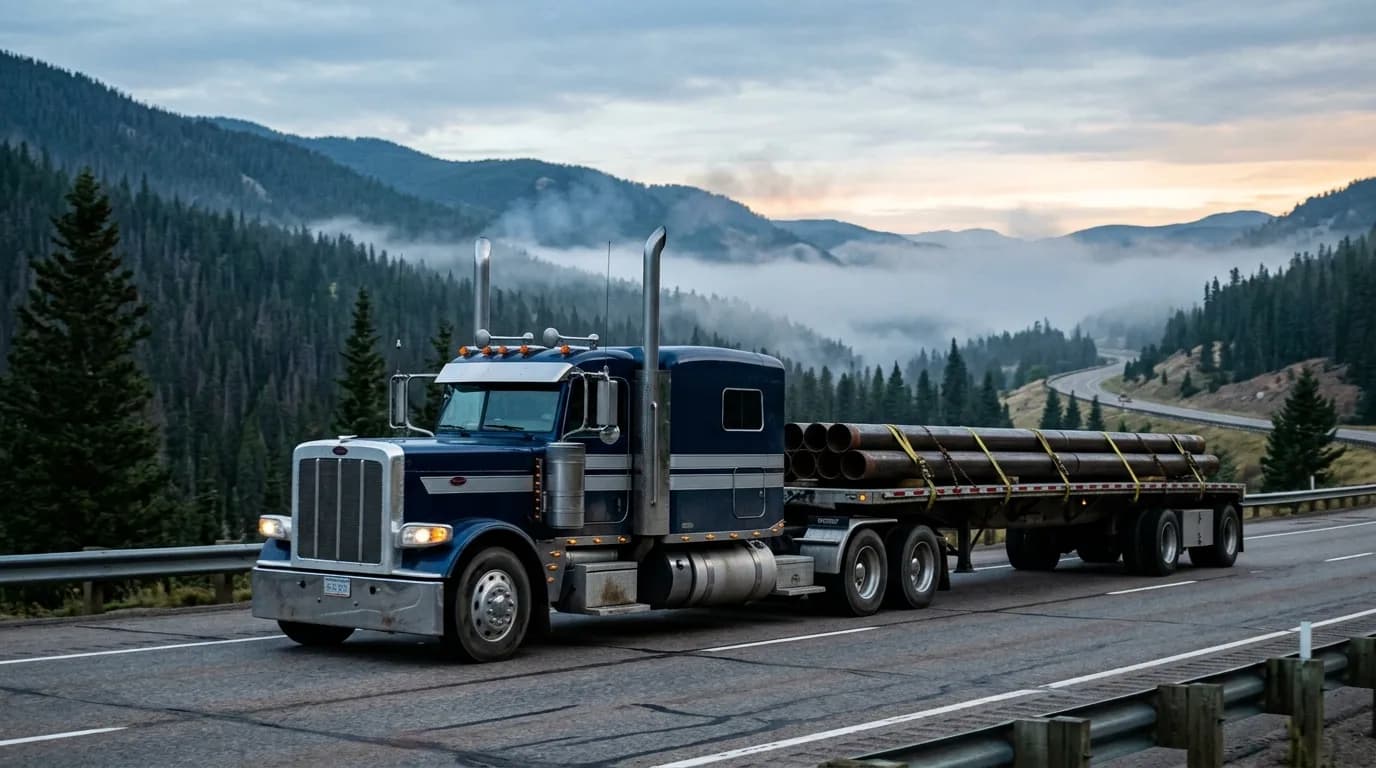
Hood length is the headline difference, but it is only four inches. The 379 was sold in 119-inch and 127-inch bumper-to-back-of-cab (BBC) lengths. The 389 stretched the long version to 131 inches, and Truck News says the added four inches sit where the radiator got bigger and the fan moved from the radiator cowling onto the engine, so it could run closer to its shroud. The cooling package was three inches wider and 60 pounds lighter, according to the same magazine, and the magazine also noted a subtly beveled leading edge on the hood.
Four inches is hard to judge across a truck stop, so look at the headlights first. The 379 wears rectangular headlamp units with the turn signals built in. The 389 has smoother, oval-looking pods, and Trucking Info's road test said the new lamps give more than double the light output of the old pods. The grille changed too: the same road test praised a one-piece unit that replaced the old riveted pieces. Peterbilt's launch pitch added modeled bumpers, external air cleaner trim panels, softly curved battery box fairings and a roof fairing, and the fenders and trim were reworked along with the headlamps. Truck News credited a few minor aerodynamic changes with cutting drag by 4 percent.
A quick rule: rectangular headlights on a slightly shorter nose is a 379, and pod headlights on a longer nose is a 389.
Engines: From the 2007 ISX to PACCAR and the X15
Both trucks were sold with a menu of engines. The 379 offered Caterpillar's 3406 and C-series engines such as the C13, C15 and C16, Cummins' NTC, N14, ISM, ISX and Signature 600, and the Detroit Diesel Series 60. The first road tests of the 389 used Cummins power: Trucking Info drove a 550-horsepower ISX with 1,850 lb-ft of torque and an 18-speed, and Truck News used a 565-horsepower ISX with an 18-speed. Caterpillar power reached the 389 as well, since used-truck listings document 2008 trucks with the Cat C15.
Caterpillar, long a Peterbilt staple, announced in June 2008 that it would leave the North American Class 8 market by 2010, selling its on-highway engines through 2009. PACCAR's own MX engine reached the 389 in February 2011, a 12.9-liter rated from 380 to 485 horsepower with up to 1,750 lb-ft. By the end, Peterbilt's spec page listed two engines: the MX-13 at up to 510 horsepower and 1,850 lb-ft, and Cummins' X15, which replaced the ISX15 in January 2017, at up to 605 horsepower and 2,050 lb-ft.

The 389X and the Final Years
Peterbilt announced the limited-release 389X on September 8, 2022, capped at 1,389 trucks. It could be ordered as a day cab or with a 72- or 78-inch sleeper, and it wore a polished hood crown around a louvered grille sheet inspired by the first 1939 Peterbilt, LED amber light strips in the air cleaners and under the rocker panels, and Black Pearl burl woodgrain on the dash. Each carried a serialized chrome dash plate showing its production number.
On September 7, 2023, Peterbilt announced that it had built the 100,000th Model 389 at its Denton, Texas plant, a 389X presented to Massey Motor Freight of Nacogdoches, Texas, and said the model would end its production run at the end of the year. Some reference works list 2024 as the last year; this guide follows Peterbilt's own end-of-2023 statement. Production of the successor, the Model 589, was set to begin in January 2024 in Denton. Peterbilt calls it the legendary successor to the iconic Model 389, and it keeps a 131-inch BBC hood option alongside a 121-inch one.
The 389 Today
Peterbilt's own 389 page now says the truck is no longer in production, so shoppers are mostly looking at used trucks. The final spec sheet shows what late builds look like: a 123-inch or 131-inch aluminum hood, a day cab or sleepers of 44, 58, 72 or 78 inches, and PACCAR automated or Eaton manual transmissions. An early truck sits at the other end of that range, with the first generation of the emissions hardware: the road-test trucks carried the diesel particulate filter under the passenger door, hidden behind the toolbox. Because the engine and emissions system changed so much between 2007 and 2023, the model year tells you more about what you are buying than the badge does.
Specs
- Introduced
- 2006 (Mid-America Trucking Show, March 22)
- Production end
- End of 2023 per Peterbilt (some references list 2024)
- Predecessor / successor
- Peterbilt 379 / Peterbilt 589 (production set to begin January 2024)
- Hood length
- 131 in. BBC at launch (127 in. on the longest 379); 123 in. and 131 in. on the final spec sheet
- Final engines
- PACCAR MX-13 up to 510 hp / 1,850 lb-ft; Cummins X15 up to 605 hp / 2,050 lb-ft
- Sleepers (final lineup)
- Day cab; 44, 58, 72 and 78 in.
- Special edition
- 389X (announced September 2022), limited to 1,389 trucks
- Milestone
- 100,000th built September 7, 2023, Denton, Texas
FAQ
- What is the difference between a Peterbilt 379 and a 389?
- The 389 has a longer hood (131 inches BBC against 127 on the longest 379), pod-style headlamps instead of rectangular ones, a one-piece grille, and a larger cooling package built for the 2007 emissions engines. The 379 ran for about two decades, ending in 2007, and the 389 replaced it.
- What years was the Peterbilt 389 made?
- Peterbilt introduced it in March 2006, planned production for early 2007 when the 2007 diesels arrived, and said production would end at the end of 2023. Some references list 2024 as the last year. The Model 589 replaced it, with production set to start in January 2024.
- What engines came in the Peterbilt 379 and 389?
- The 379 offered Caterpillar's 3406 and C-series, Cummins' N14, ISM, ISX and Signature 600, and the Detroit Series 60. The 389 was first road-tested with Cummins ISX power, was also offered with Caterpillar's C15 in its early years, added the PACCAR MX in 2011, and ended with the MX-13 and Cummins X15.
- How long is the hood on a Peterbilt 389?
- Launch trucks had a 131-inch BBC, four inches longer than the 379's longest hood. Peterbilt's final spec sheet lists aluminum hoods in 123-inch and 131-inch BBC lengths.
Know someone who drove one? Share this guide
Get the Look
As an Amazon Associate we earn from qualifying purchases.
- Peterbilt 389 diecast model truck (1:32 or 1:64 scale) — The long-hood silhouette for a shelf or desk.
- Peterbilt truck history book — Background reading on the model line the 389 grew out of.
- Licensed Peterbilt hat — For wearing the badge off the truck.
Sources
- peterbilt.com — 389
- peterbilt.com — peterbilt-legendary-model-589-now-available-for-order-production-begins-january-2024
- peterbilt.com — peterbilt-celebrates-production-milestone-with-100000th-model-389-at-its-denton-manufacturing-plant-presented-to-massey-motor-freight
- ccjdigital.com — peterbilt-revamps-product-line-with-new-model-389-replacing-flagship-379
- truckinginfo.com — spring-showtime
- truckinginfo.com — the-peterbilt-389
- trucknews.com — road-test-peterbilt-389-turns-379-up-a-notch
- trucknews.com — test-drive-pete-389-2
- smart-trucking.com — peterbilt-389
- fleetowner.com — peterbilt-delivers-its-last-model-379
- ttnews.com — caterpillar-exits-us-truck-market
- truckinginfo.com — peterbilt-offers-the-mx-engine-with-the-model-389
- truckinginfo.com — cummins-new-x15-engine-offers-high-performance-economy-reliability
- truckinginfo.com — peterbilt-debuts-special-edition-398x-truck
- trucknews.com — peterbilt-special-edition-model-389x-limited-to-1389-trucks-photo-gallery
- bulktransporter.com — end-of-an-era-peterbilt-celebrates-100000th-model-389
- ttnews.com — peterbilt-model-389-milestone
- en.wikipedia.org — Peterbilt_379
- en.wikipedia.org — List_of_Peterbilt_vehicles
- truckmarket.com — 2008-peterbilt-389-sleeper-757413